Introduction: Maintenance & Service Strategy Comparison for Singapore Plant Managers
Maintenance & Service decisions represent one of the largest operational cost factors in industrial facilities. As a plant manager, you're constantly balancing capital expenditure against equipment reliability, workforce allocation against production schedules, and risk mitigation against budget constraints.
With 35+ years of experience supplying industrial equipment across Southeast Asia, 3G Electric has observed that the most successful plant managers adopt a hybrid approach—combining elements of reactive, preventive, and predictive maintenance tailored to their specific operational context. This guide walks you through comparing these strategies and building a customized Maintenance & Service program that works for Singapore's industrial environment.
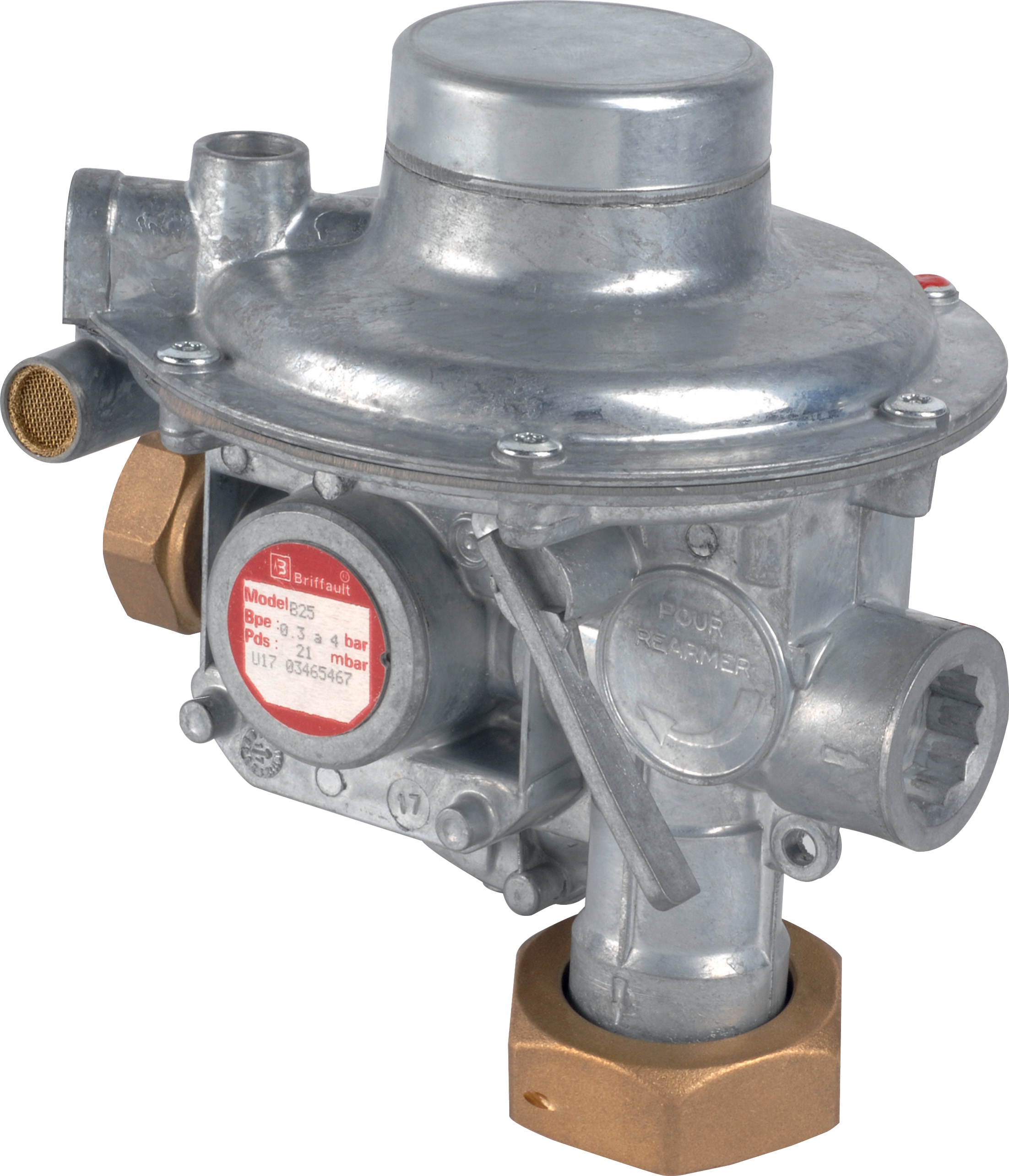
The equipment you manage—from high-pressure pumps like the Pratissoli KF30 to precision pressure regulators like the Francel B25/37mb—demands different maintenance protocols. Understanding these differences is essential for protecting your investment.
Section 1: Reactive vs. Preventive Maintenance & Service—Cost and Risk Analysis
What Plant Managers Need to Compare
Reactive maintenance (fix-it-when-it-breaks) seems cost-effective initially. You only pay for repairs when failures occur, with no preventive labor costs. However, this approach creates hidden expenses that compound quickly in manufacturing environments.
Consider a failure scenario with the Pratissoli MW40 high-capacity pump (85 kW, 211 L/min). An unexpected breakdown triggers:
- Production stoppage costs: 4–8 hours of idle facility time
- Emergency parts procurement: 40–60% premium over standard pricing
- Expedited technician fees: After-hours service rates apply
- Cascading damage: Pump failure may damage connected equipment like nozzles or pressure regulation systems
- Compliance risk: Unplanned downtime in regulated industries (food, pharma, chemicals) creates documentation gaps
Preventive Maintenance & Service, by contrast, requires scheduled labor (inspections, fluid changes, component replacements) but eliminates catastrophic failures. For the same MW40 pump, preventive protocols include:
- Quarterly oil analysis and filtering
- Semi-annual bearing and seal inspections
- Annual pressure relief valve testing on components like the Francel B25/37mb regulator
- Documented component replacement on 2000–3000 operating hour cycles
Studies across Southeast Asian manufacturing show:
- Reactive maintenance costs: 100% baseline (in crisis mode)
- Preventive maintenance costs: 65–75% of baseline (planned labor is cheaper)
- Downtime reduction: 30–50% fewer unplanned stoppages
- Equipment lifespan extension: 20–35% longer operational life
For a facility running multiple high-pressure systems like the KF30 and Interpump E1D1808, preventive Maintenance & Service saves approximately 35–40% annually when properly executed.
Section 2: Predictive Maintenance & Service—Leveraging Data for Singapore's High-Utilization Environment
Why Predictive Maintenance Matters in Singapore's Industrial Context
Singapore's compact industrial zones and dense manufacturing operations demand maximum uptime. Space constraints mean equipment operates at higher utilization rates than regional peers. This environment favors predictive Maintenance & Service—using real-time monitoring to schedule work before failures occur.
Predictive approaches use:
- Pressure trending: Monitor outlet pressures on regulators like the Francel B25/37mb (37 mbar design). Gradual pressure decay signals seal degradation, allowing planned replacement before system failure.
- Vibration analysis: High-frequency sensors detect bearing wear in pumps 2–3 weeks before mechanical failure.
- Thermal imaging: Temperature anomalies in motor windings (KF30, MW40 systems) predict imminent electrical faults.
- Oil condition monitoring: Particle counts and viscosity changes reveal internal component wear in high-pressure fluid delivery systems.
- Flow rate consistency: Nozzle performance degradation (measured through spray pattern consistency with Euspray flat jet nozzles) indicates clogging or internal wear.
Predictive Maintenance & Service requires upfront investment (sensors: SGD 3,000–8,000 per major system) but delivers superior ROI in high-utilization facilities:
1. Phase 1 (Months 1–3): Install monitoring on critical systems (high-pressure pumps, primary regulators). Establish baseline readings.
2. Phase 2 (Months 4–6): Collect 90+ days of trend data. Identify seasonal patterns and equipment-specific degradation curves.
3. Phase 3 (Months 7–12): Transition to predictive scheduling. Schedule maintenance 1–2 weeks before predicted failures.
4. Phase 4 (Ongoing): Refine alert thresholds based on actual failure patterns. Typical ROI threshold: 18–24 months.
For example, predictive monitoring of the MW40 pump's 210 bar pressure system would detect pressure relief valve drift (often caused by regulator component wear) 3–4 weeks early, allowing planned replacement of the integrated safety relief on the Francel regulator before catastrophic failure.
Section 3: Component-Specific Maintenance & Service Protocols for Core Industrial Equipment
High-Pressure Pumps: KF30 and MW40 Series
Pratissoli pumps represent Italian-engineered precision machinery. Maintenance & Service for these systems differs significantly based on application:
- KF30 (106 L/min, 40 kW): Suited for continuous duty applications. Service intervals: fluid change every 1000 hours, bearing inspection every 500 hours, seal replacement annually.
- MW40 (211 L/min, 85 kW): Higher duty-cycle equipment. Service intervals: fluid change every 750 hours (higher stress = faster oil degradation), bearing inspection every 400 hours, relief valve testing every 250 operating hours.
3G Electric's 35 years serving Singapore plants shows that Maintenance & Service failures with high-pressure pumps stem from contaminated hydraulic fluid in 60% of cases. Implement:
- Monthly filter element inspections (visual and pressure differential)
- Quarterly lab-tested fluid sampling (ISO particle count tracking)
- Semi-annual system flushing in dusty or humid Singapore environments
The Francel B25/37mb integrates a 37 mbar regulator with safety relief in a single compact unit. Maintenance & Service focuses on three areas:
1. Outlet pressure calibration: Monthly verification that 37 mbar is maintained under load. Drift >2 mbar indicates internal seal wear.
2. Safety relief function test: Quarterly manual test—slow increase pressure until relief opens. Opening should occur within ±3% of rated threshold.
3. Vent orifice (10 mm) cleaning: Singapore's humidity and occasional atmospheric contamination can partially block the vent port. Quarterly inspection prevents pressure creep.
Nozzle and Spray Systems: Euspray Flat Jet HP 1/4"
The Euspray flat jet nozzle (25° spray angle, index 30) delivers consistent spray patterns essential for coating and cleaning. Maintenance & Service addresses:
- Clogging prevention: Weekly flushing with system fluid (never dry). Mineral deposits form within 48 hours of residual exposure to air.
- Pattern degradation: Monthly spray pattern inspection against baseline. Asymmetric spray signals internal orifice wear.
- Thread integrity: Quarterly inspection of 1/4" M BSPT connection. Minor corrosion requires immediate replacement in marine-influenced Singapore humidity.
The Interpump E1D1808 (8 L/min, 180 bar, 2.72 kW) operates in space-constrained applications. Maintenance & Service protocols:
- Bearing preload verification: Every 250 hours. Excessive play >0.1 mm indicates wear requiring bearing replacement (typically SGD 400–600 including labor).
- Inlet filter condition: Monthly inspection. This compact unit is highly sensitive to particulate contamination.
- Temperature monitoring: Operating temperature should not exceed 65°C. Higher temps signal fluid viscosity degradation or pump wear.
Section 4: Building Your Maintenance & Service Organization for Singapore Operations
Staffing and Resource Allocation
Plant managers must decide: in-house technicians vs. outsourced maintenance partners vs. hybrid model.
Comparison Framework:
| Aspect | In-House | Outsourced | Hybrid |
|--------|----------|-----------|--------|
| Response time | 15–30 min | 2–8 hours | 30–60 min |
| Cost predictability | Variable | Fixed contract | Moderate |
| Technical expertise | Equipment-specific | Broad knowledge | Specialized focus |
| Capital investment | High (training, tools) | Low | Moderate |
| Flexibility for peak demand | Limited | Scalable | Balanced |
| Singapore labor cost premium | 25–35% above regional | Regional rates | Mixed rates |
For most Singapore plant managers, a hybrid model proves optimal: retain 1–2 full-time technicians for routine Maintenance & Service (fluid changes, filter replacement, basic troubleshooting) and contract specialized labor for complex diagnostics (vibration analysis, bearing replacement, pressure regulator calibration).
Creating a Maintenance & Service Documentation System
Effective Maintenance & Service requires tracking:
- Equipment serial numbers and procurement dates (critical for warranty claims with 3G Electric as your supplier)
- Service dates and technician names
- Parts replaced with SKU references (e.g., KF30 seals, DTG06002 relief valve cartridges)
- Failure root causes and corrective actions
- Compliance records (especially for pressure relief testing)
Implement a simple spreadsheet or low-cost CMMS (Computerized Maintenance Management System) like Fixit or Maintainify (SGD 50–150/month). Over 3+ years, documented Maintenance & Service reduces emergency repairs by 35–50%.
Partnering with 3G Electric for Maintenance & Service Support
As your industrial equipment distributor with 35+ years in the region, 3G Electric provides:
- Parts availability: Stock of common replacement components for all referenced equipment (Francel, Pratissoli, Interpump, Euspray).
- Technical documentation: Original manufacturer specifications and maintenance interval guidance.
- Supply consistency: Reliable sourcing ensures you don't substitute equipment during emergency repairs, which compromises Maintenance & Service quality.
When scheduling maintenance on the KF30 or MW40 pumps, coordinate with 3G Electric to ensure backup units are available. This simple step has saved countless Singapore plant managers from extended downtime.
Conclusion
Maintenance & Service excellence separates high-performing plants from struggling ones. By comparing reactive, preventive, and predictive approaches and implementing component-specific protocols, you'll optimize uptime while controlling costs.
Start with an honest assessment: Which failures have disrupted your facility most in the past 12 months? Which equipment creates the largest unplanned maintenance costs? These pain points guide your Maintenance & Service investment priorities.
With 3G Electric as your partner—providing reliable supply of Pratissoli pumps, Francel regulators, and precision nozzles—you can build a Maintenance & Service program that reflects Singapore's operational realities and your facility's specific demands.