Understanding Maintenance & Service Through Control System Architecture
Maintenance & Service excellence in modern industrial operations extends far beyond routine pump inspections and pressure checks. The integration of complementary control systems—particularly solenoid valves and transmission accessories—creates a more resilient operational foundation that reduces unplanned downtime and extends component life. Drawing on 3G Electric's 35+ years as a distributor of industrial equipment, we've observed that facilities overlooking control system compatibility during maintenance planning often experience cascading failures that could have been prevented through proper component selection and integration.
When maintaining high-pressure systems, the relationship between your primary pump, control valves, and transmission accessories becomes critical. Consider a system using the Interpump PUMP W2035 L ATEX for hazardous environment operations. This 35 L/min pump at 200 bar requires precise control mechanisms to operate safely and efficiently. The integration point where automation meets safety is where Maintenance & Service strategy truly matters.
Solenoid Valve Selection and Maintenance Integration
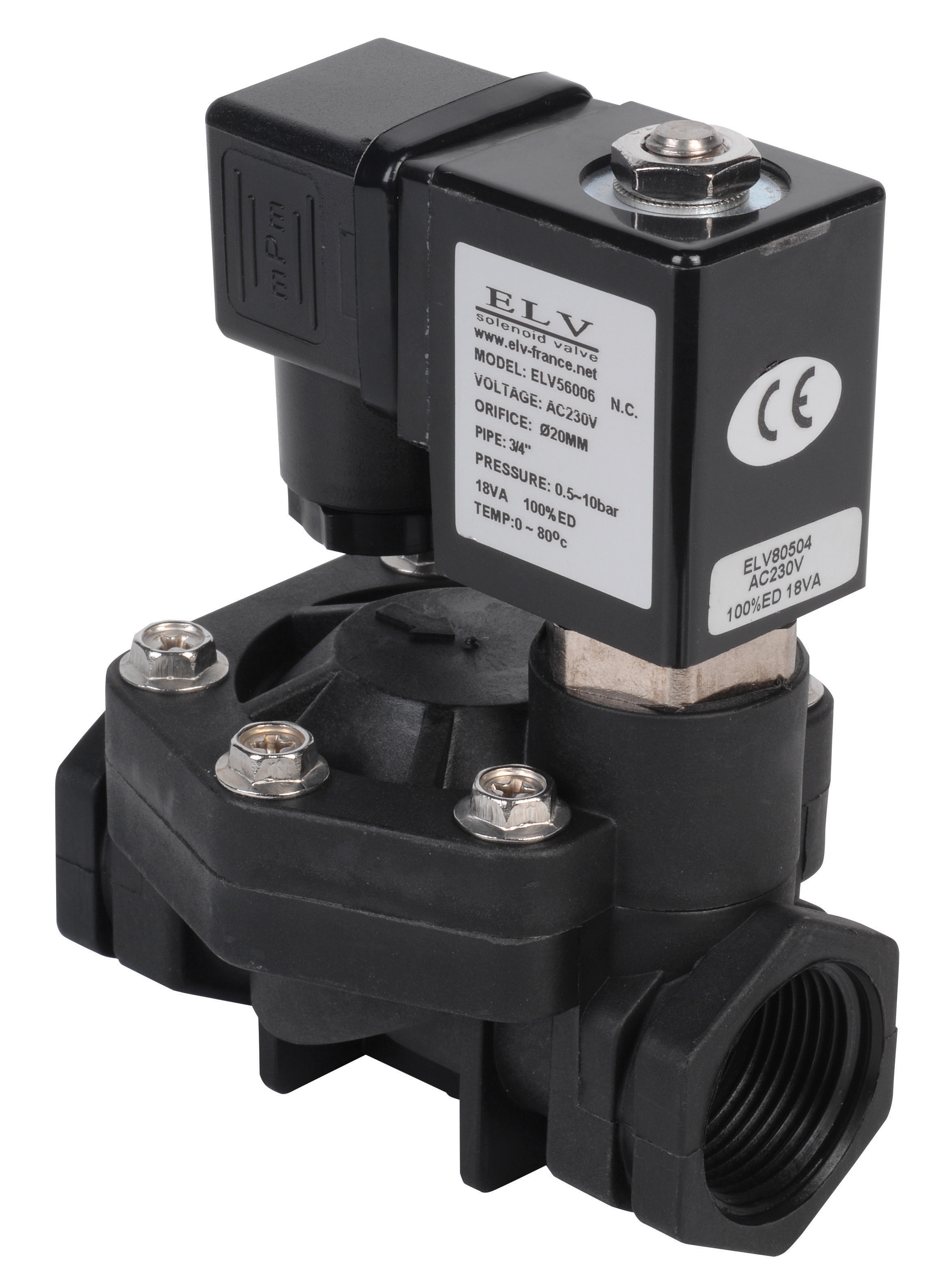
Solenoid valves serve as the nervous system of automated pressure systems, controlling flow direction, pressure relief, and system shutdown sequences. The ELV Plastic solenoid valve D.3/4 NF 230V represents a practical solution for facilities managing compressed air, water, and light oil applications in the 0.5 to 10 bar range. From a maintenance perspective, this valve's plastic construction offers advantages and challenges worth understanding.
Advantages in Maintenance & Service Planning:
- Corrosion resistance: Plastic bodies eliminate rust concerns common in metal valve systems, reducing preventive cleaning frequency and extending service intervals
- Cost efficiency: Lower material cost allows for strategic spare parts inventory without significant capital outlay
- Compact footprint: Easier to inspect, test, and replace without extensive system reconfiguration
- Standardized 230V coil: Simplifies electrical maintenance across global facilities using common voltage standards
The plastic solenoid valve operates across 0.5 to 10 bar, consuming 22 VA at 230V. Maintenance teams should establish quarterly coil resistance testing (typical 3500-4500 ohms for this specification) to detect electrical degradation before failure. The 3/4" port size requires compatible tubing—incompatible connections are a common source of efficiency loss and micro-leaks that degrade system performance over months.
Integrating this valve with higher-flow systems like the Pratissoli KF30 (106 L/min at 200 bar, 40 kW) demands careful flow-path analysis. The KF30's 106 L/min output exceeds the solenoid valve's rated capacity, necessitating parallel valve configurations or system redesign. This is where maintenance planning intersects with capital equipment decisions—choosing undersized control components creates bottlenecks that generate heat, reduce efficiency, and accelerate wear across the entire system.
Pump and Gearbox Integration: The Maintenance & Service Foundation
Transmission accessories like the Interpump GEARBOX RS500 represent the mechanical bridge between engine power and pump flow output. This 18.5 kW transmission system with a 2.2 reduction ratio handles integration with 1-inch engine connections, making it compatible with mid-range industrial pump configurations.
From a Maintenance & Service standpoint, gearbox selection affects maintenance frequency and cost significantly:
Transmission Efficiency and Maintenance Impact:
A 2.2 reduction ratio provides torque multiplication that allows smaller, less expensive engines to power larger displacement pumps. The trade-off: additional rotating components require oil monitoring, bearing inspection, and shaft alignment checks. Systems operating the Pratissoli SN7045 L (45 L/min at 210 bar, 18.4 kW at 1450 rpm) through a gearbox versus direct-drive configurations will experience:
- Increased maintenance intervals: Gearbox oil analysis every 250-500 operating hours (versus pump-only systems at 500+ hours)
- Bearing wear monitoring: Vibration analysis becomes critical—gearbox bearings typically require replacement every 5,000-8,000 operating hours
- Shaft seal inspection: The connection point between motor and gearbox is a common leak source, requiring quarterly visual inspection
- Alignment verification: Thermal growth and vibration can gradually misalign shafts; annual laser alignment checks prevent premature bearing failure
However, this complexity delivers meaningful operational benefits. A well-maintained gearbox system extends overall equipment life by distributing stress across multiple components rather than relying on a single pump bearing to handle all load. The GEARBOX RS500's 2.2 ratio means the pump shaft rotates at half the motor speed, reducing bearing stress proportionally.
Comparative System Architecture: Three Operational Scenarios
Scenario 1: Hazardous Environment with ATEX Compliance
Facilities operating in hazardous areas (explosive atmospheres, chemical plants) must use equipment certified for Zone classifications. The Interpump W2035 L ATEX provides 35 L/min at 200 bar with mandatory safety certifications. Maintenance & Service strategy here focuses on:
- Monthly certification documentation review (ATEX compliance remains in effect only with proper maintenance records)
- Quarterly external visual inspection for seal degradation
- Annual bearing temperature monitoring (ATEX motors have tighter temperature tolerances)
- Documented spare parts sourcing (replacement seals must maintain ATEX certification)
For non-hazardous high-flow applications, the Pratissoli KF30 (106 L/min, 200 bar, 40 kW) offers Italian engineering with 72 kg compact design. Maintenance strategy diverges significantly:
- Bi-weekly pressure gauge verification (higher flow systems show greater pressure fluctuations)
- Monthly suction filter changes (higher flow accelerates contaminant accumulation)
- Semi-annual gearbox oil analysis if using ZONDA5-080 transmission
- Annual displacement verification (wear in the wobble plate mechanism reduces output)
The Pratissoli SN7045 L at 45 L/min, 210 bar, paired with the ELV plastic solenoid valve, creates a balanced system where control precision matters. Maintenance approach emphasizes:
- Weekly solenoid coil insulation testing
- Bi-weekly control valve response time measurement (manual actuation tests)
- Monthly system pressure profile documentation (trending reveals control valve drift)
- Quarterly servo response analysis if the system includes proportional control modifications
Practical Maintenance & Service Integration Framework
Component Compatibility Matrix:
Before implementing any maintenance schedule, verify component compatibility:
| Component | Flow Rating | Pressure Range | Integration Notes |
|-----------|------------|-----------------|-------------------|
| W2035 L ATEX | 35 L/min | 200 bar | ATEX Zone certified; solenoid valve must match |
| ELV D.3/4 | Limited | 0.5-10 bar | Suitable only for low-pressure pilot control |
| KF30 | 106 L/min | 200 bar | Requires parallel solenoids or larger valve body |
| SN7045 L | 45 L/min | 210 bar | Direct solenoid control practical |
| GEARBOX RS500 | 18.5 kW | Speed reduction | Requires oil monitoring program |
Documentation Requirements:
Effective Maintenance & Service depends on institutional knowledge capture:
- Commissioning baseline: Document initial pressure, temperature, sound profile, and electrical readings
- Maintenance logs: Record date, service performed, components tested, adjustments made, next scheduled service
- Spare parts inventory: Stock critical wear items—seal kits for specific pump models, solenoid coil replacements rated to your system voltage
- Failure root-cause analysis: When failures occur, trace back through maintenance records to identify process breakdowns
Cost-Benefit Analysis: Preventive vs. Reactive Maintenance & Service
Using 3G Electric's experience across global operations, preventive Maintenance & Service typically delivers 3-5x cost advantage over reactive repair:
Preventive Investment Example (Annual cost for mid-range system):
- Quarterly oil analysis: $400
- Semi-annual seal inspections: $600
- Monthly coil testing: $300
- Annual bearing replacement (scheduled): $1,200
- Total: $2,500/year
- Emergency service call: $1,500
- Component replacement (unplanned): $2,000-4,000
- System downtime (24-72 hours): $5,000-20,000 depending on production value
- Secondary damage to coupled equipment: $3,000-10,000
- Total: $11,500-35,500 per incident
A single catastrophic failure typically exceeds five years of preventive maintenance investment.
Selecting Maintenance & Service Providers and Support
When working with industrial equipment distributors like 3G Electric, leverage their technical experience:
- Request equipment-specific maintenance schedules aligned to your operating hours and environment
- Establish spare parts supply agreements that include emergency availability for critical components
- Schedule quarterly review meetings to discuss maintenance trends and optimize service intervals
- Access technical documentation for all components to support internal technician training
The choice between solenoid valve designs, pump models, and transmission solutions should never be made in isolation from your facility's Maintenance & Service capability. Select equipment your team can confidently service, or invest in partnerships that provide reliable support.
Key Takeaways for Global Industrial Operations
Maintenance & Service excellence requires holistic thinking:
1. Control systems matter: Proper solenoid valve selection and integration prevents efficiency loss that masked failures develop within
2. Transmission accessories add complexity and resilience: Gearbox systems require more maintenance but distribute wear and extend overall system life
3. Documentation is your insurance: Detailed maintenance records enable predictive analysis and reduce emergency calls
4. Preventive investment delivers measurable ROI: 3-5x cost advantage compared to reactive repair strategies
5. Compatibility verification prevents cascading failures: Oversized or undersized control components create stress throughout the system
With 35+ years distributing industrial equipment globally, 3G Electric understands that purchasing equipment is only the beginning. The real operational advantage comes from Maintenance & Service strategies that keep that equipment running predictably, efficiently, and safely across your facility's lifetime.