Maintenance & Service: Building Operational Resilience in Southeast Asian Industrial Environments
Maintenance & Service planning for high-pressure fluid systems in Southeast Asia demands a nuanced understanding of regional climate challenges, equipment specifications, and supply chain realities. Over 35 years, 3G Electric has supported industrial operations across the region, observing that failures often stem not from poor equipment quality, but from inadequate service protocols and preventive practices. Procurement engineers must recognize that maintenance strategy directly impacts total cost of ownership, regulatory compliance, and production continuity.
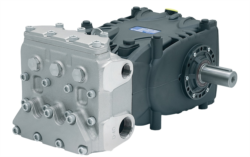
Southeast Asia's tropical climate—characterized by high humidity, temperature fluctuations, and corrosive salt-laden air in coastal regions—accelerates component degradation when proper maintenance protocols are absent. Industrial pumps like the Pratissoli KF30 and MW40 series are engineered to exacting Italian standards, but their performance depends entirely on how maintenance is executed in your facility.
Section 1: Establishing Core Maintenance Intervals for High-Pressure Components
Understanding Your Equipment's Duty Cycle
Procurement engineers must first establish realistic maintenance intervals based on actual operating conditions rather than manufacturer minimums. For industrial pumps operating in demanding Southeast Asian applications, three maintenance tiers exist: routine inspection (weekly), preventive service (monthly-quarterly), and major overhaul (annually or per operating hours).
The Pratissoli KF30 pump, delivering 106 L/min at 200 bar, requires different service protocols than the higher-capacity MW40 (211 L/min at 210 bar). Larger displacement units accumulate wear faster and justify more frequent inspections. Document baseline operating pressures, flow rates, and temperatures during initial commissioning—these metrics become your diagnostic reference points.
Fluid Analysis as Predictive Intelligence
Regular fluid sampling is among the most underutilized yet cost-effective maintenance practices. Hydraulic and lubrication oils degrade through oxidation, particulate contamination, and water absorption—all accelerated by Southeast Asia's humidity. Implement quarterly fluid analysis covering:
- Viscosity changes (indicating thermal stress or contamination)
- Acid number elevation (oxidation progression)
- Particle counting (filtration effectiveness)
- Water content (especially critical in coastal facilities)
- Ferrous debris levels (internal component wear)
Fluid analysis typically costs $50-150 per sample but prevents failures costing thousands in downtime and replacement components. Partner with certified laboratories in Singapore, Thailand, or Malaysia for rapid turnaround results.
Pressure Regulator Maintenance: The Francel B25/37mb Example
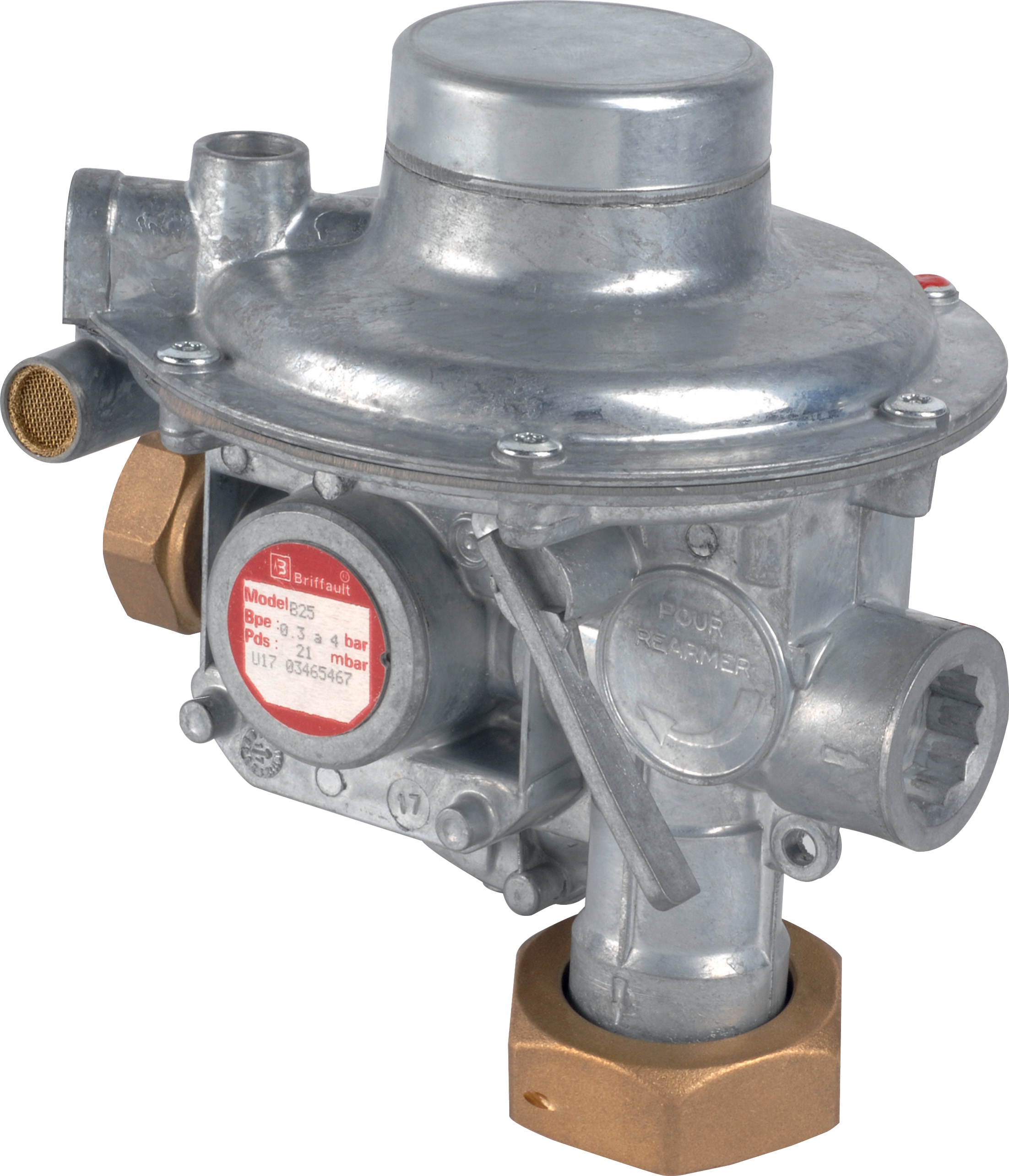
Pressure regulators like the Francel B25/37mb with integrated safety relief require specific attention. These components protect downstream systems by maintaining consistent outlet pressure (37 mbar in this model) regardless of inlet fluctuations. Maintenance protocols include:
- Monthly vent verification (confirming 10 mm vent remains unobstructed)
- Quarterly internal inspection for seat degradation
- Annual safety relief testing at certified pressures
- Visual inspection for corrosion or moisture ingress
In humid environments, moisture can compromise the safety relief mechanism. Install desiccant breathers on inlet ports and schedule post-monsoon inspections to prevent regulator failure during critical production periods.
Section 2: Component-Specific Service Strategies and Replacement Planning
Nozzle Performance and Spray Pattern Degradation
Industrial nozzles, including the Euspray flat jet nozzle HP 1/4" BSPT, experience gradual performance loss that procurement engineers often mistake for pump failure. The 25° spray angle and index 30 design depend on precise orifice geometry—any erosion or blockage shifts spray patterns and reduces cleaning or coating efficiency.
Implement quarterly nozzle inspections using these criteria:
- Visual inspection for erosion streaks or surface pitting
- Spray pattern testing (photograph patterns and compare to baseline)
- Pressure drop measurement (compare inlet/outlet pressure differential)
- Fluid velocity testing at nozzle exit using flow visualization
Nozzle replacement costs $200-500 per unit but, when neglected, causes $5,000+ losses from poor spray coverage or system backpressure. Maintain spare nozzles in stock—they represent minimal capital investment with outsized reliability value.
Gear Pump Bearing and Seal Management
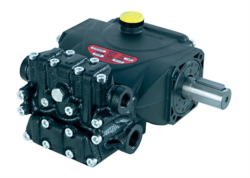
Compact industrial pumps like the Interpump E1D1808 (8 L/min at 180 bar, 2800 rpm) operate at high rotational speeds where bearing and seal degradation accelerates dramatically. Southeast Asian humidity penetrates seals faster than in temperate climates.
Develop tiered seal replacement protocols:
- Tier 1 (6 months): Visual seal inspection; measure fluid leakage rate
- Tier 2 (12 months): Replace primary shaft seals and inlet/outlet seals
- Tier 3 (24 months): Full bearing inspection; replace if radial play exceeds 0.05 mm
Stock seal kits specific to your equipment. The E1D1808 requires seals rated for 180 bar continuous duty and designed for tropical climates (synthetic materials resist moisture better than traditional elastomers).
Pump Displacement Volume and Flow Degradation Detection
As pumps age, internal leakage increases and displacement decreases. Monitor this through simple volumetric tests:
- Measure actual flow output against nameplate specifications (e.g., 106 L/min for KF30)
- Compare across multiple operating pressures
- Calculate volumetric efficiency (actual flow ÷ theoretical flow × 100%)
When volumetric efficiency drops below 90%, schedule major overhaul or replacement. This predictive metric prevents catastrophic failure and guides capital planning.
Section 3: Preventive Maintenance Documentation and Performance Tracking
Building Your Maintenance Record System
Procurement engineers must establish maintenance records that track every service intervention, fluid analysis result, component replacement, and performance metric. Digital systems (cloud-based maintenance management software) are preferable to paper records in Southeast Asia, where storage humidity damages documentation.
Minimum required records:
- Equipment identification (serial numbers, acquisition dates, original specifications)
- Operating hours and duty cycle classification
- All fluid analysis results with trending graphs
- Pressure/flow measurements at standardized intervals
- Parts replaced with dates and part numbers
- Service costs and labor hours
- Downtime incidents and root causes
- Safety inspection certifications (especially for pressure regulators with relief valves)
This documentation becomes invaluable during audits, warranty claims, and procurement decisions for replacement equipment.
Cost-Benefit Analysis: Predictive Maintenance Investments
Procurement engineers often face budgetary pressure to defer maintenance. Calculate the true financial impact:
Scenario Example:
- Equipment cost: $15,000 (Pratissoli MW40 class pump)
- Annual routine maintenance: $800
- Fluid analysis (quarterly): $400
- Preventive component replacement (seals, gaskets): $600
- Annual total: $1,800 (12% of equipment cost)
- Unplanned downtime: 24-48 hours ($5,000-10,000 production loss)
- Emergency replacement component: $3,000-5,000
- Expedited shipping: $500-1,500
- Facility shutdown and restart costs: $2,000-3,000
- Total failure cost: $10,500-19,500
Investing 12% annually in maintenance prevents failures costing 6-11× more. This calculation justifies maintenance budgets to CFOs and plant managers.
Section 4: Regional Considerations and Supply Chain Integration
Southeast Asian Climate Adaptations
Tropical climate presents unique challenges absent in temperate regions:
- Humidity control: Install dehumidifying equipment in pump rooms; use silica gel breathers on reservoir vents
- Temperature stability: Maintain fluid temperatures 40-60°C; upgrade cooling capacity during monsoon seasons when ambient temperatures spike
- Corrosion prevention: Use stainless steel fasteners, apply protective coatings to ferrous surfaces, implement cathodic protection in coastal facilities
- Microbial contamination: Tropical conditions accelerate bacterial growth in hydraulic systems; increase fluid sampling frequency in rainy seasons
Sourcing Maintenance Components Through 3G Electric
As a global distributor with 35+ years' experience, 3G Electric maintains extensive inventory of maintenance components suited to Southeast Asian operations. Rather than sourcing from multiple suppliers, procurement engineers benefit from:
- Verified compatibility across KF30, MW40, E1D1808, and other equipment lines
- Regional warehousing reducing lead times from weeks to days
- Technical support familiar with local climate and operational challenges
- Consolidated invoicing simplifying procurement administration
Establish preventive maintenance contracts with 3G Electric guaranteeing component availability and priority technical support. This transforms maintenance from reactive firefighting to strategic planning.
Training and Knowledge Transfer
Procurement engineers must ensure maintenance technicians possess proper training. Partner with equipment manufacturers and 3G Electric for:
- Hands-on maintenance workshops covering your specific equipment
- Documentation in local languages (Thai, Vietnamese, Indonesian, Tagalog)
- Spare parts kitting sessions ensuring correct component identification
- Safety certification programs, particularly for pressure systems and relief valves
Well-trained technicians perform maintenance more efficiently, identify emerging problems earlier, and reduce costly mistakes.
Conclusion: Maintenance & Service as Competitive Advantage
Maintenance & Service excellence transforms industrial operations from reactive cost centers into competitive advantages. Procurement engineers in Southeast Asia who implement systematic maintenance protocols—grounded in fluid analysis, predictive metrics, and regional climate understanding—achieve dramatically lower total costs of ownership and superior equipment reliability.
The industrial equipment you procure represents significant capital investment. Protecting that investment through disciplined maintenance protocols ensures consistent production, regulatory compliance, and extended asset lifespan. 3G Electric's 35+ years' experience supporting Southeast Asian industrial operations demonstrates that maintenance excellence correlates directly with operational success.