Understanding Maintenance & Service as a Procurement Decision
When procurement engineers evaluate equipment, Maintenance & Service capabilities often receive less attention than initial specifications. However, 3G Electric's 35+ years distributing industrial equipment has consistently shown that service accessibility, spare parts availability, and design longevity directly correlate with total cost of ownership (TCO).
Equipment that requires frequent service interventions or relies on proprietary spare parts can multiply costs by 30-40% over five years. Conversely, robust designs with standardized components and accessible maintenance protocols reduce both planned and unplanned downtime. This article examines how to evaluate Maintenance & Service factors when comparing pressure regulators, high-performance pumps, and spray nozzle systems—three critical components in industrial operations.
Evaluating Pressure Regulation: Service Accessibility vs. Safety Integration
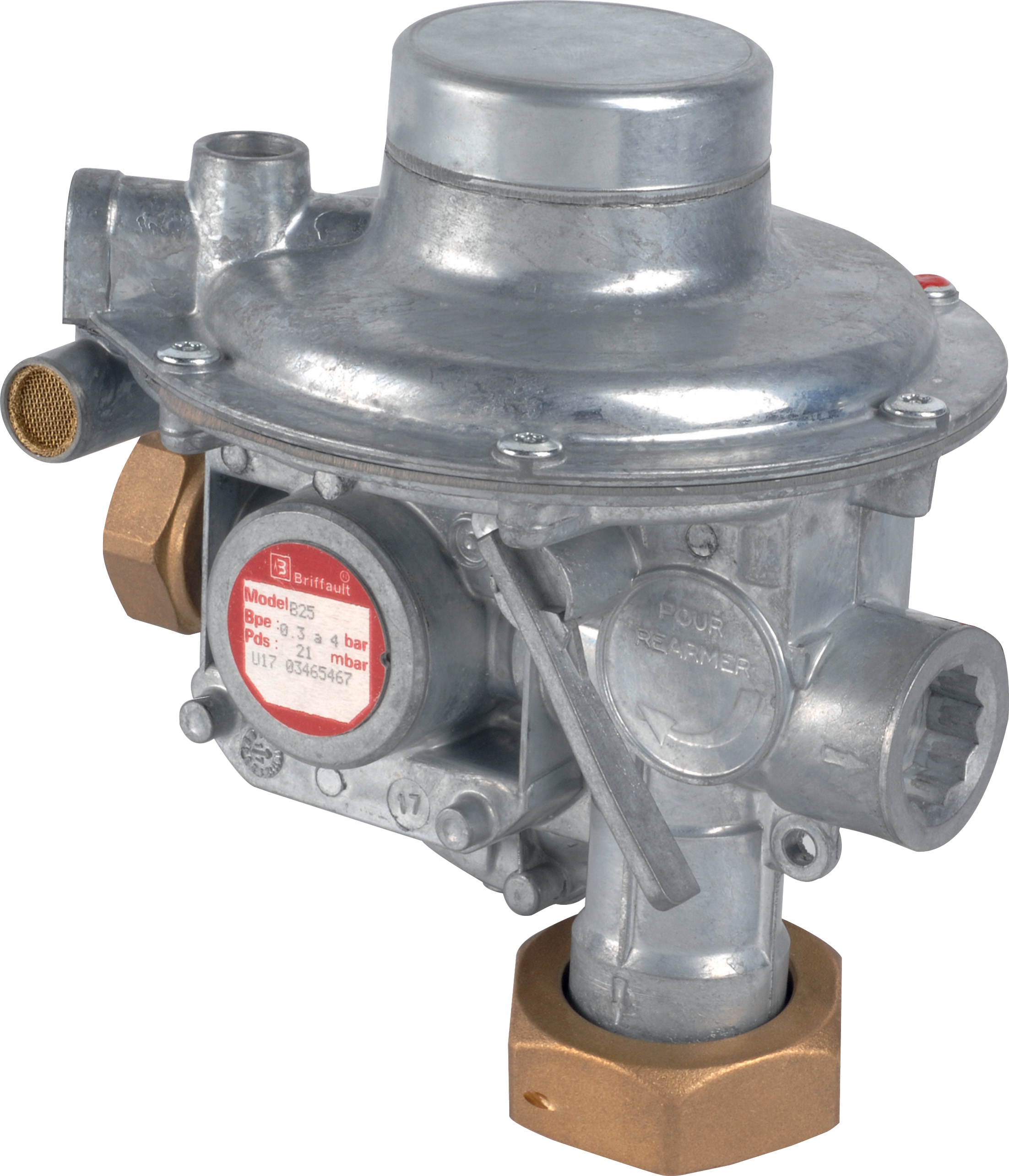
Pressure regulators are foundational to gas distribution systems, yet their Maintenance & Service profiles vary significantly. The Francel B25/37mb pressure regulator with integrated safety relief exemplifies a design philosophy that simplifies maintenance through integrated functionality.
Service Advantages of Integrated Safety Design:
- Single unit replaces separate regulator and relief valve installations
- Reduces potential leak points from 4-6 connection points to 2-3
- Simplifies troubleshooting: technicians diagnose one component rather than multiple devices
- Lower spare parts inventory requirements
- Easier pressure calibration procedures with centralized adjustment mechanisms
The 10 mm vent size on the Francel B25/37mb delivers 37 mbar outlet pressure with industry-standard connections, meaning replacement components and seals are readily available through multiple suppliers globally. This standardization matters when you face unexpected failures in remote locations or during supply chain disruptions.
Maintenance Interval Considerations:
Integrated regulators typically require full replacement rather than field service, but the lower parts count and reduced installation complexity mean shorter downtime per service event. Procurement teams should calculate: (Cost per unit) ÷ (Years to expected failure) versus (Cost per unit) ÷ (Years to failure + maintenance time value).
Pump Performance: Comparing Durability Tiers Across Industrial Duty Cycles
Pump selection represents one of the largest Maintenance & Service commitments in industrial operations. The choice between mid-range and high-capacity equipment fundamentally changes service expectations, spare parts strategies, and operator training requirements.
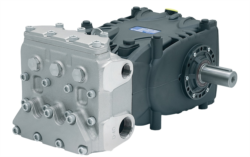
Mid-Range Pump Profile: The Pratissoli KF30
- Flow: 106 L/min at 200 bar pressure
- Power: 40 kW input (72 kg unit weight)
- Italian-engineered construction emphasizes component accessibility
- Typical maintenance interval: 500-1,000 operating hours for seal inspection
- Replacement cycles: 3,000-5,000 operating hours under continuous duty
- Flow: 211 L/min at 210 bar pressure
- Power: 85 kW input (264 kg unit weight)
- Enhanced displacement design for sustained high-pressure applications
- Typical maintenance interval: 750-1,500 operating hours
- Replacement cycles: 4,500-7,000 operating hours under continuous duty
The MW40's larger displacement and heavier construction initially suggests higher service costs, but operational context determines actual TCO. An operation running 16 hours daily benefits from the MW40's longer intervals between seal replacements, reducing frequency of production stops. A facility running 4-6 hours daily may never reach the KF30's full lifecycle before replacement becomes economically viable, making the KF30 the better choice despite shorter intervals.
The Interpump Group heritage shared by both units—Pratissoli's parent company—ensures seal kits, bearing assemblies, and valve cartridges remain available for 10+ years post-manufacture. This parts availability is critical for procurement engineers planning equipment lifecycles across 5-10 year timescales.
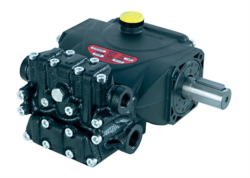
Compact Pump Consideration: The Interpump E1D1808L
For applications requiring minimal footprint, the E1D1808L (8 L/min, 180 bar, 2.72 kW, 5 kg) introduces a different Maintenance & Service calculus. Its compact design and lower power input reduce installation complexity, but the tighter tolerances in miniaturized gear pump designs demand higher filtration standards and more frequent fluid analysis. Procurement teams should budget for dedicated hydraulic fluid condition monitoring if selecting this unit, offsetting some savings from reduced physical space.
Spray System Integration: Nozzle Selection's Impact on System-Wide Maintenance
Industrial spray systems create unexpected maintenance burdens when nozzle selection ignores downstream service requirements. The Euspray flat jet nozzle (HP 1/4" M BSPT, 25° angle, index 30) demonstrates how nozzle specification cascades through maintenance planning.
Direct Maintenance Implications of Nozzle Design:
- Spray Pattern Consistency: The fixed 25° angle at index 30 means spray geometry remains constant across multiple mounting positions, simplifying system calibration and reducing field adjustments
- BSPT Connection Standard: 1/4" M BSPT is a globally standardized connection, ensuring replacement nozzles and adapters are available from multiple manufacturers
- Material Compatibility: High-pressure rated design (suitable for 200+ bar systems) uses stainless steel or hardened materials that resist both chemical corrosion and cavitation erosion
- Clogging Prevention: Flat jet geometry naturally resists particle blockage compared to hollow cone designs, reducing flush-out maintenance cycles
When pairing the Euspray nozzle with MW40 pumps and Francel pressure regulators, procurement engineers benefit from matched service intervals. The nozzle's robust design aligns with the MW40's 750-1,500 hour maintenance window, allowing consolidated service events rather than staggered component changes.
Conversely, selecting exotic nozzle materials or proprietary spray patterns locks facilities into single-source maintenance, increasing costs by 15-25% when unplanned replacements become necessary.
Procurement Strategy: Balancing Standardization Against Peak Performance
Three fundamental principles guide Maintenance & Service-centric procurement decisions:
1. Standardization Reduces Total Cost of Ownership
Equipment using globally available connections (BSPT, ISO flanges, SAE ports) and common seal materials generates lower spare parts inventory requirements. 3G Electric's experience across 35+ years shows that operations maintaining fewer than 15 distinct spare part numbers spend 40% less on emergency procurement and expedited shipping.
2. Service Interval Alignment Minimizes Coordination Overhead
When pressure regulators, pumps, and nozzles are specified with similar maintenance intervals (quarterly, semi-annually, annually), facilities consolidate technician time and reduce production calendar complexity. The Francel B25/37mb, Pratissoli KF30/MW40, and Euspray nozzle combination naturally aligns within 500-hour maintenance windows.
3. Design Transparency Enables Operator Training
Equipment with accessible component layouts (modular valve cartridges, external adjustment points, clear service ports) supports operator certification and in-house troubleshooting. Sealed or proprietary designs require vendor technical support, increasing mean time to repair by 2-4 hours per incident.
Regional Considerations for Global Maintenance & Service Planning
Procurement engineers managing multi-facility operations across regions must account for:
- Parts Availability: European-manufactured equipment (Pratissoli, Francel) has established distribution networks in Europe and North America; Asia-Pacific facilities should verify local inventory before committing to specifications
- Technical Support: Confirm that 3G Electric or authorized service partners maintain technical documentation in regional languages
- Environmental Factors: High-humidity or extreme-temperature locations require sealed bearing assemblies and corrosion-resistant materials, shifting maintenance intervals and spare parts selection
- Operator Skill Levels: Facilities with limited technical staff benefit from simpler designs with fewer adjustment parameters
Maintenance & Service as Competitive Advantage
Organizations that systematically evaluate Maintenance & Service during procurement gain measurable advantages: reduced unplanned downtime, lower per-unit lifecycle costs, and improved operator safety through standardized procedures. By leveraging 3G Electric's 35+ years of equipment distribution experience and selecting components with proven service records, procurement engineers transform maintenance from a cost center into a reliability asset.
The choice between competing equipment specifications ultimately reflects your facility's tolerance for downtime, technical support availability in your region, and long-term operational budget constraints. Evaluating these factors systematically—rather than defaulting to lowest initial cost or highest peak specifications—ensures Maintenance & Service investments strengthen rather than compromise operational resilience.