Industry Applications for Thermal Storage and System Monitoring
Industry Applications for thermal management systems extend across manufacturing, HVAC/R, hospitality, and institutional facilities globally. Over 35 years, 3G Electric has supported maintenance teams in optimizing thermal storage solutions and implementing comprehensive system monitoring protocols. This guide addresses the practical challenges maintenance professionals face when managing expansion tanks, fluid pressure management, and critical safety shutdown systems that protect expensive infrastructure from catastrophic failure.
Understanding Expansion Tank Systems in Industrial Settings
Expansion tanks serve as critical components in closed-loop thermal systems, absorbing pressure fluctuations caused by fluid temperature changes. When heating or cooling fluid expands, it needs controlled space to prevent excessive system pressure that can damage pumps, valves, and heat exchangers. Maintenance teams must understand that improper expansion tank management leads to system failures, reduced equipment lifespan, and potential safety hazards.
The CBM expansion tank inflator battery unit provides maintenance teams with essential tools for proper tank pressurization and maintenance. This 2000 mAH battery-powered inflator enables field technicians to quickly restore proper precharge pressure without requiring external power sources or manual pumps. In industrial applications, maintaining correct expansion tank precharge pressure—typically 0.6 to 0.8 times the system's minimum static pressure—prevents waterlogging and ensures the tank functions within design specifications.
Practical applications include:
- HVAC systems: Commercial building climate control systems in North America and Europe require regular expansion tank maintenance to handle seasonal temperature fluctuations
- Industrial heating loops: Manufacturing facilities use expansion tanks to manage pressure in high-temperature fluid circuits serving process equipment
- Renewable energy installations: Solar thermal systems require properly charged expansion tanks to accommodate rapid temperature swings during cloudy-to-sunny transitions
- District heating networks: European municipal heating systems depend on reliable expansion tank performance across hundreds of buildings
Maintenance teams should inspect expansion tank condition quarterly, checking for corrosion, sediment accumulation, and proper pressure gauge readings. The portable inflator battery system enables preventive maintenance without system shutdown, reducing downtime and labor costs. When pressure readings drift below specifications, immediate intervention prevents cascading failures in pumps and valve assemblies.
Critical Safety Monitoring: Alarm and Shutdown Systems
System safety monitoring has become non-negotiable in industrial thermal management. Fluid reservoirs and expansion systems face multiple failure modes—overpressure conditions, fluid contamination, temperature extremes, and level fluctuations—each capable of causing equipment damage or operational hazards.
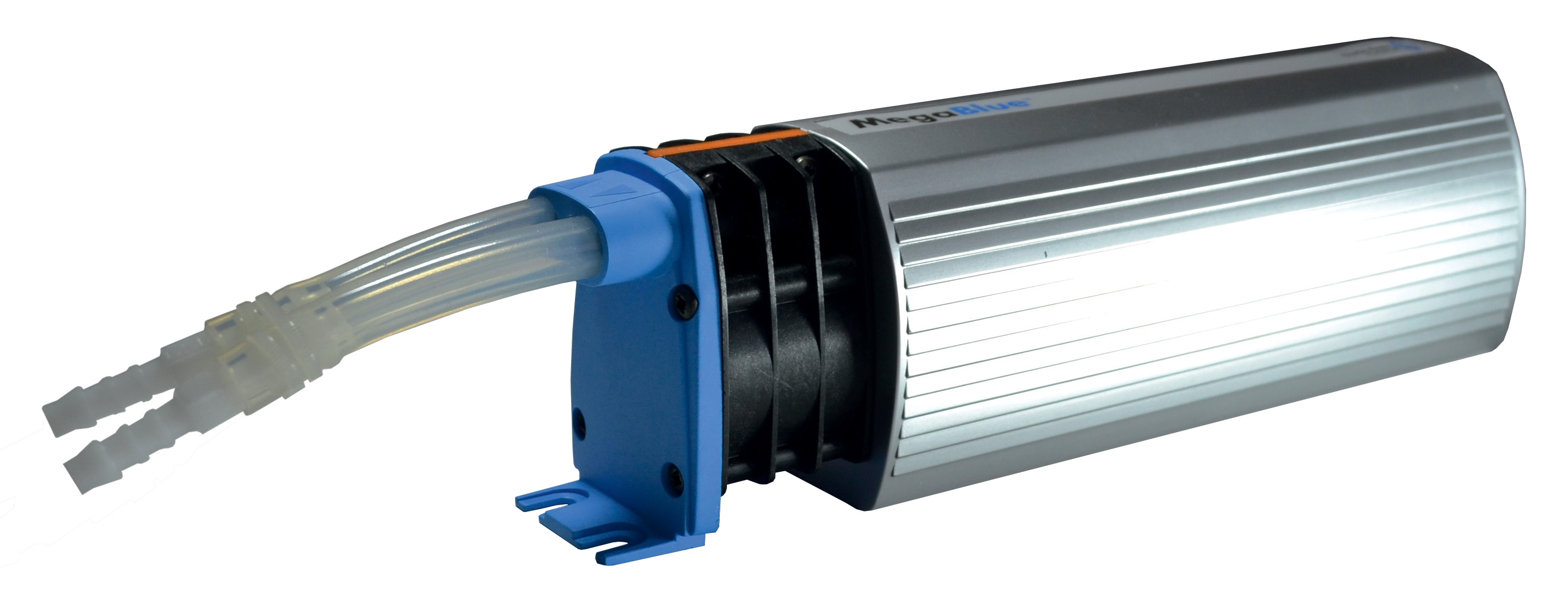
The CBM Megablue reservoir alarm and automatic shut-off system provides dual-function protection essential for unattended industrial operations. This integrated monitoring solution combines real-time alarm notification with automatic system shutdown, preventing situations where maintenance teams cannot physically monitor equipment 24/7. The X87-813 configuration specifically addresses:
Critical protection scenarios:
- Overpressure events: Automatic shutdown triggers when system pressure exceeds safe thresholds, protecting downstream equipment and preventing catastrophic ruptures
- Low fluid level conditions: Prevents pump cavitation and bearing damage by shutting down circulation before fluid supply becomes depleted
- Reservoir contamination: Early warning alerts enable fluid testing and replacement before particles damage precision components like high-pressure nozzles
- Thermal runaway: Temperature monitoring prevents thermal stability loss in systems with sensitive combustion or process requirements
In global industrial applications, this monitoring capability proves invaluable across multiple scenarios. Singapore's precision manufacturing sector relies on consistent thermal conditions; equipment shutdown prevents millions in lost production when conditions drift outside parameters. European industrial standards increasingly mandate automatic shutdown capabilities for unattended systems. North American HVAC contractors integrate these systems into commercial building management platforms, enabling remote monitoring across multiple facility locations.
Maintenance teams should integrate alarm system testing into quarterly preventive maintenance schedules, confirming that sensor responsiveness and shutdown actuators function properly under simulated fault conditions.
High-Pressure Fluid Control and Nozzle Selection for Precision Applications
Industry Applications in thermal systems frequently involve precise fluid atomization and directional delivery. High-pressure nozzles control fluid spray patterns, temperatures, and distribution to critical process areas. Selecting appropriate nozzle specifications directly impacts system efficiency, component longevity, and final product quality.
Flat jet nozzles represent the primary choice for uniform distribution applications requiring consistent spray geometry. The CBM flat jet nozzle HP 1/4" BSPT index 25 angle 15° and CBM flat jet nozzle HP 1/4" BSPT index 055 angle 15° provide maintenance teams with precision options for different flow requirements and application geometries.
Technical specifications that maintenance teams must understand:
- Index ratings (25 vs 055): Index values define flow rate capacity; index 25 handles lower flow volumes suitable for precision cooling or lubrication, while index 055 manages higher volumes for large-scale distribution
- Angle geometry (15° flat spray): The consistent 15-degree angle produces uniform, fan-shaped distribution patterns ideal for heating plate coverage or coolant delivery to machine tool surfaces
- 1/4" BSPT connection: British Standard Pipe Tapered threads ensure reliable sealing in systems across European, Asian, and international equipment standards
- High-pressure rating (HP designation): Withstands 250+ bar operating pressure, essential for industrial applications demanding force-directed fluid delivery
Maintenance teams encounter nozzle applications across diverse industries. In precision machining centers, flat jet nozzles deliver coolant with minimal overspray, reducing fluid consumption and environmental impact. Textile manufacturing operations use similar nozzles for consistent humidity and temperature control across production lines. Food processing facilities employ flat jet nozzles for sanitization and thermal processing, where spray uniformity directly affects product safety and quality compliance.
Critical maintenance practice includes quarterly nozzle inspection for calcium deposits, corrosion, or debris blockage. Replacing a degraded nozzle costs $50–200 and requires 15 minutes; ignoring degradation leads to uneven distribution, process failures, and $2,000+ equipment damage. Maintenance teams should maintain spare nozzles at each facility index rating to enable rapid replacement without ordering delays.
Combustion System Applications and Fuel Delivery Integration
Industrial thermal systems frequently incorporate combustion burners for primary heat generation. Modern gas burners require integrated fuel delivery, air supply, and modulation control to meet efficiency standards and emissions regulations worldwide.
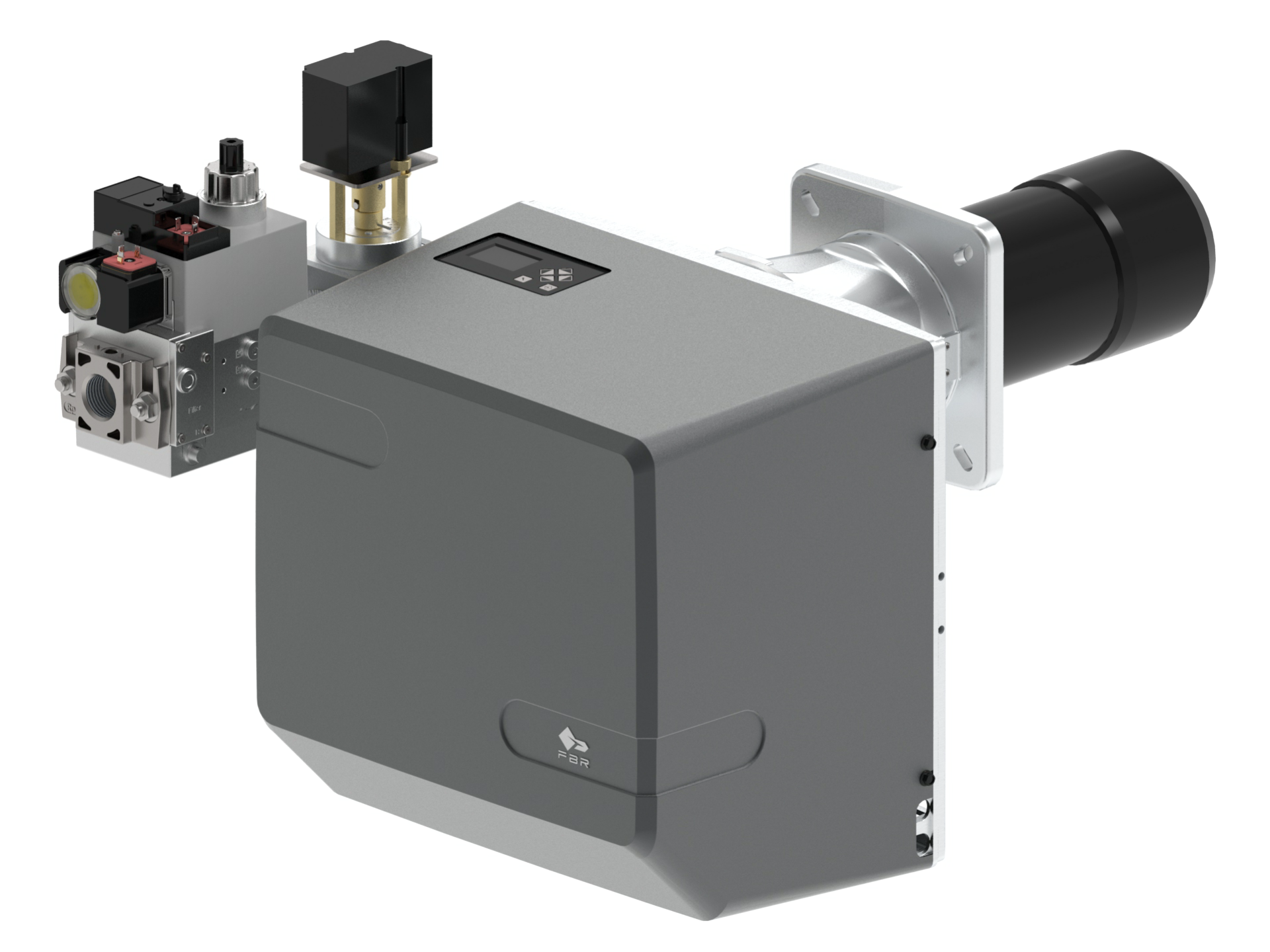
The FBR burner gas X5/MF TL EL VC LPG system represents advanced burner technology combining die-cast aluminum construction with high-pressure fan systems and optional PID modulation capability. This burner architecture serves diverse global applications:
Industry Applications across regions:
- European industrial boilers: Modulating burners achieve 90%+ efficiency, meeting stringent EU emissions directives and energy performance standards
- North American institutional heating: Large commercial facilities integrate modulating burners with BMS (Building Management Systems) for demand-responsive operation
- Asia-Pacific manufacturing: Process heating for chemical production, food manufacturing, and textile operations benefits from precise flame control and fuel efficiency
- LPG-based systems: Regions with limited natural gas infrastructure rely on propane burner variants for reliable thermal generation
Maintenance teams managing combustion systems must understand burner modulation principles. Base burners operate at fixed capacity; modulating systems use optional kits with thermal probes to adjust fuel flow and air supply in response to system temperature demand. This capability reduces energy waste, extends equipment lifespan by operating components at optimal efficiency ranges, and improves thermal comfort in variable-load applications.
Critical maintenance procedures for combustion burners include monthly flame inspection (visual confirmation of stable, blue flame without sooting), quarterly fuel line pressure verification, and annual cleaning of air intake screens. Combustion air blockage represents the most common failure mode; maintenance teams must ensure clear airflow to burner intake areas. In dusty industrial environments, monthly air filter inspection and replacement prevents flame instability and incomplete combustion.
Integrated System Design and Maintenance Strategy
With 35+ years of global equipment distribution experience, 3G Electric recognizes that industrial systems achieve optimal performance when all components function as integrated assemblies. Expansion tanks manage pressure; monitoring systems detect faults; nozzles deliver fluid precisely; and burners provide efficient thermal generation. Failure in any single component cascades through the entire system.
Maintenance teams should adopt integrated maintenance strategies:
Preventive protocol framework:
- Monthly: Visual inspection of all fluid lines, pressure gauges, and alarm indicator lights; confirmation of nozzle spray patterns
- Quarterly: Expansion tank pressure verification with portable inflator; alarm system functional testing; combustion system air intake cleaning
- Semi-annual: Complete pressure system hydrostatic testing; fluid sampling for contamination analysis; nozzle replacement and backup inventory verification
- Annual: Comprehensive system documentation update; efficiency testing of modulating burner controls; replacement of wear items like seals and gaskets
Documentation excellence enables rapid troubleshooting when issues arise. Maintain records of expansion tank precharge pressures, alarm test results, fluid analysis reports, and equipment operating hours. This historical data reveals trending patterns—gradual pressure decline indicates slow bladder degradation; increasing contamination suggests seal wear requiring intervention.
Global maintenance teams benefit from standardized equipment selections that simplify spare parts management. Standardizing on specific nozzle index ratings and burner configurations across facility locations reduces inventory complexity and enables rapid component replacement.
Conclusion
Industry Applications for thermal storage and system monitoring systems demand comprehensive maintenance team expertise spanning mechanical, pressure, safety, and combustion systems. The equipment selections—expansion tank inflators, integrated alarm systems, precision nozzles, and efficient burners—represent investments in reliability, safety, and operational efficiency. By implementing structured preventive maintenance protocols and maintaining accurate technical documentation, global maintenance teams protect expensive industrial infrastructure and ensure consistent, safe system performance across 24/7 operations.