Understanding Controls & Safety Response Time Architecture
Controls & Safety in HVAC burner systems hinges on one critical parameter: response time. This is the interval between when a control signal is sent to a solenoid valve and when gas flow actually stops or starts. For HVAC contractors, understanding this architecture is essential for designing systems that meet both safety codes and operational efficiency standards.
Response time determines how quickly your burner can react to flame loss, pressure anomalies, or manual shutdowns. In residential and commercial HVAC applications, slower response times (typically 300-500ms) provide stability during normal operation, while faster responses (under 200ms) prevent dangerous gas accumulation during emergency shutdowns. The balance between these two characteristics is where proper component selection becomes critical.
3G Electric has distributed industrial burner controls for over 35 years, and we've seen countless field issues stem from mismatched response time specifications. When contractors pair fast-response valves with slow control logic, or vice versa, the system becomes unpredictable. The solenoid valve itself—whether classified as "slow" or "fast"—is only one element. The relay logic, wiring configuration, and pressure differential across the valve all influence actual response behavior.
Slow vs. Fast Solenoid Valves: Application-Specific Selection
The CBM product line distinguishes between two valve families, each serving distinct burner control scenarios:
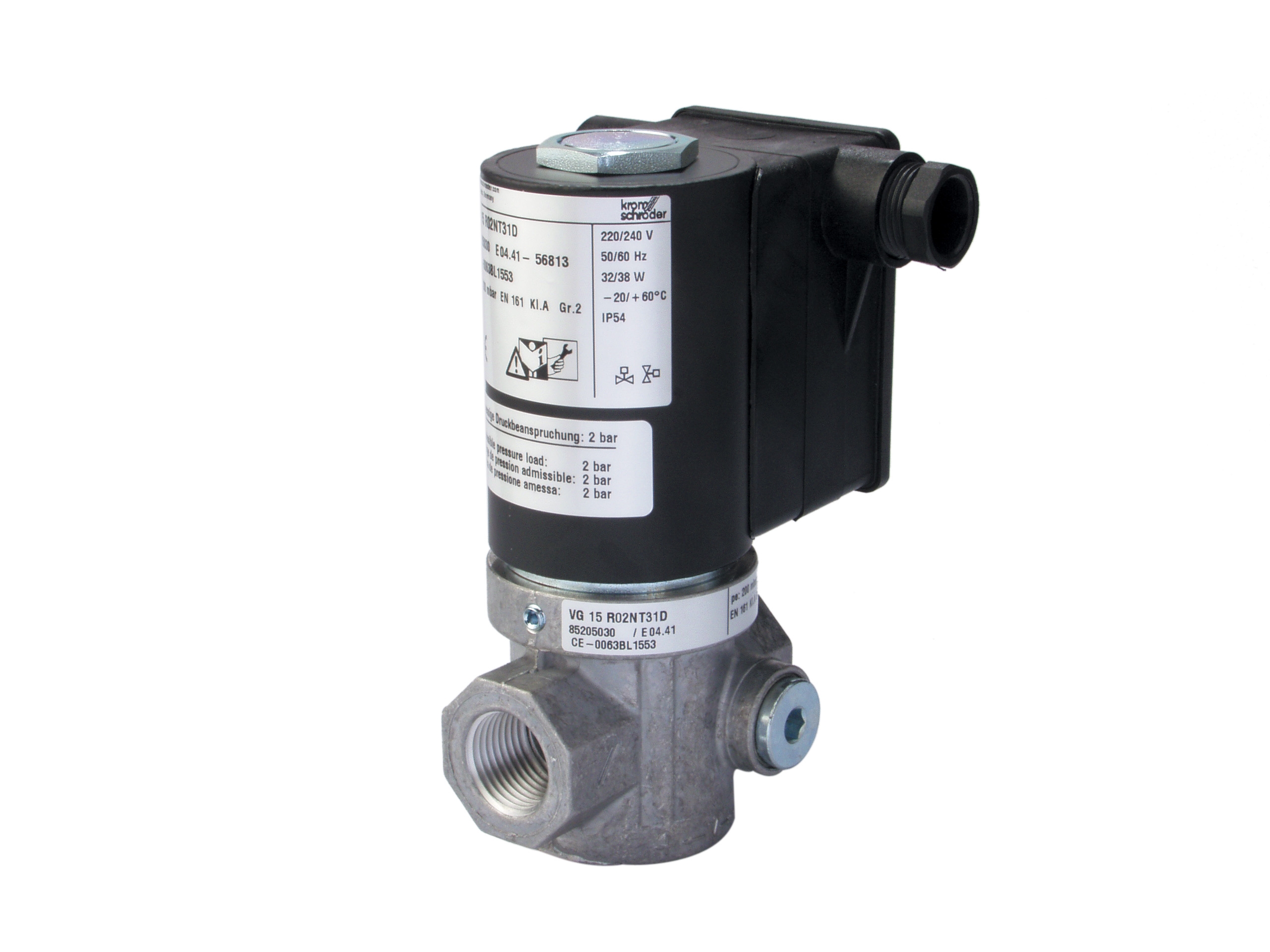
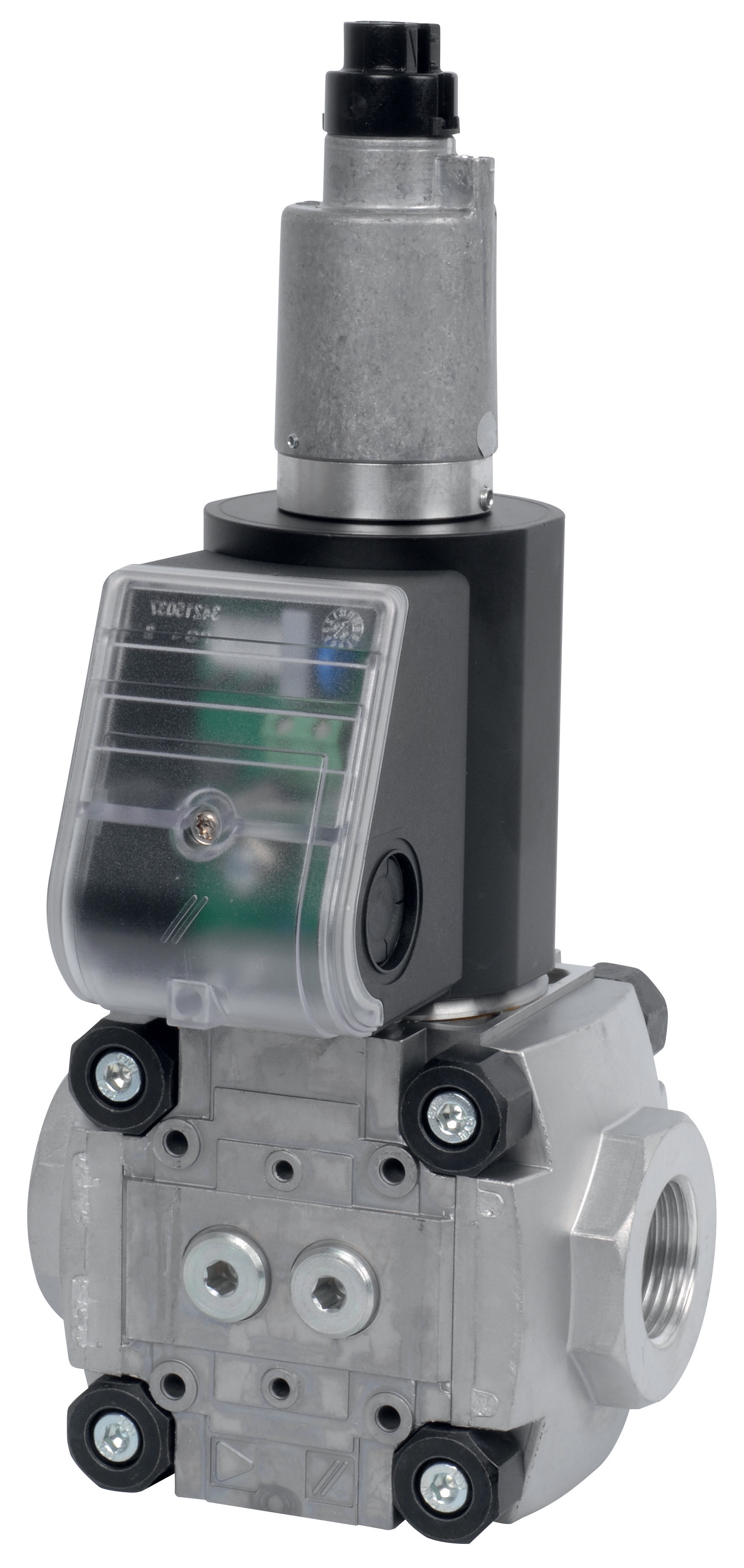
Slow Gas Solenoid Valves like the CBM VAS 340R/LW Slow Gas Solenoid Valve and CBM VAS 125R/LW Slow Gas Solenoid Valve are engineered with larger pilot orifices and softer spools. These valves typically respond in 350-500 milliseconds. They excel in applications where:
- Pilot gas pressure stabilization is more important than emergency shutoff speed
- The burner operates under variable load conditions requiring smooth modulation
- Atmospheric pressure changes or altitude variations affect gas delivery
- Control signal noise or electrical transients might otherwise trigger unwanted closures
The VAS 340R/LW accommodates larger gas volumes (up to 340 cubic meters per hour under specific conditions), making it suitable for multi-burner HVAC installations or systems with downstream regulators. The VAS 125R/LW handles lower volume scenarios in residential or small commercial applications.
Fast Gas Solenoid Valves including the CBM VAS 110R/NW Fast Gas Solenoid Valve and CBM VAS 365R/NW Fast Gas EV respond within 100-200 milliseconds. These are mandatory when:
- Flame safeguard circuits require rapid gas cutoff on flame loss detection
- Pressure relief or safety interlock systems demand immediate valve closure
- The burner operates in industrial HVAC environments with strict safety code compliance (NFPA 85, EN 613)
- System integrators need headroom for relay logic delays and wiring propagation times
The distinction isn't arbitrary—it reflects the internal geometry. Fast valves use smaller pilot ports and stiffer spool mechanisms. They require higher pilot pressure differential but deliver decisive action. The VAS 110R/NW suits compact applications, while the VAS 365R/NW handles larger capacity needs without sacrificing response speed.
Integration with Control Relays and Sequencing Logic
No solenoid valve operates in isolation. The CBM Relay DMG 970-N MOD.03 exemplifies modern relay-based control architecture. This is not a simple on-off switch—it's an intelligent sequencer that manages the timing relationships between multiple safety inputs.
A typical Controls & Safety sequence works like this:
1. Ignition Command Phase: The relay receives a burner start signal from the thermostat or building management system. The relay energizes the main solenoid valve (usually slow-response) to establish pilot gas flow.
2. Pilot Stabilization Window: The relay waits 3-5 seconds for pilot pressure to build and igniter to establish a flame. This is where slow-valve characteristics provide advantage—they don't chatter or oscillate during pressure buildup.
3. Flame Detection Verification: A flame sensor (UV, infrared, or resistive) confirms ignition success. If the flame safeguard circuit detects absence of flame within this window, the relay immediately de-energizes the solenoid, and a fast-response pilot valve cuts gas.
4. Main Valve Transition: Once pilot flame is confirmed, the relay may energize a second solenoid to open the main burner valve. Some systems use one dual-function valve; others employ separate pilot and main solenoids for enhanced safety isolation.
5. Continuous Monitoring and Emergency Shutdown: Throughout operation, the relay continuously monitors flame status, pressure switches, and thermal limits. Any fault triggers immediate valve closure via the fast-response solenoid pathway.
This sequencing is where response time architecture matters intensely. If the relay introduces a 500ms logic delay, and the solenoid adds another 500ms, total shutdown time reaches one second—potentially unsafe in modern codes. Conversely, if you over-specify fast response everywhere, the system becomes sensitive to electrical noise and experiences nuisance shutdowns.
3G Electric recommends this hierarchy: use fast-response solenoids on the safety-critical shutoff path (pilot cutoff, main emergency valve), and reserve slow-response valves for modulation or pilot establishment functions. The DMG 970-N Relay, with its configurable timing modules, allows you to tune the relay logic separately from the valve response, giving contractors precise control.
Practical Commissioning and Field Diagnostics
When you receive a CBM solenoid valve or relay module, commissioning involves four verification steps that most contractors overlook:
Step 1: Bench Test the Solenoid
Apply 24V DC (or the appropriate voltage for your model) and listen for the click. You should hear immediate mechanical response, even without gas pressure applied. No click suggests a coil failure. A delayed or soft click on a "fast" valve indicates mechanical wear or manufacturing defect—return it.
Step 2: Measure Pilot Pressure Differential
Slow valves require approximately 0.3-0.5 bar pilot pressure differential to reliably open. Fast valves often need 0.5-0.8 bar. Use a manometer on the inlet and outlet sides of the solenoid (with pilot pressure applied). If differential is below spec, your regulator upstream is undersized, or the valve is seated incorrectly.
Step 3: Simulate Flame Loss
With the burner operating under pilot flame, interrupt the flame safeguard signal (typically by disconnecting the sensor). The relay should de-energize within 2-3 seconds (depending on your specific code requirement—NFPA typically allows up to 4 seconds). Time this with a stopwatch or oscilloscope. If the burner continues burning or if gas hisses for more than 4 seconds after shutoff, you have a stuck valve or relay contact problem.
Step 4: Pressure Relief Verification
Some installations include a separate safety shutoff solenoid that doubles gas-block security. After main valve closure, apply pressure to both outlets and confirm both valves hold pressure. Leakage indicates worn seals—replace, don't attempt field repair.
These steps take 30 minutes per installation but prevent field callbacks and potential safety incidents. Over 35 years, 3G Electric has seen contractors skip these checks—invariably leading to warranty disputes and liability exposure.
Selecting the Right Valve for Your HVAC Application
The decision tree is straightforward:
Choose Slow-Response (VAS 340R/LW or VAS 125R/LW) if:
- Your HVAC system is primarily load-following (residential, small commercial)
- You need pilot stability in high-altitude or variable-pressure environments
- Your control relay already provides fast electronic shutdown logic
- You want to minimize nuisance shutdowns from electrical noise
- Your application falls under industrial HVAC (boiler rooms, large commercial)
- Your safety interlock or pressure relief system demands rapid gas cutoff
- You're retrofitting an older burner with modern safety codes (NFPA 85 certified)
- Your relay logic is simple or legacy, requiring the valve to carry safety timing responsibility
Capacity matters equally. The VAS 340R/LW handles the largest volume ranges and suits multi-stage burner systems where you might need both pilot and main valve control from one unit. The VAS 125R/LW is the residential standard. The fast-response variants (110R and 365R) offer the same capacity range but with emergency-shutoff focus.
Pair your solenoid selection with the relay logic. The DMG 970-N MOD.03 is configurable for multiple sequencing modes. If your installation uses this relay, you gain flexibility to mix slow main valves with fast pilot shutoff solenoids, optimizing both safety and operational smoothness.
Maintenance and Long-Term Reliability
Solenoid valves age predictably. After 5-7 years of continuous cycling, coil insulation degrades and mechanical spools develop micro-wear. In HVAC environments with dust or vibration, this timeline shortens. 3G Electric recommends inspection at 3-year intervals for commercial installations, 5-year intervals for residential.
Common failure modes:
- Coil burnout: Usually manifests as the valve not responding to energization. Caused by voltage spikes, water ingress, or ambient overheating. Prevention: use proper fusing and surge protection on all 24V circuits.
- Spool stiction: The internal spool becomes sticky, delaying response. Caused by gas contamination or mineral buildup in the pilot passage. Prevention: ensure gas filtering upstream of the valve.
- Valve seal degradation: Pilot gas leaks externally or internally. Inevitable over time; plan replacement rather than repair.
When you order a replacement solenoid from 3G Electric, specify the original model number exactly—CBM valves come in numerous variants, and using the wrong replacement can break your safety sequence. Our team can cross-reference legacy part numbers to current equivalents, ensuring drop-in compatibility.
Proper Controls & Safety design in HVAC systems balances response speed, component selection, and relay logic into a cohesive architecture. Understanding solenoid response characteristics—and matching them to your application—separates reliable installations from perpetual service calls.