Understanding High-Pressure Fluid System Architecture and Service Requirements
High-pressure fluid systems demand rigorous Maintenance & Service protocols because operational failures can result in production downtime, safety hazards, and costly equipment damage. Whether you operate industrial pumps, nozzle assemblies, or pressure regulation equipment, understanding the interdependencies between components is essential.
A typical high-pressure system consists of a prime mover (motor or engine), a positive displacement or centrifugal pump, pressure regulation hardware, distribution manifolds, spray nozzles or delivery points, and return filtration. Each component generates wear at different rates depending on fluid type, operating pressure, temperature cycles, and duty cycle intensity.
In Singapore's tropical industrial environment, thermal stress, humidity-accelerated corrosion, and mineral-laden water sources create accelerated component degradation. 3G Electric's 35+ years of equipment distribution across Southeast Asia has demonstrated that facilities implementing structured Maintenance & Service programs reduce unplanned downtime by 40-60% while extending asset lifespan by 25-35%.
The foundation of effective Maintenance & Service begins with documenting baseline performance metrics: flow rate (L/min), operating pressure (bar), inlet and outlet temperatures, vibration signatures, and acoustic profiles. These baseline values become your diagnostic reference points for identifying degradation patterns.
Systematic Component Inspection and Preventive Maintenance Protocols
Pump Inspection and Performance Verification
Centrifugal and positive displacement pumps require monthly performance baseline documentation and quarterly detailed inspections. Begin by measuring actual flow rate output using calibrated flow meters—modern systems should achieve 95-98% of nameplate specifications under rated conditions.
For units like the Pratissoli MW40 industrial pump (211 L/min nominal, 210 bar rated pressure), document actual delivery rates under controlled load conditions. Declining flow rates indicate internal wear patterns: impeller erosion in centrifugal units, seal degradation permitting internal bypass leakage, or bearing wear affecting rotor positioning.
Pressure measurement requires multiple sampling points:
- Pump discharge pressure: Compare against system demand curve
- Return line backpressure: Filtration restriction creates backpressure; exceeding 3.5 bar indicates filter element saturation
- Component inlet pressures: Identifies restriction in suction lines or filter blockage
Inspect pump casings for external corrosion, particularly at drain plugs and pressure ports. Saltwater environments in Singapore coastal facilities accelerate corrosion—apply protective coatings to exposed ferrous surfaces every 12-18 months.
Vibrational monitoring provides early warning of bearing degradation. Establish baseline vibration signatures using handheld vibration meters (measure at motor-pump coupling, pump case mounting points). Increases exceeding 1.5x baseline indicate bearing wear requiring bearing replacement within 4-8 weeks depending on failure acceleration rate.
Pressure Regulation System Maintenance
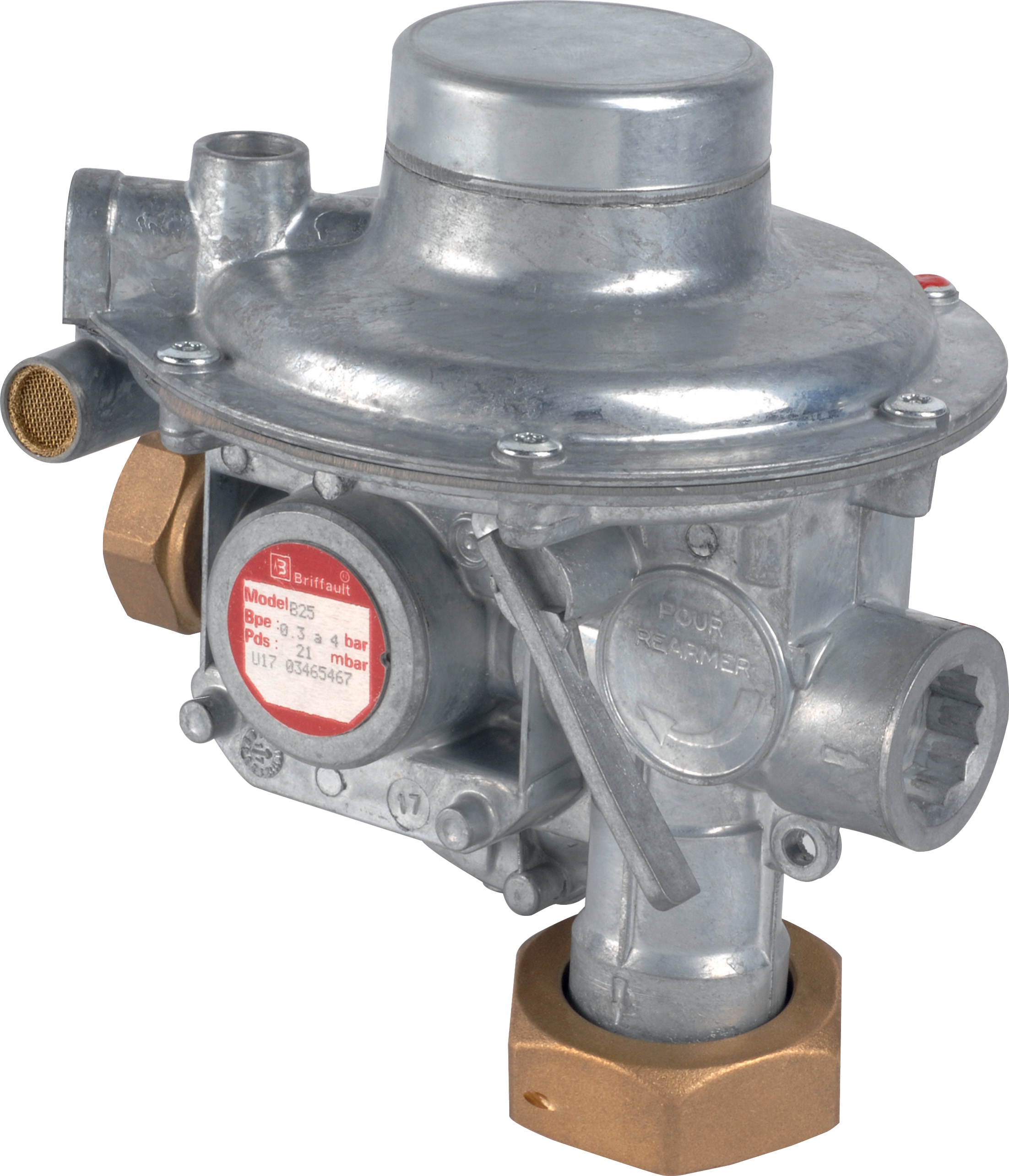
Pressure regulators like the Francel B25/37mb pressure regulator with safety relief require quarterly functional testing and annual recalibration. Test protocol:
1. Cracking pressure verification: Apply pressure slowly until the relief valve vents—should occur within ±1 bar of design setpoint (37 mbar outlet pressure for this unit)
2. Flow capacity confirmation: At full design flow, pressure should remain stable within ±2% of setpoint
3. Vent blockage inspection: Clear the 10 mm vent port of debris; blockage prevents proper relief function
4. Pilot line integrity: Examine pilot supply tubing for leaks, kinks, or contamination
Remove regulator cartridges annually for visual inspection. Replace if: seating surfaces show scoring, poppet seals display compression set (permanent deformation), or internal passages exhibit debris accumulation. Scored seating surfaces cannot achieve full shutoff—pressure bleed-down occurs internally, reducing system efficiency and causing heat generation.
Spray Nozzle and Delivery Component Service
Spray nozzles accumulate mineral deposits and biological growth in tropical climates, degrading spray pattern consistency. Quarterly inspection includes:
For units like the Euspray flat jet nozzle (1/4" M BSPT, 25° angle, index 30), remove and soak in distilled water with mild detergent for 30 minutes. Use soft brass brushes to gently clean the orifice region—never use steel wool or hard implements. Ultrasonic cleaning (40 kHz frequency, 15-minute cycles) safely removes deposits without orifice damage.
Test cleaned nozzles by flowing clean water at design pressure through a transparent test manifold. Compare spray pattern against photographic standards maintained in your Maintenance & Service documentation. Non-uniform patterns indicate internal erosion or partial blockage—replacement is required.
Inspect connection ports (1/4" BSPT threads) for corrosion or thread damage. Apply PTFE thread sealant to all disconnected nozzles before reinstallation to prevent micro-leakage at high pressures.
Fluid Analysis and Filtration System Management
Fluid condition directly determines component lifespan. Implement ISO 4406 fluid cleanliness monitoring using particle counters—industrial systems typically target ISO 18/16/13 or better (18 microns, 16 half-micron, 13 submicron particle counts).
Establish a fluid sampling schedule:
- Monthly: Single sample from main return line; measure particle count, viscosity, water content, acid number
- Quarterly: Additional samples from component inlet lines; compare cleanliness versus main return—significant differences indicate localized contamination sources
- After maintenance: Always sample 24 hours post-maintenance to verify system flush effectiveness
Tropical humidity in Singapore means water ingress represents your primary contamination risk. Systems operating in 80%+ humidity environments can accumulate 200-400 ppm water monthly if breather ports lack proper desiccant cartridges. Water contamination above 500 ppm:
- Accelerates corrosion at ferrous component surfaces
- Promotes bacterial growth causing biofilm and filter blockage
- Reduces lubricant film strength, increasing bearing and seal wear
Replace fluid when particle count exceeds target specifications or acid number increases beyond 1.0 mg KOH/g. Complete fluid drains require flushing systems with compatible new fluid circulated at full flow through all components for 6-8 hours minimum.
For positive displacement pumps like the Pratissoli KF30 (106 L/min, 200 bar, 40 kW), high-viscosity fluids (>100 cSt @ 40°C) require extended flushing times. Low-viscosity flushing fluid (ISO VG 32) circulates more effectively through internal clearances, dislodging previous fluid residue and contamination.
Seal and Bearing Management for System Reliability
Mechanical seals on pump shafts require monthly inspection for external weeping or accumulation of dry salts (indicating evaporative leakage). Minor weeping (<5 drops per hour) during operation is acceptable; rapid dripping indicates seal degradation requiring seal cartridge replacement within 2 weeks.
Seal replacement procedure:
1. Isolate system, depressurize completely, and drain fluid
2. Disconnect pump from motor/prime mover
3. Remove seal gland bolts in diagonal pattern to prevent cocking
4. Extract old seal assembly and clean internal cavity with lint-free cloth
5. Install new seal cartridge with correct orientation (spring direction matters—verify against manufacturer documentation)
6. Apply thin film of system fluid to seal faces before reassembly
7. Reassemble with gradual bolt torque (diagonal pattern, incremental tightening)
Bearing temperature monitoring provides advance warning of degradation. Establish baseline bearing temperatures at full load operation (typically 55-65°C for well-maintained systems). Temperature increases exceeding 10°C above baseline indicate:
- Inadequate lubrication (verify bearing grease volume and type)
- Bearing preload degradation (internal clearances increasing)
- Misalignment between motor and pump shafts
Misalignment represents 30-40% of premature bearing failures in Singapore industrial facilities. Use dial indicators at motor-pump coupling to verify <0.1 mm radial runout and <0.05 mm axial runout. Realign using shim adjustment under motor feet (modify in 0.05 mm increments).
Seasonal Maintenance Considerations for Singapore Operations
Tropical monsoon cycles create distinct Maintenance & Service requirements. During heavy rain seasons (November-January, June-September), increase breather filter inspection frequency to weekly intervals. Desiccant cartridges saturate rapidly in high-humidity conditions.
Salt spray environments (within 5 km of coastline) require protective coating reapplication every 12 months rather than the standard 18-month interval. Use industrial epoxy coatings rated for marine corrosion service (ISO 12944 C5-M specification minimum).
Electrical component inspection becomes critical during monsoon periods. Verify motor terminal box gasket integrity, cable gland sealing compounds, and control cabinet ventilation filter saturation. Moisture ingress into electrical systems causes 15-25% of industrial equipment failures in coastal Singapore regions.
Documentation is your Maintenance & Service foundation. Maintain digital records of:
- Pressure and flow baseline measurements with timestamps
- Fluid analysis reports with particle count trends
- Component replacement parts and dates
- Vibration baseline signatures
- Temperature profiles under varying load conditions
- Seal inspection intervals and replacement history
These records enable predictive maintenance—identifying degradation trends before catastrophic failure occurs. Facilities that invest in systematic documentation typically achieve 35-40% reduction in emergency service calls and extend equipment lifespan by 3-5 years beyond standard recommendations.
3G Electric's technical support team brings 35+ years of experience diagnosing complex Maintenance & Service issues across Singapore's diverse industrial sectors. When baseline parameters deviate significantly from documented standards, engage specialist diagnostics to prevent equipment failure during critical production windows.