Understanding Gas Valves & Regulation in Industrial Settings
Gas Valves & Regulation systems form the critical backbone of safe, efficient industrial operations across Singapore's manufacturing, petrochemical, and facility management sectors. Unlike simple on-off valves, modern pressure regulators must maintain precise setpoints under fluctuating inlet pressures, temperature swings, and varying load conditions—a challenge that intensifies in Singapore's humid tropical climate.
With over 35 years of experience distributing industrial equipment across Southeast Asia, 3G Electric has observed that most gas valve failures don't happen suddenly. Instead, they develop gradually through calibration drift, seal degradation, and response lag that plant managers often overlook until safety interlocks trigger or production falters. This guide focuses on the practical diagnostic and corrective procedures you need to maintain optimal regulation without waiting for catastrophic failure.
Section 1: Diagnosing Calibration Drift and Setpoint Creep
Root Causes of Pressure Setpoint Drift
Calibration drift occurs when a regulator's output pressure slowly deviates from its factory setpoint despite no deliberate adjustment. Common causes include:
- Spring relaxation: Extended service under maximum pressure causes the diaphragm spring to weaken, reducing cracking pressure by 5–15% over 12–24 months
- Seat erosion and sludge accumulation: Particulate matter in gas lines gradually damages the valve seat, preventing clean closure and allowing downstream pressure creep
- Temperature cycling: Singapore's daily temperature fluctuations (24–32°C) combined with humid salt-air environments accelerate internal corrosion on stainless steel seats
- Moisture and condensate buildup: High humidity ingress causes internal rust formation on carbon steel internals, increasing friction and reducing sensitivity
Diagnostic Procedure: The Three-Point Pressure Test
Step 1: Establish Baseline Inlet Pressure
At the regulator inlet, measure static inlet pressure with a calibrated analog or digital pressure gauge rated for the gas type in use (natural gas, propane, nitrogen, compressed air, etc.). Record this reading with ambient temperature and humidity. For natural gas systems in Singapore, typical inlet pressures range from 20–100 mbar. Wait 5 minutes for gauge stabilization.
Step 2: Measure No-Load Output Pressure
With all downstream equipment isolated (close branch isolation valves), measure the regulator outlet pressure at the test port or gauge connection point closest to the regulator body. This is your "cracking pressure"—the pressure at which the regulator begins to modulate. If outlet pressure drops more than 10 mbar when inlet pressure is increased by 20 mbar, you likely have significant seat wear.
Step 3: Load Response Test Under Operating Conditions
With downstream loads active (furnaces running, burners firing, etc.), remeasure outlet pressure at the same test point. A healthy regulator maintains setpoint ±5 mbar under normal flow conditions. If load causes outlet pressure to drop >10 mbar (called "droop"), the diaphragm or pilot circuit requires cleaning or replacement.
Using Reference Standards for Accuracy
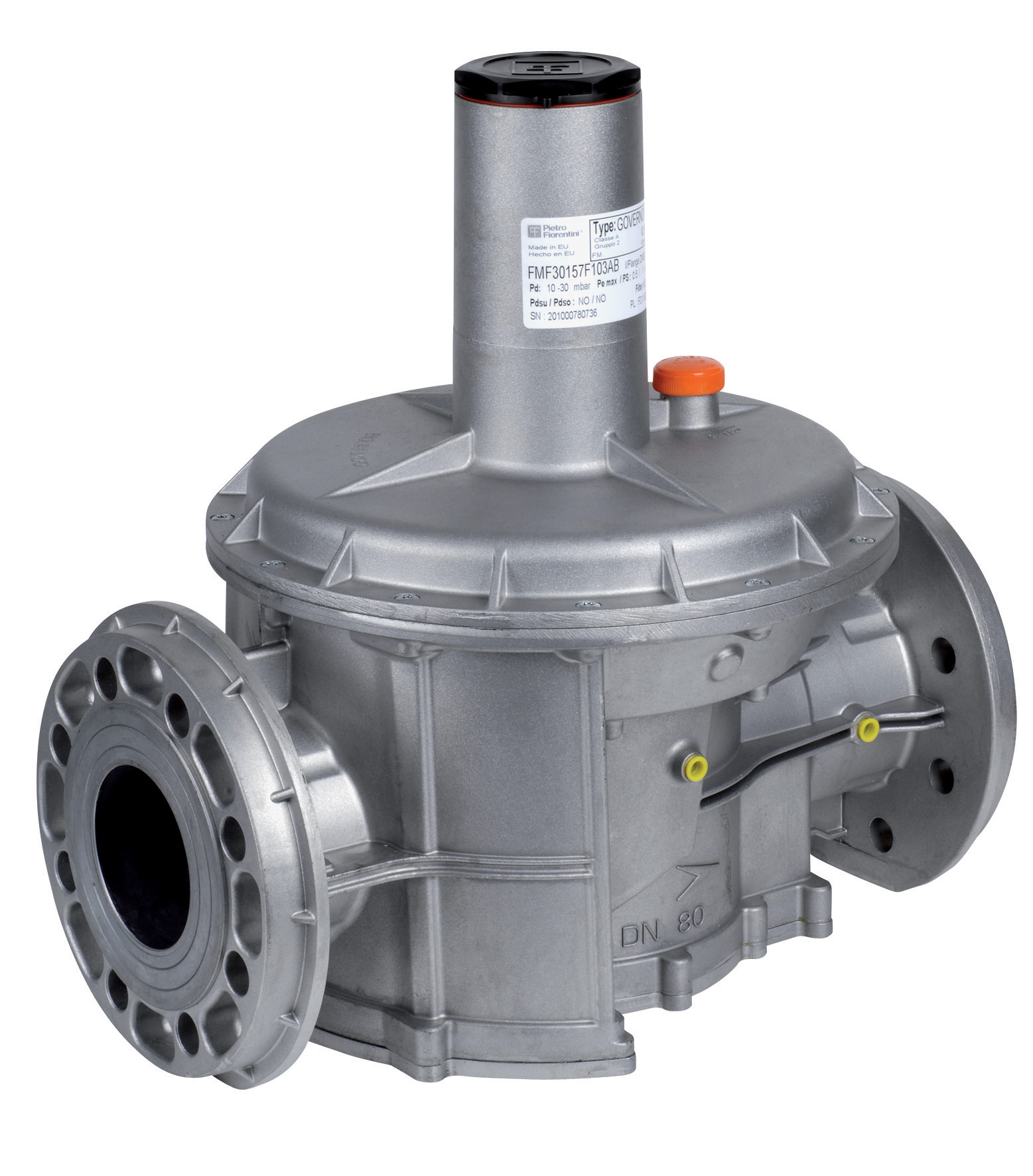
For critical applications (medical gas, high-precision burner control), calibrate your test gauges against a certified reference standard before field testing. The FAG Pressure regulator with flanges DN40 500 Mbar PS 5/300 Mbar is calibrated to UNI EN 88 CLASSE A specification, making it an excellent bench-check reference. If your field measurements diverge >2% from the reference, your test gauge requires calibration service.
Section 2: Detecting and Correcting Response Lag
What Causes Sluggish Regulator Response?
Response lag—the delay between a demand change and regulator output adjustment—creates pressure spikes that trigger relief valves and stress downstream equipment. Three mechanisms drive this problem:
Pilot Port Blockage: The small orifices that sense pilot pressure become fouled with:
- Scale deposits from hard water condensation
- Rust particles from corroded inlet strainers
- Lubricant breakdown products (if using oil-lubricated compressors)
A 0.5 mm blockage in a 1.5 mm pilot orifice reduces response speed by 40%.
Diaphragm Stiffness: Repeated pressure cycling hardens elastomer diaphragms, especially in tropical conditions where UV exposure and ozone accelerate aging. The diaphragm loses compliance, requiring higher pilot pressure changes to produce the same outlet adjustment.
Dirt Trap Saturation: Most regulators include a dirt pocket below the main valve seat where particles settle. When this fills, inlet turbulence increases and pilot sensing becomes erratic.
Field Test for Response Lag
1. Baseline measurement: With the system at steady state, record outlet pressure and stabilization time (should be <2 seconds)
2. Sudden demand increase: Rapidly open a downstream load valve (increase gas flow by 30–50%); measure how long outlet pressure takes to recover to setpoint
3. Sudden demand decrease: Close the load valve; measure pressure spike overshoot and recovery time
4. Acceptance criteria: Recovery to within 5% of setpoint should occur in <3 seconds for industrial regulators; <1 second for precision control applications
If response time exceeds these limits, proceed to cleaning or component replacement.
Practical Correction Procedures
For Pilot Port Blockage (Low-Cost Fix):
If your regulator design permits field pilot port access:
- Isolate the regulator and depressurize all sections
- Using a fine flush procedure, carefully reverse-flow clean nitrogen through the pilot port at 5–10 bar for 15–30 seconds
- Repeat 3–4 times; monitor outlet for pressure ripple (indicates clearing)
- Do not use compressed air for flushing; use dry nitrogen or argon to prevent moisture introduction
When lag persists after flushing:
1. Consult the regulator's maintenance manual for internal component access
2. Order replacement diaphragm and seal kits matched to your specific regulator model
3. Perform the replacement in a clean, dry environment (humidity <40% ideal)
4. Re-test pressure response before returning to service
3G Electric stocks OEM replacement kits for Pratissoli regulators and major European brands, reducing lead times typical in Singapore's industrial supply chain.
Section 3: Pressure Relief Interaction and Safety Margin Verification
Why Regulator and Relief Valve Coordination Matters
A gas regulator does not protect against overpressure—that is the job of a pressure relief valve (PRV). However, if your regulator's response lag allows pressure to rise faster than your relief valve can react, you risk:
- Brief high-pressure spikes that exceed component ratings
- Water-hammer damage in gas piping
- Nuisance relief valve chatter and seal wear
In Singapore's industrial environment, where equipment spans decades of vintage and maintenance varies widely, this interaction is a hidden failure driver.
Coordination Check Procedure
1. Document setpoints: Confirm your regulator outlet setpoint and relief valve cracking pressure from system documentation
2. Minimum margin rule: Relief valve cracking pressure must be ≥110% of regulator setpoint. Example: If regulator outlet is set to 50 mbar, relief must crack at ≥55 mbar
3. Test under rapid load change: Open a large downstream load (furnace ignition, high-flow demand) and observe whether relief valve lifts. If it does, your regulator's response lag exceeds acceptable limits
4. Measure pilot quality: If relief chatter occurs (rapid on-off cycling), suspect dirty pilot gas introducing pressure instability
Improving System Stability
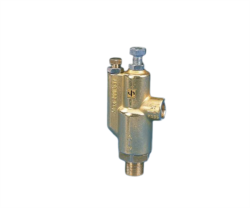
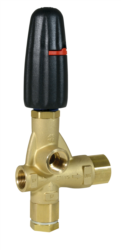
- Install pilot-operated regulators for systems with large, rapid load swings. The Pratissoli Automatic Press.Reg. H288 delivers 20 L/min flow at 280 bar maximum pressure with proportional response ideally suited to industrial pump systems; this technology stabilizes pilot-stage pressure and reduces main-stage response lag by 60–70%
- Add a small accumulator (0.5–2 L capacity) downstream of the regulator to absorb sudden demand surges and smooth pressure ripple
- Upgrade inlet filtration to a 10 μm absolute micron rating; this prevents pilot port blockage and extends regulator service life from 3–5 years to 7–10 years in humid environments
Section 4: Preventive Maintenance and Tropical Climate Resilience
Humidity and Corrosion Risk in Singapore
Singapore's relative humidity exceeds 80% for 300+ days per year, and coastal areas experience salt-air exposure. Standard carbon steel internal components begin corrosion within 6–12 months if not protected. Stainless steel bodies provide only surface protection; internals remain vulnerable.
Protective measures:
- Specify stainless steel or nickel-plated internals for all new regulator purchases
- Install moisture traps with automatic drain upstream of regulators; check and empty weekly in high-humidity seasons
- Use dry nitrogen purging (not compressed air) when storing isolated regulators for >2 weeks
- Store spare regulator components in sealed, desiccant-lined containers
Scheduled Maintenance Intervals
Based on 35 years of field experience across Southeast Asian plants, 3G Electric recommends:
| Maintenance Task | Frequency | Notes |
|---|---|---|
| Visual external inspection | Monthly | Check for corrosion, seeping, debris accumulation |
| Pressure response test | Quarterly | Use Three-Point Pressure Test method (Section 1) |
| Pilot port flushing | Biannually | Essential in high-particulate environments (metalworking, concrete cutting) |
| Diaphragm and seal inspection | Annually | Open regulator body, inspect for hardening, cracks, discoloration |
| Full recalibration bench test | Every 18–24 months | Send to certified lab or replace unit if out of spec |
| Relief valve coordination audit | Annually | Verify margin between regulator setpoint and relief cracking |
Spare Parts Strategy
Maintain on-site backup inventory of:
- One complete spare regulator matched to critical process (furnace, autoclave, main gas line)
- Diaphragm and seal kits for your three most common regulator models
- Replacement pilot orifice assemblies (if applicable to your design)
- Inlet strainer cartridges rated to your gas type
3G Electric's Singapore facility stocks OEM parts for Pratissoli regulators and European brands used across the region's industrial base. Lead times for emergency orders are typically 24–48 hours for common SKUs.
Integration with High-Pressure Systems
For facilities operating high-pressure industrial equipment, coordination between gas regulation and pump systems is critical. The Pratissoli PUMP SRS65 at 1800 rpm, 400V-AC operates at 170 bar maximum pressure; if your gas regulator feeds this pump's pilot system, ensure the regulator outlet is cleaned to 5 μm absolute and delivered at stable setpoint to prevent pump starvation and cavitation. Similar logic applies to high-pressure cleaning systems using Pratissoli High Pressure Sewer Cleaning Hoses ZT06B1000353 and Pratissoli Pilotflex 120 ZT03A0200152—these systems demand consistent, clean pressure regulation to achieve rated flow and pressure without seal degradation.
Conclusion: Building Regulator Resilience in Singapore's Industrial Environment
Gas Valves & Regulation failures rarely announce themselves—they creep in through calibration drift, response lag, and environmental degradation. By adopting the three diagnostic procedures outlined in this guide (Three-Point Pressure Test, Response Lag Field Test, Relief Valve Coordination Check), plant managers can detect and correct these problems before they trigger safety shutdowns or damage downstream equipment.
Singapore's aggressive industrial climate demands proactive maintenance. Schedule your quarterly pressure response tests now, upgrade to stainless steel internal components on your next regulator replacement, and maintain a backup unit on site. This investment in preventive discipline will reduce emergency downtime, extend equipment service life, and protect your team from safety risks.
3G Electric's 35+ years distributing industrial equipment across Southeast Asia have taught us that reliable regulation is not a luxury—it is the foundation of safe, profitable operations. Contact our Singapore office for regulator selection guidance, pressure test equipment rental, or spare parts fulfillment.