Understanding Equipment Reliability as a Business Imperative
Industry Applications in Singapore's manufacturing and processing sectors extend far beyond simple equipment selection—they represent strategic decisions that influence production uptime, maintenance costs, and competitive positioning. With over 35 years of experience as a global industrial equipment distributor, 3G Electric has observed that equipment reliability challenges consistently translate to operational disruptions and unexpected capital expenditure.
For industrial professionals managing operations in Singapore's demanding manufacturing environment, understanding how to select and deploy equipment that delivers consistent performance is essential. Whether you oversee food processing lines, automotive component manufacturing, water treatment facilities, or precision coating operations, the reliability of your fluid handling and pressure control systems directly impacts your ability to meet customer commitments and maintain profit margins.
The challenge facing most procurement teams is not simply finding equipment that works—it is finding equipment that continues to work reliably under the specific conditions your facility operates. This requires moving beyond generic specifications to understand real-world performance requirements, integration points, and maintenance realities.
Pump Performance and Selection for Critical Applications
High-pressure pumping systems form the backbone of numerous industrial processes across Singapore's manufacturing base. From metalworking fluid delivery in precision machining operations to hydraulic power in construction equipment and high-pressure cleaning in food processing facilities, pump selection directly affects operational reliability.
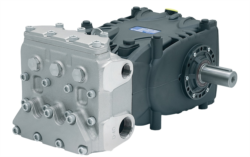
The Pratissoli KF30 represents a practical example of how Italian engineering principles applied to modern manufacturing requirements deliver consistent performance. With 106 L/min flow capacity and 200 bar pressure rating, this 40 kW industrial pump addresses mid-range applications requiring sustained reliable operation. Industrial professionals managing coating lines, surface preparation systems, or moderate-pressure hydraulic applications find that properly specified equipment at this performance tier eliminates the over-specification that drives unnecessary costs while providing adequate safety margins.
For operations requiring higher performance envelopes, the Pratissoli MW40 delivers 211 L/min flow at 210 bar pressure with 85 kW power input. This capability addresses industries including heavy-duty cleaning operations, large-scale hydraulic systems, and demanding fluid transfer applications. Singapore's marine maintenance facilities, large-scale food processing operations, and automotive component manufacturers increasingly rely on equipment at this performance level to handle production volumes that justify the capital investment.
Smaller operations and integrated systems benefit from compact solutions like the Interpump PUMP E1D1808 L, which delivers 8 L/min at 180 bar in a 5 kg package. This equipment serves lubrication systems, precision cooling fluid delivery, and auxiliary hydraulic circuits where space constraints and lower flow requirements align with compact engineering.
The practical lesson for procurement teams: pump selection must balance three competing requirements—sufficient capacity to handle peak demand, pressure rating that provides safety margin above normal operating conditions, and physical form factor that integrates within available space constraints. Under-specified equipment creates bottlenecks and reliability risks. Over-specified equipment wastes capital and operational efficiency.
Precision Control in Pressure Regulation and Safety
Pressure regulation and safety relief represent critical control points that are frequently overlooked in operational planning, yet failures in these areas generate disproportionate downtime and risk exposure. Gas delivery systems, hydraulic circuits, and pneumatic power applications all require reliable pressure control to function safely and efficiently.
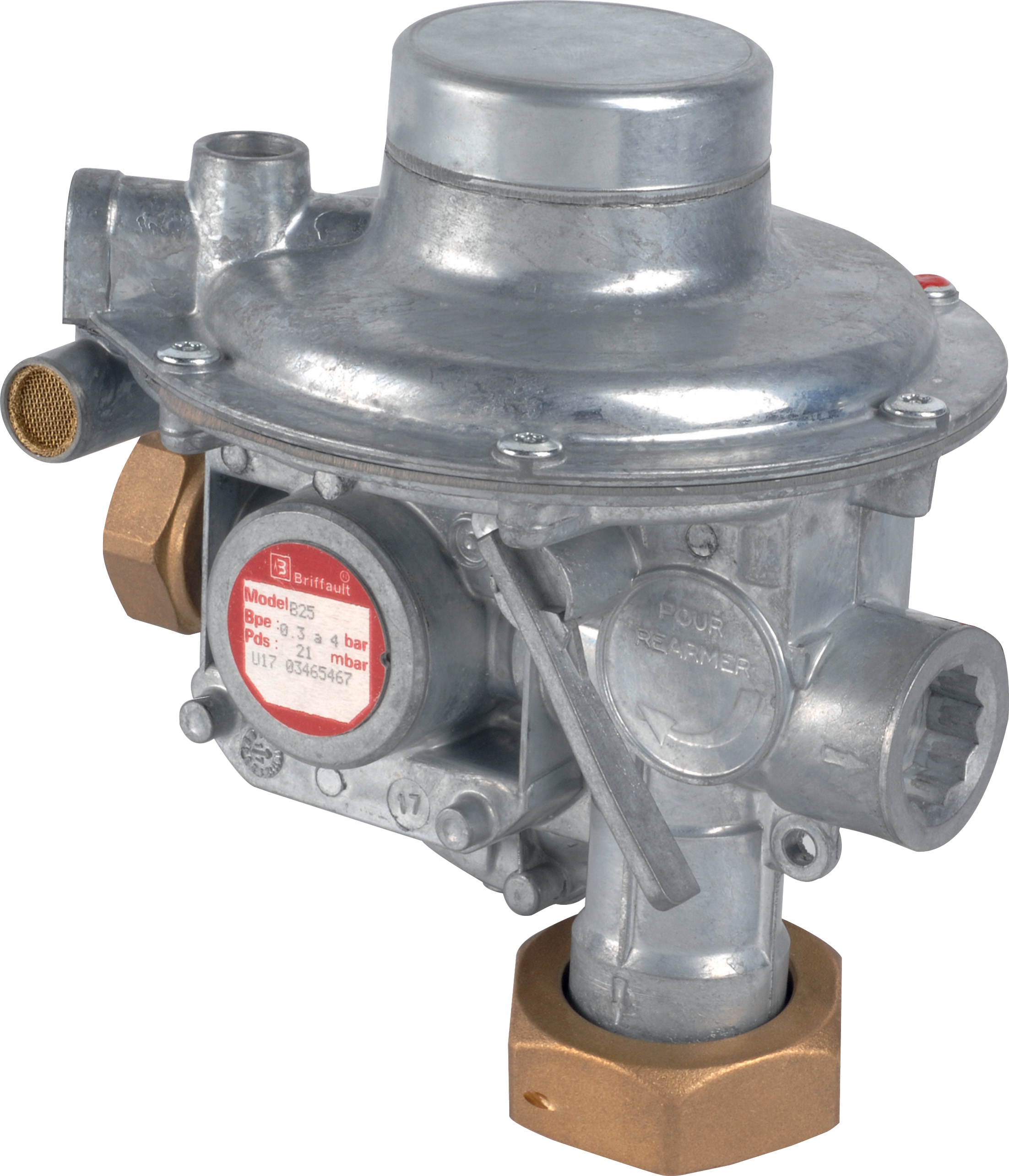
The Francel B25/37mb pressure regulator with integrated safety relief exemplifies how compact precision control equipment addresses real laboratory and industrial gas distribution requirements. Delivering 37 mbar outlet pressure with integrated safety relief through a 10 mm vent, this equipment protects downstream systems from overpressure conditions while maintaining stable operating pressure. For medical gas delivery in healthcare facilities, gas chromatography in analytical laboratories, or industrial gas applications in semiconductor manufacturing, this level of precision control prevents both equipment damage and safety incidents.
Industrial professionals managing pressure-sensitive applications understand that pressure regulation is not simply a binary on/off function. Fluctuations in inlet pressure, temperature variations, flow demand changes, and system transients all create challenges that proper regulation must address. Equipment that maintains pressure stability within narrow bands reduces component stress, extends system service life, and improves overall process reliability.
The integration of safety relief within pressure regulation equipment simplifies system design, reduces failure points, and ensures that safety functions remain coordinated with normal operating modes. This integrated approach represents decades of engineering refinement directed toward addressing real operational needs.
Spray System Precision and Application Reliability
Spray nozzle selection directly impacts surface preparation quality, coating uniformity, cleaning effectiveness, and operational consistency across numerous Singapore industries. While spray nozzles represent relatively small components in overall system architecture, their performance characteristics fundamentally determine whether downstream processes achieve target specifications.
The Euspray flat jet nozzle HP 1/4" M BSPT with 25° spray angle delivers targeted spray patterns for industrial cleaning and surface preparation applications. The 25° spray angle, index 30 design, and 1/4" M BSPT connection provide practical compatibility with standard fluid delivery systems while delivering consistent spray geometry. For applications ranging from paint booth preparation and pre-wash stages in automotive component manufacturing to cleaning operations in food processing facilities, precision nozzle selection ensures repeatable results.
Industrial professionals frequently encounter situations where spray system performance degrades over time due to nozzle wear, deposits, or misalignment. Understanding that nozzle performance directly impacts downstream process quality encourages systematic approaches to spray system maintenance and component replacement before performance degradation creates quality failures.
Spray pattern consistency also interacts with pump performance characteristics. A high-flow pump delivering inconsistent pressure creates variable spray patterns that compound quality challenges. This underscores why pump selection, pressure regulation, and spray nozzle selection must be evaluated as an integrated system rather than independent component decisions.
Practical Implementation and Operational Integration
Successful Industry Applications in Singapore manufacturing require moving from component-level thinking to system-level optimization. This means evaluating how pressure regulators integrate with pump discharge characteristics, how spray nozzles perform under actual operating pressures and flow conditions, and how integrated designs reduce failure points and maintenance burden.
Procurement teams managing multiple facilities, production lines, or system configurations benefit from standardizing equipment selections where application requirements permit. Standardization reduces training requirements, simplifies spare parts inventory management, and builds operational expertise with specific equipment characteristics. A procurement strategy that standardizes on Pratissoli pumps across similar applications, for example, enables maintenance teams to develop deep troubleshooting expertise and streamlines repair procedures.
For Singapore operations competing in regional and global markets, equipment reliability directly influences delivery performance and customer satisfaction. Extended equipment downtime cascades through production schedules, delays customer shipments, and erodes competitive positioning. This reality justifies investing in proper equipment selection, preventive maintenance programs, and replacement strategies that eliminate aging equipment before failure creates crisis conditions.
3G Electric's experience distributing industrial equipment globally since 1990 has reinforced a consistent pattern: facilities that treat equipment selection as a strategic procurement decision rather than a cost minimization exercise consistently outperform competitors on reliability metrics, maintenance cost management, and overall operational efficiency. This applies equally to large multinational operations and mid-sized Singapore manufacturers competing in specialized market niches.
The transition toward predictive and preventive maintenance approaches further emphasizes the importance of selecting equipment with documented performance characteristics and proven reliability track records. Equipment from established manufacturers like Pratissoli, Francel, and Interpump provides the technical documentation and performance history that modern maintenance approaches require.
Conclusion: Strategic Perspectives on Equipment Selection
Industry Applications in Singapore's industrial sectors fundamentally come down to selecting equipment that reliably delivers specified performance under the actual operating conditions your facility requires. This requires moving beyond purchasing decisions driven by unit cost to procurement strategies that evaluate total cost of ownership, integration complexity, maintenance requirements, and reliability characteristics.
The equipment solutions referenced throughout this guide—from the compact Interpump PUMP E1D1808 L serving auxiliary systems to the high-capacity Pratissoli MW40 driving major production processes—represent practical solutions addressing different operational requirements. Effective procurement means matching equipment capabilities to application requirements with appropriate safety margins, integration pathways, and maintenance accessibility.
For industrial professionals in Singapore managing complex operations, competing in demanding markets, and responsible for operational performance, equipment reliability decisions merit the same strategic attention as production planning, quality management, and customer relationship management. This perspective transforms equipment selection from a routine procurement function into a competitive advantage.