Understanding Your Controls & Safety Architecture Decision
Plant managers across Southeast Asia operate in environments that stress every component of your industrial equipment. High humidity, temperature fluctuations, and seasonal monsoon conditions push standard Controls & Safety systems to their limits. Yet your facility depends on reliable burner operation for process heating, steam generation, or HVAC support—often 24/7.
The core question isn't whether you need temperature control or flame detection. You need both, integrated strategically. Over 35 years supporting industrial equipment distributors and end-users, 3G Electric has helped hundreds of plant managers in this region understand how thermostat controls and flame detection systems work as complementary safeguards, not competing technologies.
This article walks you through the practical decision: when to prioritize temperature regulation, when to invest in advanced flame monitoring, and how to configure them as a unified Controls & Safety system that protects your equipment and your operation.
Section 1: Temperature Regulation—Your First Line of Process Control
What Temperature Controls Actually Do
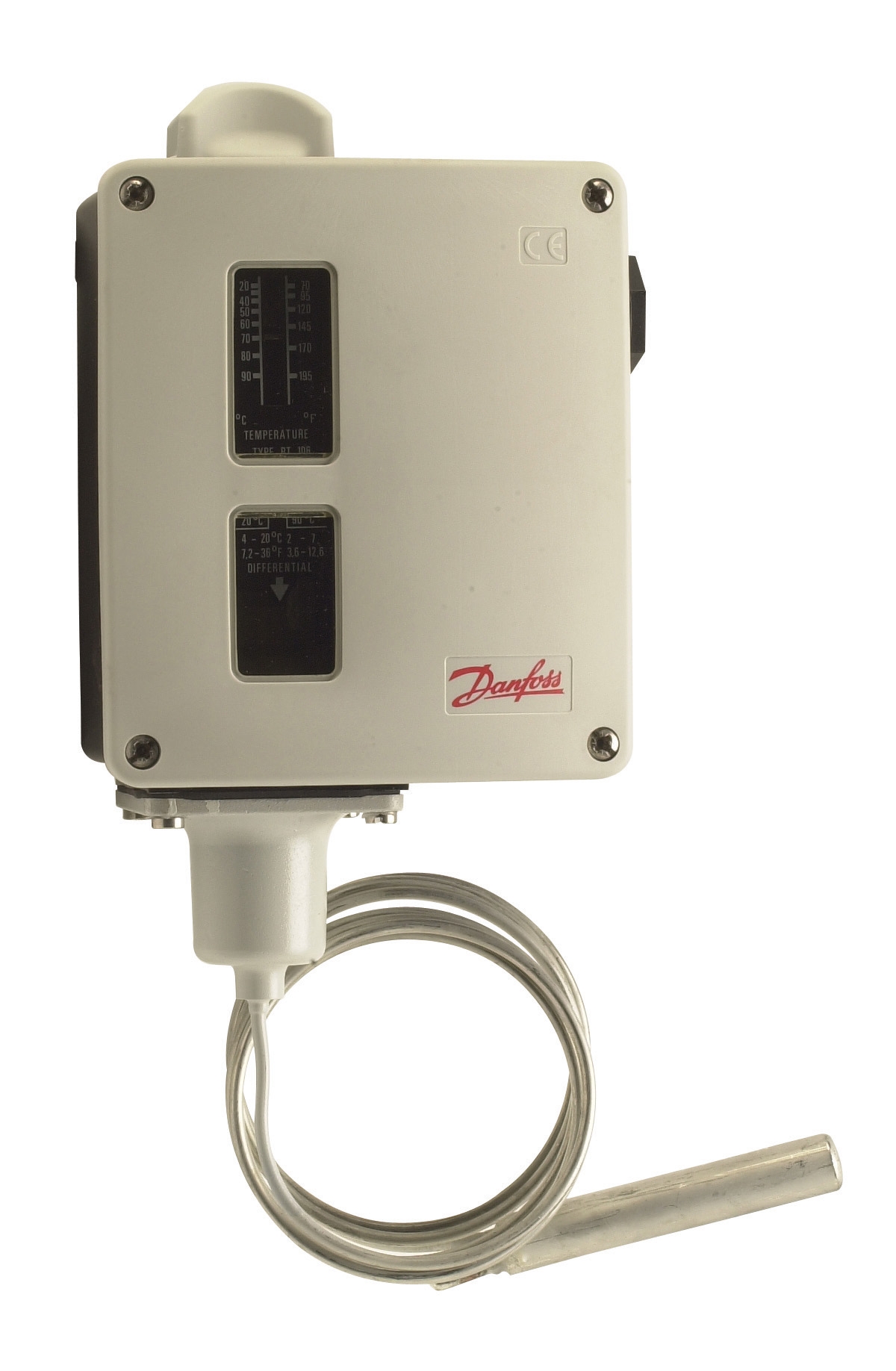
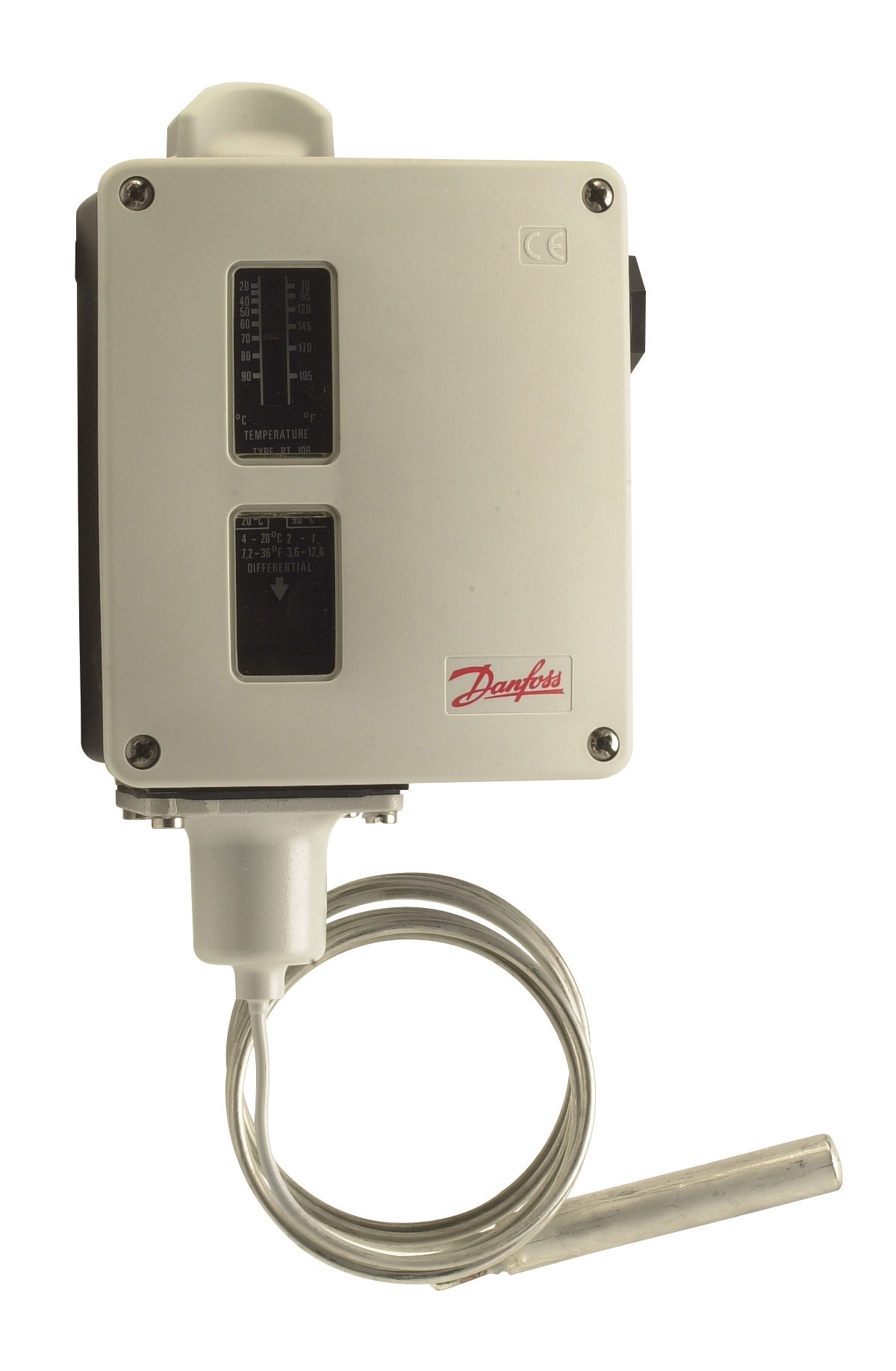
Thermostats like the Danfoss RT 107 and Danfoss RT 124 aren't just comfort devices. They're active process controllers that prevent overshoot, protect equipment from thermal stress, and maintain consistent output across operational cycles.
The RT 107 features a universal single-pole changeover contact—meaning one thermostat can switch between heating and cooling modes, critical for tropical climates where ambient temperature swings throughout the day. The RT 124 adds adjustable differential and a neutral zone option, giving you precision control over the temperature band where your burner modulates or cycles.
Why This Matters for Southeast Asian Operations
Your facility faces real thermal challenges:
- Ambient temperature swings: 25°C at dawn, 35°C+ by afternoon. Thermostats must tolerate this noise without false triggering.
- Humidity-induced condensation: Salt air, moisture ingress, and tropical downpours accelerate corrosion. Bulb-actuated designs (like the RT 124) offer mechanical simplicity and fewer electrical failure points than electronic alternatives.
- Load variability: Morning startups after cool-down, afternoon peak demand, evening shutdowns. Adjustable differential prevents rapid on-off cycling that strains solenoids and burner ignition systems.
A well-configured thermostat acts as your passive safety barrier. If a flame detector fails or a solenoid valve sticks, your temperature controller still prevents runaway heating by cycling the burner off when setpoint is reached.
Practical Selection Criteria
Choose between RT 107 and RT 124 based on:
- Single setpoint, tight control needed: RT 107 (heating or cooling, not both in one cycle)
- Precise band control with hysteresis: RT 124 (adjustable differential, neutral zone for stable operation)
- Multi-mode HVAC or process applications: RT 107's changeover contact flexibility
Both are suitable for the temperature ranges you'll encounter in Southeast Asia (-10°C to 60°C covers startup conditions and worst-case ambient heat).
Section 2: Flame Detection—Your Active Safety Guardian
Why Flame Detection Is Non-Negotiable
A thermostat tells you the outcome of combustion: "the space is warm." A flame detector tells you whether combustion is happening. This distinction is critical for safety.
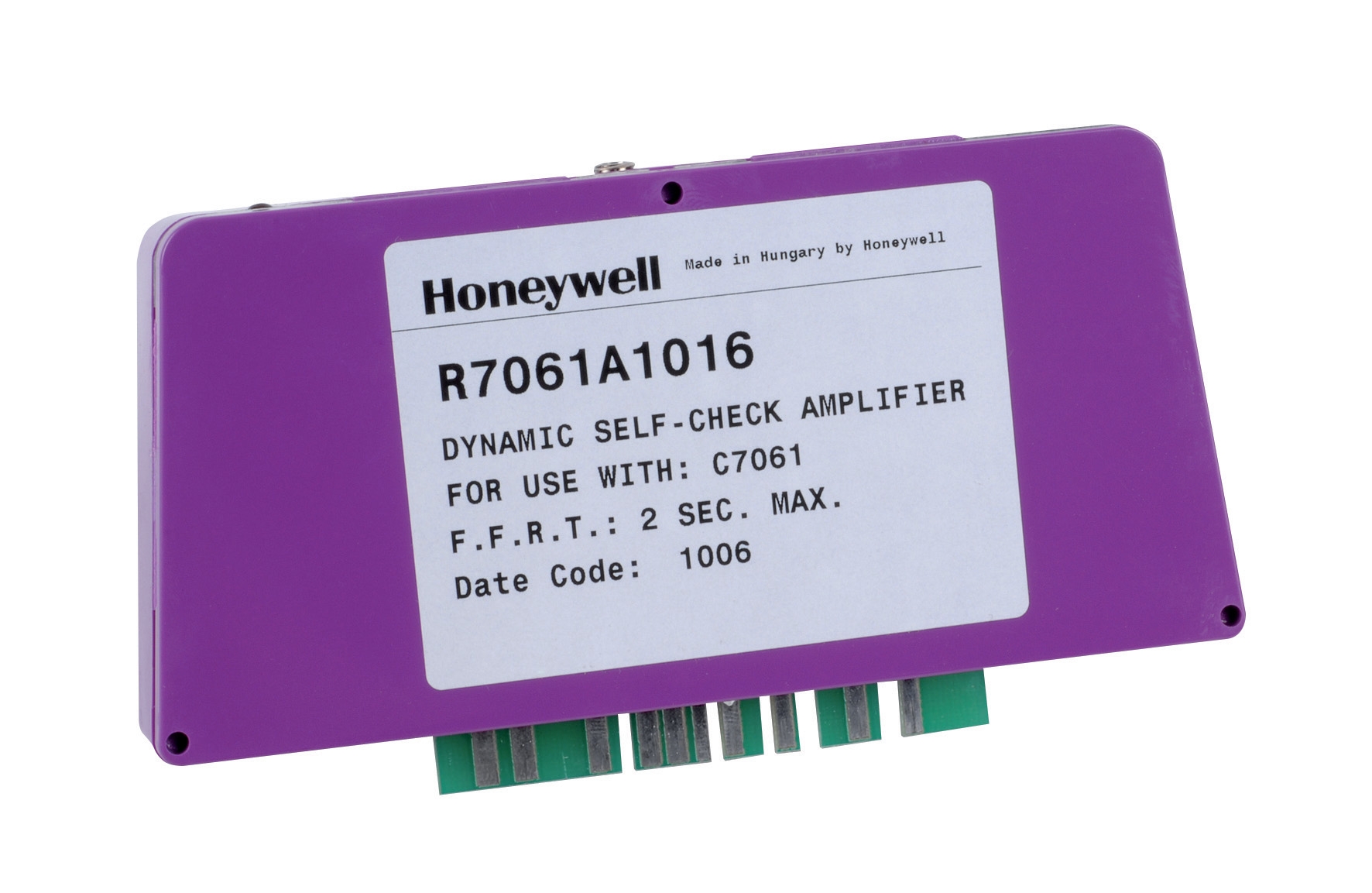
The Honeywell Cell C 7044 A 1006 ultraviolet flame detector continuously monitors burner ignition in oil and gas applications. The Honeywell Amplifier R 7861 A 1026 interprets that signal and commands fuel shutoff if flame is lost during operation.
How UV Flame Detection Works in Your Controls & Safety Chain
The Cell C 7044 A 1006 uses ultraviolet light sensing to detect the UV emissions present only during combustion. Unlike infrared or photo-resistive detectors, UV sensing is:
- Immune to ambient light: Tropical sun and industrial lighting don't trigger false alarms
- Fast-responding: Detects flame loss within milliseconds, triggering rapid fuel shutoff before dangerous accumulation
- Proven for burner duty: Specified for furnaces, boilers, and process heaters where flame-loss consequences are severe
The R 7861 A 1026 amplifier amplifies the detector signal and integrates with your burner control sequencer. Its operating range (-40°C to 60°C) and vibration tolerance (0.5 g continuous) are designed for equipment room installations in tropical climates where vibrating fans and compressors create acoustic and mechanical stress.
Southeast Asian Reliability Challenges
Fostering flame detection reliability in this region requires attention to:
- Salt corrosion on detector windows: Salt spray and high humidity degrade UV cell transmission. Plan quarterly cleaning or optical inspection.
- Electrical noise from high-load circuits: Your facility's large motors and VFD-driven fans generate EMI. Proper shielding and amplifier placement (close to detector, away from main switchgear) reduce false lockouts.
- Thermal drift in extended startup: Humidity and high ambient can delay burner light-off. Flame detectors must have adequate "off-delay" logic (typically 2–5 seconds) to distinguish slow light-off from flame loss.
Section 3: Integration with Burner Control Modules—Creating Your Unified Safety System
How Thermostat + Flame Detector + Control Module Work Together
The Pactrol CSS01 12 is a burner control module that integrates timed relay, flame relay, and electronic spark generator functions. It's the nervous system connecting your thermostat signal and flame detector signal into coordinated burner sequencing.
Practical Integration Architecture
A typical safe burner startup sequence:
1. Thermostat calls for heat (setpoint > room temperature)
2. Control module energizes pilot ignition (spark generator fires, solenoid opens pilot gas)
3. Flame detector monitors pilot light—typically 3–5 second pilot establish time
4. Once pilot flame confirmed, main gas solenoid opens, main burner ignites
5. Thermostat modulates burner on/off as space reaches setpoint
6. Flame detector continuously monitors—if flame lost during operation, control module de-energizes all solenoids and demands pilot re-light or full shutdown
For atmospheric and small forced-air burners up to 60 kW (the CSS01 12 rating), this architecture balances cost, reliability, and safety.
Why This Redundancy Matters in Southeast Asia
Your region's operating environment creates multiple failure modes:
- Thermostat alone: Can't detect if burner fails to ignite (you heat water, burner doesn't light, thermostat sees no temperature rise, stays in call state indefinitely)
- Flame detector alone: Can't modulate burner output when space is already warm (wastes fuel, stresses components)
- Together: Thermostat prevents overcycle; flame detector prevents unburned fuel accumulation and equipment damage
The CSS01 12 module's integrated architecture also simplifies installation and troubleshooting. Fewer external wired connections mean fewer points for humidity-induced corrosion or loose terminals—a major failure mode in high-humidity environments.
Maintenance and Diagnostics
Plant managers should establish quarterly checks:
- Thermostat: Verify setpoint accuracy with independent thermometer; test changeover contact with multimeter
- Flame detector: Visual inspection of UV cell window (clean if dusty or corroded); test detector output at amplifier with reference light source
- Control module: Verify pilot gas flow timing (should establish in 3–5 sec); confirm main gas energizes only after pilot confirmed; run manual shutdown drill (turn thermostat to lowest setting, verify all solenoids de-energize)
3G Electric's 35+ years supporting industrial equipment means we've learned that most Controls & Safety failures stem from deferred maintenance on these three checks. Budget one technician-hour quarterly per burner; it prevents 90% of field failures.
Section 4: Practical Selection Criteria for Your Southeast Asia Facility
Assessing Your Burner Size and Application
Your equipment likely falls into one of these categories:
- Small HVAC/domestic boilers (< 20 kW): Single thermostat (RT 107) + integrated control module (CSS01 12) is often sufficient
- Medium industrial burners (20–60 kW): Thermostat (RT 124 for precision) + UV flame detector (Cell C 7044) + standalone amplifier (R 7861) + modular relay sequencing
- Large process furnaces or steam generators (> 60 kW): Dedicated burner control system with redundant flame detection and backup ignition circuit
When configuring Controls & Safety for your specific site:
- Mounting location: Thermostats in the conditioned space; flame detectors and amplifiers in equipment room on vibration-isolated shelves, shielded from direct moisture spray
- Wiring runs: Use shielded cable for flame detector signal (UV cell to amplifier); keep power and signal cables in separate conduit
- Spare parts availability: Confirm 3G Electric stocks replacement thermostats, detector cells, and amplifiers locally or via rapid Southeast Asia distribution. Downtime cost of custom ordering from Europe exceeds component cost many times over.
- Technician training: Invest in training your maintenance staff on flame detector testing and thermostat calibration. Knowledge of UV detection principles prevents misdiagnosis as control failure when the issue is dirty detector window.
A complete Controls & Safety upgrade (thermostat + flame detector + amplifier + control module) typically costs $1,500–$3,500 USD depending on burner size. Over a 15-year equipment life:
- Prevented downtime: Avoiding one 8-hour unplanned shutdown (loss of steam, process delay, emergency service call) pays for the upgrade 3–4 times over
- Reduced fuel consumption: Precise thermostat modulation saves 5–10% gas/oil vs. crude on-off control
- Insurance and compliance: Some regional underwriters and ASEAN standards increasingly require documented flame detection in process heating; upgrading now avoids future retrofit costs
Conclusion: Building Your Controls & Safety Strategy
Temperature regulation and flame detection are not competing choices. They're complementary safeguards that, when properly integrated through a burner control module like the Pactrol CSS01 12, create a robust system suited to Southeast Asia's humid, thermally variable operating environment.
3G Electric's 35+ years experience supporting industrial equipment distributors in this region shows that the most reliable burner systems combine:
- Precise thermostat control (Danfoss RT 107 or RT 124) to modulate output and prevent overshoot
- Continuous flame monitoring (Honeywell Cell C 7044 UV detector + R 7861 amplifier) to prevent unburned fuel and detect ignition failure
- Integrated or modular sequencing (Pactrol CSS01 12 or equivalent) to coordinate signals into safe, repeatable startup and shutdown logic
- Quarterly maintenance (thermostat calibration, detector window cleaning, control module signal verification) to catch degradation before failure
Your facility's uptime and safety depend on these decisions. Work with your equipment supplier to audit your current Controls & Safety architecture, identify redundancy gaps, and plan phased upgrades if your existing system lacks either temperature control precision or flame detection capability.
Contact 3G Electric for product selection support, local availability confirmation, and technical guidance tailored to your burner size, fuel type, and Southeast Asian operating conditions.