Understanding Controls & Safety in Singapore Industrial Operations
Controls & Safety components form the backbone of reliable burner system operation, yet procurement engineers in Singapore often struggle to prioritize between temperature regulation and flame detection technologies. With over 35 years of experience distributing industrial equipment across Southeast Asia, 3G Electric has observed that many plant commissioning delays stem not from component quality, but from misalignment between component selection and actual operational requirements.
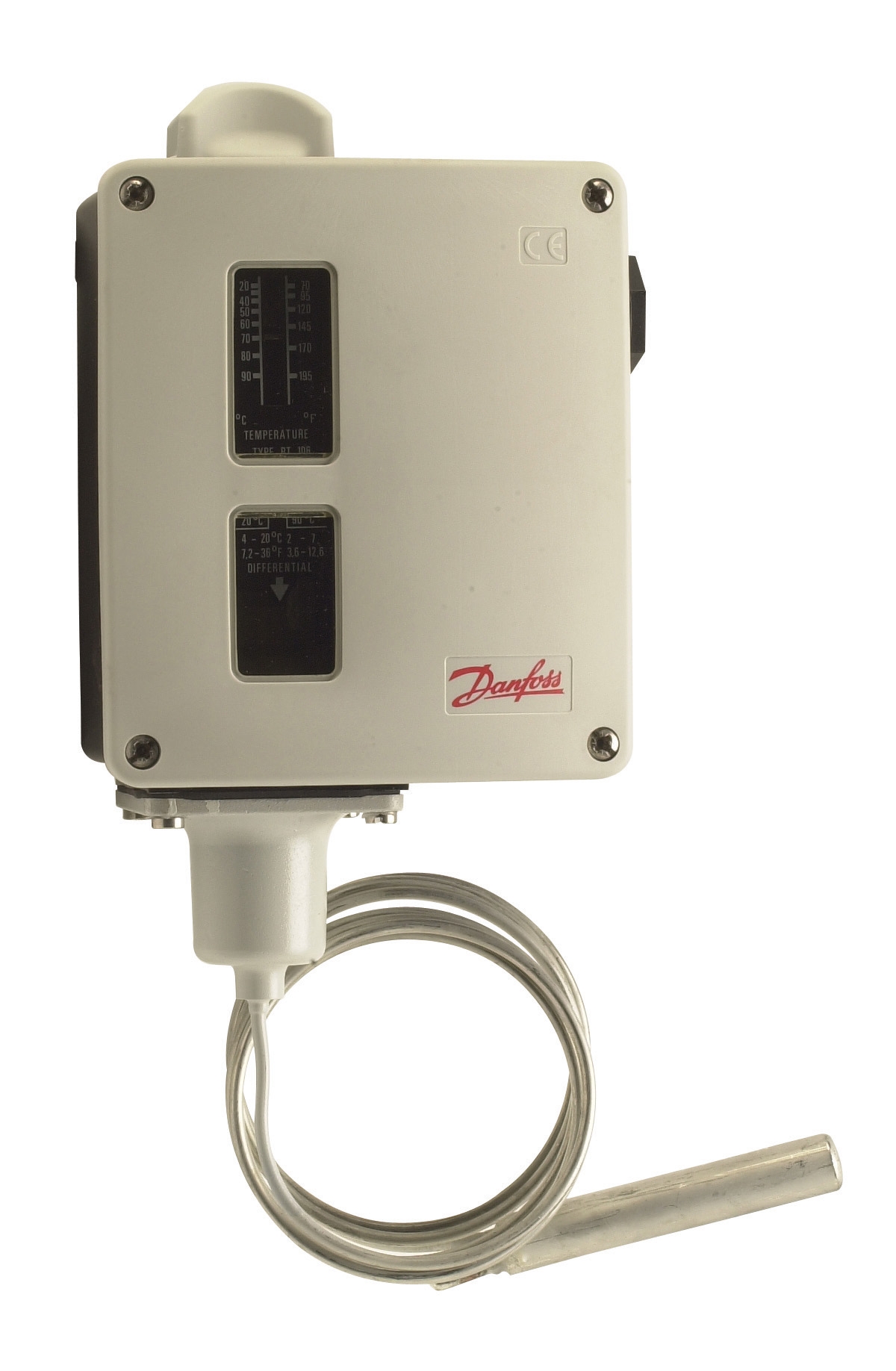
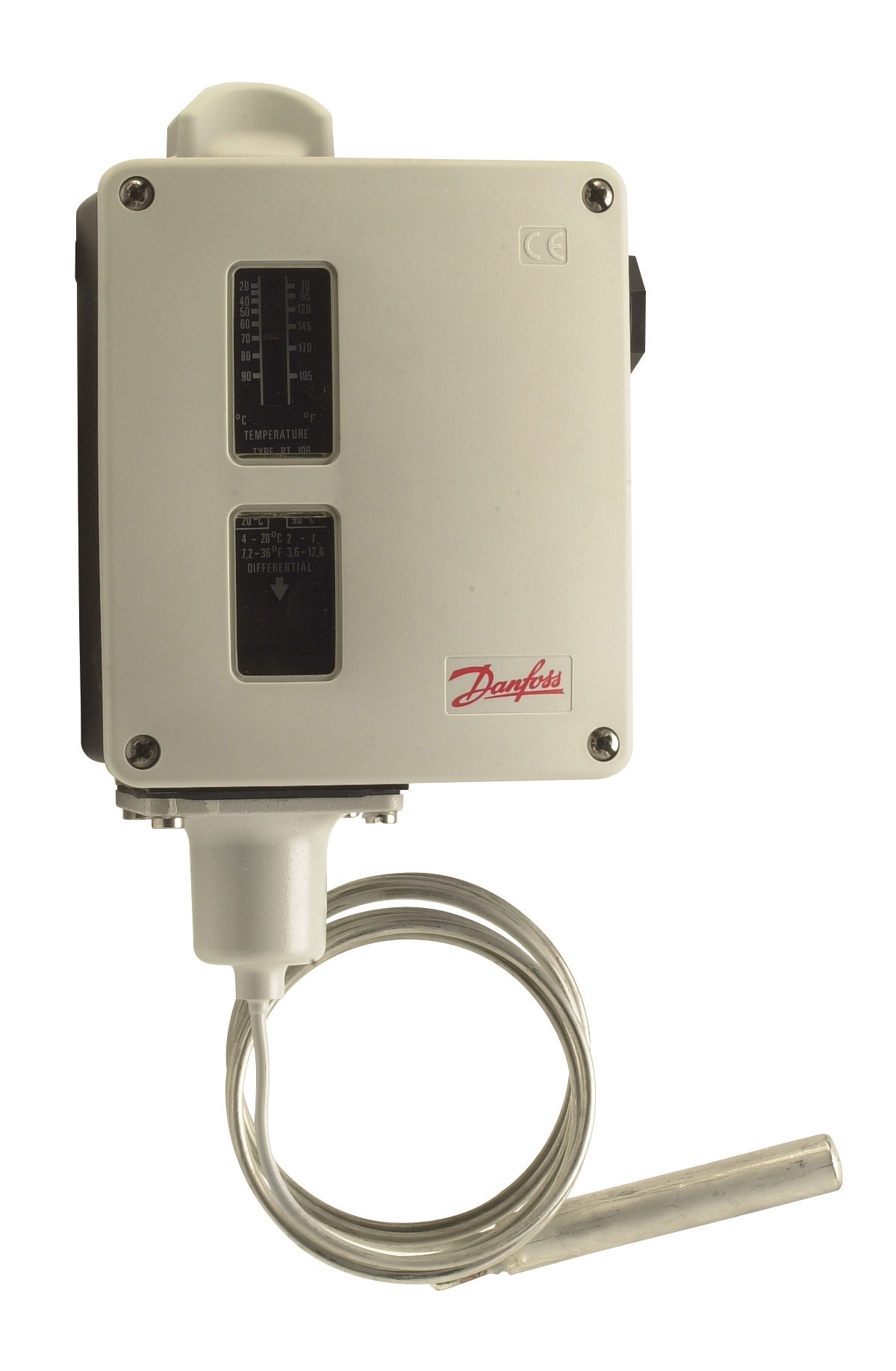
Temperature control via thermostats like the Danfoss RT 107 and Danfoss RT 124 operate reactively—they monitor thermal conditions and adjust fuel flow to maintain setpoint. Flame detection systems like the Honeywell Cell C 7044 A 1006 operate proactively—they verify combustion is occurring before allowing fuel to flow. Understanding when to prioritize each approach is essential for Singapore's high-humidity, challenging operating environments.
Temperature Control Thermostats: Specification and Commissioning Considerations
Operational Principle and Integration Points
The Danfoss RT 107 employs a bulb-actuated design with a universal single-pole changeover contact, making it suitable for both heating and cooling applications. In Singapore's tropical context, this dual-contact capability becomes valuable in facilities using absorption chillers or indirect cooling loops alongside primary heating. The changeover contact allows one device to serve multiple operational modes without requiring separate sensors.
The Danfoss RT 124 extends this functionality with adjustable differential and optional neutral zone settings. For procurement engineers, the differential setting determines hysteresis—how far temperature must deviate before switching occurs. In Singapore's humid environment where thermal cycling can stress seals and connections, a wider differential (2–3°C) reduces relay chatter and extends component life, though it sacrifices tighter temperature control.
Commissioning Timeline and Diagnostic Value
Thermostat-based systems typically commission within 2–3 days. Technicians set the bulb location, adjust setpoint and differential, verify contact closure at transition points, and conduct steady-state temperature holds. This straightforward process means procurement teams can validate performance during factory acceptance testing (FAT) before shipment to Singapore, reducing on-site troubleshooting.
Diagnostic capability is high: thermostats provide continuous feedback via temperature readout, making it simple to verify proper sensor placement and identify thermal dead zones in ductwork or combustion chambers. When temperature drifts, the root cause is usually obvious (sensor fouling, insulation loss, or control setpoint error).
However, thermostats cannot verify that combustion is actually occurring—only that thermal conditions match setpoint. A burner might be running without flame, creating dangerous accumulation of unburned fuel.
Flame Detection Systems: Specification and Safety-Critical Commissioning
Operational Principle and Safety Architecture
The Honeywell Cell C 7044 A 1006 ultraviolet flame detector operates on a fundamentally different safety principle: it proves combustion is present before allowing fuel to remain available. The UV cell detects photons emitted during flame combustion, providing optical proof of fire.
This proof-of-flame approach prevents dangerous conditions where fuel accumulates without ignition, risking explosion during subsequent ignition attempts. In Singapore's industrial setting, where burners may restart after power interruptions or undergo maintenance, this safety guarantee is non-negotiable in many applications.
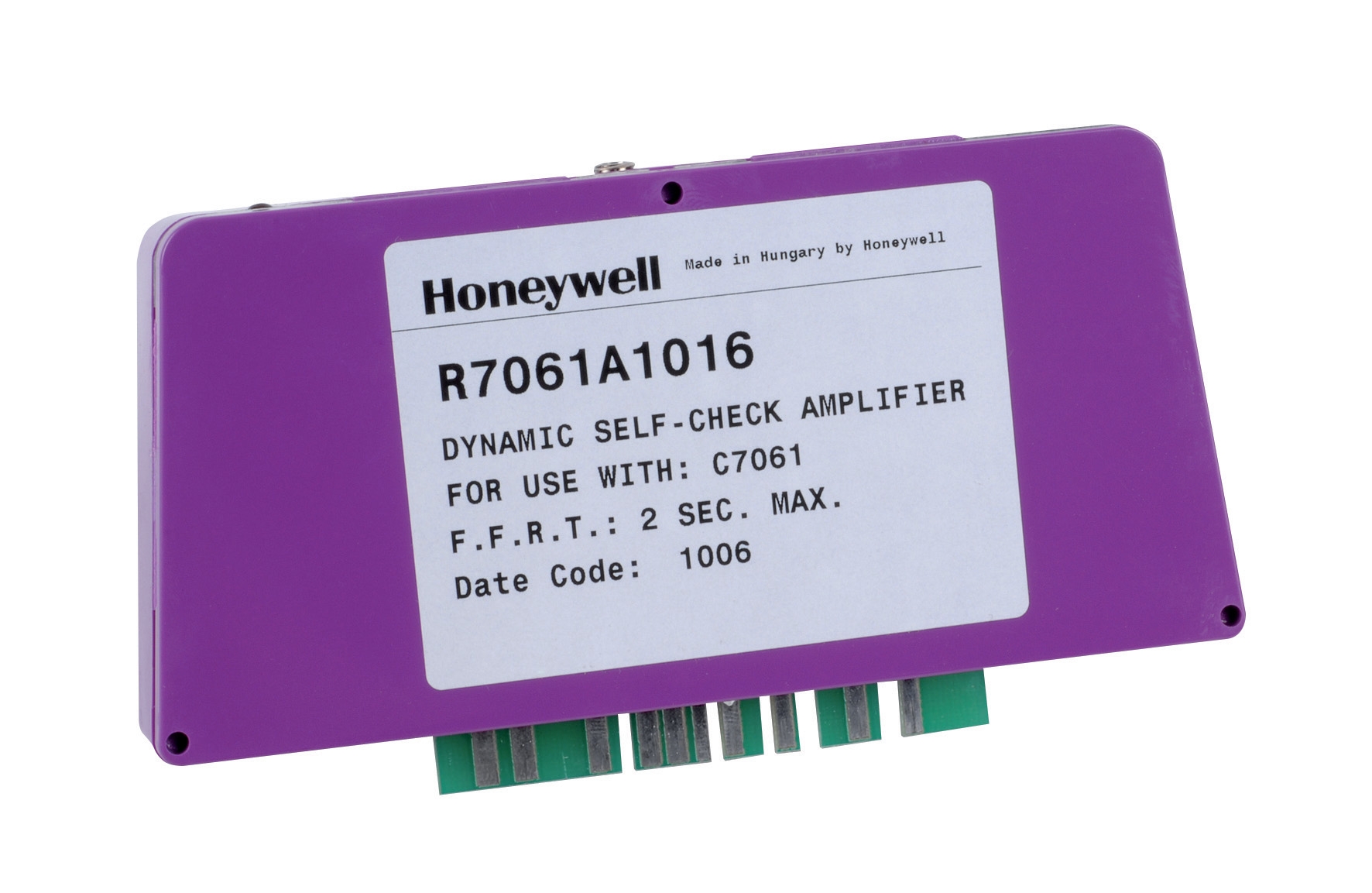
The detector integrates with the Honeywell Amplifier R 7861 A 1026, which amplifies the UV cell signal and makes the safety-critical decision to shut off fuel if flame is lost. The amplifier operates reliably across −40°C to 60°C and tolerates 0.5 g continuous vibration, meeting the mechanical demands of Singapore's industrial facilities, where ground vibration from adjacent machinery and thermal cycling create stress.
Commissioning Complexity and Diagnostic Demands
Flame detection systems typically require 4–7 days to commission properly. Commissioning involves:
Optical alignment: The UV cell must "see" flame through the combustion chamber viewport without obstruction. In Singapore's dusty, humid environments, viewport fouling is common, requiring protective windows and regular cleaning protocols.
Flame signal strength verification: The amplifier must receive adequate UV signal to reliably detect flame while rejecting false signals from external light sources (sunlight in open-air equipment, arc welding nearby, or even bright LED work lights).
Flame loss response time testing: The system must shut off fuel supply within 2–5 seconds of flame loss, verified through controlled ignition and extinction cycles.
Burner interaction commissioning: Different burner designs produce different flame profiles. A burner operating at 30% fire rate may generate weaker UV signal than at 100%, requiring sensitivity adjustment and testing across the operating range.
Diagnostic value is also high but more specialized: technicians need UV-sensitive meters to measure flame signal strength, and must understand optical path geometry. Troubleshooting often requires site-specific adjustments (viewport cleaning, cell repositioning, or signal threshold tuning).
Practical Comparison: When Temperature Control and Flame Detection Complement Each Other
Integrated Safety Strategy
Advanced burner systems don't choose between temperature control and flame detection—they employ both in a layered safety architecture. The Pactrol CSS01 12 housing control module exemplifies this integration, combining timed relay logic, flame relay switching, and spark generation in a single housing.
In this architecture:
- Flame detection (Cell C 7044 + Amplifier R 7861) provides proof-of-combustion safety, proving the burner is actually burning before allowing fuel flow to continue.
- Temperature control (RT 107 or RT 124 thermostat) then manages fuel quantity to maintain desired outlet temperature, operating only after flame proof is established.
For Singapore procurement engineers, this means specifying both categories is often the most cost-effective approach when amortized over 10+ years of operation. A single thermostat failure in a temperature-critical process (e.g., steam generation for pharmaceutical water systems) can halt production. A single flame detector failure might cause unwanted burner shutdowns but prevents dangerous conditions.
Cost Structure and Total Cost of Ownership
Initial component costs show thermostats at 40–60% lower price than complete flame detection systems. However, over a 10-year lifecycle in Singapore's challenging environment:
Thermostat-only systems: Lower initial cost, but require more frequent manual safety checks and operator oversight. Undetected flame-out conditions occasionally occur, requiring emergency response and investigation. Maintenance is simple but frequent.
Integrated temperature + flame detection systems: Higher initial cost, but dramatically lower operational risk. Flame detection prevents dangerous accumulation conditions automatically. Maintenance is more complex (optical cleaning, calibration) but occurs on predictable intervals.
Risk-adjusted cost: When factoring in production loss from false shutdowns, emergency maintenance calls, and potential safety incident costs, integrated systems typically show 15–25% lower total cost of ownership for continuous-duty industrial burners operating in Singapore.
Selection Framework for Singapore Procurement Engineers
Application Categories and Recommended Approach
Category A: Temperature-Critical, Continuous Duty (Boilers, Hot Water, Process Heating)
- Specification: Temperature control thermostat (RT 107 or RT 124) PLUS flame detection (Cell C 7044 + R 7861 Amplifier)
- Rationale: Both control outcomes required; flame safety is non-negotiable; temperature precision drives product quality
- Commissioning timeline: 5–7 days
- Maintenance interval: Quarterly thermostat verification, semi-annual flame cell optical cleaning
- Specification: Temperature control thermostat only (RT 107)
- Rationale: Burner cycles frequently; operator oversight is practical; false shutdowns are tolerable; cost sensitivity is high
- Commissioning timeline: 2–3 days
- Maintenance interval: Annual verification
- Specification: Flame detection (Cell C 7044 + R 7861 Amplifier) with integrated control module (Pactrol CSS01 12)
- Rationale: Proof-of-combustion is safety requirement; unattended operation eliminates operator oversight; integration reduces connection points
- Commissioning timeline: 6–8 days
- Maintenance interval: Quarterly optical inspection, annual full calibration
Environmental and Regulatory Considerations for Singapore
Singapore's industrial safety regulations align closely with international standards (IEC 61508 for safety-critical systems, EN 298 for gas burners). Most modern industrial burner installations require proof-of-flame capability, making flame detection a regulatory expectation rather than optional enhancement.
The tropical environment—high humidity, salt spray in coastal facilities, rapid temperature swings—creates additional pressure on Controls & Safety components. The Honeywell R 7861 Amplifier specification of −40°C to 60°C operating range accounts for equipment room extremes, but procuring engineers must verify actual site conditions. Equipment in rooftop mechanical rooms or outdoor installations regularly exceed these ranges during Southeast Asian monsoons.
With 35+ years of experience supporting Singapore industrial operations, 3G Electric recommends specifying components with IP65 or better enclosure ratings and stainless steel fasteners to combat humidity-related corrosion. This adds 8–12% to initial component cost but prevents premature failure of safety-critical systems.
Conclusion: Risk-Based Selection for Reliable Operations
The choice between temperature control thermostats and flame detection systems is not either/or for responsible procurement engineering in Singapore. Rather, the question is: which applications require which safety layers, and how do we integrate them cost-effectively?
Temperature control provides operational precision and comfort. Flame detection provides safety certainty and regulatory compliance. Together, they form a complete Controls & Safety strategy that protects both production continuity and personnel safety.
Procurement engineers specifying burner systems for Singapore industrial facilities should evaluate each installation against the three application categories above, specify appropriate component combinations, and allocate realistic commissioning timelines. Attempting to compress commissioning schedules for flame detection systems or skipping flame safety altogether to reduce costs typically creates greater expense through emergency maintenance, downtime, and liability exposure.
3G Electric's technical team can assist with specification review, component availability confirmation, and commissioning timeline development based on your specific application requirements across Singapore and Southeast Asia.