Understanding Controls & Safety Specification Hierarchy for Procurement Decisions
Controls & Safety systems represent critical infrastructure investments in industrial operations across Southeast Asia. For procurement engineers, the challenge extends beyond initial component selection—it encompasses total cost of ownership (TCO), regulatory compliance variability across jurisdictions, spare parts availability, and long-term vendor support capabilities.
3G Electric's 35+ years of experience distributing industrial equipment throughout the region has demonstrated that procurement success depends on understanding how safety control components integrate within broader system architectures. Unlike simple equipment purchases, Controls & Safety procurement requires alignment between performance specifications, local regulatory requirements, and operational reliability metrics.
The specification hierarchy typically flows from system-level safety integrity levels (SIL) downward to individual component selections. Your procurement strategy must account for this vertical integration: a pressure switch selected without understanding its role in the complete control chain may meet narrow technical specs but fail to satisfy system-level safety requirements.
Evaluating Control Relay Systems: Technical Specifications and Regional Compliance
Burner control relays form the decision-making core of industrial heating systems. Southeast Asian procurement engineers must evaluate these components across multiple technical dimensions simultaneously.
Flame Detection and Ignition Capability Analysis
The Kromschroder BCU 570WC1F1U0K1-E represents a modern approach to burner control architecture. This relay supports both direct ignition and intermittent/continuous pilot ignition modes—a flexibility critical for regional operations where equipment may be retrofitted across multiple facility types. Compliance with EN 746-2 and EN 676 standards ensures alignment with European-equivalent safety frameworks increasingly adopted in Southeast Asian industrial facilities.
When evaluating similar devices, procurement teams should assess:
- Ignition mode compatibility: Can the relay support your facility's existing burner fleet without mandatory replacements? Many retrofit projects fail due to assumed ignition mode compatibility.
- Response time specifications: Flame detection response times typically range from 300-500 milliseconds. Slower responses may create liability exposure in high-pressure applications.
- Pilot flame monitoring: Ionization-based detection (as found in the Brahma Relay CM 31 F TW10/TS5) offers superior reliability in Southeast Asian environments where ambient humidity and particulate levels fluctuate seasonally.
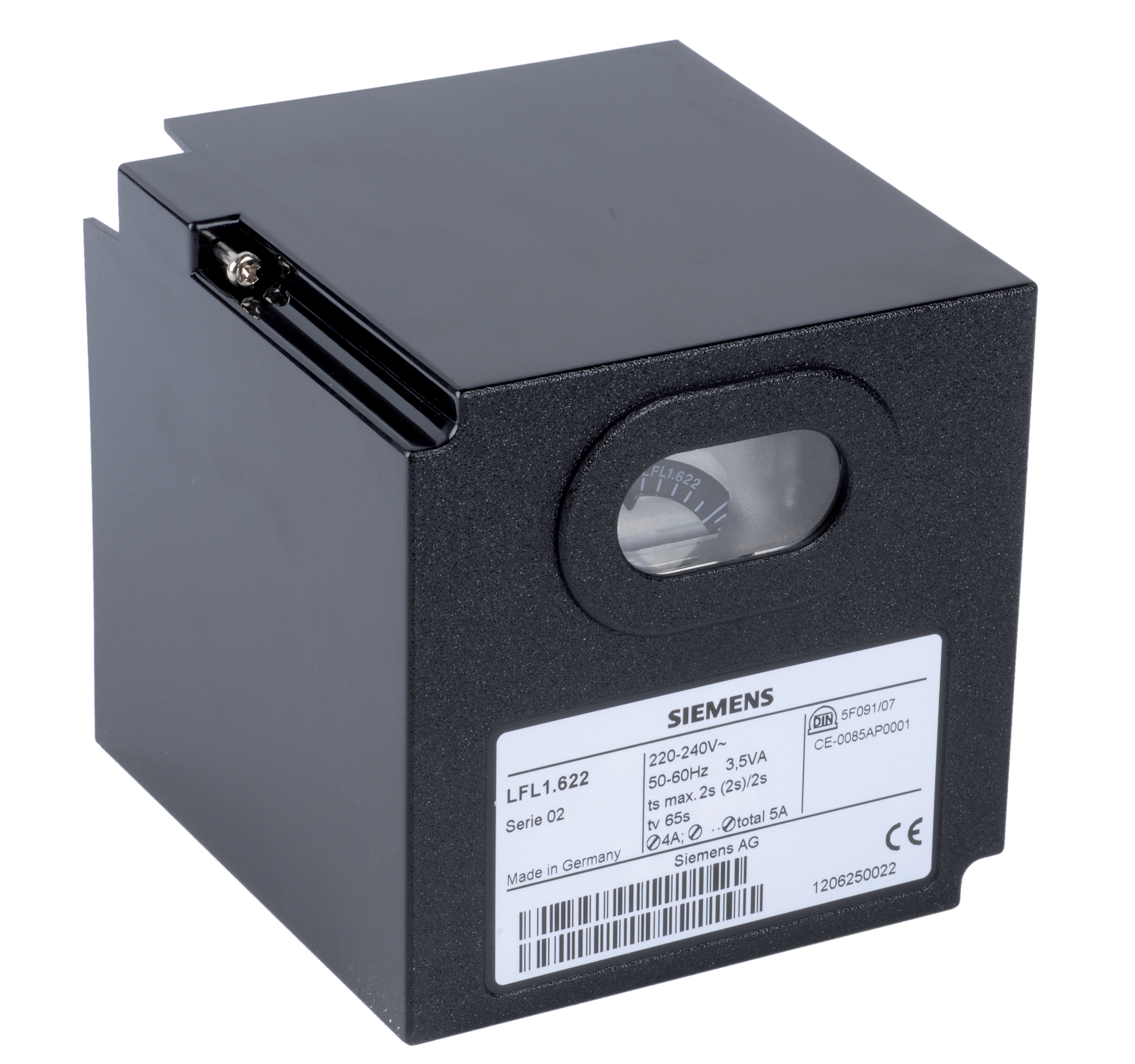
Procurement decisions should leverage comparative analysis frameworks. The Siemens LFL 1.622 introduces dual flame monitoring capabilities (UV and ionization), addressing a critical gap in high-reliability applications. This redundancy increases initial cost but reduces unplanned downtime—a TCO advantage often overlooked during budget-phase evaluations.
Key comparison criteria for your procurement evaluation:
- Power rating compatibility with existing electrical infrastructure
- Air damper control capabilities (critical for fuel-air ratio optimization)
- Modulation range (essential for applications requiring proportional control)
- Integration with distributed control systems (DCS) or programmable logic controllers (PLC)
Multifunctional Gas Control Blocks: Integration Economics and Specification Complexity
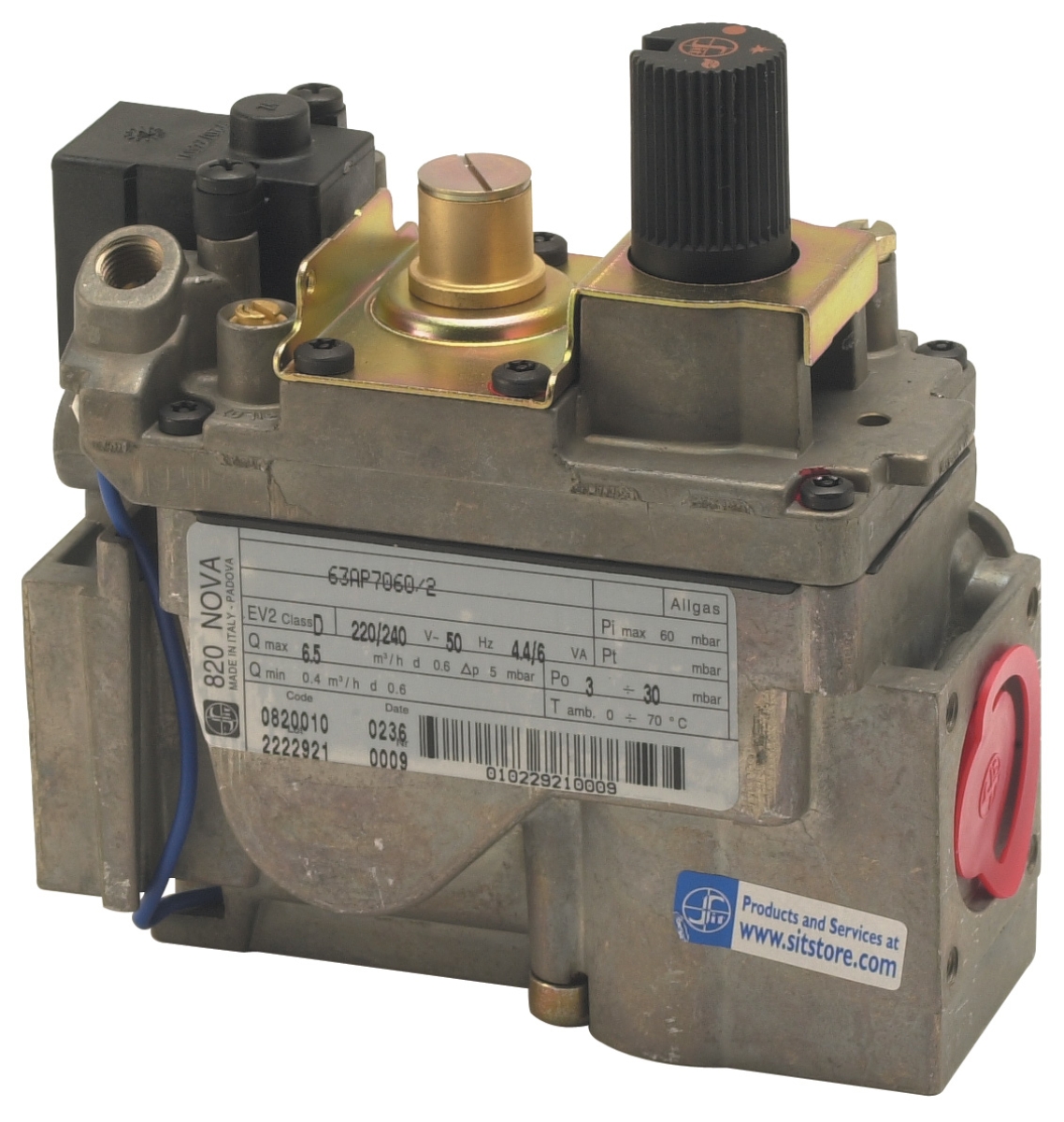
The Sit Minisit gas block 0710218 represents a different procurement category—multifunctional devices that consolidate pressure regulation, temperature control, and flame supervision into single units.
TCO Analysis for Integrated vs. Modular Architectures
Procurement engineers in Southeast Asia frequently encounter budget pressure favoring integrated solutions over modular control architectures. The Sit Minisit device delivers thermoelectric flame supervision, pressure regulation, and temperature control in compact form factor—reducing panel space, wiring complexity, and initial capital expenditure.
However, TCO analysis requires examining longer-term implications:
- Serviceability impact: Integrated gas blocks require complete replacement if any functional component fails. Modular architectures allow targeted replacement of failed pressure regulators or solenoid valves, potentially reducing downtime costs by 60-75% in regional service environments where parts availability varies.
- Operational flexibility: Multifunctional blocks optimize performance within narrow design parameters. Applications requiring future modification or fuel type changes may necessitate complete system redesign.
- Spare parts logistics: Southeast Asian operations often maintain strategic spare parts inventories due to supply chain variability. Integrated devices create higher carrying costs and obsolescence risk compared to standardized modular components.
Your procurement analysis should model failure scenarios specific to regional conditions:
- Seasonal humidity variations affecting solenoid valve performance
- Dust/particulate ingestion impacting pressure sensing accuracy
- Extended lead times for manufacturer replacements (typically 8-12 weeks from European suppliers)
Pressure Switch Selection: SIL Rating Alignment and Redundancy Requirements
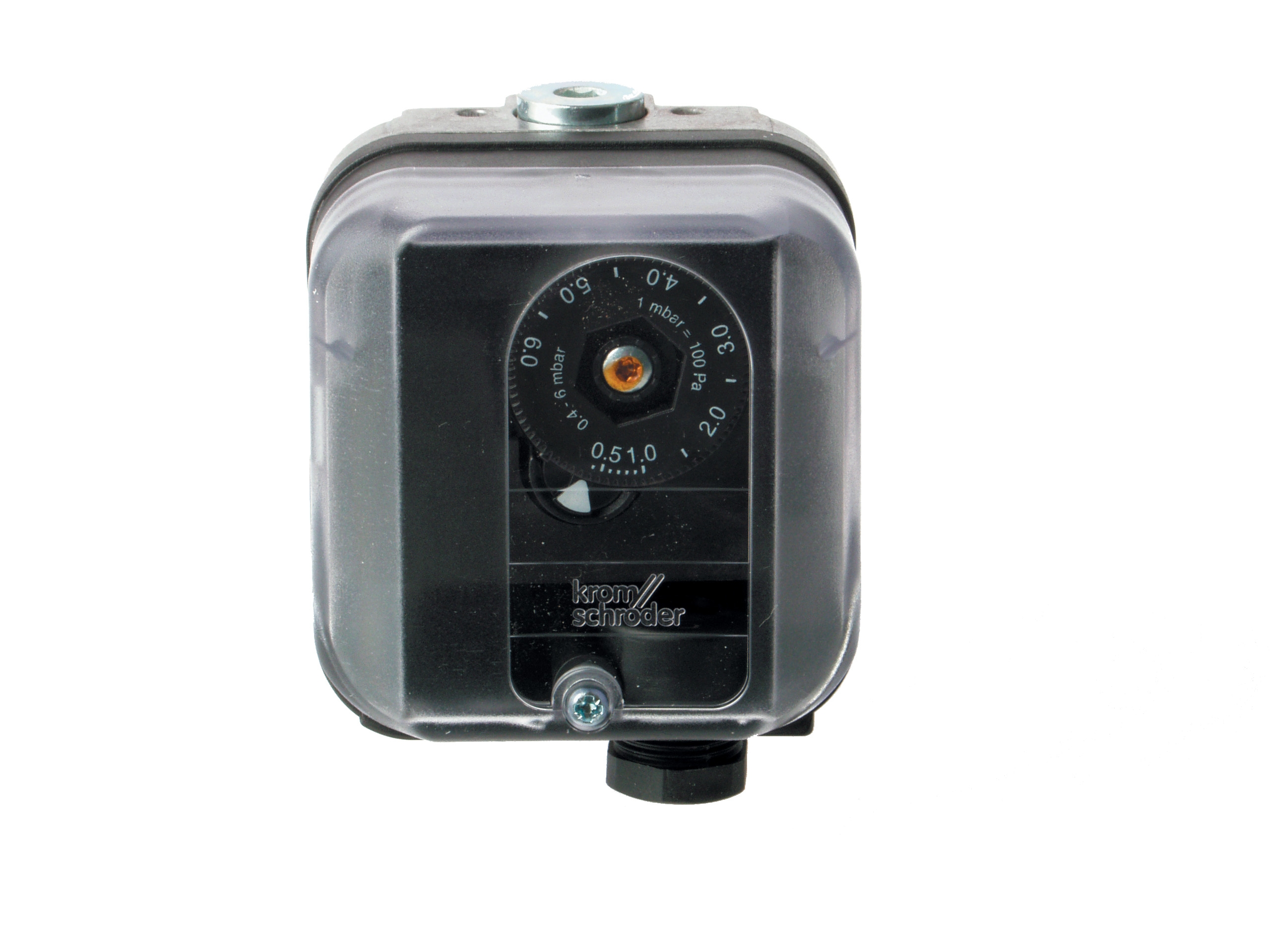
The Kromschroder DG 50U/6 pressure switch illustrates a critical procurement decision point: performance level and safety integrity alignment.
Understanding SIL 3 / Performance Level e Implications
This pressure switch achieves SIL 3 rating and Performance Level e—certifications indicating suitability for high-consequence applications. However, procurement engineers must understand what this actually means operationally:
- SIL 3 designation indicates the device functions safely even when experiencing specific failure modes, with statistical failure probability less than 10^-4 per demand.
- Performance Level e aligns with ISO 13849-1 standards, ensuring the pressure switch performs predictably even during component degradation.
Southeast Asian industrial operations increasingly face regulatory pressure for redundant safety mechanisms. A single SIL 3 pressure switch may not satisfy system-level SIL 2 or SIL 3 requirements if it represents a single point of failure in your control architecture.
Procurement strategy should address:
- Diagnostic coverage: Can your control system continuously monitor switch performance? Devices with integral diagnostics reduce undetected failure risk—critical in facilities where burner systems operate unattended for extended periods.
- Proof-test intervals: SIL ratings assume periodic functional testing. Your procurement must account for test labor costs and production disruption during proof testing cycles.
- Certification alignment with local authorities: While Kromschroder's multi-standard certifications (EN 1854, FM, UL, AGA, GOST-TR) provide global recognition, verify that your regional industrial authority (Singapore's ACRA, Malaysia's DOSH, Indonesia's Kementerian Ketenagakerjaan) explicitly recognizes these certifications without requiring local re-certification.
Regional Procurement Strategy Framework
Vendor Evaluation Methodology for Long-Term Reliability
Beyond component specifications, procurement engineers must evaluate distribution partners based on regional capability factors:
- Spare parts availability: Does your distributor maintain regional inventory for critical Control & Safety components, or do all replacements require international ordering? 3G Electric's 35+ years of regional operations ensure stock availability for both OEM equipment and cross-compatible alternatives.
- Technical support capacity: Southeast Asian industrial facilities often operate in challenging environments with limited local expertise. Your procurement partner should offer application engineering support, not merely transactional order fulfillment.
- Regulatory knowledge: Control & Safety procurement in Southeast Asia requires understanding how international standards (EN, IEC, ISO) translate to local regulatory requirements. Your distributor should navigate these complexities proactively.
Successful procurement strategy in the region emphasizes modular standardization. Rather than selecting equipment for each facility independently, develop a standard palette of compatible Control & Safety components that work across your operational footprint:
- Standardize on relay families that support multiple ignition modes and fuel types
- Select pressure switches that integrate with both legacy and modern control systems
- Qualify multifunctional gas blocks only for applications where their integrated economics demonstrably outperform modular alternatives
This approach reduces engineering time for each new installation, simplifies spare parts management, and leverages volume purchasing power across multiple facilities.
Documentation and Knowledge Management
Procurement for Controls & Safety systems should include formal documentation requirements:
- Certificate of Conformity for each component, explicitly referencing applicable standards
- Technical datasheets in English and local language (critical for facilities with mixed-language technical staff)
- Regional certification details showing which local authorities have validated compliance
- Integration guidelines for common control platforms (Siemens S7, ABB AC500, etc.)
Implementation Considerations for Southeast Asian Environments
Regional environmental factors create procurement requirements beyond standard industrial specifications:
Tropical Humidity and Seasonal Variations
Southeast Asian humidity levels (60-95% relative humidity year-round in many areas) create challenges for pressure sensing accuracy and electrical contact reliability. Your procurement should specify:
- Potted or sealed pressure transducers (rather than open designs susceptible to moisture ingress)
- Gold-plated electrical contacts for relay systems operating in humid environments
- Corrosion-resistant coatings on metal housings
Industrial facilities in areas with seasonal dust storms or proximity to agricultural operations require robust particle filtration. Control & Safety procurement should account for more frequent solenoid valve maintenance and include pre-filtration specifications in your system design.
Extended Operating Hours and Minimal Downtime Tolerance
Many Southeast Asian industrial operations run continuously with minimal maintenance windows. Your procurement strategy should emphasize:
- Components with published mean time between failures (MTBF) data
- Devices supporting online diagnostics and condition monitoring
- Redundant control architectures for mission-critical applications
Conclusion
Controls & Safety procurement in Southeast Asia requires balancing technical specifications against regional operational realities and long-term reliability factors. Success depends on comprehensive vendor evaluation, understanding the full cost implications of component choices, and building modular standardized architectures that adapt to facility-specific requirements without requiring complete redesign.
Working with experienced regional distributors like 3G Electric ensures that your procurement decisions incorporate not only current specifications but also practical knowledge of how equipment performs across diverse Southeast Asian operational environments over extended service lifecycles.