Understanding Controls & Safety Scalability for Plant Growth
Plant Managers in Singapore face a critical challenge: how to build Controls & Safety systems that support today's operations without becoming obsolete during expansion. Unlike purchasing individual components reactively, strategic scalability planning prevents costly retrofits, reduces downtime during upgrades, and maintains safety compliance across growing production lines.
The difference between scalable and rigid Controls & Safety architectures becomes apparent when operations expand from 2–3 burner systems to 8–10 units. A thermostat designed for single-point monitoring cannot easily integrate into networked temperature oversight. Flame detection systems selected without redundancy cannot support critical production lines. Control modules that lack modular design force complete replacement rather than incremental upgrades.
3G Electric has distributed industrial Controls & Safety equipment across Southeast Asia for over 35 years, advising plant managers on infrastructure choices that accommodate 5–10 year growth horizons. This article compares five products commonly specified for Singapore operations, evaluating how each performs when your plant doubles in size.
Thermostat Architecture: Single-Point vs. Multi-Zone Capability
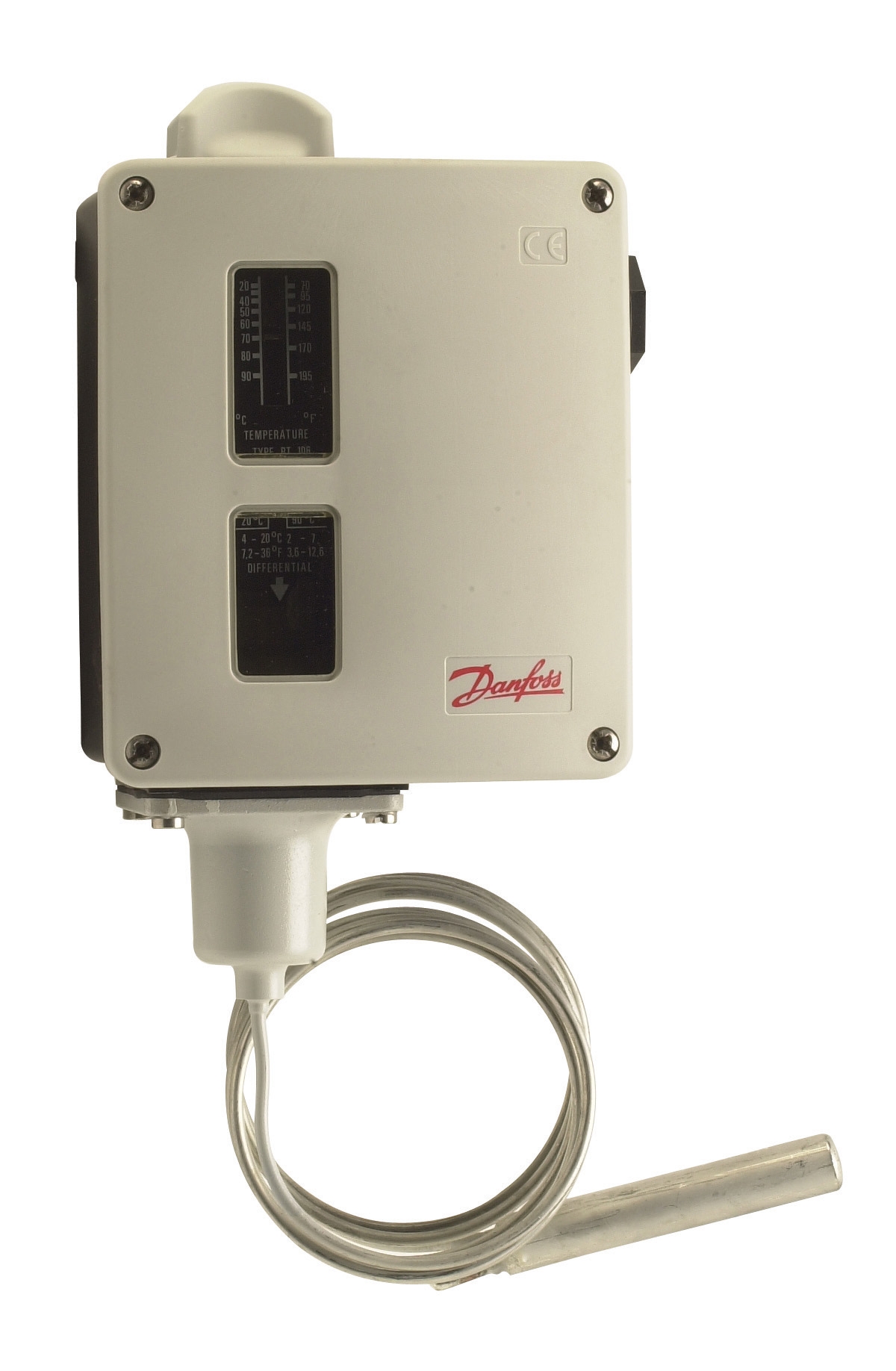
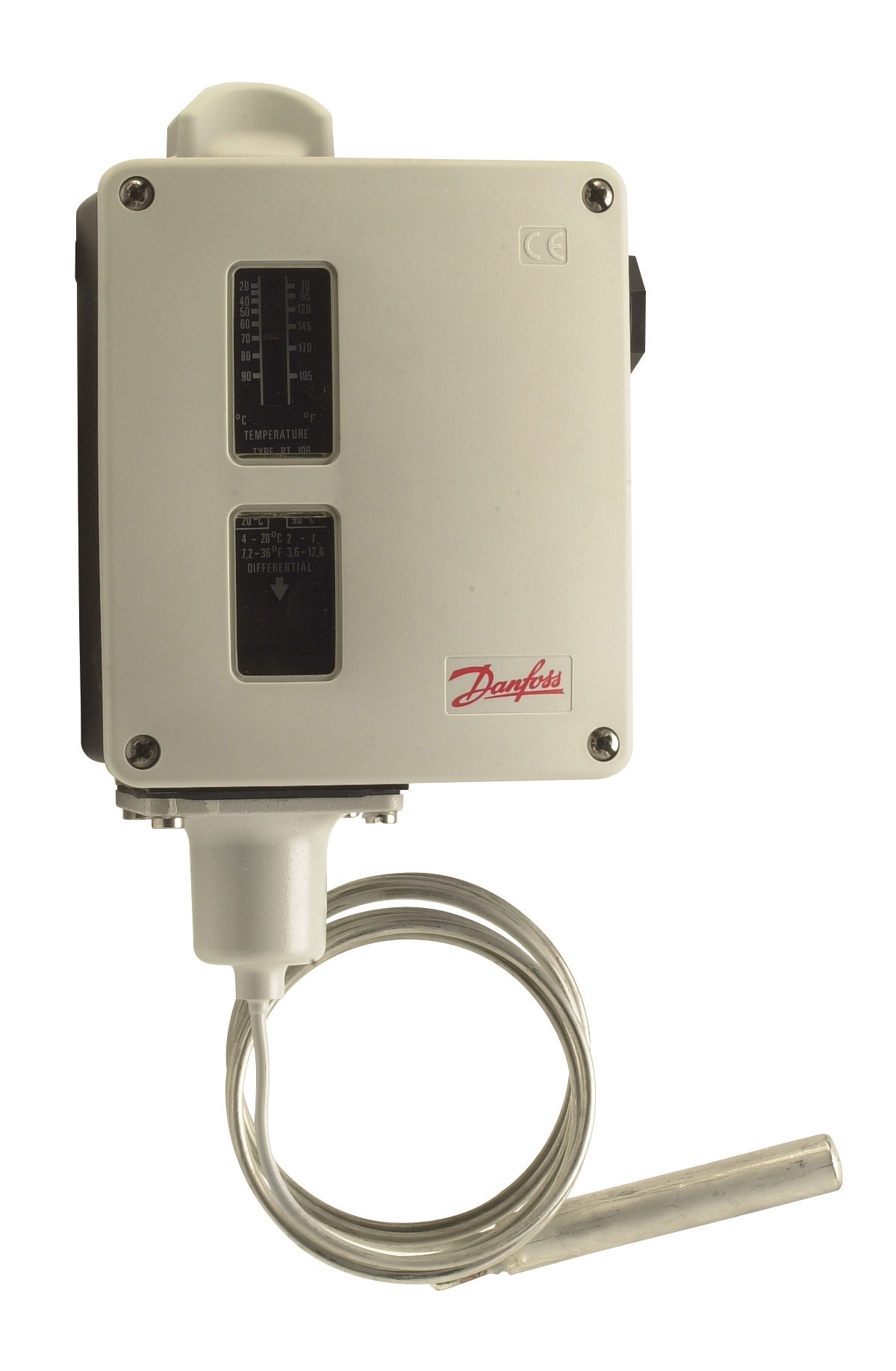
The Danfoss RT 107 and Danfoss RT 124 represent two approaches to temperature control that differ significantly in scalability.
The Danfoss RT 107 features a universal single-pole changeover contact design optimized for individual HVAC and process temperature regulation. Its fixed differential and neutral zone configuration work reliably in standalone applications. However, when a plant grows from monitoring one heating zone to three, integrating multiple RT 107 units requires parallel installation and independent calibration of each thermostat. This approach increases commissioning time and introduces variability—each unit may drift at different rates, creating temperature inconsistencies across zones.
The Danfoss RT 124 bulb-actuated design with adjustable differential and neutral zone option provides greater flexibility. The neutral zone feature—which creates a temperature band where no control signal activates—allows overlapping coverage across adjacent zones. When expanding from one zone to two or three, the RT 124's adjustable parameters enable coordinated operation without requiring completely separate circuit designs. The bulb-actuated sensing also provides faster response to temperature swings, valuable in plants with variable production loads during scaling periods.
Scalability Advantage: The RT 124 supports multi-zone integration with reduced commissioning complexity, while the RT 107 requires independent setup for each expansion.
Flame Detection and Amplifier Integration: Redundancy and Modular Expansion
Flame detection represents the most critical safety component in burner systems, and its architecture determines whether your plant can upgrade without interrupting production.
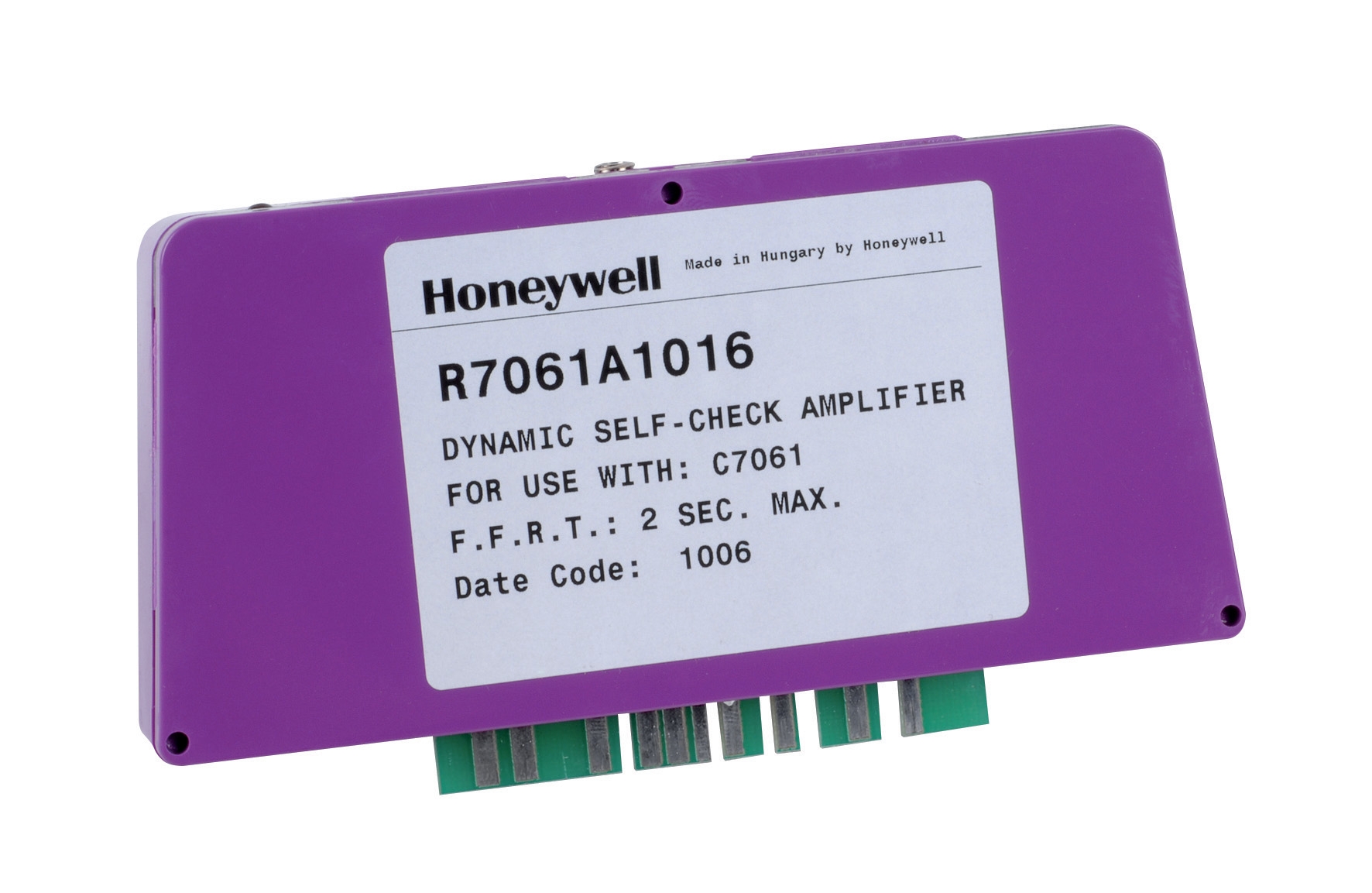
The Honeywell Cell C 7044 A 1006 ultraviolet flame detector paired with the Honeywell Amplifier R 7861 A 1026 represents a modular two-stage design widely used in Singapore's industrial sector. The UV cell detects flame presence, while the dedicated amplifier interprets the signal and outputs control commands to burner safety circuits.
Modularity Benefits:
- Independent Upgrades: If UV detection capability requires enhancement (switching to IR-UV dual sensing, for example), the cell can be replaced independently while the amplifier remains in service.
- Redundancy Capacity: Plants can install parallel flame detection chains—two Cell C 7044 detectors fed through separate R 7861 amplifiers—enabling true redundancy where one failure doesn't halt production.
- Environmental Tolerance: The R 7861 amplifier rated for -40°C to +60°C and 0.5 g continuous vibration maintains reliability during plant expansion when new burner placements may occur in less-controlled environments (outdoor annexes, elevated roof installations).
The modular architecture becomes essential when scaling. A plant operating two burners can add a third with a new Cell C 7044 + R 7861 pair, without redesigning existing flame detection circuits. The standardized interface between cell and amplifier means components from different installation generations work together.
Scalability Advantage: Modular detection + amplifier architecture allows parallel redundancy and independent component replacement, essential for plants adding burner systems incrementally.
Control Module Consolidation: Burner-Integrated vs. Distributed Logic
The Pactrol CSS01 12 control module integrates timed relay, flame relay, and electronic spark generator functions into a single 60 kW housing—a design philosophy that differs fundamentally from distributed relay systems.
Integrated Design Benefits for Expansion:
- Footprint Efficiency: Single control module occupies minimal electrical cabinet space, important when plants retrofit Controls & Safety into existing panel infrastructure. A plant in Jurong Industrial Estate with space-constrained control rooms can add a second CSS01 module without cabinet expansion.
- Function Coordination: Timed relay, flame monitoring relay, and ignition generation operate from one logic block, eliminating cross-module timing mismatches that occur when integrating separate relays and timers.
- Atmospheric and Forced-Air Compatibility: The CSS01 supports both burner types (atmospheric up to 60 kW and small forced-air systems), providing flexibility when production strategies shift or when multiple burner types coexist.
Contrast this with distributed relay architectures where a 4-tier relay rack can control 4–8 burners through shared timer logic and flame monitoring redundancy. However, distributed systems demand more commissioning expertise and introduce more potential integration points for failure.
Scalability Advantage: Integrated CSS01 modules scale linearly and predictably, but lack the density advantage of distributed systems for plants expanding beyond 2–3 burners.
Practical Selection Strategy for Singapore Plant Growth
Phase 1 Expansion (Current to +2 Burners):
Select the Danfoss RT 124 for thermostat control and the Honeywell Cell C 7044 A 1006 + Honeywell R 7861 A 1026 flame detection pair. These components provide adequate capacity for near-term growth while establishing modular architecture. The adjustable neutral zone on the RT 124 prepares for multi-zone operation. Deploy a Pactrol CSS01 12 control module for the primary burner line, with provisions for a second module in the electrical design.
Phase 2 Expansion (Year 3–5, +3–4 Burners):
Add a second Honeywell flame detection pair (Cell C 7044 + R 7861) for the new burner, creating parallel redundancy. Install the second CSS01 control module. The RT 124's multi-zone capability allows consolidated thermostat monitoring across the expanded facility. At this stage, conduct a Controls & Safety audit to determine if a distributed relay architecture becomes more cost-effective for Phase 3.
Phase 3 Expansion (Year 5+, +5–6 Total Burners):
Replace integrated CSS01 modules with a distributed relay system if operational complexity has increased. The modular flame detection architecture (Honeywell Cell/Amplifier pairs) continues scaling linearly, making it the anchor for long-term redundancy.
Certification and Compliance Considerations in Scaling
Singapore's PUB (Public Utilities Board) and SCDF (Singapore Civil Defence Force) regulations for boiler and burner safety don't change with plant expansion, but compliance documentation becomes more complex. The Honeywell R 7861 A 1026 amplifier and Danfoss RT 124 thermostat both carry CE and UL certifications, providing regulatory continuity as new systems are added.
When specifying Controls & Safety for scalable infrastructure, ensure all components share common certification standards. Mixing certified and non-certified components (or components with different certification bodies) creates compliance audit risk during production expansion.
Long-Term Cost Analysis: Scalability vs. Initial Price
Plant Managers often choose the least-expensive Controls & Safety option to minimize upfront capital. However, a scalable architecture reduces total cost of ownership over 10 years:
- Modular flame detection (Cell C 7044 + R 7861): Higher initial cost per burner, but each additional burner adds predictable cost with minimal commissioning variation. Year 5 expansion costs remain aligned with Year 1 pricing.
- Integrated control modules (CSS01): Lower initial cost, but each expansion requires new module procurement, engineering review, and integration testing, typically consuming 40–60 engineering hours per expansion phase.
- Single-point thermostats (RT 107): Cheapest initially, but multi-zone expansion forces parallel installation and independent calibration, increasing long-term labor costs.
Over a 10-year horizon with 2–3 expansion phases, modular architecture typically delivers 15–25% lower total cost despite 8–12% higher Year 1 investment.
Working with 3G Electric for Scalable Controls & Safety Planning
3G Electric's 35+ years distributing industrial Controls & Safety equipment in Southeast Asia means our technical team understands how Singapore plants expand. We recommend specifying controls architecture with a 3–5 year horizon in mind, not just immediate needs.
When evaluating the Danfoss RT 124, Honeywell Cell C 7044 A 1006, Honeywell R 7861 A 1026, Danfoss RT 107, and Pactrol CSS01 12, consider not just performance in Year 1, but integration capacity in Years 3 and 5. A Controls & Safety system that requires complete replacement during your plant's first major expansion represents hidden cost, not savings.