Understanding Thermal Power Scaling in Industrial Burners & Combustion
Burners & Combustion systems must deliver precise thermal output across varying operational demands. For HVAC contractors in Southeast Asia, thermal power scaling—the ability to match burner output to facility heating loads—is critical for energy efficiency and cost control.
Thermal power is measured in kilowatts (kW) or megacalories per hour (Mcal/h). A single facility rarely operates at maximum capacity continuously. Industrial boilers, process heaters, and HVAC systems cycle through part-load and full-load conditions. Two-stage and modulating burners address this reality by adjusting flame intensity and fuel flow without stopping and restarting.
3G Electric has distributed industrial combustion equipment for over 35 years, serving manufacturers across Southeast Asia who face diverse heating demands. Whether you're retrofitting aging steam systems or commissioning new district heating networks, understanding thermal power bands prevents costly oversizing and undersizing errors.
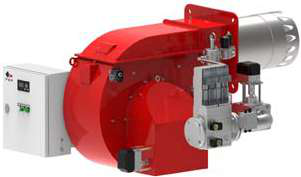
The FBR GAS XP 60/2 CE TC EVO exemplifies modern gas burner design, delivering 116–630 kW thermal power through two-stage operation. This 5.4:1 turndown ratio means the burner efficiently handles both light summer loads and peak winter demand. At 66–69 dBA, it also maintains acoustic compliance in noise-sensitive urban environments common throughout Southeast Asia.
Dual-Fuel Burner Architecture and Fuel Switching Logic
Many Southeast Asian facilities operate in energy markets where fuel availability and pricing fluctuate unpredictably. Dual-fuel burners provide operational flexibility by switching between natural gas and heavy fuel oil (HFO) or kerosene without requiring equipment shutdown.
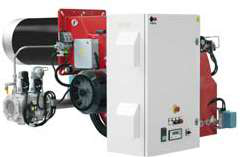
The FBR KN 1300/M TL EL represents industrial-scale dual-fuel capability, delivering 1700–11500 Mcal/h thermal power with modulating two-stage control. This burner suits large institutional and manufacturing boilers where fuel cost arbitrage drives procurement decisions. During monsoon seasons when LNG supply tightens, contractors can seamlessly transition facilities to HFO reserves without operational interruption.
Dual-fuel burner selection requires three parallel evaluations:
- Nozzle and atomization design: Oil-capable burners use pressure-atomizing or air-atomizing nozzles to break heavy fuel into fine mist. The FBR KN 1300/M TL EL employs rotary cup atomization for HFO grades up to ISO 2/M, tolerating the viscosity and sulfur content typical in Southeast Asian crude-derived fuels.
- Ignition system compatibility: Dual-fuel switching requires robust ignition circuits that function reliably across both gas pilot and oil pilot modes. The Kromschroder Relay BCU 570WC1F1U0K1-E supports both direct ignition and intermittent/continuous pilot operation, meeting EN 746-2 and EN 676 standards essential for equipment certification in ASEAN markets.
- Control relay logic and safety interlocks: Switching between fuels demands coordinated valve actuation and flame monitoring. The Siemens Relay LFL 1.622 provides UV and ionization flame detection with programmable air damper control, ensuring stable combustion during fuel transitions and protecting against flame-out scenarios.
HVAC contractors often underestimate the electrical complexity of dual-fuel systems. A misconfigured control relay can cause fuel line deadlock (both valves closed) or unsafe overlap (both fuels flowing simultaneously). Proper burner selection means partnering with suppliers like 3G Electric who stock compatible control packages, not just individual components.
Pressure Control and Combustion Stability at Variable Loads
As burners modulate between 116 kW and 630 kW (or 1700–11500 Mcal/h in heavy-duty applications), fuel and air pressures must track precisely to maintain stoichiometric air-fuel ratios. Pressure mismatches cause smoking, incomplete combustion, and fouling—costly maintenance in facilities operating 24/7.
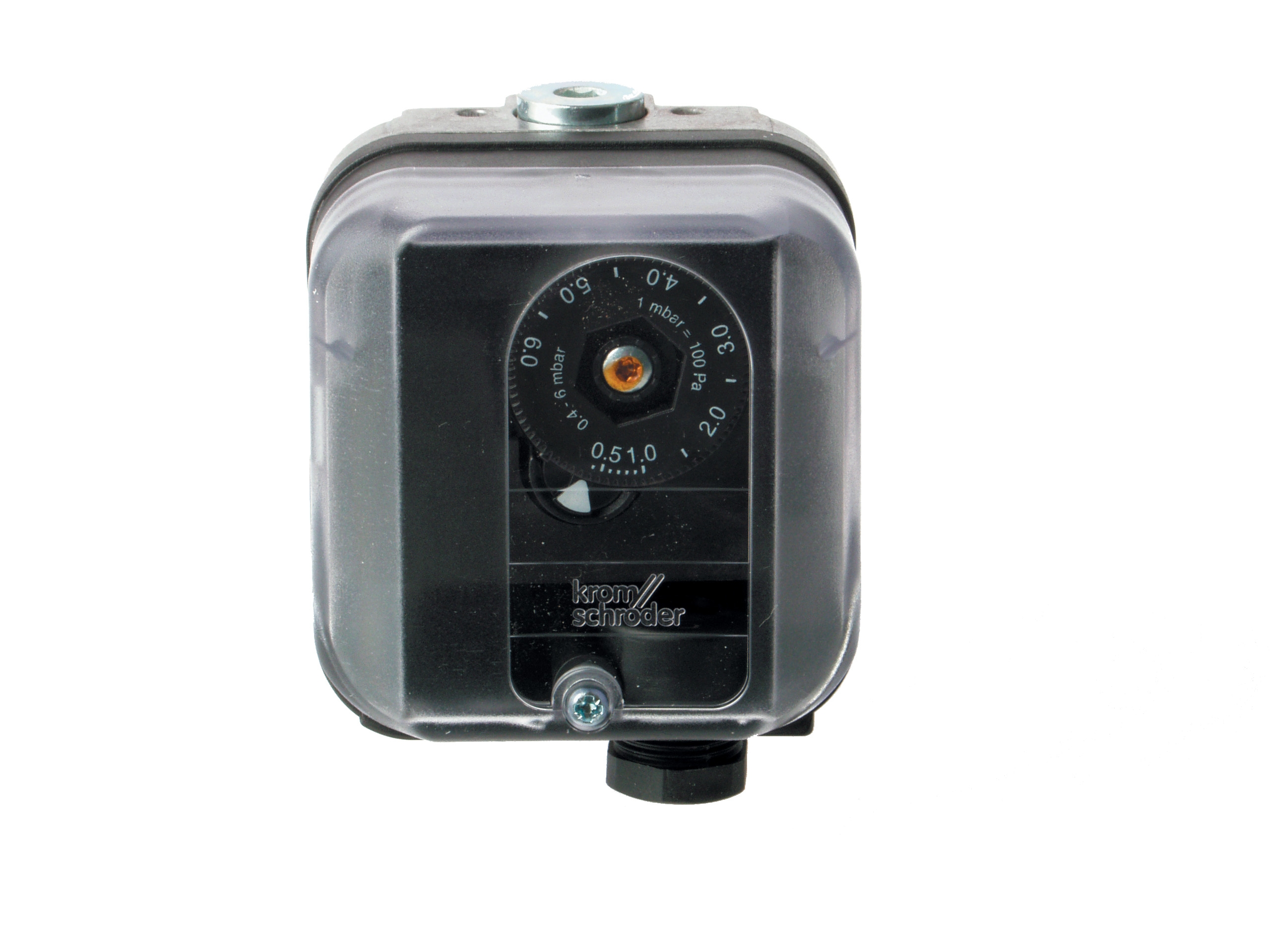
The Kromschroder DG 50U/6 pressure switch provides SIL 3-rated monitoring for burner air and fuel circuits. Rated to EN 1854, FM, UL, AGA, and GOST-TR standards, it detects fuel starvation, excessive back-pressure, and supply anomalies before combustion becomes unsafe or inefficient.
Pressure switches serve two functions in Burners & Combustion systems:
1. Pre-ignition safety verification: Confirming minimum fuel pressure exists before spark or pilot ignition. Low-pressure conditions indicate plugged nozzles, failed fuel pumps, or supply-line leaks.
2. Continuous operation monitoring: Detecting load-dependent pressure swings that signal air/fuel imbalance. On a modulating burner firing at 50% load, fuel pressure may drop 30–40% while air pressure remains high, creating lean-burn conditions that increase NOx emissions and reduce efficiency.
In Southeast Asia's humid, corrosive coastal environments, pressure switch reliability is non-negotiable. The Kromschroder DG 50U/6 withstands salt-air exposure and thermal cycling better than budget alternatives. Contractors choosing lower-cost switches often face repeat callouts when humidity causes electrical failures—a hidden cost that erodes profitability.
Practical Commissioning and Load-Matching Workflows
Selecting a burner is only the first step. Proper commissioning ensures it operates at design efficiency throughout its service life.
Step 1: Load Analysis
Determine peak heating demand (winter design day) and minimum part-load operation. A facility with 500 kW peak winter load but operating at 200 kW average should specify a burner with at least 6:1 turndown (300–1800 kW range) rather than a simple on-off unit rated for 500 kW. Oversized on-off burners cycle excessively, waste energy, and shorten equipment life.
Step 2: Fuel Supply Verification
For multi-fuel options, confirm both fuel storage capacity, delivery infrastructure, and quality. Southeast Asian HFO often contains higher water content and sediment than European grades. Burners must include adequate preheating (for viscosity reduction) and straining (for particulate removal). The FBR KN 1300/M TL EL includes integrated HFO preheating, eliminating external heat exchangers on smaller installations.
Step 3: Control Logic Validation
During commissioning, test fuel switchover under loaded conditions. Verify the Siemens Relay LFL 1.622 correctly sequences valve timing, monitors flame during transition, and holds off re-ignition attempts if flame is lost. Document pressure readings at 25%, 50%, 75%, and 100% load to establish baseline performance. Use these readings to tune the Kromschroder DG 50U/6 alarm thresholds.
Step 4: Emission Testing and Tuning
After 50 hours of operation, measure flue-gas CO, CO₂, O₂, and NOx. Adjust air/fuel ratios to achieve 3–5% excess oxygen and minimal smoke. In Singapore, Malaysia, and Indonesia, environmental regulations increasingly mandate annual stack testing. Proper tuning at commissioning prevents non-compliance penalties later.
Step 5: Handover Documentation
Provide facility operators with burner power curves (thermal output vs. load %), control sequences, and alarm thresholds. Many field failures trace to operator misunderstanding of burner behavior. A detailed startup checklist prevents accidental lockouts and flame failures during emergency operation.
Why Component Compatibility Matters More Than Price
HVAC contractors often source burners from one vendor and control components from another to reduce costs. This fragmentation creates integration risk. A low-cost generic ignition transformer may not deliver the precise spark timing required by a premium burner's fuel nozzle. A generic pressure switch may have 2–3 second response lag, allowing brief over-pressure spikes that damage proportional valves.
3G Electric maintains strategic inventory across Kromschroder, Siemens, and FBR product lines specifically because these manufacturers design systems where all components work in concert. When you purchase the Kromschroder Relay BCU 570WC1F1U0K1-E, the Kromschroder DG 50U/6, and an FBR burner through a single distributor, you gain technical support for the complete assembly—not finger-pointing when performance falls short.
For Southeast Asian contractors managing multiple sites across varying climates and fuel availability, this integrated approach reduces troubleshooting time and improves first-call-fix rates. Your reputation depends on burners that ignite reliably, modulate smoothly, and maintain efficiency year after year. Component synergy delivers that reliability.
Summary: Matching Thermal Power to Facility Demand
Burners & Combustion selection success hinges on matching thermal power range, fuel type, and control logic to actual operating conditions. Oversized burners waste energy; undersized burners cannot meet peak demand. Two-stage and modulating designs with turndown ratios of 5:1 or greater optimize efficiency across the full operational envelope.
Dual-fuel capability adds operational resilience in Southeast Asia's variable energy markets. Robust pressure monitoring and safety-certified control relays prevent combustion emergencies and maintain compliance with local environmental standards.
Work with a distributor like 3G Electric who stocks complete, compatible burner systems and provides commissioning guidance. Your facility's heating reliability and operating cost efficiency depend on decisions made during the selection phase, not corrected by field modifications later.