Understanding Burners & Combustion Load Matching
Burners & Combustion systems form the thermal backbone of industrial operations across Singapore—from district heating networks and food processing to chemical manufacturing and waste-to-energy plants. However, oversizing or undersizing a burner can result in poor efficiency, increased emissions, shortened equipment life, and failed compliance audits.
As a procurement engineer, your role is to bridge the gap between application thermal demands and equipment specifications. This requires understanding not just peak capacity, but also turndown ratio (modulation range), fuel availability, safety interlocks, and lifecycle costs. Drawing on 35+ years of experience supplying industrial equipment across Asia-Pacific, 3G Electric has identified the most common sizing errors that lead to costly mid-life replacements and operational headaches.
This guide provides a structured framework for evaluating burner capacity, matching it to your facility's load profile, and selecting complementary control and safety components that work together as an integrated system.
Section 1: Calculating True Thermal Load and Turndown Requirements
Peak vs. Average Load Analysis
Most procurement teams begin by identifying their facility's peak thermal demand. For a steam boiler, this might be 10 MW. For a process heater, it could be 2 MW. But peak demand often occurs only 10–20% of the time. The burner you select must handle peak load, but it will operate at partial load for 80% of its runtime.
This is where turndown ratio becomes critical. Turndown ratio is the ratio between maximum and minimum firing rates a burner can achieve while maintaining stable combustion and flame stability.
Example Calculation:
- Peak thermal demand: 10 MW
- Minimum load (continuous operation): 2 MW
- Required turndown ratio: 10 ÷ 2 = 5:1
If you specify a burner with only 3:1 turndown, one of two problems occurs:
1. Overfiring at minimum load: The burner fires below its modulation floor, causing incomplete combustion, soot formation, and safety trips.
2. On-off cycling: The burner cycles on and off, wasting fuel and stressing components.
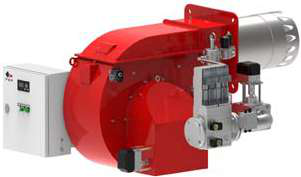
Industrial gas burners like the FBR HI-GAS P1500/M deliver 4186–15116 kW across a modulating flow range of 60–206 kg/h, giving you flexible turndown to handle variable loads. For smaller applications, the FBR HI-GAS P650/M provides 3488–7558 kW capacity with dual-stage modulation.
Accounting for Thermal Losses and Safety Margin
Never size a burner to match your theoretical heat load exactly. Industrial systems experience:
- Piping and insulation losses: 5–15% in steam and hot water systems
- Sensor response lag: 2–5 seconds delay in temperature control
- Seasonal variation: Winter demand significantly exceeds summer baselines
- Future expansion: Manufacturing lines are often extended mid-life
Section 2: Fuel Type, Availability, and Dual-Fuel Capability
Fuel Selection Matrix for Singapore
Singapore's industrial fuel landscape differs from regional neighbors. Grid-supplied natural gas is reliable but subject to price volatility. Liquefied petroleum gas (LPG) is available but requires onsite storage. Heavy fuel oil (HFO) offers cost advantages for large facilities but introduces higher maintenance and emissions compliance burdens.
Natural Gas Advantages:
- Cleanest combustion (lowest NOx and particulate)
- Lowest maintenance (no fuel atomization, minimal soot)
- Highest modulation range (up to 10:1)
- Simplest control logic
- Lower cost per BTU
- Higher energy density (longer runtime per unit volume)
- Backup fuel during gas supply disruptions
- Suitable for large steam boilers (1–20 MW)
For facilities requiring both fuels, dual-fuel burners like the FBR KN 350/M (465–4070 kW, gas/heavy oil) eliminate the need for separate combustion systems and simplify fuel switching logic.
Supply Chain and Logistics Impact
When specifying a burner, verify fuel supply contracts and backup arrangements:
- Gas interruptible rates: If your supplier can cut supply during peak demand periods, you must maintain alternative fuel capability.
- Fuel delivery schedules: HFO and LPG deliveries may be weekly or monthly. Your storage capacity must bridge these intervals.
- Seasonal switching: Some facilities deliberately switch to HFO in winter (when gas demand peaks nationally) to reduce costs.
Document these assumptions in your procurement specification, as they directly affect which burner model is appropriate.
Section 3: Pressure Control, Flame Detection, and Safety Integration
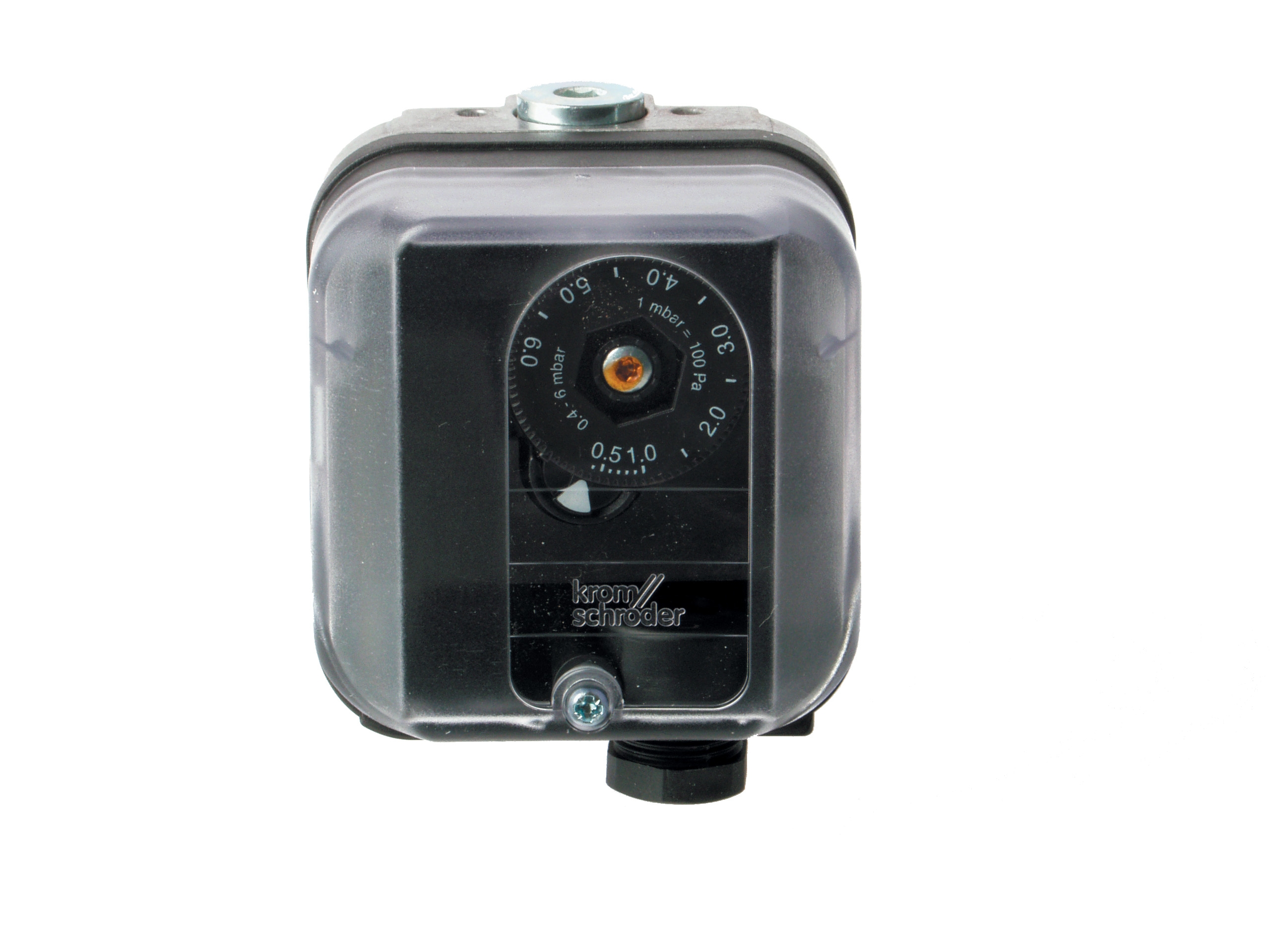
Pressure Switch Specification for Burner Protection
Every burner requires fuel pressure monitoring to ensure:
1. Minimum pressure for atomization (typically 2.5–5 bar for oil burners)
2. Maximum pressure protection (above 8 bar, fuel pressure regulators can fail)
3. Loss-of-signal detection (burst fuel lines)
The Kromschroder DG 50U/6 pressure switch is rated SIL 3 and meets EN 1854, FM, UL, and AGA standards—critical for facilities operating under Singapore's stricter industrial safety regimes and any insurance underwriting that demands third-party certification.
When specifying a pressure switch:
- Match the setpoint to your fuel delivery pressure (verify with your fuel supplier)
- Ensure the switch can tolerate your fuel type (some switches are oil-rated only; others handle gas)
- Install a snubber (dampening cartridge) if fuel pressure pulses exceed ±0.3 bar (common in gear-pump delivery systems)
Flame Detection and Burner Interlock Logic
Flame detectors confirm that fuel is actually burning. Loss of flame triggers an automatic burner lockout, preventing dangerous accumulation of unburned fuel vapors.
The Siemens QRB4A-B036B40B flame detector is a two-wire ultraviolet (UV) cell designed for oil burner applications, with 36 mm mounting hole spacing for standard burner tile installations. It provides rapid flame response (under 1 second) and is compatible with most burner control relays used in Asia-Pacific.
Critical integration point: Your flame detector must interface with your burner control relay and your fuel solenoid valve. The standard sequence is:
1. Burner energized (igniter + fuel pump start)
2. Flame detector confirms ignition within 4 seconds
3. If no flame detected → fuel solenoid de-energizes → burner shuts down
4. If flame confirmed → burner modulates to setpoint
If your facility operates multiple burners (e.g., three 5 MW burners in parallel rather than one 15 MW burner), each must have independent flame detection and fuel isolation. This prevents a single burner failure from affecting others.
Section 4: Lifecycle Costing and Total Cost of Ownership
Capital vs. Operating Costs
A smaller, less capable burner may appear cheaper upfront but incur higher operating costs:
Scenario A: Undersized Burner (6 MW unit for 10 MW peak)
- Capital cost: $15,000
- Annual operating cost: $2,800 (constant high modulation, poor efficiency)
- Annual maintenance: $1,200 (excessive wear)
- 10-year TCO: $15,000 + (10 × $4,000) = $55,000
- Capital cost: $22,000
- Annual operating cost: $2,100 (optimal modulation range)
- Annual maintenance: $600 (normal wear)
- 10-year TCO: $22,000 + (10 × $2,700) = $49,000
The correctly sized unit costs 11% less over its life, despite higher capital outlay.
Maintenance and Spare Parts Availability
Singapore's industrial sector is highly developed, but spare parts for niche equipment can take 4–8 weeks to import. Ensure your selected burner model has established supply chains:
- OEM direct service: Manufacturer representatives in Singapore or Malaysia
- Authorized distributors: 3G Electric maintains stock of common FBR burner nozzles, electrodes, and fuel filters
- Documentation: Ensure detailed service manuals and parts diagrams are available in English
- Technician training: Verify your maintenance staff (or contractor) has completed certification courses
Regulatory and Compliance Costs
Singapore's Energy Conservation Act and Environmental Protection and Management Act impose:
- Annual energy audits for facilities consuming >54 GJ thermal energy
- Efficiency benchmarking requirements
- NOx and particulate emissions limits that vary by fuel type
Specifying a burner with certified efficiency ratings (ISO 12922 for oils, EN 1854 for gas burners) and integrated emissions monitoring can prevent costly retrofit projects later.
Conclusion
Burners & Combustion equipment selection is not a simple "match kW to load" exercise. It requires integrating load profiling, fuel logistics, safety interlocks, and 10-year ownership economics into a single coherent specification.
3G Electric's 35+ years of experience distributing industrial thermal equipment across Asia-Pacific has shown that procurement engineers who invest time in these analyses save both capital and operating costs, reduce compliance risk, and achieve better equipment uptime. The tools and frameworks in this guide are proven across hundreds of installations—from small commercial boilers to large manufacturing complexes.
Start with your true load profile (peak, average, and minimum), confirm fuel availability and supply terms, specify appropriate safety components, and validate total cost of ownership before issuing purchase orders. Your operations team will thank you when the system runs reliably for 15+ years.