Understanding Burners & Combustion System Specifications
Burners & Combustion systems represent significant capital investments in industrial operations. As a procurement engineer, your role requires translating operational requirements into precise technical specifications that ensure equipment reliability, regulatory compliance, and cost efficiency. This guide provides the methodology for evaluating, comparing, and procuring combustion equipment across a spectrum of applications—from boiler heating to process plant operations.
The combustion equation itself drives all specification decisions. Understanding fuel-to-air ratios, thermal output requirements, and control responsiveness establishes the foundation for rational equipment selection. Most industrial heating demands fall into three categories: continuous high-output applications (process heating, large-scale boilers), modulating systems (responsive to load changes), and specialized applications (emergency backup, dual-fuel redundancy).
3G Electric's 35+ years of experience distributing industrial equipment has exposed us to thousands of system configurations across Southeast Asian operations. We've observed that procurement decisions made without comprehensive specification frameworks typically result in either oversized systems consuming excess fuel, or undersized equipment unable to meet demand peaks.
Establishing Capacity Requirements and Control Parameters
The first step in specification is calculating your actual thermal load. Document hourly heating demands, peak loads, and anticipated growth. For boiler applications, account for both steady-state operation and warm-up cycles. For process heating, model seasonal variations and production schedule changes.
Capacity specifications must address three distinct parameters:
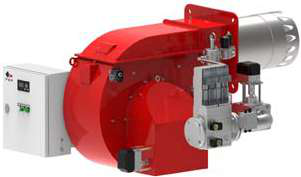
- Thermal Output (kW or Mcal/h): The rated heat energy the burner delivers. The FBR HI-GAS P550/M CE TL exemplifies large-scale capacity with 2325–6395 kW output, suitable for industrial applications requiring substantial fuel flow rates of 60–206 kg/h.
- Fuel Flow Rate (GPH, kg/h, or m³/h): The volumetric or mass quantity of fuel consumed per unit time. This directly impacts fuel storage requirements, delivery scheduling, and operating costs. Procurement teams must verify fuel supply infrastructure can sustain specified flow rates continuously.
- Modulation Ratio (turn-down capability): The range between minimum and maximum output. A 5:1 modulation ratio means the burner can operate from 20% to 100% output. Higher ratios provide operational flexibility but require more sophisticated control systems. The FBR X GAS 2/C offers manual modulation from 15–60 Mcal/h (17.4–69.8 kW), making it suitable for kitchen and smaller commercial applications where demand fluctuates.
Electrical requirements must be specified with precision. Three-phase vs. single-phase supply availability, voltage (230V, 110V, or variable), frequency (50Hz or 60Hz in Singapore), and power demand all influence equipment compatibility. The FBR HI-GAS P550/M operates on 3-phase supply—standard for industrial facilities—while smaller burners like the FBR X GAS 2/C function on single-phase 230V with a 110W fan motor.
Control System Integration and Safety Device Selection
Modern burners & combustion systems demand sophisticated electronic control and safety verification. Control architecture determines how quickly the burner responds to load changes, how precisely it maintains setpoint temperature, and how reliably it detects and responds to combustion failures.
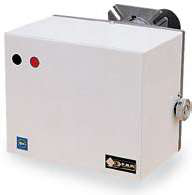
Electronic control boxes form the intelligence layer of combustion systems. The SIT 0577211 control box represents this category—a microprocessor-based device specifically engineered for gas appliances and boilers using natural or LPG fuel. Key procurement considerations include:
- Microprocessor capability: Enables diagnostic self-testing, load curve optimization, and fault logging. Modern controllers record ignition attempts, flame detection events, and safety shutdowns—critical data for troubleshooting and preventive maintenance planning.
- Spark gap specifications: The SIT 0577211 maintains a 2–4 mm spark gap, critical for reliable ignition across varying atmospheric conditions and fuel line pressures. Procurement teams should verify spark gap repeatability and maintenance access when evaluating control boxes.
- Alarm output capacity: The 230 Vac alarm output at 1 A allows integration with building management systems, emergency notifications, or secondary safety circuits. Confirm alarm output specifications match your facility's integration requirements before purchase.
Flame detection and burner control relays form the safety backbone of combustion systems. The Satronic DMG 970-N MOD.01 relay demonstrates industrial-grade safety integration, compatible with IRD 1020 and UVD 971 flame detectors. This device operates at both 50Hz and 60Hz, with voltage options of 220/240V or 110/120V—crucial for facilities with multiple electrical standards or potential future relocation within Southeast Asia.
Procurement engineers must understand that flame detection and control relays work as interdependent systems. Flame detectors (ultraviolet or infrared) constantly monitor combustion status. If flame is not detected within specified timeout windows (typically 2-4 seconds), the control relay initiates safety shutdown. Specifying mismatched components—a flame detector incompatible with the control relay—results in nuisance shutdowns or, worse, failure to detect actual flame loss.
Fuel Type Considerations and Equipment Matching
Singapore's industrial landscape relies predominantly on natural gas for burner applications, with oil-fired systems serving specific industries (food processing, small manufacturing) and backup applications. Dual-fuel capability provides operational resilience when either fuel supply experiences disruption.
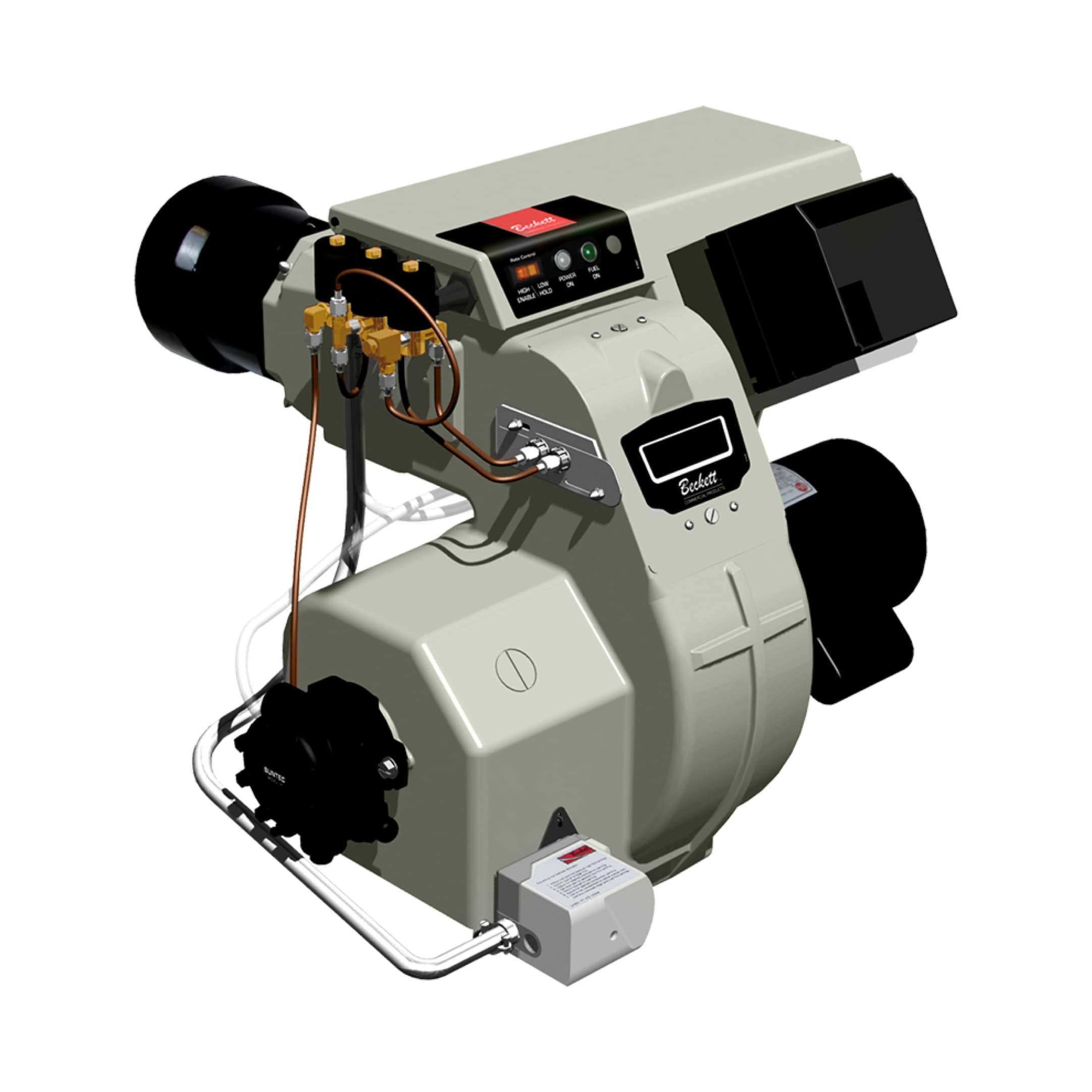
For oil-fired applications, the Beckett CF3500 Oil Burner delivers 17.00–35.00 GPH with direct spark ignition, rated for AC power supply. Oil burners demand higher maintenance rigor than gas counterparts due to fuel contamination risks, nozzle fouling, and combustion residue accumulation. Procurement engineers selecting oil-fired equipment should budget accordingly for:
- Fuel storage tank inspection and maintenance (quarterly minimum)
- Nozzle replacement and testing (annually)
- Combustion air filter changes (quarterly to semi-annual, depending on environment)
- Flue gas analysis and adjustment (semi-annual)
Gas-fired systems, by contrast, offer lower maintenance intensity and inherently cleaner combustion. However, natural gas supply pressure varies by location and time of day, requiring pressure regulation and potentially burner derating during peak consumption periods.
Procurement decisions hinge on:
1. Primary fuel availability and cost trajectory: Natural gas pricing in Singapore remains relatively stable, while oil prices fluctuate with global crude markets. Calculate 5-year operating cost scenarios using realistic fuel price forecasts from your procurement analytics team.
2. Supply reliability and backup requirements: Industries with continuous thermal demands (hospitals, food manufacturing, chemical processing) may justify dual-fuel systems. Industries with flexible production schedules can operate with single-fuel primary systems and manual backup protocols.
3. Emissions compliance: Singapore maintains strict emissions standards under the Environmental Protection and Management Act. Gas-fired systems naturally produce lower NOx and particulate emissions than oil-fired equipment. If your facility operates in environmentally sensitive zones or serves customers with stringent Scope 3 emissions requirements, specify gas-fired burners and high-efficiency boiler designs.
Vendor Evaluation and Total Cost of Ownership Analysis
Selecting a equipment supplier involves more than comparing unit prices. Procurement engineers must evaluate the total cost of ownership, including installation support, technical documentation, warranty coverage, and long-term spare parts availability.
3G Electric's 35+ years as a distributor of industrial equipment positions us to provide not just products, but system integration support. When evaluating potential suppliers:
- Request detailed technical datasheets that specify electrical requirements, control system compatibility, maintenance intervals, and spare parts availability. Vague or incomplete documentation signals either poor product design or inadequate vendor support.
- Verify spare parts inventory and procurement lead times. A control box with 12-week lead time for replacement parts creates unacceptable downtime risk. Cross-reference equipment models with distributor catalogs to confirm parts availability in Singapore and regional warehouses.
- Confirm installation and commissioning support. Industrial burner installation requires specialized expertise: gas line sizing and pressure testing, air/fuel ratio calibration, flue gas analysis, and safety system verification. Vendors should provide detailed installation manuals, commissioning checklists, and responsive technical support during startup.
- Evaluate warranty terms in the Singapore context. Standard warranties (12 months) often prove insufficient for equipment operating continuously. Extended warranties or service contracts covering labor, parts, and diagnostic support reduce long-term risk exposure.
- Document performance guarantees and efficiency ratings. Modern burners & combustion systems should guarantee minimum combustion efficiency (typically 85% for gas, 75% for oil). Request third-party efficiency test reports (ISO or equivalent standards) to substantiate manufacturer claims.
Procurement teams should structure vendor comparisons using a weighted scoring matrix that allocates point values to:
- Equipment specification match (40%): Does the burner capacity, modulation ratio, and fuel type precisely match operational requirements?
- Electrical compatibility (15%): Are voltage, phase, and frequency requirements compatible with facility infrastructure?
- Control system sophistication (15%): Does the electronic control package provide necessary responsiveness, diagnostics, and integration capability?
- Spare parts availability (15%): Can critical components be sourced within acceptable lead times?
- Vendor support and warranty (15%): Does the supplier provide adequate commissioning assistance and warranty/service coverage?
This framework eliminates subjective vendor selection and creates defensible procurement decisions tied directly to operational requirements and risk mitigation.
Implementation Timeline and Risk Mitigation
Industrial burner procurement and installation demands careful project management. Specify procurement timelines accounting for:
- Lead times: Large industrial burners (especially high-capacity units) may require 8–12 weeks from order to delivery. Factor this into your capital project scheduling.
- Installation complexity: Gas line sizing, pressure regulation setup, combustion air provision, flue routing, and safety system integration typically require 2–4 weeks for large installations. Coordinate with facility maintenance teams to schedule during planned maintenance windows.
- Commissioning and testing: Post-installation verification, flue gas analysis, efficiency measurement, and safety system proof-testing require 3–5 days. Schedule commissioning only after installation completion and preliminary inspection.
- Staff training: Operating and maintenance personnel require training on the specific control system, emergency procedures, and routine maintenance protocols. Budget 2–3 days for comprehensive operator training.
Mitigation strategies include specifying equipment with modular designs allowing staged installation, requesting spare control boxes to enable equipment replacement while originals undergo service, and maintaining relationships with multiple equipment suppliers to reduce single-source dependency.
Procurement engineers who follow this systematic specification and evaluation framework reduce project risk, optimize capital efficiency, and establish reliable, compliant combustion systems that serve their facilities for 15–20 years with minimal unexpected failures.