Understanding Burners & Combustion Power Ratings in Industrial Applications
Burners & Combustion systems vary dramatically in thermal output, and choosing the wrong capacity is one of the most common procurement mistakes in Singapore's industrial sector. Whether you operate a food processing facility, chemical plant, or district heating system, matching your burner's thermal power to your actual demand directly impacts energy costs, equipment lifespan, and production reliability.
With over 35 years of industrial equipment distribution experience, 3G Electric has helped hundreds of Singapore-based facilities optimize their combustion systems. This comparison guide focuses on practical thermal capacity selection—a critical decision point that determines whether your burner operates efficiently at 80% load or wastes fuel running undersized or oversized.
Thermal power in Burners & Combustion equipment is measured in kilowatts (kW) or megacalories per hour (Mcal/h). Understanding this specification, combined with your facility's peak demand and modulation range, ensures you invest in the right capacity.
Two-Stage Gas Burners: Mid-Range Thermal Capacity for Flexible Operations
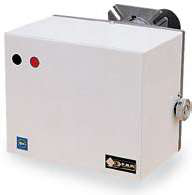
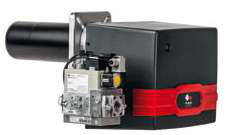
The FBR GAS XP 60/2 CE TC EVO represents the two-stage gas burner category—a practical choice for many Singapore industrial operations. This burner delivers 116–630 kW thermal power with full modulation across its operating range.
Key capacity characteristics:
- Low-fire output: 116 kW at minimum load
- High-fire output: 630 kW at maximum load
- Modulation ratio: 1:5.4, meaning the burner can operate efficiently across varying demand scenarios
- Nozzle specification: 250 mm, standard for industrial gas applications
- Noise level: 66–69 dBA, acceptable for most industrial environments
- Protection rating: IP 40, suitable for protected indoor installation
For Singapore facilities with variable thermal demand—such as food sterilization lines, textile drying operations, or indirect heating systems—a two-stage burner with this modulation ratio provides significant fuel savings. Rather than cycling a single-stage burner on and off (which wastes fuel during ignition cycles), the FBR GAS XP 60/2 CE TC EVO operates continuously at whatever low-fire or high-fire setting matches your current load.
The 250 mm nozzle is industry-standard and pairs well with standard combustion control systems. This model suits facilities operating between 116 and 630 kW continuously, with peak demands that don't exceed the upper limit.
Heavy Oil and Dual-Fuel Burners: High-Capacity Industrial Power
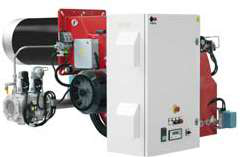
For operations requiring significantly higher thermal output—or fuel flexibility during supply disruptions—dual-fuel burners represent a critical infrastructure investment. The FBR KN 1300/M TL EL exemplifies this category.
Capacity specifications:
- Thermal power range: 1,700–11,500 Mcal/h (approximately 1,980–13,400 kW)
- Fuel compatibility: Heavy oil and gas (dual-fuel)
- Modulation: 2-stage with modulating control
- Control type: Fully modulating, allowing continuous adjustment within its operating envelope
- Application suitability: Large-scale industrial heating, steam generation, and high-demand process heating
This capacity class addresses Singapore's industrial heavyweight operations—petrochemical plants, large textile mills, food processing complexes, and district heating installations. The dual-fuel capability is particularly valuable in Singapore's industrial landscape, where gas supply reliability may require backup heavy oil capacity.
The modulating control feature distinguishes this burner from fixed-output alternatives. Rather than operating at discrete low-fire and high-fire positions, a modulating burner continuously adjusts fuel and air flow to match demand. For a facility with variable thermal needs throughout the operating day, this translates directly to fuel cost savings of 8–15% compared to two-stage alternatives.
Critical consideration: A burner rated 1,700–11,500 Mcal/h should operate primarily in the 3,000–10,000 Mcal/h range for optimal efficiency. If your facility's average demand is below 2,500 Mcal/h, oversizing to this capacity will result in excessive cycling and poor performance.
Control Systems and Burner Capacity Matching
Selecting the correct thermal power is only half the equation. Your burner's performance depends equally on compatible control relay and safety systems.
For the FBR GAS XP 60/2 CE TC EVO (116–630 kW range), the Kromschroder Relay BCU 570WC1F1U0K1-E provides appropriate control. This relay supports:
- Direct ignition and intermittent/continuous pilot ignition modes
- EN 746-2 and EN 676 compliance (European standards, widely adopted in Singapore)
- Control of two-stage or modulating burners
- Integration with air damper controls and gas valve sequencing
For larger installations utilizing the FBR KN 1300/M TL EL, the Siemens Relay LFL 1.622 offers enhanced capability for medium to high-power burners. This control unit provides:
- Dual-flame monitoring (UV and ionization) for reliable ignition confirmation
- Controlled air damper operation, critical for maintaining combustion efficiency
- Safety interlocking that prevents unsafe fuel flow
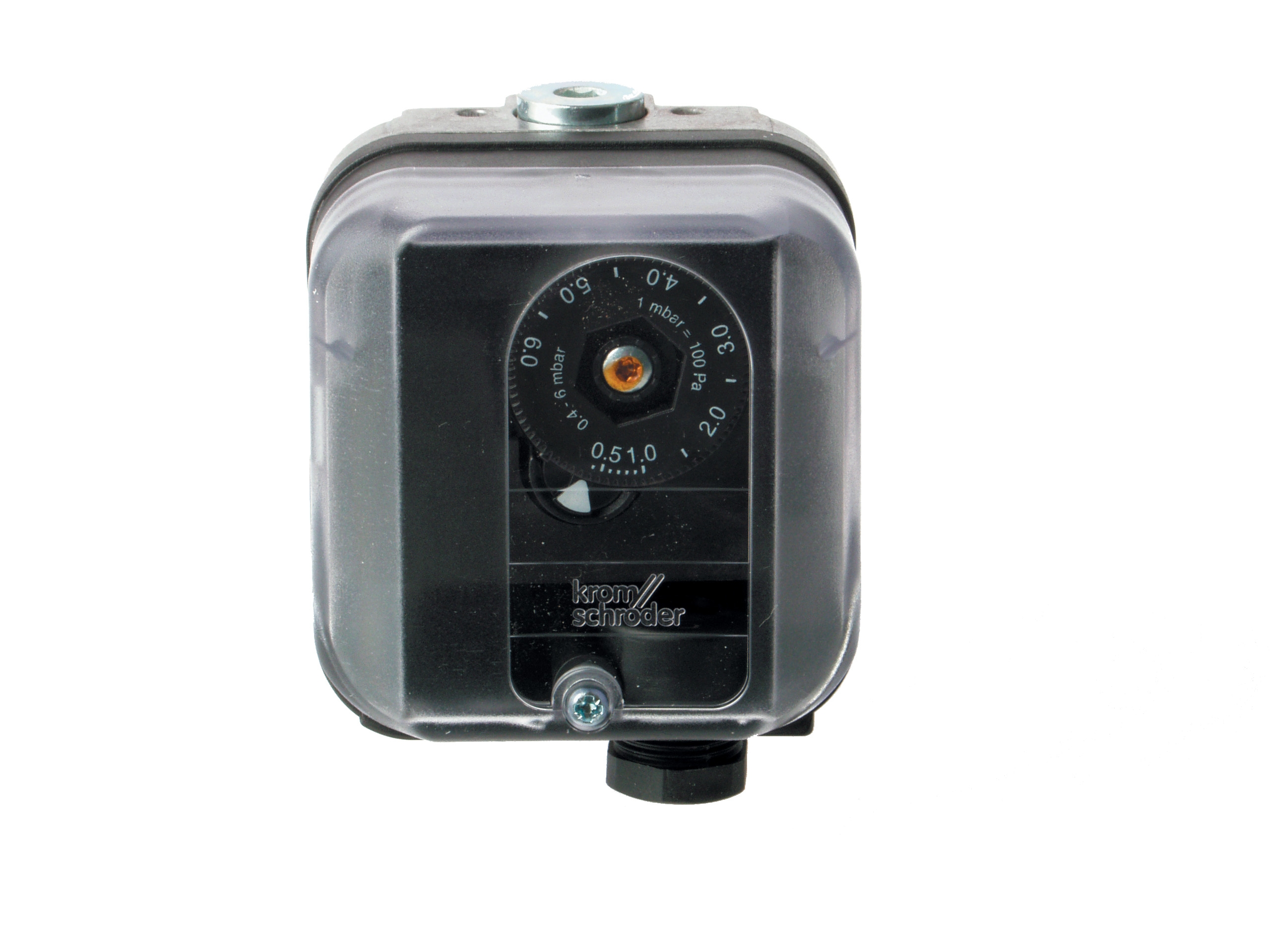
Beyond the control relay, pressure safety is equally critical. The Kromschroder Pressure switch DG 50U/6 monitors fuel or air pressure, certified SIL 3 and Performance Level e. This switch prevents burner operation if:
- Fuel pressure drops below safe operating range (equipment damage risk)
- Air pressure is insufficient for complete combustion (incomplete burn, emissions risk)
- System pressure exceeds design limits (safety hazard)
For a 1,700–11,500 Mcal/h installation like the FBR KN 1300/M TL EL, this pressure switch is non-negotiable. The consequences of uncontrolled fuel flow at this capacity level—equipment damage, production loss, safety exposure—far exceed the cost of proper pressure monitoring.
Practical Capacity Selection Framework for Singapore Facilities
When evaluating Burners & Combustion systems for your operation, follow this practical approach:
1. Calculate Your Actual Thermal Demand
Determine your facility's average thermal load and peak thermal load. For a textile drying operation, measure the actual steam or hot air consumption during normal production. For chemical processing, calculate the thermal energy required per batch. This number—not your maximum possible capacity—should drive your burner selection.
2. Apply a Safety Margin
Select a burner with maximum capacity 15–25% above your peak measured demand. This margin accommodates seasonal variations, production increases, and aging equipment effects (which reduce heat transfer efficiency over time).
3. Verify Modulation Range
If your facility's demand varies significantly throughout the day or across production batches, ensure your burner's modulation ratio supports efficient operation at minimum load. A two-stage burner works well if demand remains above 50% most of the time. A modulating burner suits operations with demand swinging between 30% and 100%.
4. Match Control System Capacity
Confirm your selected control relay and safety switches are rated for your burner's thermal capacity and fuel type. An undersized control relay cannot safely modulate a large burner; an oversized relay adds unnecessary cost without benefit.
5. Confirm Local Compliance
Verify that your selected burner and control system meet relevant Singapore standards and any facility-specific requirements (e.g., emissions limits, noise constraints, installation space limitations).
Real-World Impact: Capacity Mismatches in Singapore Operations
We frequently encounter facilities with problematic burner capacity selections:
- Oversized burners running at minimal load cycle frequently, reducing component lifespan and consuming excess fuel
- Undersized burners that cannot maintain production temperatures, forcing production delays and customer impact
- Wrong control systems that cannot properly modulate large burners, resulting in unstable flame and safety shutdowns
- Missing safety switches on high-capacity burners, creating unacceptable risk
Each scenario is avoidable through proper upfront capacity analysis. The modest investment in careful selection and compatibility verification—typically 2–4 hours of engineering review—prevents costly operational issues.
Conclusion: Right-Sizing Your Burner Investment
Burners & Combustion equipment represents a significant capital investment with 15–25 year operational lifespan. Selecting the correct thermal power rating ensures your facility operates efficiently, safely, and reliably throughout that entire period.
3G Electric's 35+ years of industrial equipment distribution across Southeast Asia means we've guided countless facility managers, procurement engineers, and maintenance teams through this selection process. Whether your operation requires a two-stage gas burner in the 116–630 kW range or a large dual-fuel installation at 1,700–11,500 Mcal/h, the fundamental principle remains constant: match your burner's capacity to your actual thermal demand, verify compatibility with control and safety systems, and confirm local compliance.
The cost savings from proper capacity selection—typically 8–15% reduction in fuel consumption plus extended equipment lifespan—exceed the engineering investment many times over.