Understanding Dual-Fuel Burners and Combustion Architecture
Burners & Combustion systems in Southeast Asia face unique operational challenges driven by fluctuating fuel availability, seasonal energy pricing, and regulatory compliance across diverse markets. Dual-fuel burners address these constraints by enabling seamless switching between natural gas and heavy fuel oil, allowing facility managers to optimize operating costs while maintaining consistent thermal output.
A dual-fuel combustion system operates on a primary-backup principle or simultaneous combustion logic, depending on design architecture. In primary-backup mode, the burner operates on preferred fuel (typically gas) with automatic switchover to secondary fuel (heavy oil) when primary fuel becomes unavailable or uneconomical. Simultaneous combustion systems blend both fuels proportionally to achieve target power output while managing supply chain disruptions common in the region.
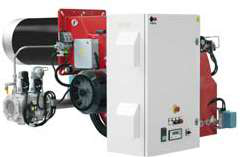
The FBR KN 1300/M TL EL exemplifies industrial-grade dual-fuel design, delivering thermal power from 1700 to 11,500 Mcal/h across two operating stages with modulating control. This capacity range serves diverse Southeast Asian applications—from textile processing and food production to petrochemical preheating and district heating networks. The burner's modulating capability enables proportional heat delivery matching real-time process demands, reducing fuel waste during partial-load operation.
Multi-Stage Modulation and Combustion Control Logic
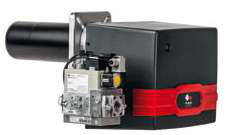
Modulating dual-fuel burners employ staged combustion architecture where each stage represents a distinct flame envelope and fuel delivery pathway. Two-stage burners like the FBR GAS XP 60/2 CE TC EVO operate with low-fire and high-fire settings, enabling intermediate power levels through proportional valve modulation or staged ignition sequencing.
Stage 1 (Low-Fire Operation):
- Reduced air and fuel flow maintains flame stability at minimal thermal output
- Essential for soft-start procedures preventing thermal shock to downstream equipment
- Typical low-fire setting: 25-40% of burner rating
- Fuel consumption optimization during reduced-demand periods
- Full air and fuel delivery achieving maximum thermal power
- Responsive to demand spikes requiring rapid heat generation
- Typical high-fire setting: 75-100% of burner rating
Intermediate power levels (40-75% output) are achieved through analog modulating valves that continuously adjust fuel flow proportional to control signals from process sensors. This approach eliminates the efficiency losses associated with on-off cycling burners, which repeatedly ignite and extinguish creating thermal hysteresis and increased NOx emissions.
Control relay integration is critical for safe modulation. The Kromschroder Relay BCU 570WC1F1U0K1-E provides burner control logic supporting direct ignition and intermittent/continuous pilot modes across both stages. This relay coordinates fuel valve sequencing, air damper positioning, and flame monitoring—ensuring combustion stability during fuel transitions.
Fuel Switching and Supply Management Strategies
Dual-fuel switching in Southeast Asian industrial operations requires sophisticated pressure management and flame stability protocols. Unlike single-fuel systems, dual-fuel burners must handle different fuel properties including viscosity, flash point, and flame speed characteristics.
Gas-to-Oil Switchover Sequence:
When switching from natural gas to heavy fuel oil, the burner must:
1. Reduce gas supply pressure while simultaneously increasing oil pump discharge pressure
2. Transition pilot flame from gas ignition to oil ignition (typically requiring higher temperature)
3. Adjust air damper position to optimize air-fuel ratio for denser oil fuel
4. Monitor flame signal during transition—flame loss triggers safety shutdown
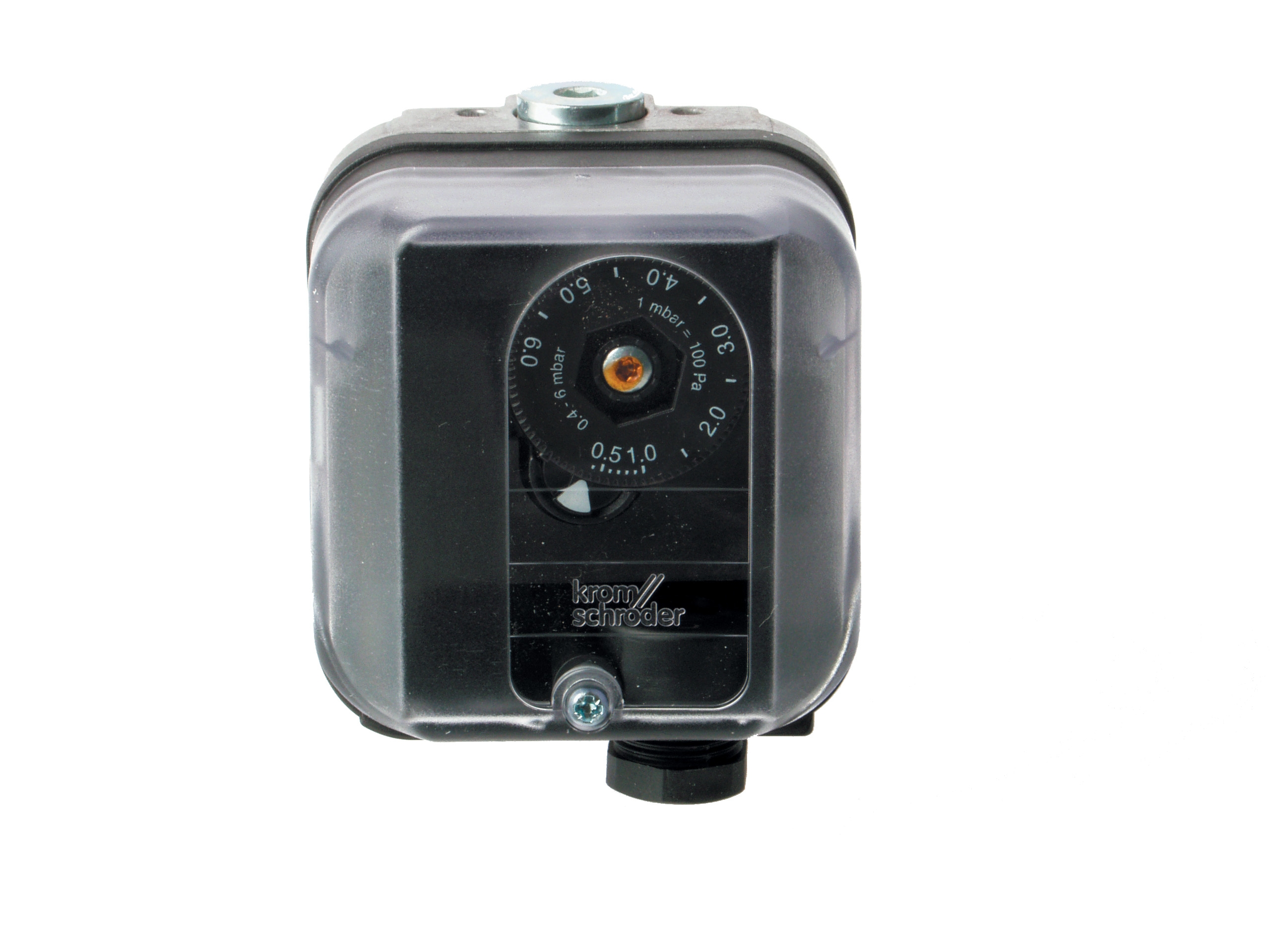
This switchover occurs over 10-30 seconds, during which the burner operates in a transition state where both fuels may be flowing at reduced rates. Pressure control is maintained by the Kromschroder Pressure Switch DG 50U/6, a SIL 3-rated device providing dual-channel pressure monitoring with EN 1854, FM, and UL certification. This switch validates fuel supply pressure remains within safe operating ranges (typically 1.5-6 bar for gas, 8-20 bar for heavy oil) before permitting flame ignition.
Cost Optimization Logic:
Seasonal fuel pricing in Southeast Asia creates opportunities for cost reduction through intelligent fuel selection:
- During monsoon seasons when natural gas imports face shipping delays, switching to domestically available heavy fuel oil maintains operation
- Off-peak night hours may favor cheaper fuel sources
- Heavy maintenance periods (weekends) can operate on less preferred fuel while primary fuel reserves accumulate
Facility operators implement automated fuel selection logic within burner management systems, typically based on:
- Real-time commodity pricing feeds
- Inventory level thresholds
- Seasonal supply forecasts
- Equipment maintenance schedules
Combustion Safety and Flame Monitoring During Dual-Fuel Operation
Dual-fuel combustion introduces additional failure modes requiring robust safety architecture. Each fuel type exhibits different flame characteristics—gas flames are typically blue and fast-propagating, while oil flames are yellow/orange with slower development. Safety relays must correctly identify valid flame signals regardless of fuel type and operational stage.
The Siemens Relay LFL 1.622 addresses this requirement through dual flame monitoring: UV (ultraviolet) detection and ionization sensing. UV sensors respond to both gas and oil flame emissions, while ionization monitors the ion current generated in the combustion zone. Operating these sensors in parallel provides redundancy—if one sensor fails, the other continues monitoring, maintaining SIL 2 safety integrity.
Critical Safety Functions in Dual-Fuel Systems:
- Fuel Pressure Interlocks: Flame ignition is only permitted when fuel supply pressure falls within acceptable bands. The DG 50U/6 pressure switch prevents ignition attempts when oil pump fails to build pressure or when gas regulator malfunction causes over/under-pressure
- Flame Loss Detection: Monitored continuously through safety relay integration. Loss of flame for >3 seconds triggers immediate fuel valve closure and ignition cutoff, requiring manual reset
- Soft-Start Air Damper: Prevents blast furnace effect during ignition by restricting combustion air until flame establishes, reducing mechanical stress on furnace walls
- Burner Proving Cycle: Prior to each ignition attempt, the control system executes a timed purge cycle (typically 5-10 seconds) to evacuate unburned fuel from the combustion chamber, preventing explosive accumulation
With 35+ years of industrial equipment distribution experience, 3G Electric has supported Southeast Asian facilities through multiple dual-fuel implementation projects. We've observed that most operational failures stem not from equipment defects, but from improper fuel system commissioning, inadequate strainer maintenance, and insufficient operator training on fuel switching logic.
Practical Implementation and Field Considerations
Successful dual-fuel burner deployment in Southeast Asia requires attention to regional environmental and operational factors:
Fuel Quality Management:
- Heavy fuel oil in tropical climates requires regular viscosity monitoring and tank heating to maintain pumpability (typically 18-22 cSt at operating temperature)
- Sulfur content in regional heavy oil varies 1.5-3.5%, necessitating appropriate combustion chamber erosion allowances
- Gas supply infrastructure inconsistency makes pressure regulation with SIL-rated switches (like the DG 50U/6) non-negotiable
- Position dual-fuel burners to permit quarterly nozzle cleaning and filter replacement without full system shutdown
- Maintain spare fuel pump seals and oil strainer cartridges on-site—lead times for Asian suppliers can exceed 4 weeks
- Schedule oil/gas changeover testing quarterly to verify flame transition sequences before critical demand periods
- Account for extended thermal startup times (30-45 minutes for oil preheating) in production planning
- Verify control relay terminal ratings accommodate South Asian high-humidity environments (consider conformal coating on REL80060 control terminals)
- Ensure facility earthing/grounding meets local standards (variations exist between Singapore, Thailand, Vietnam, Indonesia)
Commissioning and Performance Optimization
During commissioning, dual-fuel burner systems require comprehensive testing across operational modes:
1. Single-fuel validation: Confirm burner operation and efficiency on gas-only, then oil-only
2. Transition testing: Execute 10+ fuel switchover cycles while monitoring flame loss events, pressure transients, and outlet temperature stability
3. Safety function verification: Confirm all pressure switch setpoints, flame detection sensitivity, and fuel valve closure times meet manufacturer specifications
4. Environmental emissions: Measure CO, NOx, and smoke output—dual-fuel systems often show elevated emissions during switchover transients
Optimal efficiency occurs when air-fuel ratios are maintained precisely during modulation. Modern burners achieve 85-88% thermal efficiency on gas in steady-state, dropping to 80-84% during part-load operation due to modulating valve hysteresis. Heavy oil combustion baseline efficiency ranges 82-86%, typically 2-3% lower than gas due to higher latent heat losses and combustion chamber fouling over extended run periods.
3G Electric supplies the complete control architecture for dual-fuel systems: FBR dual-fuel burners paired with Kromschroder control relays, DG 50U/6 pressure switches, and Siemens safety relays for flame monitoring. Regional service centers throughout Southeast Asia provide commissioning support, spare parts availability, and technical troubleshooting to minimize downtime during critical industrial operations.