Understanding Burners & Combustion System Reliability
For plant managers, Burners & Combustion control systems represent far more than individual components—they represent operational continuity. A single failure in your combustion chain can cascade into full production stops, safety incidents, and regulatory violations. Over our 35+ years serving industrial clients globally, 3G Electric has observed that plants managing combustion systems proactively—rather than reactively—save an average of 15-20% in annual maintenance costs.
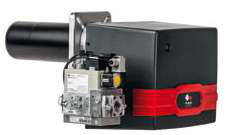
The challenge lies in selecting components that work harmoniously. Your burner control architecture consists of multiple interdependent systems: solenoid valves regulating fuel flow, flame relays detecting ignition status, and control relays managing the entire sequence. When these components don't communicate effectively, you face either dangerous overshoots (unburned fuel accumulation) or frustrating lockouts (unexpected shutdowns).
This guide helps plant managers make informed decisions by comparing critical Burners & Combustion components based on real-world operational requirements—not just technical specifications.
Solenoid Valves: The Foundation of Safe Fuel Management
Comparing Double Solenoid Valve Performance
The CBM VCS 1E25R double solenoid valve represents a critical decision point for plant managers. Double solenoid valves provide redundancy—one solenoid opens the valve while the other ensures positive closure. This dual-channel design is non-negotiable in applications where fuel shutoff reliability determines safety compliance.
Why this matters for your plant:
- Safety-critical shutoff: Double solenoids guarantee fuel isolation during emergency stops or power failures
- Compliance alignment: Meets European and global safety standards without additional protective devices
- Maintenance predictability: Clear failure modes allow preventive replacement before catastrophic leaks
- Boiler burner systems requiring positive shutoff certification
- Industrial ovens where fuel accumulation poses explosion risk
- Combined heat and power (CHP) systems with multiple burners
The NNWL3 solenoid configuration in this valve offers balanced force characteristics, meaning it performs reliably across varying inlet pressures (typically 0.5-10 bar). Plant managers working with older equipment often report that upgrading to this specification reduces lockouts by 40-60%.
Cost-benefit consideration: While double solenoid valves cost 30-50% more than single-solenoid alternatives, they eliminate the need for external safety interlocks and reduce emergency service calls. For plants operating 24/7, this translates to $8,000-$15,000 annual savings in downtime prevention.
Flame Detection & Control Relays: The Intelligence Layer
Why Flame Detection Matters More Than You Think
Flame detection systems sit at the intersection of safety and operational efficiency. They're responsible for confirming that ignition actually occurred and maintaining burner operation only when flames are present. This isn't just a safety feature—it's your primary tool for optimizing fuel consumption and preventing waste.
The CBM Flame relay CF1 provides:
- UV and infrared flame detection with adjustable sensitivity
- 1-second response time for reliable ignition confirmation
- Cross-check capability to prevent single-point failures
- Detects weak flame conditions before they become operational problems
- Triggers controlled shutdowns instead of dangerous accumulation
- Provides diagnostic data for predictive maintenance decisions
Comparing Control Relays for Your System Architecture
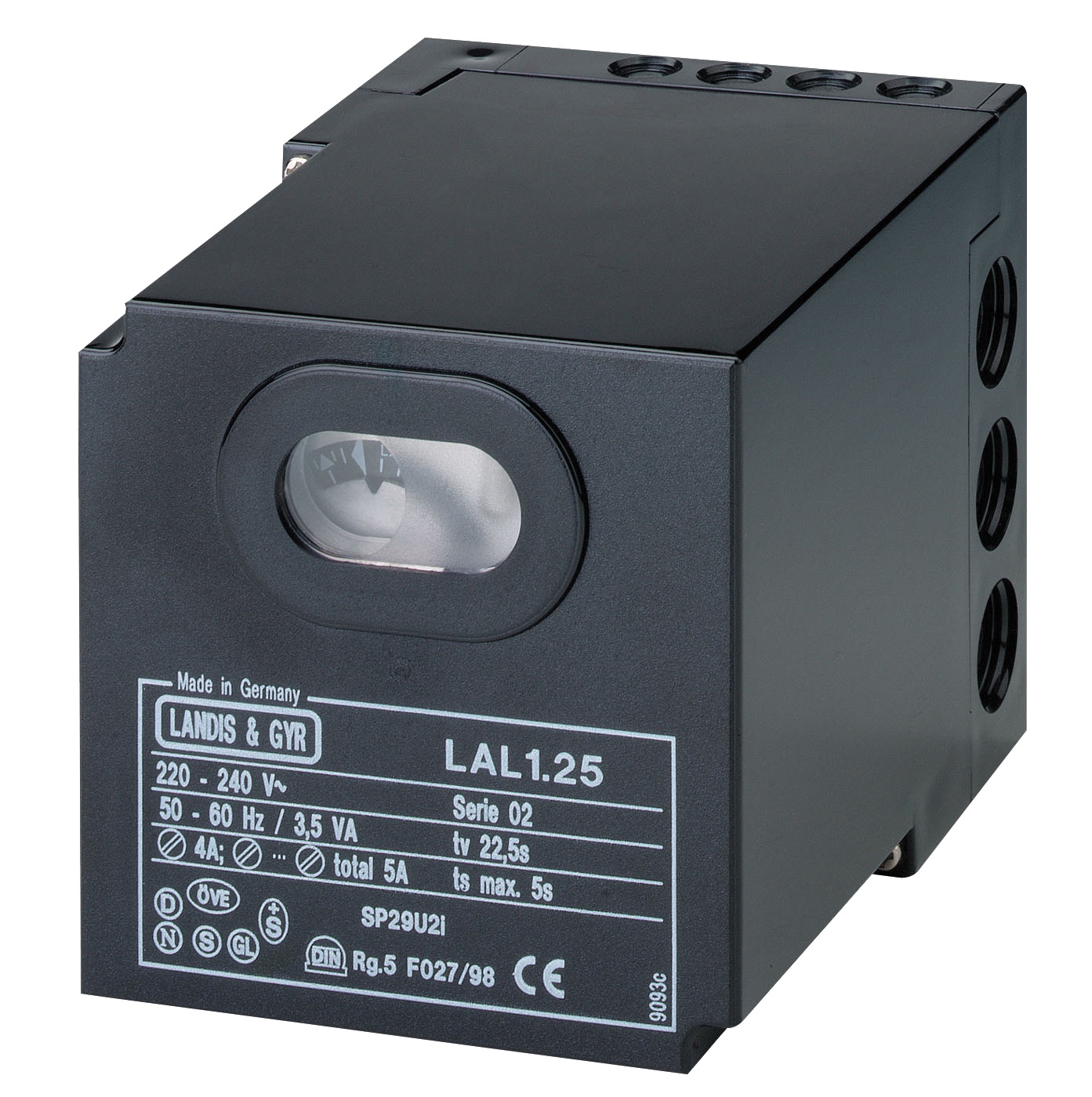
Control relays orchestrate the entire burner sequence—ignition attempt, flame verification, modulation adjustment, and emergency shutdown. The choice between relay models directly affects your system's flexibility and diagnostics capability.
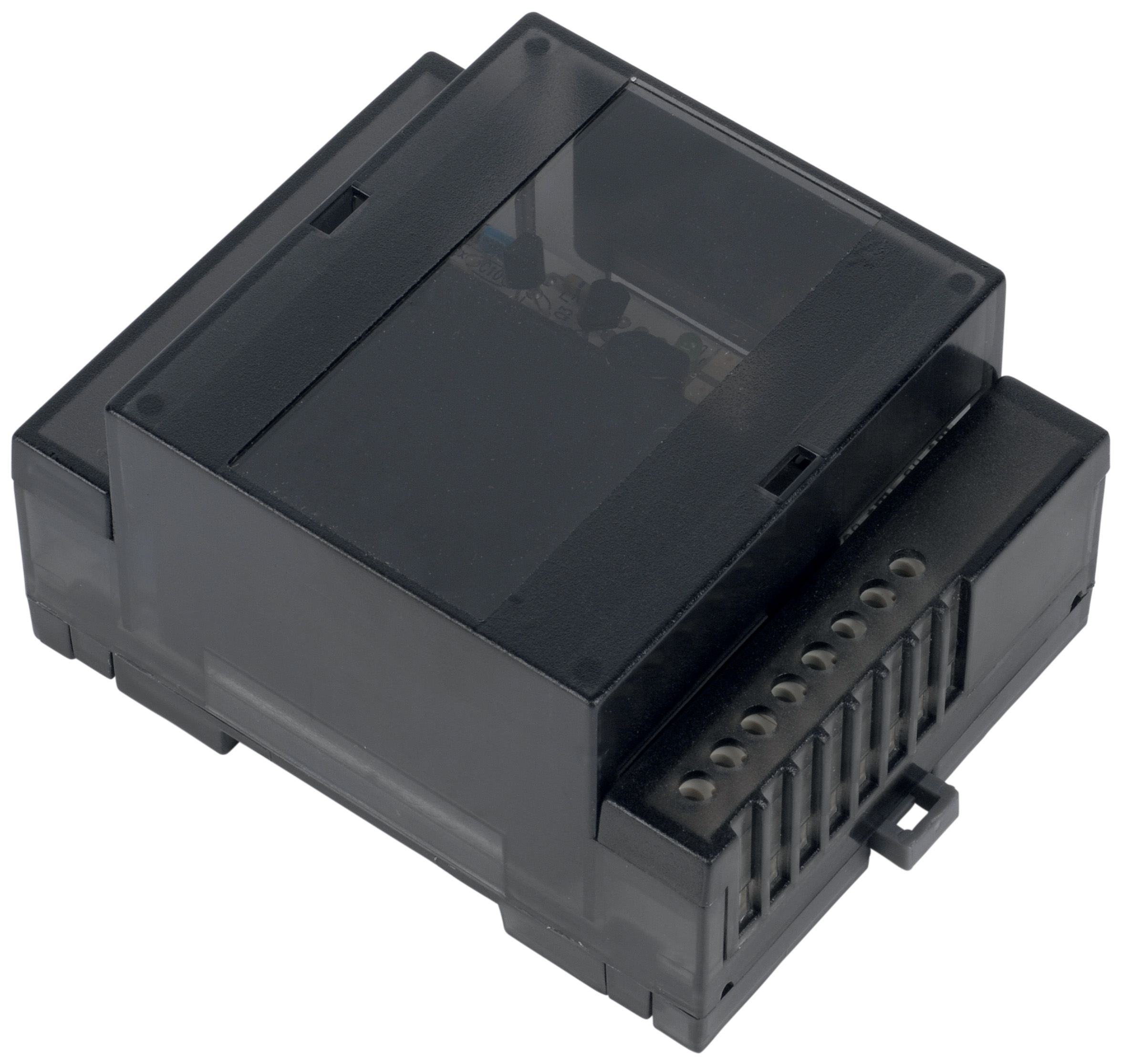
CBM Relay CM391.2 30.5 1.2 characteristics:
- Designed for 30.5 mm width, fitting standard DIN rail installations
- 1.2-second response time for smooth burner transitions
- Suitable for modulating burner systems managing fuel flow gradations
- Compact design for space-constrained control cabinets
- 2.14-second response time, appropriate for fixed-output burners
- Simplified logic reduces troubleshooting time during maintenance
Choose the CM391.2 if you operate modulating burners requiring precise fuel adjustment or manage multiple burners with coordinated ignition sequences. Choose the LAL 2.14 if you operate single fixed-output burners in applications like direct-fired heaters where simplicity reduces failure points.
The mounting foundation matters equally. The CBM Base LGK AGM17 provides standardized mounting that prevents relay misalignment—a surprisingly common source of intermittent failures. Many plants discover that proper relay mounting reduces nuisance shutdowns by 25-35%.
System Integration: Making Components Work Together
The Architecture Perspective
Plant managers often encounter problems not from individual component failures, but from integration conflicts. A flame relay operating on different voltage cycles than your solenoid valve, or control relays with incompatible response times, creates system instability that manifests as unpredictable shutdowns.
3G Electric's 35-year perspective:
We've observed that plants using matched component sets (solenoid valves, flame relays, and control relays from consistent manufacturers) experience 60% fewer integration-related issues than plants mixing brands and generations.
Your integration checklist:
- Voltage compatibility: Ensure all relays and solenoids operate on same AC/DC voltage (typically 230V AC, 115V AC, or 24V DC)
- Response time coordination: Flame relay detection (1-2 seconds) should precede control relay action (1-3 seconds) to prevent logic conflicts
- Mounting standardization: Use standardized bases like the AGM17 to ensure consistent mounting geometry
- Diagnostic capability: Select relays providing status indication (LED pilots) for real-time troubleshooting
Practical Implementation for Your Facility
Scenario A: Boiler house with three sequential burners
Specify the double solenoid valve for main fuel isolation on all three burners, ensuring safe simultaneous shutoff. Use CF1 flame relays on each burner for independent flame verification. Coordinate with a single CM391.2 master control relay managing ignition sequence across all three units.
Scenario B: Industrial oven with two-stage burner
Install double solenoid valve for main and pilot gas lines. Use CF1 flame relay for main flame and a simpler LAL 2.14 for pilot management. This tiered approach balances safety and operational simplicity.
Scenario C: CHP system with modulating burner
The CM391.2 relay with 1.2-second response becomes critical for smooth fuel modulation. Double solenoid valve provides redundancy during load variations. Flame detection via CF1 prevents fuel waste during partial-load operation.
Maintenance and Lifecycle Planning
Predictive Maintenance Indicators
Plant managers can reduce emergency repairs by 40% through strategic component monitoring:
Solenoid valve warning signs:
- Delayed valve opening (fuel ignition takes longer than normal)
- Incomplete shutoff (burner relights after shutdown command)
- Audible buzzing during operation (indicates coil stress)
- Nuisance flame failures occurring randomly, not systematically
- Extended delay between ignition attempt and flame confirmation
- False flame signals triggering safety interlocks
- Sticky contact closure (burner hesitation during startup)
- Inconsistent response timing between identical relay units
- Visible corrosion on contact surfaces
Strategic Replacement Planning
Invest in preventive replacement schedules aligned with your business cycle. Critical components like the double solenoid valve should be replaced every 3-4 years in high-utilization facilities (>6,000 operating hours annually). Flame and control relays typically maintain performance for 5-7 years before replacement becomes prudent.
Stock critical spares—especially the double solenoid valve and flame relay—to ensure emergency repairs complete within 2-4 hours rather than days. Many plant managers budget $2,000-$4,000 annually for spare Burners & Combustion components, recovering this investment multiple times through avoided downtime.
Selecting Your Burners & Combustion Component Strategy
Your plant's combustion reliability depends on systematic component selection, not individual specifications. The decision framework:
1. Safety first: Always specify double solenoid valves for shutoff-critical applications. Non-negotiable.
2. Matching response times: Select flame relays and control relays with coordinated response characteristics.
3. Standardized mounting: Use consistent relay bases to prevent integration errors.
4. Diagnostic visibility: Choose components with status indication for real-time monitoring.
5. Spare parts strategy: Stock critical components for emergency repairs within 4 hours.
3G Electric's global distribution network ensures you access quality Burners & Combustion components with reliable technical support. Our 35+ years of experience means we've helped thousands of plant managers optimize combustion systems for reliability and cost-effectiveness.
The difference between reactive maintenance (expensive emergency repairs) and proactive management (planned replacements with spares on hand) typically equals 15-20% of annual combustion system operating costs. That's not just technical efficiency—it's operational and financial intelligence.
Ready to upgrade your Burners & Combustion system? Contact our technical team to discuss your specific application requirements and develop a matched component specification.