Understanding Burners & Combustion Ignition and Flame Monitoring Systems
Burners & Combustion systems in Singapore's industrial plants depend on precise ignition control and continuous flame verification to operate safely and efficiently. Whether managing food processing dryers, chemical reactors, or district heating systems, plant engineers must understand how ignition systems initiate combustion and how flame monitoring systems confirm that combustion continues reliably.
Ignition systems serve a critical function: they transform a cold, pressurized fuel-air mixture into active combustion by introducing a reliable energy source—either electrical spark or hot surface ignition. Once combustion begins, flame monitoring devices take over, continuously verifying that flame exists and shutting down fuel supply if flame is lost. This two-stage process, supported by burner control relays and safety interlocks, protects equipment from dangerous conditions like unburned fuel accumulation, equipment damage, and potential explosions.
With over 35 years of experience as an industrial equipment distributor, 3G Electric has supported hundreds of Singapore facilities in selecting and maintaining ignition and flame monitoring components that meet local regulatory requirements and harsh tropical operating conditions. This guide explains the architecture, selection criteria, and commissioning procedures that help industrial teams achieve reliable combustion control.
Ignition System Architecture and Operating Modes
Modern burner ignition systems operate in three primary configurations, each suited to different load patterns and fuel types:
Direct Ignition (Spark or Hot Surface)
Direct ignition eliminates the pilot flame entirely, reducing fuel consumption and complexity. An electrical spark plug or hot surface element ignites the main burner directly when the control signal arrives. This mode is common in modulating burners where energy waste must be minimized. Direct ignition is ideal for intermittent applications—bakery ovens, batch dryers, or startup heating sequences—because it responds quickly and leaves no idle pilot flame burning during shutdown periods.
The Kromschroder Relay BCU 570WC1F1U0K1-E exemplifies modern direct ignition architecture. This burner control relay supports direct ignition mode and complies with EN 746-2 and EN 676 standards, ensuring that ignition timing and flame proving sequences meet European safety benchmarks that Singapore's PUB and building codes align with. The relay manages ignition lockout timing—the safety window during which the control system waits for flame to establish before declaring ignition failure—a critical parameter that varies by fuel type and burner design.
Intermittent Pilot Ignition
Intermittent pilot mode establishes a small pilot flame only when main burner operation is required. Once the pilot is proven, the main burner ignites from that pilot. This mode reduces standby fuel consumption compared to continuous pilot systems while providing faster main burner response than direct ignition alone. Intermittent pilot systems are widely used in medium-load industrial applications where reliability is essential and fuel cost is significant.
The BCU 570 relay also supports intermittent pilot mode, allowing facility managers to configure ignition strategy based on operational requirements and fuel economics. The relay's configurable pilot proving time and ignition delay parameters enable technicians to optimize the sequence for specific burner installations.
Continuous Pilot Ignition
Continuous pilot mode maintains a small pilot flame at all times, providing instant main burner ignition whenever fuel is introduced. This mode is preferred in high-reliability applications where any delay in main flame establishment could disrupt critical processes—for example, in boilers supplying steam to pharmaceutical manufacturing or in furnaces used in metalworking where flame loss causes product defects.
Although continuous pilot mode consumes more fuel during idle periods, many Singapore industrial facilities justify the cost through improved process stability and simplified control logic. The pilot flame acts as a secondary heat source and provides constant verification that the burner air-fuel mix is capable of sustaining combustion.
Flame Detection Technologies and Safety Integration
Once ignition is complete, flame monitoring devices provide continuous confirmation that combustion is occurring. Three primary flame detection technologies are deployed across Singapore industrial burners:
Ultraviolet (UV) Flame Detection
UV sensors detect the ultraviolet radiation emitted by the flame itself—typically in the 185–260 nm wavelength band. UV detection is extremely fast (response time < 100 milliseconds) and is unaffected by infrared radiation from hot surfaces, making it ideal for burners with high radiant temperatures or where reflected infrared might cause false flame signals.
The Siemens Relay LFL 1.622 integrates advanced UV flame monitoring, making it well-suited for medium to high-power gas, oil, and dual-fuel burner applications common in Singapore's chemical plants, refineries, and large district heating systems. The UV channel responds only to actual flame radiation, rejecting spurious signals from ambient light or equipment glow, which is particularly important in tropical climates where intense sunlight can interfere with optical sensors.
Ionization Flame Detection
Ionization detection measures electrical conductivity across electrodes placed in the flame zone. The flame itself acts as an electrical conductor due to ions produced by combustion, and this conductivity provides proof of flame. Ionization is highly sensitive and cost-effective but requires careful electrode design and maintenance, as carbon deposits and electrode erosion gradually reduce sensitivity over time.
The Siemens LFL 1.622 combines both UV and ionization detection, allowing facility managers to select or cross-check detection methods. This dual-sensor approach is invaluable in installations where fuel quality varies or where maintenance intervals are extended—the UV sensor compensates if ionization signal degrades due to electrode contamination.
Infrared (IR) Flame Detection
Infrared sensors detect thermal radiation in the 4–5 μm wavelength band. IR detection is slower than UV (response time typically 200–500 ms) but is extremely robust in environments with heavy dust, smoke, or humidity. Singapore's humid tropical climate can present challenges for optical flame detection; IR sensors with wavelength filtering can distinguish flame radiation from background heat sources.
Pressure Monitoring and Burner Control Integration
Flame detection and ignition control only function effectively when integrated with pressure monitoring and fuel-air balance verification. Burner control sequences demand confirmation that:
- Air pressure reaches safe levels before fuel is admitted (prevents explosions from unburned fuel accumulation)
- Fuel pressure remains stable throughout the combustion cycle
- Low-fire operation pressure remains adequate for stable flame
- High-fire operation pressure does not exceed equipment limits
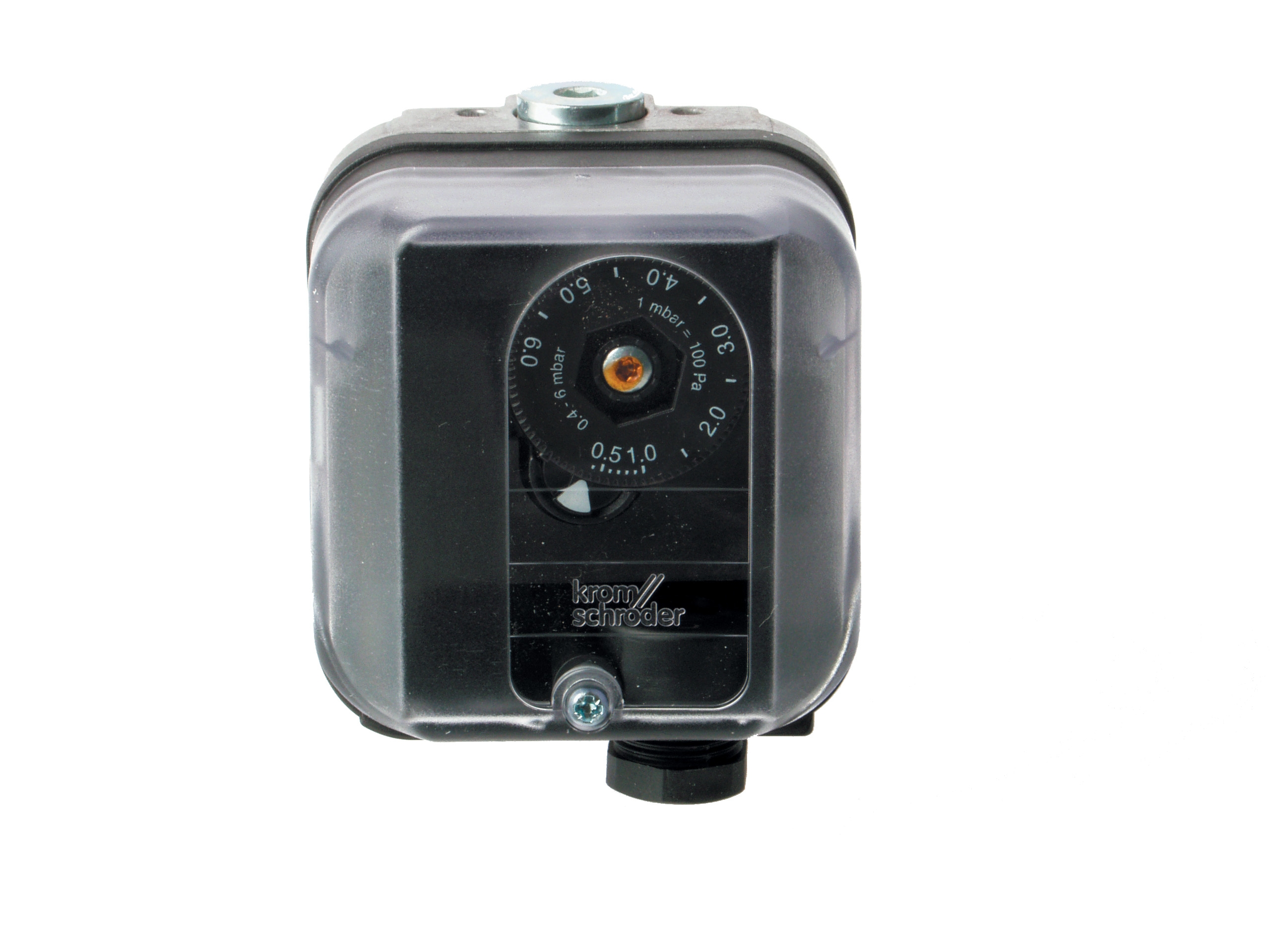
The Kromschroder Pressure Switch DG 50U/6 meets these requirements with SIL 3 rated safety performance and compliance with EN 1854, FM, UL, and AGA certifications. This pressure switch delivers reliable air and fuel pressure interlocks, ensuring that the burner control sequence cannot introduce fuel unless air supply is verified. The DG 50U/6's 6-bar rating is ideal for dual-fuel burner installations in Singapore where oil backup systems must maintain pressure stability across multiple fuel viscosity grades.
Pressure switches must be positioned and configured correctly within the burner installation:
- Air pressure switch: Located in the forced-draft air stream, typically 50–150 mm downstream of the fan discharge, confirms air velocity and density adequate for combustion
- Fuel pressure switch: Installed at the burner fuel inlet, with snubbing (damping) to prevent false trips from pump pulsation, confirms fuel pressure is within design range
- Low-fire pressure switch: On modulating burners, a separate low-fire switch prevents flame instability by ensuring minimum pressure at part-load operation
During commissioning, technicians must verify that pressure switch setpoints align with the burner's published control curve. Incorrect setpoints can prevent safe ignition or allow unsafe high-pressure operation. 3G Electric's technical teams recommend that facility engineers document the original equipment manufacturer's (OEM) control curves and maintain these records for the life of the installation, particularly important in Singapore where tropical humidity and corrosive marine air affect equipment performance over time.
Selecting and Commissioning Ignition and Flame Monitoring Systems
Choosing the correct ignition and flame monitoring components requires systematic evaluation of fuel type, power rating, operating duty cycle, and safety standards applicable to the specific application.
Application Analysis
Begin by characterizing the burner's operational profile:
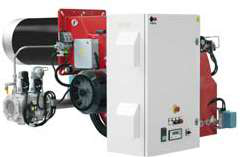
- Fuel type: Is the burner gas-only, oil-only, or dual-fuel? Dual-fuel installations (such as those using FBR KN 1300/M TL EL heavy oil burners with gas backup) require control relays and flame sensors rated for both fuels. Oil requires ionization or IR flame detection; gas burners can use UV or ionization.
- Power range: Is the burner low-power (< 100 kW), medium-power (100–1000 kW), or high-power (> 1000 kW)? Higher-power burners in Singapore's industrial sector typically demand more robust flame detection and faster ignition response to prevent flameout during load transients.
- Operating profile: Is operation continuous (24/7), intermittent (shifts or batches), or cycling (frequent on/off)? Continuous operation favors continuous pilot modes; intermittent operation favors direct or intermittent pilot ignition to conserve fuel.
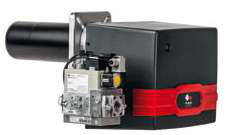
- Modulation requirement: Does the burner require smooth load variation (modulating burners like the FBR GAS XP 60/2 CE TC EVO) or does it operate on/off only? Modulating burners demand precise pressure control and faster flame response than on/off burners.
The burner control relay orchestrates the ignition sequence, flame monitoring, and safety lockouts. For Singapore industrial applications, the Kromschroder BCU 570 and Siemens LFL 1.622 represent proven platforms:
- Kromschroder BCU 570: Configurable relay supporting direct, intermittent, and continuous pilot ignition. Ideal for retrofit applications where fuel flexibility and mode selection are priorities. Compact DIN-rail mounting suits space-constrained control cabinets common in Singapore's industrial facilities.
- Siemens LFL 1.622: Integrated UV and ionization flame detection with air damper modulation capability. Preferred for new installations where safety certification and commissioning simplicity justify the higher initial cost.
Flame sensor placement is critical and often overlooked. Sensors must have an unobstructed view of the flame, positioned to detect flame within 0.2–0.5 seconds of ignition and to remain continuously responsive to flame throughout the burner firing range.
- UV sensors: Mount perpendicular to the main flame axis, typically at 45° angle to avoid direct exposure to burner nozzle. Protect from dust and condensation using stainless-steel sleeves with quartz windows.
- Ionization sensors: Integrate into the burner head design where electrodes are naturally positioned in the flame zone. Ensure electrode gaps remain clean and verify periodically that electrode spacing has not changed due to vibration or thermal stress.
Pressure switches must be mechanically isolated from vibration and pulsation:
- Use soapstone or elastomer snubbers on fuel pressure lines to dampen pump pulsation
- Install 3-valve manifolds allowing isolated setpoint adjustment without shutting down the burner
- Document setpoints on control diagrams and maintain records for regulatory compliance (Singapore's Building and Construction Authority and PUB regulations require documented equipment parameters)
During commissioning, execute the full control sequence:
1. Verify air pressure rises and confirms before fuel is permitted
2. Confirm pilot ignition occurs and flame is detected within lockout time (typically 4 seconds for gas, 10 seconds for oil)
3. Verify main burner ignition occurs smoothly from pilot flame
4. Test flame failure: intentionally interrupt flame and confirm fuel shutoff within 1 second
5. Verify pressure switches prevent unsafe operation at boundary conditions
Maintenance and Seasonal Considerations for Singapore Climate
Singapore's high humidity (typically 70–90% relative humidity) and salt-air environment in coastal areas create accelerated corrosion of electrical contacts and optical surfaces. Maintenance schedules must account for tropical climate stresses:
- UV and ionization sensors: Clean lens/electrode surfaces monthly; replace quartz windows or electrodes annually or when response time increases above OEM limits
- Pressure switches: Flush snubbers every 6 months to prevent silicone fluid degradation; verify setpoints annually as spring constants weaken over time
- Electrical contacts in control relays: Inspect relay contacts quarterly; light contact pitting can be cleaned with fine abrasive cards, but heavily corroded contacts require relay replacement
- Ignition electrodes: Replace spark plug gap electrodes every 12–18 months or when spark quality visibly diminishes
Establishing a documented maintenance program aligned with the specific climatic stresses in your facility location is essential. 3G Electric's 35+ years of Southeast Asia industrial experience shows that proactive tropical maintenance extends burner control system life by 30–40% compared to temperate climate maintenance intervals.
Conclusion
Mastering ignition systems and flame monitoring ensures that Burners & Combustion installations across Singapore operate safely, efficiently, and reliably. By understanding ignition architecture, selecting appropriate flame detection technology, integrating pressure monitoring, and executing rigorous commissioning procedures, industrial professionals can avoid costly failures and regulatory non-compliance.
Whether upgrading existing burner installations or designing new systems, 3G Electric's team of technical specialists can guide you through component selection, installation planning, and commissioning validation. Contact our Singapore office to discuss your specific application and explore how modern ignition and flame monitoring technologies can optimize your facility's combustion control.