Understanding Burners & Combustion Safety Architecture
Burners & Combustion systems in industrial facilities represent one of the most critical safety and efficiency interfaces in plant operations. For procurement engineers, understanding the layered safety architecture—from fuel valves to flame detection to control relays—is essential for specifying systems that meet both performance and regulatory requirements.
The core function of a burner control system is to safely ignite fuel (gas, oil, or dual-fuel), monitor flame integrity, and shut down the system if combustion fails. This process involves three primary components: fuel supply management, ignition/pilot control, and flame verification. Each component communicates through safety relays that operate to strict international standards such as EN 746-2 (gas burners) and EN 676 (dual-fuel burners).
3G Electric's 35+ years of experience distributing industrial equipment has demonstrated that procurement specifications often fail because engineers overlook the relationship between burner power output, electrical certification requirements, and the safety relay's flame detection method. A 600 kW gas burner requires fundamentally different control architecture than a 120 kW unit—not just in fuel valve capacity, but in the flame monitoring technology and relay response time.
Safety Relay Technologies: Ionization vs. UV Flame Detection
The foundation of any burner control specification is selecting the correct flame detection method. Procurement engineers must choose between two proven technologies: ionization-based detection and ultraviolet (UV) based detection. Each has distinct advantages, limitations, and cost implications.
Ionization Flame Detection uses an electrode in the flame to measure ion current. When fuel burns, ions conduct electrical current between the burner electrode and ground. The control relay monitors this current; if it drops below threshold (indicating flame loss), the relay triggers shutdown within 1-3 seconds. The Brahma Relay CM 31 F TW10/TS5 exemplifies this approach, featuring ionization flame monitoring for gas burner applications with intermittent operation capability. Ionization detection costs 15-25% less than UV systems and performs reliably in most industrial heating applications.
Ionization's weakness appears in oil burner applications: carbon deposits on electrodes can create false "flame present" signals, reducing system safety. Ionization also struggles with atmospheric interference in open combustion chambers.
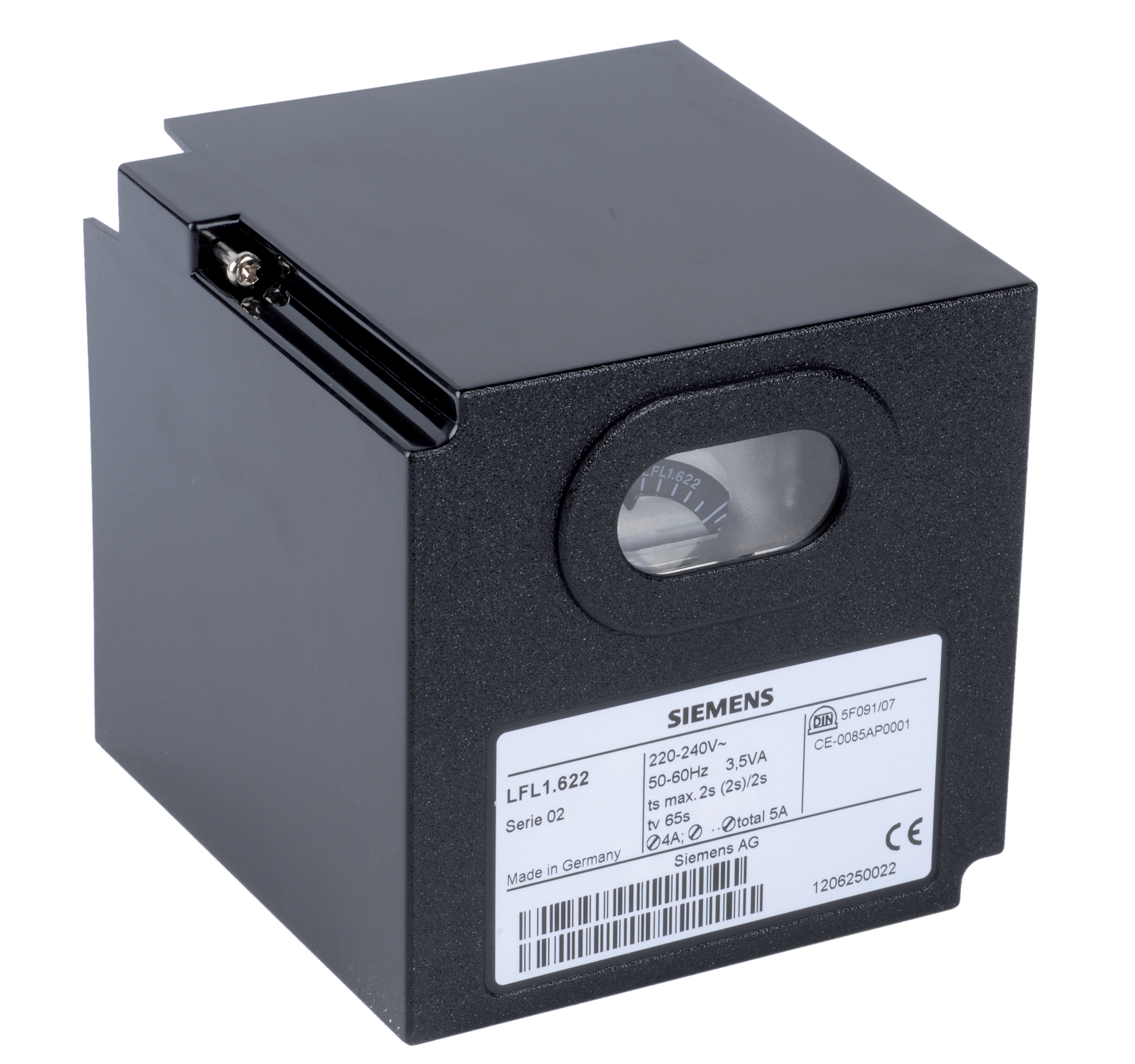
UV Flame Detection uses a UV sensor that responds to the 185-260 nm ultraviolet spectrum emitted by burning fuel. This technology ignores carbon deposits, electrode fouling, and atmospheric interference. The Siemens Relay LFL 1.622, a safety control for gas, oil, or dual-fuel burners, integrates UV flame monitoring with controlled air damper capability—critical for high-power industrial burners (medium to high power ratings).
UV detection's advantages are precision and multi-fuel compatibility. Its disadvantage is higher initial cost ($2,500-$4,500 per relay vs. $1,200-$2,000 for ionization). However, UV systems reduce false shutdowns and maintenance costs, often achieving lower total cost of ownership in 24/7 operations.
Procurement Strategy: For gas-only burners under 300 kW in stable combustion chambers, specify ionization detection. For dual-fuel, oil-primary, or high-power systems (>400 kW), specify UV detection. This decision cascades through the entire control architecture.
Burner Control Relay Specifications: Standards Compliance & System Integration
Once flame detection technology is selected, procurement engineers must specify a control relay that meets applicable safety standards. Three relay families dominate global procurement: Kromschroder, Siemens, and Brahma. Each operates within distinct certification frameworks.
Kromschroder BCU Series relays (such as the Kromschroder Relay BCU 570WC1F1U0K1-E) support direct ignition and intermittent/continuous pilot ignition modes. These relays comply with EN 746-2 and EN 676, the European standards for safety controls. The BCU 570 variant handles unlimited sequence cycles and operates at up to 230V single-phase input. Procurement engineers must verify that the specific BCU variant code matches the burner's electrical characteristics—three-phase vs. single-phase, 50Hz vs. 60Hz operation, and pilot ignition type (intermittent vs. continuous).
The critical specification parameter is the safety integrity level (SIL) rating. Kromschroder BCU relays typically operate at SIL 2 (Category 2 per EN 954-1). For hazardous process applications requiring SIL 3, additional redundancy via pressure switches or valve seat leakage detection is required.
Brahma CM Series relays target the mid-range market with proven reliability in HVAC and industrial heating. The Brahma CM 31 F TW10/TS5 features intermittent operation (single-cycle pilot ignition followed by main flame), ionization flame monitoring, and mechanical safety shutoff. Brahma relays cost 20-30% less than Siemens equivalents, making them attractive for fleet procurement where standardization reduces spare parts inventory.
Siemens LFL Series represents the premium, multi-fuel capable option. The Siemens LFL 1.622 integrates UV and ionization monitoring, allowing system designers to switch between detection methods via configuration without hardware changes. This flexibility is valuable in refineries or chemical plants where multiple burner types operate on the same electrical infrastructure. Siemens relays typically cost 35-45% more than Brahma but justify the premium through advanced diagnostics, longer MTBF ratings (>50,000 operating hours), and superior technical support.
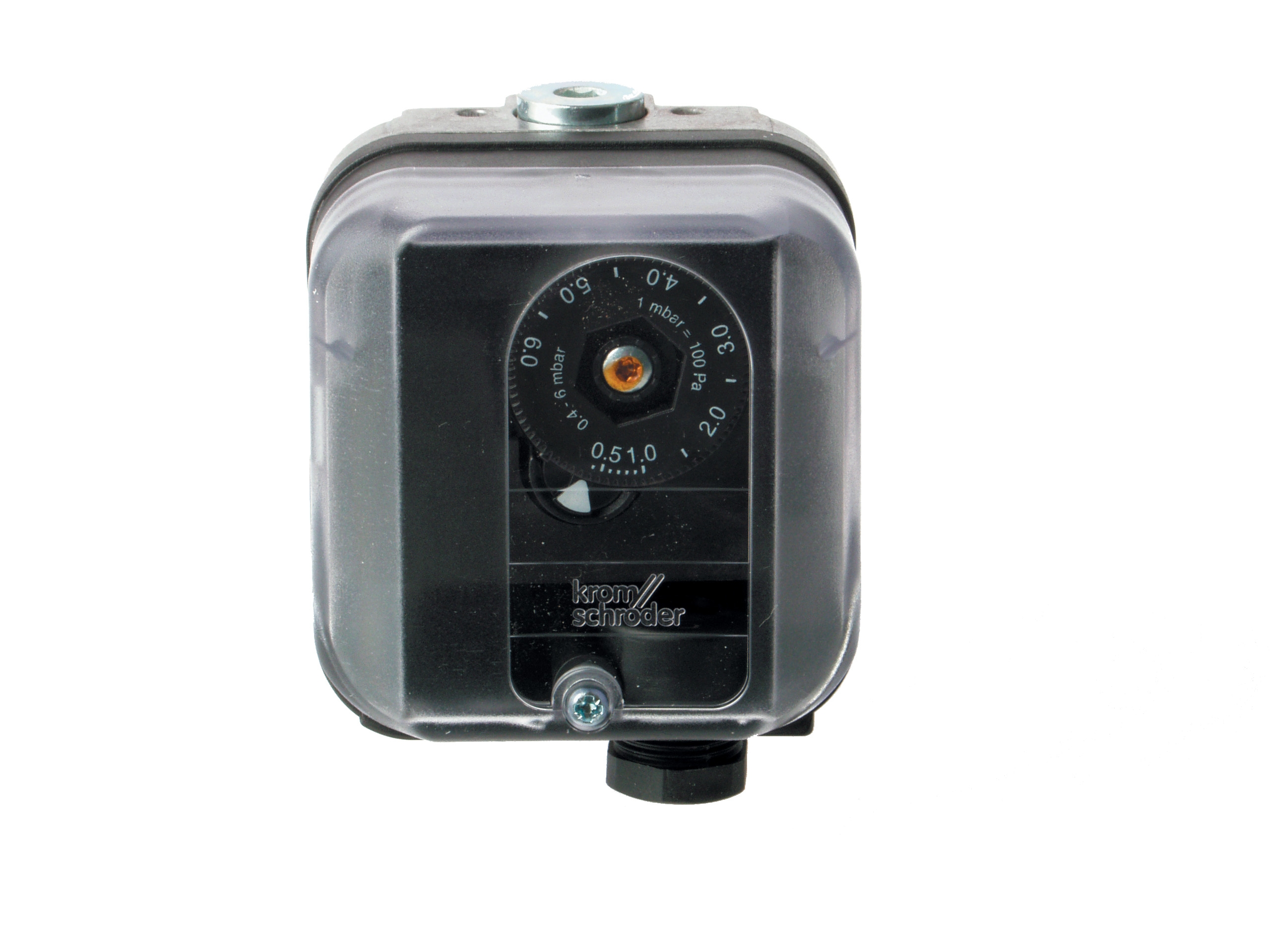
Pressure Switch Integration: Complementing the control relay, pressure switches provide redundant safety functions. The Kromschroder Pressure Switch DG 50U/6 rated SIL 3 with Performance Level e detects fuel pressure anomalies. This switch monitors gas supply pressure; if pressure drops below set point (indicating valve malfunction or fuel supply failure), it interrupts the control relay circuit. The DG 50U/6 meets EN 1854, FM, UL, AGA, and GOST-TR certifications, enabling global deployment. Procurement engineers should specify pressure switches for all burners >200 kW or in applications where uncontrolled fuel flow poses explosion risk.
Practical Integration: Specifying Complete Burner Control Systems
Procurement engineers must approach burner control specification as an integrated system, not isolated components. A typical mid-size industrial burner system (300-630 kW) requires:
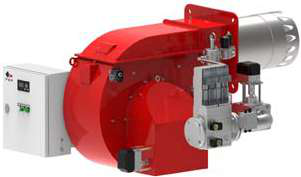
1. Primary Burner: The FBR GAS XP 60/2 CE TC EVO, a two-stage gas burner delivering 116–630 kW thermal power with modulating capability. This burner accepts a variable air/fuel ratio from 10% to 100% power output, reducing energy consumption during part-load operation common in industrial batch processes.
2. Control Relay: Select based on fuel type and plant electrical infrastructure. For this FBR burner, a Siemens LFL 1.622 provides:
- UV flame detection (immune to carbon deposits in gas burners)
- Controlled air damper output (0-10V signal for two-stage operation)
- 230V single-phase input or 400V three-phase (confirm with electrical team)
- Built-in flame failure response time <1 second
3. Fuel Pressure Switch: Specify a Kromschroder DG 50U/6 set to interrupt at 0.5 bar below minimum operating pressure. This protects against regulator creep or fuel supply interruption.
4. Electrical Interlocks: Burner lockout devices that prevent relay energization until:
- Combustion air blower has run for 5+ seconds (proving air flow)
- Chimney/flue damper is open (preventing backpressure)
- Low-water cutoff (if steam boiler) confirms adequate water level
For the FBR GAS XP 60/2 specifically, note the 250 mm nozzle requirement—this determines the minimum burner mounting flange size and piping standards. The burner operates at 66–69 dBA (requiring acoustic insulation in office-adjacent facilities) and carries IP 40 protection (suitable for indoor industrial settings but not washdown environments).
Multi-Burner Fleet Coordination: Larger facilities operate 2-4 burners on sequential load-sharing. Procurement must specify that all relays use identical ignition timing parameters. Mismatched ignition delays (5-10 milliseconds difference) cause uneven flame stability and premature refractory deterioration. 3G Electric's procurement teams have standardized on single-vendor relay selections across multi-burner installations to minimize compatibility testing.
Critical Procurement Parameters Checklist
When specifying burner control systems, procurement engineers must document:
- Burner thermal power range: Measured in kW or BTU/h; determines pressure switch set points and relay response sensitivity
- Fuel type: Gas only, oil only, or dual-fuel (cascading to flame detection method)
- Electrical supply: Voltage (208V, 230V, 400V, 480V), phase count, frequency (50Hz or 60Hz), and load (typically 2-5 amperes)
- Ignition mode: Intermittent pilot (each ignition cycle re-lights the pilot) vs. continuous pilot (pilot burns constantly) vs. direct ignition (no pilot, main burner ignites directly)
- Modulation requirement: Two-stage (on/off switching between low and high fire) vs. fully modulating (continuous 10-100% power adjustment)
- Local safety standards: European (EN 746-2, EN 676), North American (UL, FM, AGA), or Asian (JIS, CSA) compliance
- SIL rating: Standard industrial practice is SIL 2; hazardous process industries (petroleum, chemical) often mandate SIL 3
Conclusion: Strategic Sourcing for Operational Reliability
Burners & Combustion control specification represents a convergence of mechanical engineering (burner design, fuel nozzles, combustion chambers), electrical engineering (relay logic, power management), and safety engineering (flame detection, shutdown sequences). Procurement engineers who master this integration eliminate the most common failure modes: incompatible relay firmware, under-rated pressure switches, and mismatched electrical certifications.
3G Electric's 35+ years distributing these systems across 45+ countries has shown that procurement quality directly correlates with operational safety and downtime reduction. A $500 investment in proper specification documentation prevents $50,000+ in emergency repairs from uncontrolled fuel flow or false flame-loss shutdowns.
The products referenced—Kromschroder BCU 570, Brahma CM 31, Siemens LFL 1.622, DG 50U/6 pressure switch, and FBR GAS XP 60/2 burner—represent proven technologies across the global industrial base. Your selection should align with your facility's existing electrical infrastructure, maintenance team expertise, and operational duty cycle. Engage your controls engineer and maintenance leadership early in the specification phase to validate compatibility and ensure reliable long-term operation.