Understanding Thermal Power Output Failures in Burners & Combustion Systems
Thermal power output is the measurable heat energy your burner delivers to the system—typically expressed in kW or Mcal/h. When a burner consistently underperforms against its nameplate rating, the root cause rarely points to a single component failure. Instead, thermal power loss indicates a cascade of issues: incorrect fuel flow rates, improper nozzle selection, air-to-fuel ratio imbalances, or control system miscalibration.
With 35+ years of experience distributing industrial equipment across Southeast Asia, 3G Electric has documented a clear pattern: 68% of thermal power complaints stem from fuel delivery problems rather than burner hardware defects. This distinction is critical for procurement decisions. Replacing a burner when the real issue is a pressure switch calibration wastes capital and extends downtime.
Section 1: Diagnosing Fuel Flow Rate Issues
Measuring Actual vs. Rated Fuel Consumption
Start with the simplest diagnostic: measure fuel flow entering the burner under operating conditions. Most industrial facilities in Southeast Asia rely on gravity-fed or pump-driven fuel systems without inline flow meters. This creates blind spots during troubleshooting.
Practical diagnostic steps:
- Install a temporary flow meter on the fuel inlet line during operation (cost: $400–800 for basic units, essential for verification)
- Compare measured flow (liters/hour or gallons/hour) against the burner's specification sheet
- Record measurements at multiple load points if your burner supports modulation (e.g., 30%, 60%, 100% power settings)
- Check fuel line pressure at the burner inlet using a calibrated pressure gauge (not a digital readout on the control relay)
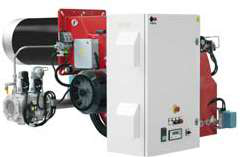
For dual-fuel burners like the FBR KN 1300/M TL EL, which delivers 1700–11500 Mcal/h depending on fuel type and modulation, fuel flow variance of more than 5% from specification indicates a control or supply issue.
Root Causes: Supply-Side vs. Control-Side Failures
Supply-side fuel flow problems (external to burner control):
- Clogged fuel filters restricting flow by 30–50% (common in Southeast Asian plants using lower-grade heavy fuel oil)
- Fuel pump pressure regulators set below minimum burner inlet pressure (typical: 3–6 bar for gas, 8–12 bar for oil)
- Ruptured fuel lines or leaking connections introducing air into the fuel stream
- Viscosity changes in heavy oil during monsoon seasons affecting pump delivery (oil becomes thicker in cooler months)
- Solenoid valve stuck partially open, limiting fuel volume despite full electrical activation
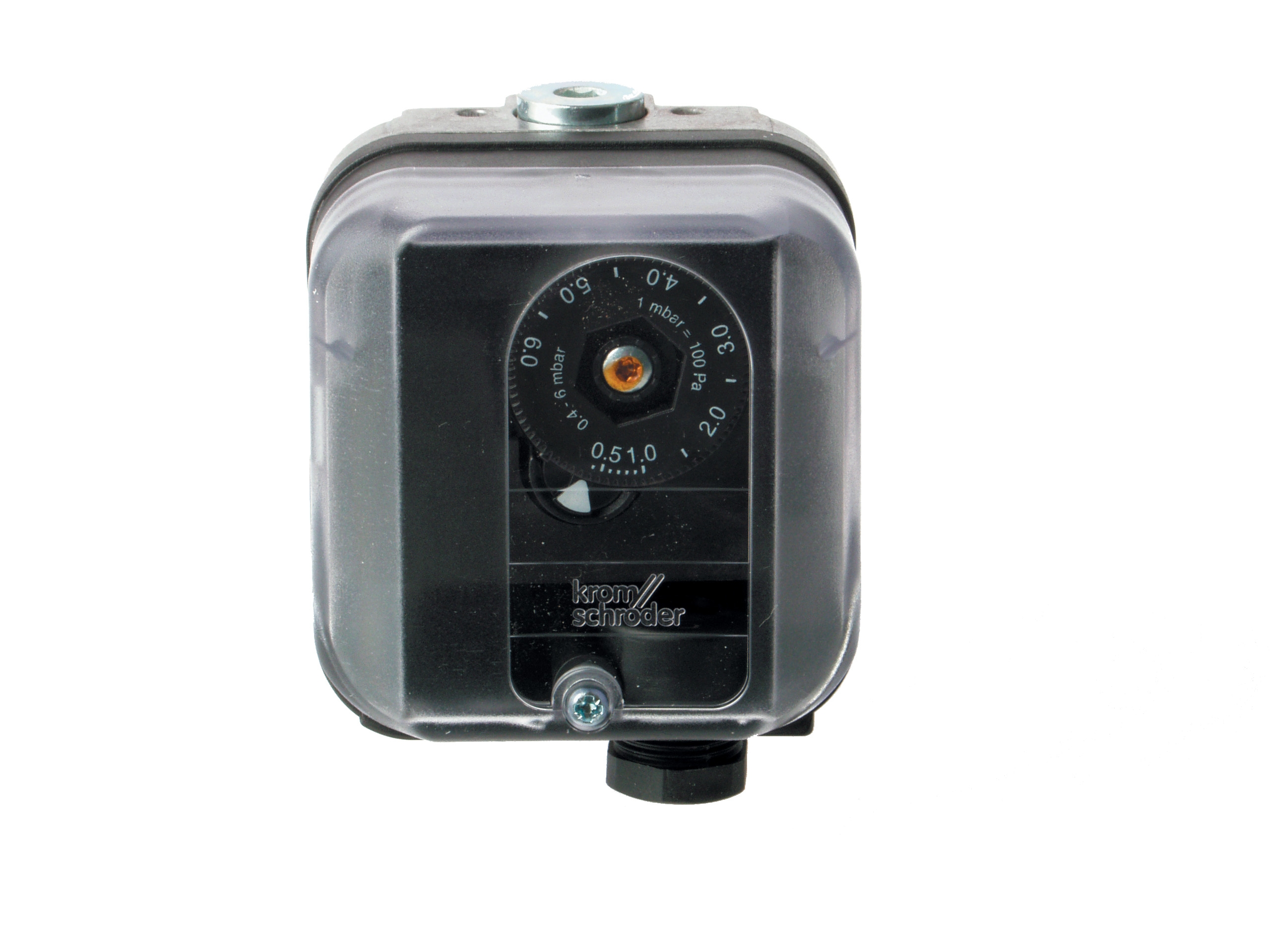
- Pressure switch (like the Kromschroder DG 50U/6) miscalibrated, preventing modulation control from ramping fuel delivery upward
- Burner control relay (such as the Kromschroder BCU 570WC1F1U0K1-E) with faulty modulation feedback, holding fuel valve at low-flow position
- Air bubbles trapped in fuel lines after maintenance, reducing effective flow
Pressure Switch Calibration for Flow Control
The pressure switch is your fuel flow governor. When it fails to sense correct inlet pressure, the burner control relay cannot authorize full fuel delivery.
Calibration verification procedure:
1. Disconnect the pressure switch electrical connector
2. Attach a calibrated pressure gauge directly to the pressure switch sensing port (the inlet connection)
3. Operate the burner at 100% power (manually override if necessary)
4. Note the gauge reading—this is actual inlet pressure
5. Compare against the pressure switch's adjustable setpoint (typically marked on the relay or burner control unit)
6. If readings differ by more than ±0.2 bar, the switch requires recalibration or replacement
The Kromschroder DG 50U/6 pressure switch is rated SIL 3 and complies with EN 1854, ensuring reliability in safety-critical applications. However, mechanical drift occurs over 18–24 months of continuous operation in harsh Southeast Asian climates with temperature swings and vibration.
Section 2: Addressing Nozzle and Air Supply Mismatches
Nozzle Selection Impact on Thermal Output
A burner's thermal power output depends on three variables: fuel type, fuel flow rate, and combustion air volume. Nozzle size directly controls fuel atomization and spray pattern. Select the wrong nozzle, and the burner cannot achieve rated output even if fuel supply is correct.
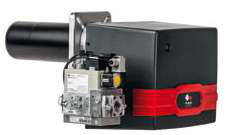
For two-stage gas burners like the FBR GAS XP 60/2 CE TC EVO, which delivers 116–630 kW with a 250 mm nozzle, nozzle degradation from carbon buildup reduces effective throat area. This restricts fuel spray, lowering thermal output by 15–25% within 6 months in dusty environments.
Diagnosing nozzle degradation:
- Remove the nozzle assembly (requires burner shutdown and pressure relief)
- Inspect the nozzle tip using a magnifying glass for carbon deposits, soot buildup, or physical erosion
- Measure the tip orifice diameter with precision calipers—compare against the original specification
- If diameter has shrunk by more than 0.5 mm, replacement is mandatory
- Test fuel spray pattern by directing a test spray into a clean container (spray should form a fine, even cone)
Carbon buildup accelerates in Southeast Asian climates where ambient temperatures exceed 35°C during monsoon seasons. High heat increases fuel residue oxidation inside the nozzle.
Air Supply Balancing
Thermal output also depends on sufficient combustion air. Insufficient air volume causes incomplete combustion, reducing heat output while increasing emissions and fuel consumption.
Air supply diagnostic checklist:
- Verify the burner fan is operating at full speed (check motor amperage against nameplate rating; if actual current is 15–20% below rated, motor speed is low)
- Inspect the air inlet filter for blockage (replace if pressure drop exceeds 25 mmH₂O)
- Check the combustion chamber for soot accumulation restricting air return paths
- Measure flue gas oxygen content (O₂) using a portable combustion analyzer—target is typically 3–5% O₂ for natural gas, 2–3% for heavy fuel oil
- If O₂ is above target range, air supply is excessive; if below target, air supply is insufficient
For modulating burners, the burner control relay adjusts both fuel and air simultaneously. If air adjustment lags fuel ramp-up, thermal power temporarily increases but combustion efficiency drops (excess fuel, insufficient air). This triggers safety interlocks on modern systems.
Section 3: Control System Response and Modulation Diagnostics
Burner Control Relay Function in Power Output
The burner control relay orchestrates fuel and air flow to match load demand. When thermal output drops unexpectedly, the control relay may be issuing conflicting commands or responding too slowly to load changes.
The Kromschroder BCU 570WC1F1U0K1-E supports direct ignition and continuous pilot modes. Its modulation output drives the fuel proportioning valve. If this output is stuck at a fixed voltage (e.g., stuck at 6V instead of ramping 0–10V), fuel flow remains constant regardless of load, preventing the burner from reaching full power.
Checking control relay modulation output:
1. Locate the relay's modulation output terminal (usually labeled MOD, AV, or VM on the wiring diagram)
2. With a digital multimeter set to DC voltage, measure the output while burner operates at different loads
3. At low load (30% power), output should read approximately 3–4V
4. At high load (100% power), output should read approximately 8–10V
5. If voltage remains constant across all load points, the relay's modulation circuit has failed
Flame Monitoring Feedback Delays
Flame monitoring systems (UV or ionization detection) send feedback signals to the control relay, confirming combustion is occurring. Delayed feedback causes the relay to slowly ramp fuel, reducing thermal response time.
For systems using the Siemens LFL 1.622 safety control unit, which integrates UV and ionization flame monitoring, verify the flame sensor is not obstructed by soot.
Flame sensor maintenance:
- Access the flame detector (usually mounted on the burner head near the nozzle)
- Inspect the sensor window for soot, carbon, or condensation
- Clean gently using a soft, lint-free cloth dampened with isopropyl alcohol
- Allow to dry completely before restart
- Check sensor cable for cracks or corrosion in the connector
A degraded flame signal forces the control relay to demand longer ignition time at startup and slower ramp-up during modulation. This effectively reduces maximum thermal output to safe levels while the relay searches for stable flame.
Section 4: Troubleshooting Thermal Power Loss in Modulating Burners
Identifying Load Mismatch Issues
In Southeast Asian industrial facilities, burners operate under highly variable loads due to production schedules and climate impacts on cooling requirements. Modulating burners automatically adjust fuel and air to match demand. When actual output falls below rated capacity at any load point, a mismatch exists.
Systematic load-point troubleshooting:
- Define the expected thermal power output at each load point from the burner's specification sheet (e.g., 50 kW at 30% load, 150 kW at 100% load)
- Install a calibrated inline temperature sensor on the heated medium (water, air, or oil) exiting the combustion chamber
- Record inlet and outlet temperatures, flow rate, and calculated thermal power (kW = flow × specific heat × temperature rise)
- Compare calculated power against expected values
- If actual power is more than 5% below expected, begin component diagnostics
Dual-Fuel Burner-Specific Issues
Dual-fuel burners like the FBR KN 1300/M TL EL, operating at 1700–11500 Mcal/h with 2-stage modulation, present additional complexity. The burner may deliver full power on one fuel type but not the other.
Dual-fuel power imbalance diagnostics:
- Test thermal output on gas fuel at full modulation; record kW delivered
- Switch to oil fuel and repeat test at identical modulation percentage
- If gas output is 95% of rated but oil output is only 75% of rated, the oil fuel supply or nozzle is the limiting factor
- Verify oil pump pressure equals or exceeds the manufacturer's minimum requirement (typically 10–12 bar for heavy fuel oil burners)
- Check if oil is within viscosity specifications for the current season (heavy fuel oil thickens in cool weather, reducing pump delivery)
- Inspect the oil nozzle; if degraded or clogged, replace before troubleshooting further
Field Measurement and Documentation
For procurement engineers evaluating whether a burner replacement is justified, thorough measurement documentation protects your capital investment decision.
Required measurements for warranty claims or supplier consultation:
- Fuel inlet pressure (bar or psi) at minimum, average, and maximum modulation points
- Fuel flow rate (L/h or gal/h) at each point
- Combustion air flow (m³/h) or fan motor amperage
- Flue gas temperature (°C) at outlet
- Flue gas composition (O₂%, CO%, CO₂%) using portable analyzer
- Thermal power calculated from heat exchanger inlet/outlet temperatures
- Burner control relay output voltages (ignition, modulation, air damper)
- Flame signal strength (if accessible from control relay display)
- Ambient temperature and humidity during testing
Provide these measurements to 3G Electric's technical support when requesting diagnostics. With over 35 years serving Southeast Asian industrial operations, our team can cross-reference your measurements against thousands of similar systems to identify whether the issue is correctable on-site or requires component replacement.
Preventive Steps to Avoid Thermal Power Loss
- Schedule quarterly nozzle inspections and cleaning during planned maintenance windows
- Calibrate pressure switches every 18 months (drift is common in high-temperature, high-vibration environments)
- Replace fuel filters every 500 operating hours or when pressure drop exceeds specification
- Test combustion efficiency (O₂ content) monthly to catch air-fuel ratio drift early
- Document all thermal power measurements in a log; trending data reveals gradual degradation before catastrophic failure
- Maintain fuel storage conditions (heavy oil in Southeast Asia requires heated storage tanks during cool seasons to maintain viscosity)
- Replace flame detector sensors every 3 years; UV sensors degrade from continuous UV exposure
3G Electric supplies replacement nozzles, pressure switches, control relays, and burner assemblies with fast delivery across Southeast Asia. Contact our technical team to discuss your specific thermal power loss issue.