Understanding Burners & Combustion Capacity Requirements in Singapore's Climate
Burners & Combustion systems are often selected based on peak design load alone, leading to chronic oversizing and inefficient operation. Singapore's tropical climate—with consistent ambient temperatures of 25–32°C and high humidity year-round—creates unique capacity profiling challenges. Unlike temperate regions with distinct seasonal heating loads, Singapore facilities operate near steady-state conditions but experience significant load variation driven by occupancy patterns, process demands, and equipment cycling.
Capacity mismatch is the primary driver of poor combustion efficiency. Oversized burners operate at partial load, cycling on-off frequently and producing incomplete combustion, higher emissions, and premature component wear. Undersized burners struggle during peak loads, reducing thermal delivery and system responsiveness. As a distributor with 35+ years of experience serving Singapore's industrial and commercial sectors, 3G Electric has observed that proper capacity matching—combined with load profiling—delivers measurable gains in thermal efficiency, equipment longevity, and operational cost control.
This article provides HVAC contractors with practical frameworks for capacity analysis, load profiling methodology, and performance optimization during procurement and commissioning phases.
Load Profiling and Demand Analysis for Tropical Applications
Effective capacity matching begins with granular load profiling across operational cycles. Unlike heating-dominant markets, Singapore facilities experience cooling-to-heating transitions within single days, process-driven thermal swings, and occupancy-dependent demand curves.
Establishing Baseline Thermal Demand
Start by mapping facility thermal loads across three temporal dimensions:
- Peak design load: Maximum simultaneous demand (e.g., full building occupancy + process load). This is the upper bound, not the operating setpoint.
- Average operational load: Mean thermal demand across typical weekday and weekend cycles. Most modern facilities operate at 50–70% of peak design capacity.
- Minimum sustained load: The lowest continuous demand required to maintain system stability and prevent short-cycling. This floor is critical for burner selection.
For Singapore applications, establish load profiles across these operational modes:
- High occupancy periods (8:00–18:00 weekdays): Office cooling + process heat demand
- Medium occupancy (18:00–22:00): Reduced cooling + residual process load
- Unoccupied periods (22:00–8:00): Minimal heating, maintenance systems only
- Weekend cycles: Typically 20–35% of weekday peak load
Industrial facilities should profile process-driven loads separately from comfort loads, as steam generation or process heating may operate independently of occupancy.
Field Measurement and Data Logging
Conduct 2–4 weeks of continuous monitoring using portable data loggers on existing systems (if replacement) or building management system (BMS) queries for new construction. Measure:
- Supply water temperature and return water temperature (ΔT across the heat exchanger)
- System flow rate (GPM or L/min)
- On-time duration and cycling frequency
- Ambient dry-bulb and wet-bulb temperature
- Process-specific metrics (e.g., steam demand, hot water tank setpoint recovery time)
Calculate instantaneous thermal output using the formula:
Q (kW) = Flow Rate (L/h) × Specific Heat (4.18 kJ/kg·°C) × ΔT (°C) ÷ 3600
This empirical data replaces design estimates and reveals true operating envelopes. Many Singapore facilities run at 40–55% of design capacity during typical operations, with peak load occurring only 5–10% of operating hours.
Burner Selection and Capacity Right-Sizing Strategy
Once load profiles are established, select burner capacity using a three-tier approach:
Tier 1: Primary Burner Sizing
Size the main burner to match the average operational load, not peak design load. If average load is 400 kW and peak is 650 kW, select a burner rated for 400–450 kW with modulation capability. This positioning allows stable, efficient operation during typical duty cycles.
For natural gas applications with modulation control, the FBR X GAS 2/C burner delivers 17.4–69.8 kW output with thermal power range of 15–60 Mcal/h, offering flexibility across kitchen and small-to-medium commercial applications. Its 110 W fan motor and manual modulation capability allow HVAC contractors to tune combustion air-fuel ratios for tropical ambient conditions.
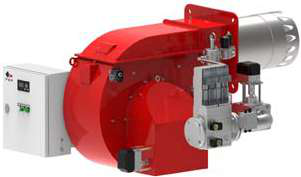
For larger industrial thermal loads, the FBR HI-GAS P550/M CE TL burner delivers 2325–6395 kW (60–206 kg/h fuel flow), enabling single-burner sizing for medium industrial plants. Its 3-phase electrical design suits Singapore's industrial infrastructure and scales effectively across process heating and district steam applications.
Tier 2: Modulation and Turndown Ratio
Select burners with turndown ratios (maximum output ÷ minimum stable output) of at least 5:1 for commercial applications and 8:1 or higher for industrial systems. Higher turndown allows the burner to efficiently track varying loads without cycling off completely.
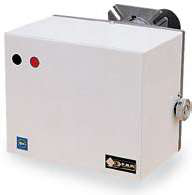
Electronic control becomes essential at turndown ratios exceeding 4:1. The SIT 0577211 control box is a microprocessor-based burner control device rated for natural and LPG gas appliances and boilers. It features a 2–4 mm spark gap for ignition reliability and 230 Vac alarm output at 1 A for safety circuit integration. This device enables precise modulation in tropical climates where humidity and ambient temperature swings affect ignition stability and combustion air delivery.
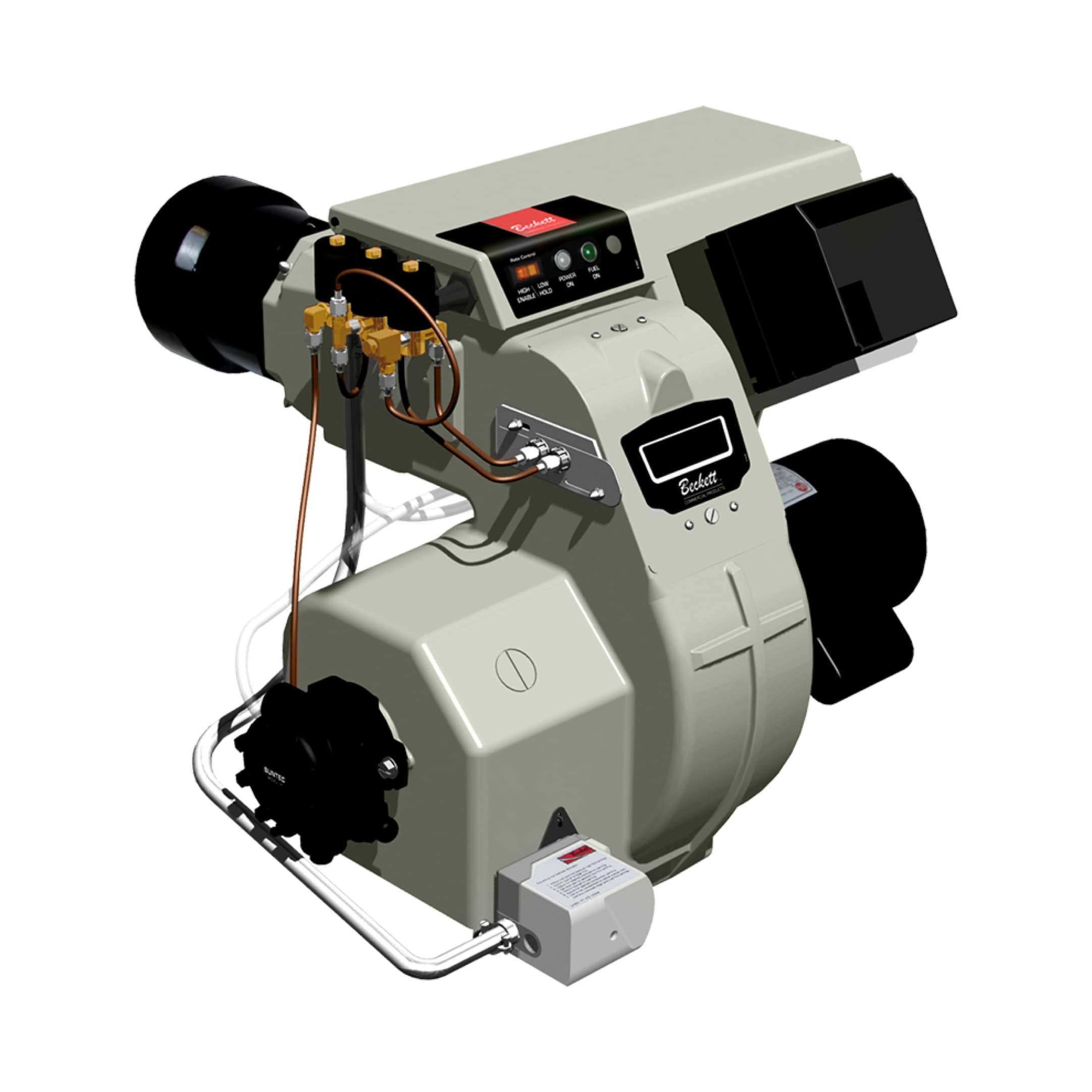
For oil-fired systems, the Beckett CF3500 oil burner delivers 17–35 GPH (68–141 kg/h) with direct spark ignition and flexible voltage options (suitable for 220V or 110V Singapore supply configurations). Its modulation range supports load-following operation across mid-size commercial and light industrial thermal applications.
Tier 3: Safety Relay and Flame Detection Integration
Specify dual-stage combustion control with flame detection to prevent unsafe burner operation. The Satronic DMG 970-N MOD.01 relay is a burner control relay compatible with IRD 1020 and UVD 971 flame detectors, operating at 50Hz or 60Hz with 220/240V or 110/120V supply flexibility. This relay provides lockout protection if flame is lost and enables safe modulation cycling—critical in Singapore's humid environment where electrode fouling and spark plug performance degradation occur faster than in dry climates.
Seasonal Performance Optimization and Commissioning Protocol
After capacity matching and component selection, establish commissioning and seasonal optimization routines to sustain performance year-round.
Commissioning and Baseline Setting
During initial startup:
1. Verify burner output against calculated load requirements: Measure supply and return temperatures, flow rate, and combustion gas composition (O₂, CO, CO₂) using portable analyzers. Confirm that burner modulation delivers designed thermal output within ±5% across the load range.
2. Optimize combustion air-fuel ratio: Adjust air damper positions to achieve 3–4% excess oxygen (O₂ in flue gas) for gas burners and 2–3% O₂ for oil burners. Higher excess air wastes fuel; lower excess air increases unburned carbon (CO) and emissions.
3. Establish spark gap and electrode condition: For the SIT 0577211, verify the 2–4 mm spark gap under worst-case humidity (high-humidity Singapore days). Clean electrodes and inspect for carbon tracking before seasonal high-load periods.
4. Document control relay response times: The Satronic DMG 970-N MOD.01 should detect flame loss and trigger lockout within 2–3 seconds. Verify timing under actual load cycling.
Tropical Climate Adjustments
Singapore's high humidity (70–90% RH typical) accelerates electrode fouling and corrosion. Implement these seasonal adjustments:
- Pre-monsoon (May–June, October–November): Inspect and clean ignition electrodes; replace spark plugs if duty cycle exceeds 8,000 hours. Humidity peaks before monsoon onset.
- Post-monsoon (July–August, December): Verify control relay relay contact cleanliness. High humidity can cause contact corrosion, reducing switching reliability.
- Mid-year maintenance (July–August): Check fuel nozzles on oil burners (Beckett CF3500) for soot accumulation; clean or replace if atomization pattern degrades.
Load-Following Optimization
Once commissioned, adjust control setpoints quarterly to track evolving facility loads:
1. Query BMS data: Extract monthly on-time, cycling frequency, and peak/average loads from building automation logs.
2. Re-profile modulation curves: If average load has shifted by >10% year-over-year, reprogram burner low-fire and high-fire setpoints to match new demand envelope.
3. Verify efficiency degradation: Compare fuel consumption per unit thermal output (e.g., m³ gas per kWh delivered) quarterly. Efficiency decline of >5% indicates component fouling, requiring cleaning or replacement.
Performance Metrics and Contractor Accountability
Track these key performance indicators (KPIs) for every burner installation:
- Thermal efficiency: Delivered thermal output (kW) ÷ Fuel energy input (kW). Target: >85% for gas, >82% for oil.
- Cycling frequency: Number of on-off cycles per hour. Target: <3 cycles/hour at average load; <6 cycles/hour at minimum load.
- Turndown accuracy: Measured output at low-fire ÷ rated output. Target: within design turndown ratio (e.g., 5:1 means low-fire output ≥ 20% of rated).
- Flame-loss response time: Time from flame extinction to burner lockout. Target: <5 seconds.
- Emissions compliance: O₂ concentration in flue gas, CO ppm, NOₓ if regulated. Target: Local SFA/NEA limits.
Summary: Practical Next Steps for HVAC Contractors
Capacity matching and load profiling transform combustion system performance from reactive troubleshooting to predictive optimization. The framework outlined above—combining empirical load measurement, right-sized component selection, and seasonal commissioning—enables HVAC contractors to deliver reliable, efficient Burners & Combustion installations across Singapore's tropical climate.
Key takeaways:
- Never size burners to peak load alone; establish true average operational load through field measurement.
- Specify modulation capability and adequate turndown ratios to eliminate short-cycling and inefficiency.
- Integrate electronic controls (SIT 0577211) and flame detection relays (Satronic DMG 970-N MOD.01) to maintain safety and efficiency across load swings.
- Conduct tropical climate-specific commissioning: Validate combustion ratios, electrode condition, and relay response times under Singapore's humidity and temperature extremes.
- Monitor performance quarterly and adjust modulation curves to track facility load evolution.
3G Electric's 35+ years serving Singapore's industrial and HVAC sectors means we understand local thermal demands, regulatory compliance pathways, and component reliability in tropical environments. Consult our technical team to validate capacity selections and secure OEM-backed combustion components that match your facility's unique load profile.