Introduction: Why Preventive Maintenance Matters for Pumps & Compressors
Pumps and compressors are the workhorses of industrial operations—yet they're often overlooked until something breaks. For maintenance teams managing critical infrastructure worldwide, the cost of unplanned downtime far exceeds the investment in preventive care. A single failed pump in a manufacturing line can cost thousands in lost production, emergency repairs, and expedited replacement parts.
With 35+ years of experience as a global industrial equipment distributor, 3G Electric has supported maintenance teams across multiple continents in extending equipment lifecycles and reducing unexpected failures. This guide translates that knowledge into practical, actionable maintenance protocols your team can implement immediately—whether you're managing a single facility or coordinating operations across multiple regions.
Section 1: Building a Preventive Maintenance Schedule That Works
The most reliable maintenance programs don't rely on gut feeling—they operate on structured schedules aligned with manufacturer specifications and real-world operational conditions.
Daily and Weekly Checks
Start simple. Assign one team member each shift to perform five-minute visual inspections:
- Fluid levels: Check oil/coolant reservoirs before equipment starts. Low levels indicate leaks or consumption requiring investigation.
- Unusual sounds: Listen for grinding, knocking, or cavitation noises. These often precede failure by hours or days.
- Temperature: Use infrared thermometers to spot abnormally hot discharge lines, pump housings, or motor casings.
- Vibration: Place your hand on the pump or compressor housing (safely) to detect excessive vibration that signals misalignment or bearing wear.
- Visible leaks: Mark any new puddles with date and location. Trending leak locations helps predict component failures.
For compression equipment specifically, drain moisture from air receiver tanks daily in humid climates. Trapped water accelerates internal corrosion and reduces compressor efficiency by 5-10%.
Monthly Deep Inspections
Once monthly, dedicate 30-60 minutes per major pump or compressor unit for systematic evaluation:
- Coupling alignment: Measure shaft alignment using dial indicators. Misalignment is a primary cause of premature bearing failure. Target tolerance: ±0.05mm for precision equipment.
- Pressure gauge calibration: Verify gauges against a reference standard. Faulty gauges lead to operating errors and component damage.
- Filter condition: Inspect inlet strainers and discharge filters. Clean or replace when differential pressure exceeds manufacturer limits (typically 0.3-0.5 bar).
- Hose and connection inspection: Look for cracks, abrasion, discoloration, or weeping at fittings. Replace hoses on a 5-7 year cycle regardless of condition—elastomers degrade internally.
Document all findings in a maintenance log. This creates accountability and provides data for identifying trends.
Quarterly and Annual Overhauls
Every three months:
- Change or clean filters per equipment specifications
- Test relief valves to confirm opening pressure matches nameplate ratings
- Inspect seals for weeping or degradation
- Review vibration data if you're using condition monitoring technology
- Perform full fluid analysis (oil in hydraulic/lubricated systems). Send samples to a certified lab—they'll catch wear metals, moisture, and contamination invisible to the eye.
- Disassemble, inspect, and replace wear rings on centrifugal pumps
- Clean compressor coolers and aftercoolers to restore heat transfer efficiency
- Inspect motor bearings and windings; measure insulation resistance with a megohmmeter
- Test safety devices (pressure relief valves, thermal overloads, shutdown switches)
Section 2: Critical Maintenance Protocols for Maximum Equipment Life
Following a schedule is necessary but not sufficient. Maintenance quality depends on understanding why you're performing each task and what you're looking for.
Fluid Management: The Foundation of Reliability
The fluid circulating through your pump or compressor carries multiple critical functions: lubrication, cooling, pressure transmission, and contaminant suspension. When fluid degrades, all of these functions fail simultaneously.
Establish fluid specifications:
- Verify the exact fluid type, viscosity grade, and ISO cleanliness class required by your equipment manual. Many facilities use wrong fluids—often due to supply chain confusion or cost-cutting—which voids warranties and accelerates wear.
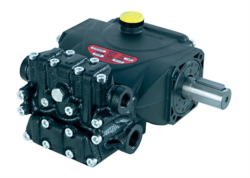
- For Interpump E3B2515I R and Interpump E3B2515 L units commonly deployed in global operations, use only ISO VG 32 or VG 46 hydraulic fluid with ISO cleanliness rating ≤18/16/13.
- Sample new fluid before installation to confirm it meets cleanliness standards
- Establish baseline analysis within the first 50 operating hours
- Sample at regular intervals (quarterly for critical systems, semi-annually for standard duty)
- Analyze for: viscosity, acid number (TAN), water content, particle count, and wear metals
- Viscosity increase indicates oxidation; consider shorter change intervals or upgraded fluid
- Rising water content signals seal leaks or cooler tube failures; repair immediately
- Wear metals (iron, copper, aluminum) in increasing quantities indicate internal damage; investigate bearing and gear condition
- Particle count trending predicts component failure; implement enhanced filtration or prepare for rebuild
Seal and Bearing Maintenance: Preventing Catastrophic Failure
Seals and bearings are the two components that, when they fail, typically cause cascading damage.
Seal inspection protocol:
- Weeping seals are normal (a few drops per shift), but streaming oil indicates imminent failure
- Observe seal lips during operation: if you see oil spray or mist, the seal is breaking down
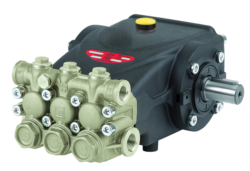
- For equipment like Interpump E3B1515 DX with Gearbox RS500H, which operates under high pressures, inspect dynamic seals every 250 operating hours under heavy load
- Replace seals during any major service, even if they appear functional—sealing surfaces are microscopic and fail without warning
- Bearings fail from two primary mechanisms: overload (misalignment, contamination, inadequate lubrication) and natural fatigue after their design life
- Monitor bearing temperature religiously. Bearings running 10°C above normal baseline signal distress. At 20°C above baseline, failure is typically imminent.
- Implement lubrication discipline: bearings fail from under-lubrication far more often than over-lubrication. Follow OEM schedules precisely.
- For grease-lubricated bearings, use only the specified grease type. Mixing greases creates chemical reactions that can solidify inside the bearing.
Pressure and Flow Optimization: Operating Within Design Limits
Many equipment failures occur not from defects but from operating outside design parameters.
Establish baseline metrics:
- Record nameplate pressure and flow ratings from equipment documentation
- Measure actual operating pressure and flow during the first week of service (after break-in)
- Use these as your "normal" baseline; deviations warrant investigation
- Pressure creep (slowly rising system pressure while flow decreases) indicates pump wear
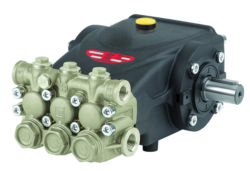
- For Interpump E3C1021 DX with Directional Valve, this pattern suggests internal leakage in the pump's swashplate or valve
- Flow reduction with stable pressure indicates filter plugging or cavitation
- Cavitation occurs when inlet pressure drops below vapor pressure, creating vapor bubbles that implode violently inside the pump
- Symptoms: grinding noise, vibration, and rapid erosion of pump internals
- Prevention: maintain inlet lines larger than outlet lines, minimize inlet hose length, keep inlet pressure above +0.3 bar absolute, monitor strainer condition aggressively
Section 3: Troubleshooting Framework for Rapid Problem Identification
When problems occur—and they will—systematic troubleshooting prevents wasted time and incorrect repairs.
Symptom-Based Diagnosis
Equipment runs but produces no pressure:
1. Check inlet supply (no fluid/low level)
2. Verify pump shaft rotation (broken coupling, motor failure)
3. Confirm relief valve isn't stuck open (listen for discharge roar)
4. If pump rotates but no pressure: internal pump failure (worn swashplate, broken pistons)
Pressure builds but flow is low:
1. Inspect filters (plugged inlet/outlet strainer)
2. Check hose routings for kinks or crushed sections
3. Verify heat exchanger/cooler isn't clogged
4. Confirm correct pump setting (some variable displacement pumps require adjustment)
Excessive noise or vibration:
1. Check coupling alignment immediately (misalignment under load creates impulses through the entire assembly)
2. Measure bearing temperature; high temp + noise = bearing distress
3. Inspect for cavitation (pressure reading at pump inlet)
4. Verify reservoir level (low fluid allows air entrainment)
Temperature rising above normal:
1. Measure cooler outlet temperature against ambient; cooler performance degradation is the primary cause
2. Verify cooler fan operation (electrical failure, belt slippage)
3. Check filter bypass valve (should open only at extreme plugging; if open, efficiency drops and heat rises)
4. Confirm correct fluid grade (wrong viscosity increases shear heating)
Systematic Repair Decision Matrix
Not every problem requires replacement—but some do. Here's how to decide:
Repair vs. Replace Decision Tree:
- Symptom severity: Does the problem affect safety, production, or just efficiency?
- Equipment age: Is the unit still within its design life (typically 8-10 years for standard industrial pumps)?
- Failure mode: Is it a wear component (normal maintenance) or structural/design failure (unpredictable future problems)?
- Repair cost vs. replacement: If repair exceeds 60% of replacement cost, replacement is economically justified
- Downtime impact: Emergency equipment justifies rapid replacement; backup equipment justifies careful repair
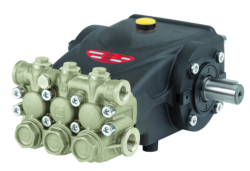
For equipment like Interpump E3C1515 L, which serves specific applications, consult 3G Electric's technical team before authorizing major repairs—upgraded models may provide better reliability or lower total cost of ownership.
Section 4: Building a Maintenance Culture That Delivers Results
The best maintenance program fails if your team doesn't follow it. Culture matters as much as procedure.
Documentation and Knowledge Continuity
- Standardize your logs: Use consistent formats across all facilities. When a technician transfers, the next person can immediately understand equipment history.
- Create equipment-specific playbooks: Compile manufacturer manuals, historical repair data, and local lessons learned into 2-3 page quick-reference guides per equipment type
- Record failure modes: When equipment fails, document exactly what failed, why it failed, and what prevented earlier detection
- Schedule quarterly team reviews: Discuss trends in failures, parts consumption, and downtime. Celebrate wins and identify system improvements
Training and Skill Development
- Rotate junior technicians through preventive maintenance tasks under supervision—they learn by doing
- Schedule annual training on new equipment types or upgraded models your facility acquires
- Partner with equipment manufacturers (3G Electric can facilitate this) for technical briefings on critical equipment
- Cross-train backup technicians on your most critical pumps and compressors—single points of knowledge create risks
Technology Integration
Modern facilities increasingly adopt condition monitoring tools:
- Vibration monitoring: Accelerometers detect bearing wear 4-6 weeks before catastrophic failure
- Temperature monitoring: Continuous thermography on critical equipment predicts failures
- Fluid analysis: Send samples monthly from critical systems; trending data prevents surprises
- Pressure trending: Data loggers on main lines reveal gradual performance degradation
These don't replace visual inspections—they enhance them by providing objective data your team can act on confidently.
Conclusion: Sustainable Equipment Reliability
Pumps and compressors fail when maintenance shifts from routine to reactive. The maintenance teams that deliver consistent, reliable operations don't do so by luck—they do it through discipline, documentation, and systematic attention to the fundamentals.
With 35+ years supporting global maintenance operations, 3G Electric understands that every facility faces unique challenges. Our technical team can help you adapt these protocols to your specific equipment, climate, and operational demands. Whether you're maintaining standard Interpump units or managing complex integrated systems, preventive maintenance principles remain constant: keep fluids clean, monitor performance, replace wear components before they fail, and document everything.
Start with one critical piece of equipment. Implement the daily and monthly protocols outlined here. Track results over 90 days. Once your team sees the impact—reduced downtime, lower emergency repair costs, extended equipment life—preventive maintenance becomes self-sustaining. Your team will own it because they experience the results.