Complete Pumps & Compressors Installation & Maintenance Guide for Procurement Engineers
Industrial pumps and compressors are critical assets in manufacturing, chemical processing, food production, and pressure cleaning operations. As a procurement engineer, understanding proper installation protocols, commissioning procedures, and preventive maintenance schedules directly impacts equipment lifespan, operational efficiency, and total cost of ownership. This guide provides actionable frameworks for managing pumps and compressors across global operations, drawing on 35+ years of experience distributing industrial equipment through 3G Electric.
Understanding Pump & Compressor Installation Requirements
Before deploying any pump or compressor system, procurement engineers must evaluate five critical installation parameters: mounting orientation, coupling alignment, fluid compatibility, environmental conditions, and integration with existing gearbox or valve assemblies.
Mounting Orientation & Foundation
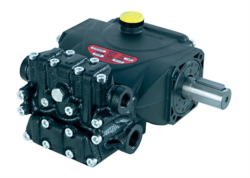
The physical installation foundation determines equipment stability and longevity. Centrifugal and gear pumps like the Interpump PUMP E3B2515I R require rigid mounting on concrete or steel bases with vibration isolation pads rated for minimum 150% of total unit weight. Vertical installations demand additional thrust bearing consideration for pressure compensation. Establish a baseline vibration reading (ISO 10816 standards) within the first 24 hours of operation to identify misalignment issues before wear patterns develop.
Coupling & Shaft Alignment
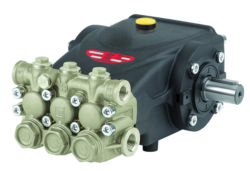
Misalignment causes 40-50% of premature pump failures. Use laser alignment tools to achieve ±0.05mm precision between motor and pump shafts. For systems using gearbox assemblies—such as the Interpump PUMP E3B1515 DX with GEARBOX RS500H—verify gear mesh tolerances and ensure flexible couplings accommodate thermal expansion across -10°C to +60°C operating ranges typical in global facilities.
Inlet & Discharge Line Configuration
Improper piping design creates cavitation, pressure drops, and noise. Install inlet lines with diameter that maintains fluid velocity under 1.2 m/s for centrifugal pumps. Use rigid steel or reinforced composite tubing; avoid kinked or undersized hoses. Discharge lines should include pressure relief valves, check valves, and isolation ball valves positioned within 300mm of the pump outlet. This configuration protects against water hammer and allows safe pump servicing without system depressurization.
Commissioning Protocols for New Pump & Compressor Systems
Systematic commissioning separates equipment that operates for 2-3 years from systems achieving 10+ year service life. Procurement engineers should implement this four-stage commissioning protocol before transferring equipment to operations teams.
Stage 1: Pre-Start Verification (24 hours)
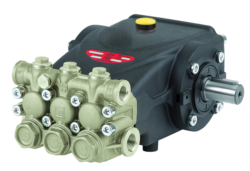
Conduct dry-run visual inspections: verify fastener torque per ISO 4762 standards, confirm coupling guard installation, validate electrical connections, and test emergency stop circuits. For dual-pump configurations using models like the Interpump PUMP E3B2515 L and Interpump PUMP E3C1515 L, confirm both units rotate freely by hand with zero binding resistance. Document all checks with dated photographs for compliance records.
Stage 2: Fluid Filling & Priming (2-4 hours)
Fill the system with manufacturer-specified hydraulic fluid, maintaining ISO VG 46 or equivalent per ISO 11158. Operate auxiliary circulation pumps to remove air pockets, typically requiring 30-45 minutes. Monitor inlet and discharge line pressures; discharge should stabilize within ±5 bar of design specification. For viscous applications, pre-warm fluid to 15°C minimum before initial start. Systems exceeding 100 bar pressure require controlled ramp-up over 15-minute intervals to condition seals and validate pressure relief valve response.
Stage 3: Load Testing (4-8 hours)
Introduce operational loads gradually: 25% capacity for 1 hour, 50% for 2 hours, 75% for 2 hours, then full design load. Monitor temperature rise (maximum 55°C under normal operation), amperage draw, vibration signatures, and fluid contamination levels. For systems incorporating directional control valves like the Interpump PUMP E3C1021 DX, cycle valve spools 50+ times to confirm smooth actuation and eliminate manufacturing residues.
Stage 4: Documentation & Baseline Establishment
Create permanent equipment files containing: manufacturer technical datasheets, witnessed performance test results, calibrated pressure/temperature readings, vibration analysis reports (FFT analysis), fluid sample ISO cleanliness codes (ISO 4406), and electrical parameter logs. These baseline metrics enable predictive maintenance decisions and validate warranty claims if failures occur.
Preventive Maintenance Strategies for Global Operations
Unplanned downtime costs 5-10× the value of preventive maintenance budgets. Procurement engineers coordinating multi-location operations must establish standardized maintenance calendars aligned with manufacturer recommendations and equipment operating hours.
Fluid Management & Contamination Control
Hydraulic fluid degradation is the root cause of 80% of pump failures. Implement quarterly fluid sampling with ISO cleanliness analysis (target: ISO 18/16/13 for systems operating above 100 bar). Change filters monthly for systems running 24/7, or per 500-hour intervals for batch operations. For pressure-intensive applications using Interpump E3B2515I R units, maintain separate fluid conditioning carts with offline 3-micron filtration to extend hydraulic fluid life from 2 years to 4+ years, reducing fluid disposal costs by ₹150,000-300,000 annually at mid-sized facilities.
Temperature & Seal Monitoring
Excessive heat accelerates seal degradation and fluid oxidation. Establish maximum operating temperatures of 50-55°C for continuous duty. Install thermocouples on pump casings; integrate temperature sensors with facility SCADA systems to trigger automatic shutdown if readings exceed 60°C. Seasonal variations—particularly in Middle Eastern or South Asian markets operating 45-50°C ambient—require cooler sizing upgrades and extended maintenance intervals. Monitor seal integrity through leak detection; any visible seepage from pump flanges indicates imminent replacement (typical seal life: 3,000-5,000 operating hours).
Vibration-Based Condition Monitoring
Bearing wear, cavitation, and misalignment create distinct vibration signatures detectable via accelerometers. Establish quarterly baseline measurements using portable vibration meters (ISO 10816 Category III limits). Trending analysis—tracking vibration increase of 0.5-1.0 in/sec per quarter—predicts failures 4-8 weeks in advance, enabling planned maintenance during production downtime. For dual-pump systems, compare vibration signatures between units; significant deviation indicates alignment drift or bearing degradation in the underperforming unit.
Seasonal & Climate Adaptation
Global procurement engineers managing equipment across tropical, temperate, and arid regions must adjust maintenance cadences. Tropical climates (Southeast Asia, India): increase filter changes to monthly and fluid sampling to bi-weekly due to humidity-driven contamination. Arid regions (Middle East, North Africa): implement enhanced cooling and pre-filtration on intake lines to manage dust infiltration. Temperate zones: standard quarterly maintenance applies with winterization protocols (fluid warming circuits) for sub-zero deployments in Northern Europe or North America.
Troubleshooting Common Pump & Compressor Issues
Reduced Flow Output
Suspect causes in order of probability: (1) clogged inlet filter—replace immediately; (2) cavitation due to insufficient inlet pressure—verify inlet line sizing and fluid temperature; (3) internal wear—measure actual flow against design specification using calibrated flow meters; if actual is 15-20% below specification, schedule pump rebuild or replacement. Gearbox-integrated systems like Interpump E3B1515 DX with RS500H may show flow loss if gear mesh clearances exceed tolerance (>0.15mm); require factory inspection.
Pressure Loss or Unstable Readings
Isolate leak sources: (1) external leaks—visible at flanges or seals, require immediate disassembly and seal replacement; (2) internal leakage—discharge pressure fails to stabilize above 80% design specification despite continuous pump operation, indicates worn compensators or pressure relief valve malfunction; (3) transducer drift—calibrate pressure gauges against certified reference instruments quarterly; ±5 bar error is common in uncalibrated systems.
Noise & Vibration Abnormalities
High-pitched whining indicates cavitation (check inlet conditions and fluid temperature); low-frequency rumbling suggests bearing wear or cavitation in gear mesh. Address immediately to prevent catastrophic failure. Verify coupling alignment and tighten all fasteners per ISO 4762 torque specifications (M10 fasteners typically: 50 N·m for steel, 30 N·m for aluminum).
Procurement Considerations for Equipment Selection
When evaluating pumps and compressors for new projects, procurement engineers should compare total cost of ownership (TCO) rather than purchase price alone. experienced distributors like 3G Electric provide technical specifications, OEM support, warranty services, and parts availability critical for global operations.
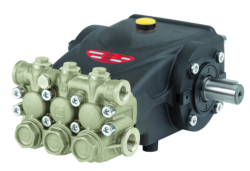
For applications requiring integrated solutions—pressure cleaning, continuous manufacturing, or variable flow demands—specify systems with controllable displacement like Interpump E3C1021 models that reduce energy consumption 20-30% versus fixed-displacement alternatives. Coordinate procurement timelines to align equipment delivery with facility commissioning schedules, allowing 4-6 weeks for installation, testing, and staff training before handover to operations.
Key Takeaways for Procurement Engineers
- Proper installation alignment and mounting prevent 40-50% of early failures—invest in laser alignment tools and rigid foundations during initial deployment.
- Structured commissioning protocols spanning pre-start verification, fluid priming, load testing, and baseline documentation reduce unexpected downtime by 60-70%.
- Quarterly fluid sampling and contamination analysis extend pump life from 3-5 years to 8-10+ years, justifying $5,000-10,000 annual condition monitoring investments through ₹300,000+ operational savings.
- Vibration-based condition monitoring provides 4-8 week failure prediction windows, enabling planned maintenance scheduling that minimizes production disruption.
- experienced distributor partnerships like 3G Electric ensure access to technical expertise, OEM-approved parts, warranty support, and global supply chain stability for multi-location operations.
Partner with 3G Electric for Pumps & Compressors Support
As an global industrial equipment distributor since 1990, 3G Electric provides procurement engineers with comprehensive support spanning equipment selection, installation guidance, commissioning supervision, and preventive maintenance planning. Our 35+ years of experience across industrial sectors—manufacturing, chemical processing, food production, and pressure cleaning—ensures that your pumps and compressors investments deliver maximum reliability and performance.
Contact our technical team to discuss your specific application requirements, obtain OEM-certified equipment specifications, and develop customized maintenance strategies aligned with your facility's operational schedule and climate conditions.