Introduction: The Energy Challenge in Pumps & Compressors Operations
Pumps & Compressors are among the most energy-intensive assets in industrial facilities worldwide. According to the International Energy Agency, compressed air systems alone account for 10% of industrial electricity consumption globally. For many facilities, energy costs dwarf initial equipment purchases, often representing 70-80% of total lifecycle expenses.
With over 35 years of experience distributing industrial equipment globally, 3G Electric has observed that many industrial professionals focus primarily on capital expenditure when selecting pumps and compressors, overlooking the far greater long-term impact of operational efficiency. This guide addresses that gap, providing practical strategies to optimize energy consumption, identify waste, and implement cost-saving measures across your Pumps & Compressors infrastructure.
Whether you operate in Southeast Asia, Europe, or beyond, understanding energy efficiency principles ensures your equipment delivers maximum performance while minimizing operational burden on your facility's energy budget.
Section 1: Understanding Energy Loss in Pumps & Compressors Systems
Common Efficiency Drains
Industrial Pumps & Compressors lose energy through multiple pathways:
- Volumetric losses from internal leakage and slippage reduce actual flow delivery
- Mechanical friction in bearings, seals, and gears consumes 5-15% of input power
- Pressure drop across piping, valves, and filters increases demand on prime movers
- Oversizing forces equipment to operate below optimal efficiency curves
- System mismatches where pump displacement or compressor capacity exceeds actual requirements
- Deteriorating components including worn impellers, scored cylinders, and degraded seals
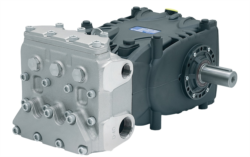
The Pratissoli KF30 high-performance pump exemplifies modern efficiency design, delivering 106 L/min at 200 bar with 40 kW input—achieving approximately 87% overall efficiency through precision Italian engineering. Similarly, the Pratissoli MW40 pump maintains 85 kW power input while delivering 211 L/min at 210 bar, demonstrating how proper equipment selection prevents energy waste from the outset.
Real-World Impact
Consider a typical 50 hp industrial pump operating 8,000 hours annually. A 5% improvement in efficiency equals approximately $3,000-5,000 in annual energy savings depending on local electricity rates. For facilities with multiple Pumps & Compressors systems, cumulative savings often exceed $50,000 annually—justifying significant investment in optimization strategies.
Section 2: System Design and Equipment Matching Strategies
Right-Sizing Your Equipment
One of the most impactful efficiency improvements involves selecting equipment matched precisely to your operational requirements rather than oversizing for "headroom."
Key Design Principles:
- Calculate actual maximum flow requirements during peak operations, not theoretical scenarios
- Size compressors for your genuine demand profile, considering demand factor (typically 0.65-0.75 for mixed operations)
- Select pump displacement matching your system's normal operating point (target 75-85% of maximum rated capacity)
- Verify pressure requirements independently rather than defaulting to standard system pressure
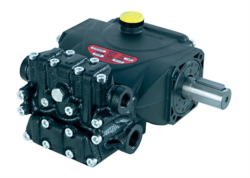
For applications requiring precise flow control, the Interpump E1D1808 compact gear pump delivering 8 L/min at 180 bar suits high-precision operations without oversizing penalties. Larger operations benefit from the Pratissoli SS71153 pump providing 122 L/min at 160 bar—sized appropriately for mid-capacity industrial hydraulics.
Piping and System Architecture
Piping design dramatically impacts system efficiency:
- Velocity in pressure lines should remain between 3-4 m/s (not 6-8 m/s typical in undersized systems)
- Minimize pipe length and directional changes to reduce pressure drop
- Specify low-restriction quick couplers and manifold passages
- Use flexible hoses strategically to dampen pressure spikes, protecting pump seals
- Implement suction line optimization: 0.6-1.2 m/s velocity with large diameter to prevent cavitation
Proper architecture can reduce system pressure requirements by 10-20 bar—translating directly to pump efficiency improvements and reduced energy consumption.
Section 3: Operational Management and Maintenance Optimization
Load Control and Duty Cycle Management
How you operate equipment significantly impacts energy efficiency:
- Variable load systems: Implement load-sensing (LS) or proportional valve control rather than pressure relief spill, eliminating continuous energy waste
- Intermittent demand: Deploy unload circuits that return pump flow to tank at negligible pressure during idle periods
- Pressure optimization: Reduce system working pressure to minimum required level (many systems operate 20-30 bar unnecessarily high)
- Flow control: Use meter-out valves and pilot-operated checks to modulate flow smoothly rather than restricting discharge
A facility operating a KF30 pump under constant full-flow with pressure relief spill wastes approximately 30-40% of input power. Converting to load-sensing control reduces energy consumption by 25-35% while improving precision.
Fluid Management and Filtration
Fluid condition directly affects Pumps & Compressors efficiency:
- High-viscosity fluids (degraded oils) increase friction losses by 15-25%
- Contamination causes accelerated wear, increasing internal leakage and volumetric losses
- Maintain ISO 4406 cleanliness target 17/15/12 or better for optimal pump efficiency
- Install bypass filtration circuits to gradually improve existing fluid condition
- Change fluids and filters on schedule; delayed maintenance increases energy consumption
Proper fluid management extends equipment life while maintaining peak efficiency across the entire service interval.
Preventive Component Replacement
Worn components create efficiency penalties that grow progressively:
- Pump impellers lose efficiency 2-3% annually with normal wear; replacement restores efficiency
- Seal degradation increases internal leakage; preventive seal replacement prevents gradual power loss
- Valve spools wear and stick, creating pressure losses; renewal restores response and efficiency
- Compressor cylinders and valves wear predictably; planned replacement prevents cascade efficiency loss
Compact systems like the Interpump ET1C1612 pump operating 3.68 kW can lose 0.3-0.5 kW annually to normal wear—justifying mid-life refurbishment.
Section 4: Measurement, Monitoring, and Continuous Improvement
Key Performance Indicators (KPIs)
Establish measurable efficiency metrics:
- Specific energy consumption (kWh per liter delivered or per cubic meter compressed)
- System pressure trend (increasing pressure for constant flow indicates wear)
- Temperature monitoring (excess heat indicates efficiency loss)
- Inlet/outlet flow comparison (gap reveals internal leakage)
- Motor current analysis (increasing current at stable load indicates efficiency decline)
Implementation Strategy
Phase 1: Baseline Assessment
- Measure current energy consumption across all Pumps & Compressors systems
- Document system configurations, operating points, and duty cycles
- Calculate cost-per-unit-output for each system
- Audit piping for leaks, loose connections, and pressure drop
- Optimize operating pressures downward to minimum functional levels
- Implement unload/load-sensing controls on suitable applications
- Improve fluid quality through enhanced filtration
- Replace oversized equipment with correctly matched units
- Upgrade to variable displacement pumps or variable speed drives
- Implement system-wide pressure reduction where feasible
- Install compressor sequencing logic for multi-unit installations
- Monitor KPIs monthly; investigate variances
- Plan preventive component replacement based on efficiency trends
- Benchmark performance against peer facilities
- Evaluate emerging technologies (VFD-driven compressors, smart controls)
Return on Investment Analysis
Calculate ROI for efficiency improvements:
Example: Industrial facility with four 50 hp pumps operating 7,000 hours annually at $0.12/kWh electricity
- Current annual energy cost: 4 × 37.3 kW × 7,000 hours × $0.12 = $124,000
- Target: 15% efficiency improvement through optimization
- Annual savings: $18,600
- Typical optimization cost (controls, piping upgrades, training): $40,000-60,000
- Payback period: 2.5-3 years
- 10-year cumulative savings: $186,000 (after payback)
Most industrial facilities see positive ROI within 2-3 years, with benefits continuing throughout equipment life.
Conclusion: Partnering for Efficiency
Optimizing Pumps & Compressors energy efficiency requires systematic approach combining equipment selection, system design, operational discipline, and continuous monitoring. With 35+ years supplying industrial equipment globally, 3G Electric understands that energy efficiency extends far beyond equipment specification sheets.
We recommend:
1. Conduct professional energy audit of existing Pumps & Compressors infrastructure
2. Prioritize quick-win improvements (pressure optimization, leak elimination)
3. Plan strategic equipment upgrades aligned with efficiency goals
4. Implement ongoing monitoring to sustain and expand gains
5. Invest in team training ensuring operational excellence
Whether you're evaluating the Pratissoli MW40 for new capacity, optimizing existing systems with KF30 pumps, or deploying compact solutions like the Interpump E1D1808, energy efficiency principles remain consistent: match equipment to actual requirements, minimize system losses, and maintain optimal operating conditions.
Your energy bills reflect these decisions every month. Strategic optimization delivers measurable financial impact while reducing environmental footprint—a win-win outcome that benefits operations, budgets, and sustainability objectives.