Understanding Pumps & Compressors Capacity Requirements in Southeast Asia
Pumps & Compressors form the hydraulic and pneumatic backbone of modern manufacturing plants, yet many plant managers in Southeast Asia operate with oversized or undersized equipment due to inadequate capacity planning. With 35+ years of experience distributing industrial equipment across the region, 3G Electric understands that one-size-fits-all specifications fail in the diverse operating conditions found throughout Southeast Asia—from high-humidity coastal facilities in Vietnam and Thailand to inland manufacturing hubs in Malaysia and Indonesia.
Capacity planning for pumps and compressors requires more than checking nameplate specifications. Plant managers must evaluate actual demand cycles, peak load requirements, ambient temperature effects, and duty cycle patterns unique to their facility. The tropical climate of Southeast Asia, with temperatures regularly exceeding 35°C and humidity levels above 80%, directly impacts equipment performance and cooling requirements. Additionally, power infrastructure variations across the region demand careful consideration of motor sizing and energy efficiency.
This guide provides plant managers with a structured approach to capacity planning that prevents both costly over-investment and operational failures. Rather than relying solely on equipment vendors' standard recommendations, you'll learn to conduct facility-specific assessments that optimize your equipment investment while ensuring reliable production continuity.
Conducting a Facility Demand Assessment
Step 1: Map Your Actual Operating Cycles
Begin by documenting your facility's typical operating day, not just peak capacity. Most manufacturing operations run in cycles—periods of high demand followed by lower-intensity work. For example, a metal fabrication shop may run heavy stamping operations for 4 hours, followed by 2 hours of lighter finishing work. This variance directly affects pump and compressor sizing.
Work with your production team to identify:
- Peak demand periods (flow rate in L/min, pressure in bar)
- Average operating periods (typical 8-hour shift requirements)
- Duty cycle duration (how long equipment runs continuously)
- Seasonal variations (some Southeast Asian facilities see demand spikes during monsoon seasons when certain operations pause)
Different processes require different pressure-flow combinations. A hydraulic press needs sustained high pressure (typically 200-210 bar) with moderate flow, while a spray cooling system requires lower pressure (50-100 bar) with higher volume. Document each process requirement separately.
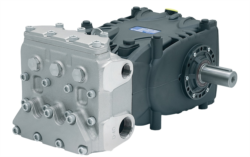
For the Pratissoli KF30, which delivers 106 L/min at 200 bar with 40 kW power, plant managers should verify this matches their actual press-forming operations. Oversizing here means paying for excess capacity year-round while undersizing causes production bottlenecks.
The Pratissoli MW40 rated at 211 L/min and 210 bar serves larger operations requiring sustained high-pressure flow. This represents nearly double the capacity of the KF30, making it suitable for facilities running multiple simultaneous high-pressure processes.
Step 3: Account for Auxiliary System Losses
Many plant managers focus only on primary equipment flow requirements while overlooking losses in piping, filtration, and cooling systems. In Southeast Asia's hot climate, cooling system demands are particularly critical. A 200 bar pump system may lose 5-15% of flow capacity to cooling circuits alone, especially when ambient temperatures exceed 35°C.
When calculating total system capacity, add 15-25% safety margin beyond your peak demand. This accounts for:
- Cooling system circulation losses
- Filtering and separation inefficiencies
- Wear-related performance degradation over time
- Future production expansion (within 3-5 years)
Right-Sizing Strategies for Different Plant Scenarios
Scenario 1: Compact Manufacturing Operations (Small-to-Medium Facilities)
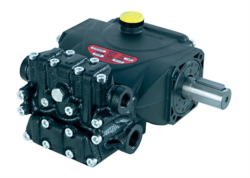
Facilities performing precision metalworking, small automotive component manufacturing, or industrial assembly typically require compact, efficient equipment. For operations with peak flows of 8-12 L/min at 160-180 bar, the Interpump E1D1808 L provides the right capacity. This compact unit delivers 8 L/min at 180 bar while consuming only 2.72 kW, making it ideal for facilities where:
- Floor space is constrained
- Multiple independent hydraulic circuits operate simultaneously
- Energy costs are a significant operational expense
- Power supply limitations exist (common in some Southeast Asian industrial zones)
The Interpump ET1C1612 SX*D20 at 12 L/min and 160 bar serves as the next step up, delivering 50% more capacity in only slightly larger footprint. Plant managers should choose between these based on whether your facility's peak demand more closely aligns with the lower or higher specification.
Scenario 2: Mid-Range Manufacturing Operations (Medium-to-Large Facilities)
Plants performing continuous production with moderate to high pressure demands benefit from the mid-capacity range. The Pratissoli SS71153 at 122 L/min and 160 bar represents an excellent fit for continuous-duty operations running 16-20 hours daily. With a 37.5 kW motor running at 800 rpm, this pump delivers sustained, reliable performance without the excess capacity that inflates energy costs.
This sizing prevents the common mistake of selecting 150 hp equipment when 100 hp adequately meets your needs—a decision that impacts monthly electricity costs across 3-5 year equipment lifecycles.
Scenario 3: Large-Scale Manufacturing and Process Industries
Facilities running multiple simultaneous high-pressure processes—such as large stamping operations, injection molding with hydraulic assist, or heavy industrial machinery—require the full capacity represented by the Pratissoli MW40. At 211 L/min and 210 bar with 85 kW power, this equipment supports operations where:
- Multiple hydraulic circuits operate simultaneously at full demand
- Rapid cycle times demand consistent, high-pressure output
- System redundancy considerations support larger equipment sizing
- Seasonal demand peaks justify larger baseline capacity
Some plant managers operate with uncertainty about their future production volumes. Rather than installing one large pump system, consider modular capacity planning: install a mid-range pump (such as the SS71153 or MW40) designed with proportional load controls and add-on compressor modules as demand grows. This approach, refined through 35+ years of industrial distribution experience at 3G Electric, allows:
- Capital cost spreading across multiple budget cycles
- Flexibility to scale based on actual customer demand
- Reduced energy waste during lower-demand periods
- Easier equipment replacement and technology upgrades
Environmental and Infrastructure Considerations for Southeast Asia
Climate Impact on Capacity Planning
Southeast Asia's tropical climate demands 10-15% additional cooling capacity compared to temperate regions. High ambient temperatures reduce pump efficiency and increase motor thermal stress. When selecting equipment, account for:
- Ambient temperature effects on motor insulation and bearing life
- Humidity-related corrosion in coastal facilities (specify stainless steel or protected components)
- Seasonal monsoon impacts on facility temperature and humidity control
- Power supply stability (voltage fluctuations common in some regions directly affect motor starting torque and thermal performance)
Electricity represents 30-50% of total industrial pump and compressor operating costs. Right-sizing your equipment directly impacts profitability. A facility operating a 150 hp pump when 100 hp meets demand wastes $2,000-4,000 annually in excess energy costs across a typical Southeast Asian facility. Using the Pratissoli KF30 (40 kW) instead of oversizing to the Pratissoli MW40 (85 kW) generates $3,000-6,000 annual energy savings for facilities where the smaller capacity adequately serves actual demand.
Infrastructure Compatibility
Many Southeast Asian industrial zones operate with power limitations and variable voltage conditions. Confirm your selected equipment's motor:
- Starting current requirements (soft starters may be necessary)
- Voltage tolerance range
- Thermal protection settings
- Bearing design for continuous high-ambient-temperature operation
Implementation: From Assessment to Installation
Step 1: Document Current Performance Baseline
If replacing existing equipment, measure your current system's actual performance: outlet pressure, flow rate, cycle times, and energy consumption. This data validates your capacity calculations and ensures your new equipment truly meets established requirements rather than theoretical specifications.
Step 2: Select Equipment with Operational Margin
Choose the smallest equipment size that meets your documented peak demand plus 15% safety margin. This conservative approach optimizes capital and operating costs while maintaining production reliability. 3G Electric's technical team can assist with this selection using your facility's specific operating data.
Step 3: Plan Installation with Thermal Management
In Southeast Asia's climate, proper installation includes:
- Dedicated cooling circuits (not bypassed during operation)
- Ambient temperature-appropriate motor enclosures
- Vibration isolation to reduce bearing stress
- Access for maintenance and filter changes (critical in humid environments where contamination accelerates)
After installation, monitor actual performance monthly for the first six months. Compare motor current draw, outlet pressure, flow rate, and cycle times to manufacturer specifications. Deviations indicate installation issues, cooling problems, or system contamination—all addressed during the critical startup phase.
Conclusion
Right-sizing pumps and compressors for Southeast Asian manufacturing represents a strategic investment in operational efficiency and profitability. By conducting thorough facility assessments, understanding climate-specific requirements, and selecting equipment matched to actual demand rather than theoretical maximums, plant managers optimize both capital investment and long-term operating costs.
3G Electric's 35+ years of industrial equipment distribution across Southeast Asia provide proven expertise in this capacity planning process. Whether your facility requires compact precision pumps like the Interpump E1D1808 L or sustained high-capacity operations with the Pratissoli MW40, our technical team supports your selection with facility-specific guidance based on regional operating conditions and best practices.