Understanding Southeast Asia's Unique Operational Environment for Pumps & Compressors
Southeast Asia presents distinct challenges for pumps and compressors that differ significantly from temperate industrial regions. High humidity, temperature fluctuations, salt-air corrosion near coastal facilities, and dusty environments in manufacturing hubs require deliberate equipment selection and deployment strategies.
Plant managers must account for these factors before specifying equipment. The region's tropical monsoon climate means seasonal temperature swings from 25°C to 40°C, accelerating component degradation if your systems lack proper protection. Coastal facilities in Singapore, Thailand, and Vietnam face salt-air corrosion that compromises standard steel components within months. Additionally, many Southeast Asian plants operate in areas with inconsistent power supply quality, demanding compressors and pumps with robust motor protection.
With 35+ years of experience distributing industrial equipment across global markets, 3G Electric understands these regional nuances. Your equipment selection directly impacts uptime, maintenance costs, and operational safety. The right pump or compressor specification prevents costly failures that compound across production schedules.
Evaluating Flow Rate and Pressure Requirements for Your Specific Climate Zone
Before selecting equipment, plant managers must establish precise operational requirements accounting for thermal and environmental conditions unique to your location.
Step 1: Document Your Baseline Operating Conditions
Begin by measuring actual ambient conditions at your facility:
- Peak and average daily temperatures
- Humidity levels (especially critical near coastal areas)
- Seasonal variations and monsoon impacts
- Power supply voltage fluctuations and frequency stability
- Presence of corrosive agents (salt spray, chemical vapors, dust)
These measurements inform pressure and flow specifications. A pump rated for 210 bar at sea level in temperate conditions may underperform in a 38°C Southeast Asian plant without thermal derating factors.
Step 2: Calculate Actual Flow Requirements with Safety Margins
Engineer your system flow rate 10-15% above peak demand. Southeast Asian plants often experience:
- Seasonal production increases (Q3-Q4 manufacturing peaks)
- Humid-climate compressor efficiency losses (2-5% reduction)
- Extended equipment run times during high-season demand
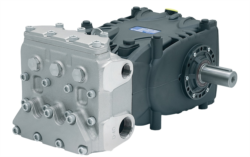
For example, if your process requires 100 L/min nominal flow, specify equipment rated for 115-120 L/min to maintain performance during peak thermal conditions. The Pratissoli KF30 delivers 106 L/min at 200 bar—suitable for moderate-demand applications—while the Pratissoli MW40 provides 211 L/min at 210 bar for higher-volume operations requiring redundancy.
Step 3: Account for Pressure Loss in Humid Environments
Humidity and temperature increase friction losses in hydraulic lines and pump components. Add 10-15 bar to your calculated system pressure requirement. If your process requires 160 bar, specify equipment rated for 180-200 bar to maintain stable pressure during peak heat periods.
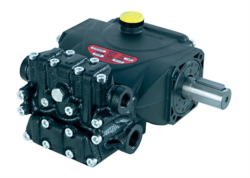
Compact, high-pressure options like the Interpump PUMP E1D1808 L (180 bar rated) excel in space-constrained facilities while maintaining performance in thermal stress conditions.
Strategic Equipment Selection for Coastal and Urban Industrial Zones
Geographic location within Southeast Asia dramatically influences material selection and deployment strategy.
Coastal Facilities (Singapore, Vietnam, Thailand Seaports)
Salt-air corrosion requires stainless steel or coated components. Standard Pratissoli and Interpump equipment features:
- Corrosion-resistant pump bodies and fasteners
- Sealed bearing chambers protecting internal components
- Protective coatings extending service life in marine environments
The Interpump ET1C1612 SX*D20 with PTFE construction offers superior corrosion resistance compared to standard steel variants, making it ideal for coastal manufacturing zones. Its 160 bar rating and 12 L/min flow suits precision applications in food processing, pharmaceutical, and electronics manufacturing—industries concentrated in coastal industrial parks.
Urban Manufacturing Zones (Bangkok, Ho Chi Minh City, Jakarta)
Densely packed industrial districts expose equipment to airborne contaminants, requiring enhanced filtration and sealed designs. Urban facilities benefit from:
- Compact, space-efficient pump configurations
- Integrated protective housings minimizing dust ingress
- Modular designs enabling rapid component replacement
The Pratissoli SS71153 high-pressure pump delivers 122 L/min at 160 bar with robust construction suitable for demanding urban environments. Its 37.5 kW motor rating provides stable operation despite variable power quality common in congested industrial areas.
Rural and Industrial Estate Locations (Rayong, Binh Duong, Batam)
These zones often lack infrastructure redundancy, requiring equipment with longer service intervals and high reliability:
- Specify proven designs with extensive regional deployment history
- Prioritize pumps and compressors from established distributors with local service networks
- Select equipment with easily sourced replacement parts
The Pratissoli KF30 (40 kW, 200 bar) combines proven performance with global parts availability through 3G Electric's 35+ year distribution network across Southeast Asia and beyond.
Installation, Integration, and Ongoing Performance Management
Equipment selection means nothing without proper deployment. Plant managers must oversee three critical phases: pre-installation verification, commissioning protocols, and performance monitoring.
Pre-Installation Verification
Before equipment arrives at your facility:
1. Verify power supply specifications match pump motor ratings (voltage, phase, frequency)
2. Confirm mounting surfaces are level and vibration-isolated
3. Inspect hydraulic line routing for potential kinks, corrosion points, or heat exposure
4. Validate filter and fluid specifications match equipment manufacturer requirements
5. Document ambient temperature and humidity at installation location
Southeast Asian plants frequently experience power supply instability. Confirm your facility's voltage regulation provides ±5% stability. Installers should measure actual voltage under full facility load before connecting equipment.
Commissioning and Initial Operation
Following installation:
1. Perform offline circulation through filtration systems for 4-8 hours, monitoring fluid temperature and clarity
2. Run equipment at reduced pressure (50% rated) for initial 8-hour operational period
3. Monitor discharge temperature (should remain below 60°C) during commissioning
4. Verify pressure gauge readings against equipment specifications
5. Record baseline vibration levels using portable measurement devices
This commissioning approach prevents thermal shock and identifies installation defects before full operational load.
Ongoing Performance Monitoring
Establish monthly monitoring routines:
- Check discharge pressure against baseline (deviations >5% signal wear or cavitation)
- Monitor fluid temperature trends (rising temperatures indicate filter restriction or internal wear)
- Listen for unusual noise patterns (high-pitched sounds suggest cavitation; grinding indicates bearing wear)
- Track power consumption trends (increasing amperage signals efficiency loss)
- Record ambient conditions (temperature, humidity) correlating with performance variations
Document all observations in a simple spreadsheet or maintenance management system. This data reveals seasonal patterns unique to Southeast Asian operations, enabling predictive maintenance scheduling aligned with your facility's production calendar.
Building a Reliable Vendor Partnership for Regional Support
Equipment alone doesn't ensure success—your relationship with your equipment distributor determines access to spare parts, technical support, and performance optimization guidance.
3G Electric's 35+ years of global industrial equipment distribution positions the company as a reliable supplier for Southeast Asian plant managers. When selecting your distributor:
1. Verify Local Inventory: Confirm your distributor maintains stock of replacement components (seals, bearings, filters) for equipment in your region, minimizing downtime during repairs.
2. Assess Technical Support Responsiveness: Establish service-level agreements specifying response times for technical inquiries and emergency situations. Southeast Asian plants operating 24/7 require 24/7 support availability.
3. Request Performance Data: Ask your distributor for case studies or performance reports from similar facilities in your region. This reveals how equipment performs under comparable climate and operational conditions.
4. Confirm Warranty and Service Coverage: Understand what warranty protections apply in Southeast Asia, including coverage duration and excluded conditions (often excluding damage from power surges or contaminated fluid).
A strong distributor relationship transforms your equipment investment into a strategic advantage. 3G Electric supports global plant managers through technical guidance, inventory management, and performance optimization—backed by decades of regional market experience.
Key Takeaways for Southeast Asian Plant Managers
Optimizing pumps and compressors selection requires understanding your specific operational environment. Account for tropical climate characteristics, geographic location-specific challenges, and infrastructure limitations when specifying equipment. Match flow rate and pressure requirements to actual facility conditions with appropriate safety margins. Select proven equipment designs from reliable distributors with regional service capabilities. Finally, implement rigorous commissioning and monitoring protocols ensuring equipment performs as specified throughout its operational life.
Your pump and compressor selection directly impacts production uptime, maintenance costs, and operational safety. Taking time to evaluate these factors systematically prevents costly failures and extends equipment service life across your Southeast Asian operations.