Understanding Pumps & Compressors in Singapore's Industrial Context
Singapore's manufacturing sector operates under unique environmental and operational pressures. High humidity, salt-spray corrosion near port facilities, compact factory spaces, and 24/7 production schedules demand pumps and compressors that perform reliably without frequent downtime.
Over 35 years of distributing industrial equipment across Southeast Asia, 3G Electric has observed that equipment selection failures rarely stem from specification mismatches alone. Instead, they typically result from overlooking application-specific environmental factors, installation constraints, and local maintenance capabilities. This guide addresses those practical realities.
Pumps and compressors form the backbone of hydraulic systems, cooling loops, compressed air networks, and process applications. In Singapore's context, a mismatch between equipment and environment can mean operational shutdowns during monsoon seasons, premature corrosion of critical components, or inefficient operation due to inadequate cooling capacity.
Tropical Environment Considerations for Equipment Deployment
Humidity and Corrosion Protection
Singapore's relative humidity averages 70-90% year-round, accelerating corrosion on unprotected metal surfaces. When selecting pumps and compressors, material composition matters as much as flow specifications. Equipment destined for port-adjacent facilities faces additional salt-spray exposure.
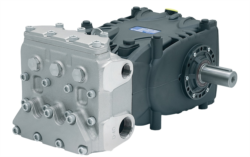
The Pratissoli MW40 features robust construction rated for 211 L/min flow at 210 bar pressure, making it suitable for heavy-duty applications, but its effectiveness depends on proper corrosion protection during installation. Similarly, the Pratissoli KF30 delivers 106 L/min at 200 bar with Italian engineering that handles sustained pressure, but requires appropriate enclosure design in high-humidity environments.
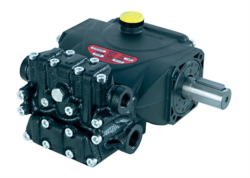
Compact gear pumps like the Interpump E1D1808 L present advantages in space-constrained Singapore facilities—it delivers 8 L/min at 180 bar while weighing only 5 kg—but their tight tolerances demand superior filtration in humid environments where moisture contamination accelerates wear.
Temperature Management
Factories operating near Port of Singapore experience ambient temperatures of 25-32°C consistently. Combined with equipment heat generation, hydraulic fluid temperatures can exceed 60°C without adequate cooling. This degrades fluid properties and accelerates component wear.
When specifying pumps for continuous operation, account for supplementary cooling capacity beyond system design. A Pratissoli SS71153 pump delivering 122 L/min at 160 bar and powered by a 37.5 kW motor generates substantial heat. Without proper heat rejection design, even high-performance equipment underperforms within weeks.
Compressed Air System Dehumidification
Compressed air systems in tropical environments accumulate moisture aggressively. Standard air-cooled compressors often fail to achieve adequate dew point suppression. This causes downstream equipment corrosion, product contamination in food and pharmaceutical manufacturing, and valve stiction in precision applications.
Singapore-based manufacturers should specify refrigerated dryers as mandatory components rather than optional add-ons. The cost differential (typically 15-20% of compressor price) prevents far costlier failures in moisture-sensitive processes.
Space Optimization and Compact Equipment Selection
Industrial Real Estate Constraints
Singapore's manufacturing facilities operate on premium land. Multi-story industrial buildings with modest floor plans dominate the landscape. This drives preference for compact, vertically-stackable equipment configurations.
Compact high-pressure pumps offer advantages here. The Interpump ET1C1612 SX*D20 delivers 12 L/min at 160 bar with PTFE construction while operating at 3.68 kW input—a footprint suitable for integrated skid-mounted systems. When designers consolidate multiple small-displacement pumps rather than one large unit, they gain modularity, redundancy, and easier maintenance access in tight quarters.
However, consolidation introduces coordination complexity. Multiple pumps require proportional valve logic, pressure-relief stacking, and integrated control systems. This increases engineering requirements but reduces single-point-of-failure risk—valuable in 24/7 operations where unplanned downtime costs exceed component purchase prices.
Vertical Equipment Mounting
Many Singapore facilities exploit vertical space by mounting equipment on multi-level racks. This demands lighter-weight solutions. The 5 kg Interpump E1D1808 L suits vertical mounting in ways heavier alternatives cannot. However, vibration isolation becomes critical—vertical mounting amplifies vibration transmission to structural elements, creating fatigue failures and noise complaints in adjacent leased spaces.
Application-Specific Selection Strategies
Heavy Industrial and Port-Adjacent Operations
Ship-building, heavy equipment assembly, and marine equipment manufacturing require sustained high-pressure delivery. The Pratissoli MW40 at 211 L/min and 85 kW power delivers the displacement and endurance these applications demand. Its 264 kg mass accommodates robust mounting for vibration-intensive environments.
These facilities typically tolerate larger footprints because production value per square meter justifies equipment space. Selection emphasis shifts toward reliability and mean-time-between-failures rather than compactness.
Food, Beverage, and Pharmaceutical Manufacturing
These sectors demand hygiene-grade equipment, washdown tolerance, and contamination-free operation. Compact solutions like the Pratissoli KF30 integrate into clean-in-place (CIP) systems effectively. Its 72 kg weight permits regular relocation for facility cleaning—a practical requirement in food processing.
Fluid selection becomes paramount: food-grade hydraulic fluids cost 3-5x standard mineral oil but prevent catastrophic contamination incidents. Pump selection must accommodate these specialized fluids without compromising efficiency.
Semiconductor and Precision Manufacturing
Ultra-clean compressed air and hydraulic systems are non-negotiable. The Interpump ET1C1612 SX*D20 with PTFE construction resists particulate contamination better than standard designs. Pair such equipment with multi-stage filtration (1 micron absolute minimum for semiconductor applications) and dedicated fluid reservoirs with immersion heaters for humidity control.
Compressors supplying semiconductor cleanrooms require oil-free designs with desiccant dryers—standard compressors are unsuitable regardless of manufacturer claims.
Integration with Local Service and Supply Networks
Service Availability and Lead Times
Singapore has robust industrial equipment support, but specific component availability varies. Equipment with established local inventory and service networks ensures faster restoration than specialized imports.
3G Electric's 35+ years distributing industrial equipment means access to replacement parts, qualified service technicians familiar with Singapore's environmental challenges, and understanding of local regulatory compliance. When specifying pumps and compressors, factor service availability into procurement decisions.
A sophisticated pump like the Pratissoli SS71153 offers superior performance but requires service capability. If your facility lacks local expertise, consider proven designs with broader market penetration.
Fluid and Consumables Supply Chain
Hydraulic systems require fluid top-ups, filter replacements, and seal maintenance. Singapore's competitive supply landscape ensures reasonable consumables pricing, but specialized fluids for food-contact or hazardous-area equipment may require advance ordering.
Verify fluid availability before equipment purchase. A system designed for synthetic ester fluids becomes problematic if local suppliers stock only mineral oil alternatives.
Practical Deployment Checklist
- Environment Assessment: Document ambient temperature range, humidity levels, corrosive elements, and dust exposure for your specific facility location
- Cooling Design: Specify supplementary cooling for systems operating continuously; assume 20% higher heat generation than nameplate ratings in tropical climates
- Filtration Specification: Exceed ISO 4406 cleanliness recommendations by one grade; tropical moisture accelerates contamination
- Vibration Isolation: Implement isolation mounts for all equipment; tropical heat softens elastomers—select materials rated for continuous 60°C+ operation
- Redundancy Planning: Consider dual smaller pumps instead of single large units for mission-critical applications
- Local Service Verification: Confirm equipment service availability with established suppliers before purchase
- Fluid Specification: Define fluid requirements (food-grade, synthetic, hazardous-area compatible) before equipment selection
- Space Validation: Physically verify equipment dimensions in actual installation location; compact products reduce footprint but demand precise positioning