Measurement & Detection Fundamentals: Selecting the Right Probe Technology
Measurement & Detection instruments form the foundation of reliable industrial process control across Southeast Asia's manufacturing, HVAC, and facility management sectors. With over 35 years of distribution experience, 3G Electric has supported thousands of installations requiring precise temperature, pressure, and flow monitoring. The challenge for plant managers and maintenance teams lies not in finding available instruments, but in matching specific probe technologies to application requirements, accuracy demands, and environmental conditions.
Three primary measurement categories dominate industrial operations: temperature sensing via resistance temperature detectors (RTDs), pressure monitoring through analog gauges, and flow rate verification using averaging probes. Each technology offers distinct advantages and inherent limitations. Understanding these differences enables informed procurement decisions that reduce commissioning delays, minimize diagnostic errors, and extend equipment service life.
Temperature Sensing with RTD Probes: Accuracy and Durability Comparison
RTD Technology Overview
Resistance temperature detectors remain the preferred choice for industrial process measurement across manufacturing facilities, HVAC systems, and thermal management applications throughout Southeast Asia. Unlike thermocouples, RTD sensors provide superior stability over extended service periods and excellent repeatability across multiple measurement cycles.
The Dwyer Probe AVG PT100 OHM RTD L.65 represents a practical solution for general-purpose temperature monitoring. Operating across -35.5 to +115.5°C with ±0.6% accuracy at 0°C, this probe delivers reliable performance in standard industrial environments. The flexible copper capillary design accommodates installation constraints common in existing ductwork, piping systems, and equipment enclosures. Flange-clip mounting simplifies retrofit applications without requiring major structural modifications.
Critical Accuracy Considerations
Accuracy specifications require careful interpretation. The ±0.6% specification applies at reference temperature (0°C). At elevated process temperatures—such as 80°C typical in HVAC return air monitoring—actual accuracy may vary. Industrial professionals should verify manufacturer tolerance tables across the full operating range relevant to their specific application. For precision industrial operations demanding tighter tolerance control, advanced RTD variants with improved sensor construction deliver ±0.3% or better performance at elevated temperatures.
Response time represents a secondary but important performance metric. Dwyer's flexible capillary design extends thermal lag slightly compared to rigid metal probes, but accommodates space-constrained installations. Maintenance teams should factor installation location into commissioning timelines—surface-mounted sensors stabilize faster than immersion probes in sluggish flowing media.
Probe Installation and Maintenance
Flange-clip mounting systems offer significant advantages for Southeast Asian operations where ambient humidity and thermal cycling stress mechanical connections. Unlike screw-threaded designs, clip-based fasteners resist corrosion-induced seizure in tropical environments. Regular inspection of capillary integrity prevents moisture ingress that degrades measurement accuracy. 3G Electric's support team regularly advises customers on preventive inspection schedules aligned with local climatic conditions.
Pressure Measurement: Analog Gauge Selection for Low-Pressure Monitoring
Gauge Specifications and Accuracy Standards
The Preciman Stainless Steel Vertical Pressure Gauge D63 0/+40 Mbar represents standard instrumentation for low-pressure industrial monitoring across 0 to 40 millibar (mbar) measurement ranges. This gauge class suits HVAC commissioning, pneumatic system verification, and laboratory process control applications common throughout Southeast Asia.
Preciman's ±1.6% full-scale accuracy specification reflects Class 1.6 gauge classification per international standards (EN 837-1). For a 40 mbar gauge, this tolerance equals ±0.64 mbar absolute uncertainty across the entire measurement range. Industrial professionals should recognize that accuracy deteriorates progressively when measuring at lower percentages of full scale. Reading 5 mbar on a 40 mbar gauge introduces proportionally larger measurement uncertainty than reading 35 mbar. Proper gauge selection requires matching full-scale rating to expected operating pressure bands—oversizing gauges degrades useful measurement resolution.
Material Selection and Corrosion Resistance
Stainless steel construction addresses critical durability requirements in Southeast Asia's humid industrial environments. Copper alloy wetted parts resist chloride attack common in coastal facilities and salt-laden air zones. Galvanic compatibility between stainless case, copper internals, and connecting ports prevents accelerated corrosion that compromises measurement reliability.
G1/4 connection sizing accommodates standard ISO port configurations found throughout Southeast Asian facility infrastructure. However, installation teams must verify connection compatibility with existing piping systems—adapters introduce potential leak points and cost considerations during commissioning phases.
Analog vs. Digital Pressure Instrumentation
Analog gauge advantages include zero power requirement, inherent safety in explosive atmospheres, and absence of calibration drift associated with electronic sensors. For Southeast Asian operations with inconsistent electrical infrastructure, analog instruments provide uninterrupted monitoring during power interruptions. Disadvantages include limited remote transmission capability and human reading errors in busy maintenance environments. Digital pressure transmitters, conversely, enable automated data logging and remote system integration but require calibration verification and power management planning.
Flow Rate Measurement: Comparing Average Flow Probes for HVAC and Industrial Applications
Average Flow Probe Principles and Configuration
The Dwyer Metal Average Flow Probe MAFS-16 and Dwyer Average Flow Rate Metal Probe MAFS-40 represent the dominant technology for ductwork and pipe flow measurement in Southeast Asian HVAC commissioning and industrial diagnostics. These averaging probes measure static and total pressure across multiple distributed points along the probe length, enabling direct volume flow calculation without velocity boundary layer corrections.
The MAFS-16 (16 cm probe length) suits smaller diameter ducts, pipe connections, and space-constrained installations. The MAFS-40 (101.6 cm probe length) accommodates larger diameter ductwork typical of commercial HVAC systems and industrial process piping. Probe length selection directly impacts measurement accuracy—longer probes average pressure across greater proportions of the velocity profile, improving accuracy in non-uniform flow conditions common in elbows, dampers, and junction transitions.
Installation Location and Measurement Reliability
Proper averaging probe performance depends critically on installation location. Measurements taken within 2.5 duct diameters downstream of flow-disrupting elements (elbows, dampers, registers) introduce significant errors due to skewed velocity profiles and stream-wise vorticity. Best practices recommend straight duct sections of at least 5 diameters downstream and 2 diameters upstream from any disturbances. Southeast Asian contractors frequently encounter existing facilities where ideal measurement locations prove unavailable; in these cases, velocity profile correction factors or alternative measurement points become necessary.
Metal probe construction provides durability advantages over plastic alternatives in high-temperature applications and aggressive industrial environments. However, metal probes exhibit slightly slower response times compared to lighter alternatives—relevant for automated HVAC balancing systems requiring rapid pressure data acquisition.
Flow Measurement Uncertainty Analysis
Average flow probes measure differential pressure (total pressure minus static pressure) which relate to velocity through Bernoulli's equation. Measurement uncertainty propagates from pressure transducer accuracy, velocity profile correction assumptions, and air density calculations. A typical commissioning measurement combining Dwyer probes with ±0.5% accuracy pressure transmitters yields overall flow measurement uncertainty of approximately ±2-3% under ideal conditions, expanding to ±4-5% in challenging installations with skewed flow profiles.
Southeast Asian maintenance teams should document baseline flow measurements during initial system commissioning, establishing reference conditions for subsequent troubleshooting. Repeat measurements identifying flow degradation indicate fouling, blockage, or distribution imbalance requiring corrective action—a key advantage of permanent or semi-permanent probe installations.
Supporting Systems: Pressure Verification and Ancillary Equipment
System Charging and Expansion Tank Management
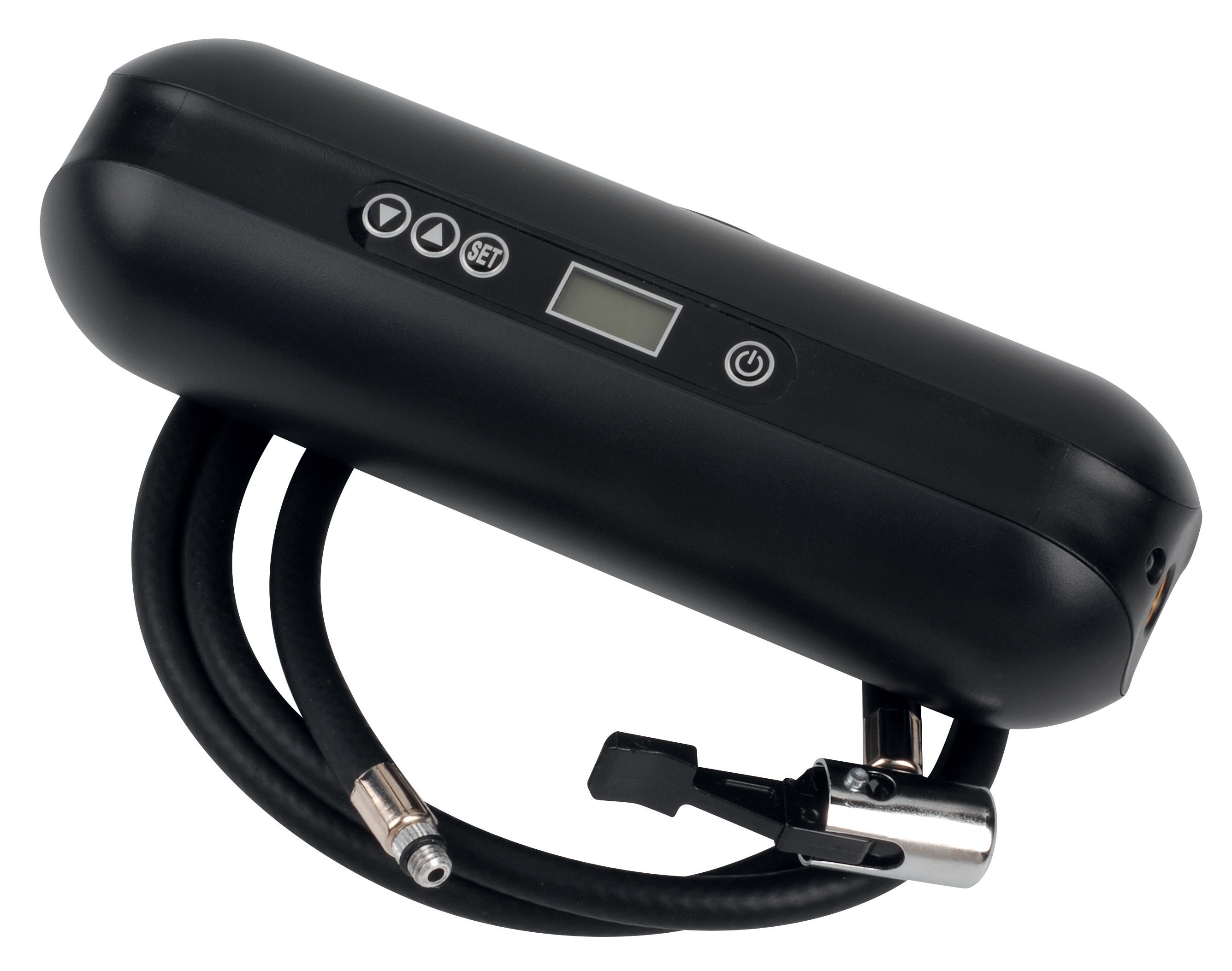
The CBM Expansion Tank Inflator Battery 2000 mAH represents critical ancillary equipment for HVAC and heating system commissioning throughout Southeast Asia. This device enables technicians to verify or adjust system pre-charge pressure—a parameter directly affecting heat pump efficiency, expansion tank performance, and thermal system reliability.
Battery-powered inflation systems eliminate dependency on external compressed air sources, simplifying field operations in facility environments lacking shop equipment. The 2000 mAH capacity supports multiple charging cycles across an entire commissioning project. Operating range from -20 to 60°C accommodates Southeast Asia's climatic extremes, though portable equipment should remain temperature-controlled during storage in non-air-conditioned facilities.
Multi-unit pressure display capability (bar, PSI, kPa) addresses international operational standards and technician familiarity preferences. However, users must exercise care to select correct pressure units—unit selection errors directly translate to dangerous over-pressurization or inadequate system charge conditions.
Practical Selection Framework for Southeast Asian Industrial Professionals
Matching Instruments to Application Requirements
Temperature probe selection depends on measurement range, response time demands, and installation geometry. Process control applications requiring real-time feedback (steam systems, heat exchangers) justify investment in faster-response rigid probes. HVAC commissioning and monitoring tolerates moderate thermal lag, favoring flexible RTD designs that accommodate retrofit installations.
Pressure gauge selection prioritizes full-scale rating accuracy matching to expected operating ranges. Low-pressure monitoring (0-40 mbar) for HVAC applications suits Preciman Class 1.6 instruments. Compressed air systems and high-pressure hydraulics demand higher gauge accuracy classifications (Class 1.0 or better) and require periodic calibration verification against certified standards.
Flow probe selection balances duct diameter, required measurement location constraints, and acceptable installation downtime. MAFS-16 probes address most common Southeast Asian commercial HVAC applications. Larger diameter industrial ductwork and pipe applications require MAFS-40 configurations. Both require proper installation technique and location assessment before purchase commitment.
3G Electric's Role in Southeast Asian Industrial Operations
With 35+ years of equipment distribution experience, 3G Electric maintains extensive inventory of Dwyer, Preciman, and CBM instrumentation throughout Southeast Asia. Beyond product supply, our technical team provides commissioning guidance, installation support, and performance verification assistance. Local distribution ensures rapid spare parts availability—critical for minimizing diagnostic equipment downtime in competitive industrial environments.
Our customer network includes major HVAC contractors, industrial facility managers, and maintenance engineering teams across Singapore, Malaysia, Thailand, and broader Southeast Asian operations. This experience informs equipment recommendations tailored to regional climate conditions, facility infrastructure standards, and operational constraints specific to Southeast Asian markets.
Conclusion: Building Reliable Measurement Capabilities
Measurement & Detection instrumentation selection represents a foundational decision affecting industrial system reliability, commissioning efficiency, and long-term operational performance. RTD temperature probes, analog pressure gauges, and averaging flow measurement devices each serve distinct but complementary roles in comprehensive facility diagnostics. Proper selection requires understanding fundamental sensor principles, accuracy limitations, and installation requirements—knowledge that 3G Electric's technical team actively shares with Southeast Asian industrial professionals.
Contact 3G Electric's regional offices for technical consultation, equipment specifications, and application support tailored to your specific industrial measurement and detection requirements.