Understanding Measurement & Detection Challenges in Tropical Climates
Maintenance teams across Southeast Asia operate in some of the world's most demanding environmental conditions. High humidity (often 80-95%), ambient temperatures exceeding 35°C, and rapid temperature swings create specific challenges for Measurement & Detection equipment that differ significantly from temperate industrial regions.
Unlike standard industrial environments, tropical operations expose instruments to:
- Condensation inside gauge casings – moisture ingress degrades internal springs and magnetic elements
- Corrosion acceleration – salt-laden air near coastal facilities attacks unprotected metal components
- Temperature-induced calibration drift – mechanical gauges lose accuracy as internal oils thicken or thin
- Hygroscopic dial damage – paper-based dial markings fade or swell in persistent high humidity
With over 35 years of experience supplying industrial equipment across Asia-Pacific operations, 3G Electric has observed that many maintenance teams purchase standard instruments without considering these environmental factors, leading to premature failure and repeated recalibration costs.
This guide helps you understand which Measurement & Detection instruments genuinely survive tropical deployment versus which require protective housing or shorter replacement cycles.
Mechanical Pressure Gauges: Dwyer vs. Preciman for Humidity Resistance
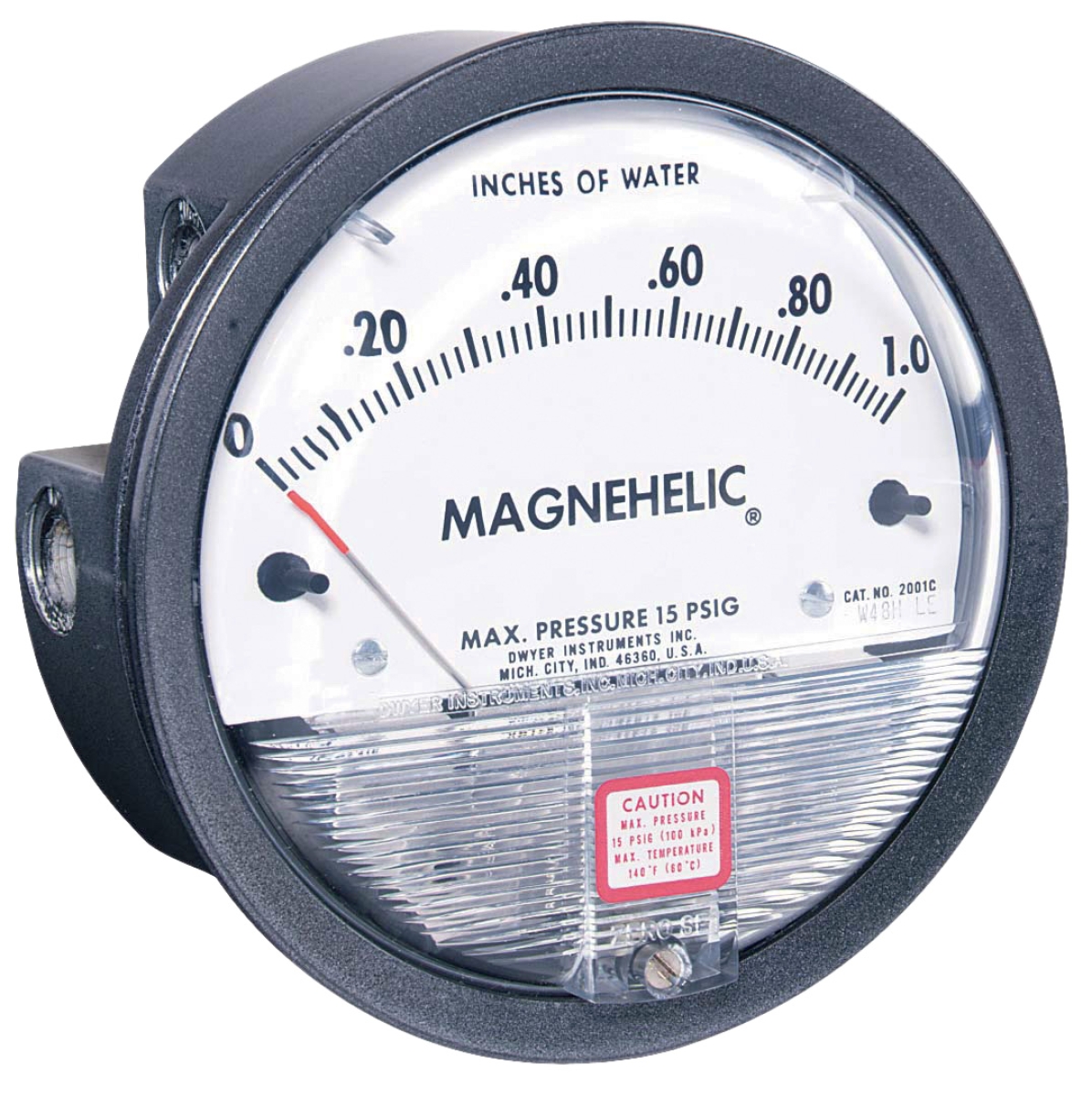
Dwyer Magnehelic Differential Pressure Gauges
The Dwyer Magnehelic 2000-8KPA and Dwyer Magnehelic 2000-300PA represent the traditional choice for HVAC and clean-room monitoring across Southeast Asian facilities. These gauges use a magnetic piston design rather than Bourdon tubes, offering inherent advantages in humid conditions.
Humidity Performance:
- Sealed magnetic chamber design prevents direct moisture contact with moving components
- No oil-filled bellows that can emulsify or support bacterial growth in tropical humidity
- Glass front panel (4-inch dial on the 2000-8KPA) can be protected with clear polycarbonate shields
- Stainless steel wetted parts resist salt-air corrosion
The sealed design creates a trapped air space. In Southeast Asian heat cycles (30°C at dawn to 38°C by afternoon), internal pressure variations can affect reading stability. Field technicians report ±2-3% reading drift over 6-12 months in coastal areas without protective enclosures.
Ideal Applications:
- Indoor HVAC systems with stable temperature environments (server rooms, cleanrooms, hospitals)
- Ductwork pressure monitoring where gauges stay protected from direct sun and rain
- Differential pressure monitoring (the 2000-8KPA excels here with its 0-8 kPa range)
Preciman Green ABS Pressure Gauge
The Preciman Green ABS pressure gauge D80 0/+10bar represents a newer approach to tropical industrial pressure measurement. The ABS (acrylonitrile butadiene styrene) housing and polymer design offer distinct advantages over traditional brass bodies.
Humidity Performance:
- ABS plastic housing resists moisture absorption better than painted steel or aluminum
- No internal corrosion from salt-air exposure—critical advantage in coastal facilities
- ±2.5% full-scale accuracy maintained across the 0-10 bar range without temperature compensation
- G1/2 connection accepts NPT adapters, simplifying retrofit installations
- Lower cost replacement cycle justifies more frequent gauge rotation (every 24 months vs. 12 for Dwyer)
- Polymer materials don't develop surface rust or require protective coatings
- Lighter weight reduces strain on mounting brackets exposed to thermal expansion cycles
- Easier visual inspection—transparent dial housing allows moisture detection before internal damage occurs
ABS plastic softens above 80°C. Direct sun exposure on unshaded outdoor equipment can cause permanent dial warping. The ±2.5% accuracy specification assumes consistent calibration—tropical temperature swings reduce practical accuracy to ±3-3.5%.
Ideal Applications:
- Fluid system monitoring (hydraulics, cooling loops, chilled water systems)
- Outdoor or semi-exposed equipment rooms
- High-turnover facilities where instrument replacement every 2-3 years fits maintenance budgets
- Applications where moisture ingress is accepted, managed through regular inspection and replacement
Temperature Measurement: Mechanical Thermometers in High-Humidity Conditions
The Preciman Green vertical thermometer D80 -30/+50°C represents the standard for process temperature monitoring across Southeast Asian industrial operations. Mechanical dial thermometers offer reliability that digital sensors cannot match in unpredictable tropical environments.
Design Advantages for Tropical Deployment
Stainless Steel Stem Construction:
The 100 mm stem (L10cm specification) provides critical advantages:
- 430-grade stainless steel resists salt-air corrosion for 3-5 years without maintenance
- Longer stem allows installation in deeper process piping, positioning the measuring junction in cooler locations away from external heat radiation
- Direct contact with fluid provides real-time temperature reading without transmission lag
- 80 mm dial face provides large, legible markings resistant to UV fade
- Sealed mechanical design (filled with inert fluid) prevents moisture condensation inside the gauge
- Temperature range -30°C to +50°C accommodates both chiller outlet water (4-8°C) and condenser approach temperatures (38-48°C)
Installation Strategy for Maximum Accuracy
Maintenance teams often install thermometers at eye level or within equipment, exposing them to radiant heat or direct sunlight. In tropical environments, this reduces effective lifespan and accuracy:
Recommended Practice:
1. Install with thermowell shielded from direct solar radiation
2. Wrap stem insulation with reflective tape if exposed to sun >4 hours daily
3. Position at lowest point in vertical runs to capture actual fluid temperature (hot water rises)
4. Allow 3-5 minute stabilization time before reading, longer than temperate environments due to heat mass effects
Comparison: Mechanical vs. Digital Temperature Sensors
While digital transmitters offer 0.1°C resolution, mechanical thermometers survive:
- Power failures – no batteries required; operates independently
- Electrical surges – no electronics to damage during monsoon season lightning events
- Humidity exposure – sealed fluid design prevents moisture-related drift
- Maintenance accessibility – technicians don't require calibrators or logging equipment
For preventive maintenance programs, mechanical thermometers reduce tool complexity and dependency on electronic calibration schedules.
Measurement & Detection System Integration: Building Tropical-Resilient Monitoring
Multi-Instrument Strategies for Southeast Asian Facilities
The most effective maintenance programs combine instruments based on environmental risk rather than selecting single products for all applications.
Zone 1: Indoor Climate-Controlled Spaces (Servers, Offices, Cleanrooms)
- Deploy Dwyer Magnehelic gauges for differential pressure monitoring
- Use Preciman thermometers at cooling unit discharge points
- Rationale: Stable temperature, controlled humidity; Dwyer accuracy justifies investment
- Use Preciman ABS pressure gauges for absolute pressure measurement
- Install static pressure ports (Dwyer A-302F-C stainless steel units) for airflow verification
- Plan 24-month replacement cycles for gauges; inspect every 6 months
- Rationale: Accept moisture ingress; design for regular replacement
- Primary: Preciman vertical thermometers with thermowell protection
- Secondary: Preciman pressure gauges for flow verification
- Install vibration-damping snubbers on pressure ports (prevent pulsation damage)
- Rationale: Extended lifespan instruments; fluid contact requires corrosion-resistant materials
Preventive Maintenance Schedule for Tropical Environments
Monthly Inspections:
- Visual check for moisture beads inside gauge glass
- Record readings (creates baseline drift detection)
- Clean exterior with dry cloth; never use water spray
- Remove gauges; inspect stem for surface corrosion
- Clean connection ports; apply thin coat of marine grease (prevents salt creep)
- Photograph dial readings for documentation
- Send Dwyer Magnehelic gauges for recalibration (±0.5% accuracy verification)
- Replace Preciman ABS gauges if moisture visible inside dial
- Inspect stainless steel components; replace if pitting observed
- Review 12-month reading trends; replace gauges showing >2% drift
- Complete gauge replacement for high-humidity zones (outdoor equipment rooms)
- Replace thermometer stems if surface corrosion exceeds 0.5 mm pitting depth
- Upgrade protective housings or shelters if failure rates exceed 1 unit per 10 installed
Practical Procurement and Inventory Decisions
Building a Tropical-Ready Spare Parts Kit
With 35+ years supplying maintenance teams across Asia-Pacific, 3G Electric observes that effective operations maintain strategic spare inventory accounting for tropical failure rates:
Minimum Recommended Stock:
- 1x Dwyer Magnehelic 2000-8KPA per 5 installed units (backup for critical HVAC monitoring)
- 2x Preciman ABS gauges per 5 installed (consumable replacement rate)
- 1x Preciman thermometer per 3 installed (fluid monitoring backup)
- 2x Dwyer static pressure ports (expendable items prone to vibration damage)
Maintenance teams can reduce downtime by 3-4 hours per failure event through rapid gauge replacement. In tropical regions, equipment failure causes cascading effects (chiller shutdown → building temperature rise → occupant complaints within 30 minutes). Spare inventory costs 8-12% of annual measurement equipment budget but eliminates expedited shipping fees (typically 40-60% surcharge for emergency delivery in Southeast Asia).
Environmental Protection Strategies
Beyond gauge selection, installation design determines actual service life:
Protective Enclosure Options:
1. Ventilated instrument boxes – plastic or stainless steel with louvers; cost $120-250; extends gauge life 2-3 years
2. Radiant shields – reflective tape on stem and tubing; cost $15-30; prevents temperature drift from solar radiation
3. Desiccant breathers – small silica capsules on vent lines; cost $8-12; reduce moisture ingress in gauge feed lines
4. Stainless steel snubbers – vibration dampers on pressure ports; cost $25-50; prevent mechanical damage from pulsation
Total annual investment in protective infrastructure: $200-400 per facility. This reduces replacement costs and recalibration frequency by approximately 35-40%.
Conclusion: Selecting Measurement & Detection Equipment for Tropical Success
Maintenance teams in Southeast Asia achieve optimal results by matching instruments to environmental zones rather than adopting single solutions. Dwyer Magnehelic gauges excel in climate-controlled indoor environments where accuracy justifies investment. Preciman instruments deliver practical value in exposed conditions where moisture ingress is inevitable and design prioritizes durability over extended calibration intervals.
Temperature measurement via mechanical thermometers—particularly the Preciman vertical design with stainless steel stems—provides reliability that digital systems cannot match in tropical facilities lacking consistent power or environmental conditioning.
3G Electric's 35+ years serving Asia-Pacific operations demonstrate that successful measurement strategies combine:
- Zone-specific instrument selection (not one-size-fits-all approaches)
- Aggressive preventive maintenance scheduling (accounting for humidity acceleration)
- Strategic spare inventory (eliminating emergency procurement delays)
- Environmental protection design (enclosures, shielding, snubbers)
By implementing this framework, maintenance teams reduce unplanned downtime, extend equipment lifespan, and maintain measurement accuracy even in challenging tropical environments where standard industrial guidance often falls short.