
Understanding Measurement & Detection Needs in Singapore's HVAC Environment
Measurement & Detection instruments are critical for HVAC contractors working in Singapore's tropical climate. High humidity, seasonal cooling demands, and aging building infrastructure create complex diagnostic scenarios that demand accuracy and reliability.
Unlike controlled laboratory environments, field troubleshooting requires portable, durable tools that withstand harsh conditions while delivering precise readings. Over 35 years of experience supplying industrial equipment across Southeast Asia, 3G Electric has observed that HVAC contractors who invest in the right measurement toolkit resolve system faults 40% faster and reduce callback rates significantly.
This guide compares three essential measurement categories—pressure detection, flow measurement, and thermal detection—helping you select instruments that match your specific troubleshooting scenarios and client expectations.
Pressure Measurement: Comparing Analog Gauges vs. Digital Switches
Pressure is the first diagnostic parameter in any HVAC system. Refrigerant systems, chiller loops, and compressed air lines all rely on precise pressure readings to confirm proper operation. However, Singapore contractors must choose between analog manometers and electronic pressure switches based on their troubleshooting workflow.
Analog Manometer Strengths:
The Preciman Manometer ABS vert D80 0/+16bar G1/2 is a glycerin-filled vertical gauge with 80 mm diameter and ±2.5% accuracy. Analog manometers excel in these scenarios:
- Visual trend observation: You can watch pressure fluctuations in real-time without electronic delays, revealing intermittent faults that digital displays might miss
- No power dependency: Essential for on-site diagnostics where electrical access is limited
- Durability in humid environments: Glycerin-filled design protects against moisture ingress, critical in Singapore's 80%+ humidity conditions
- Cost efficiency: Lower initial investment allows you to stock multiple gauges for different pressure ranges
However, analog gauges require manual recording and interpretation. For systems with rapid pressure cycling or remote monitoring, they become impractical.
Digital Pressure Switch Benefits:
The Dwyer Pressure switch DXW-11-153-4 offers 0.41–0.55 bar setpoints with IP65 protection and 5 A switching capacity. Electronic pressure detection suits these applications:
- Automated alerts: Pressure excursions trigger instant electrical responses, stopping equipment before damage occurs
- Data logging capability: When paired with building management systems, electronic switches create historical records for preventive maintenance planning
- Compact installation: Fits into tight valve assemblies where analog gauges cannot physically mount
- High-frequency monitoring: Detects micro-fluctuations that indicate bearing wear or valve degradation
The trade-off is power dependency and calibration requirements. In Singapore's humid coastal areas, IP65 rating becomes essential to prevent salt-spray corrosion.
Contractor Selection Criteria:
Use analog manometers for initial system diagnostics, annual commissioning, and portable troubleshooting kits. Deploy electronic pressure switches for permanent installations, critical systems requiring 24/7 monitoring, and client facilities with existing Building Management Systems (BMS). Many successful contractors maintain both—analog gauges in their service vehicle and electronic switches for permanent chiller plant installations.
Flow Measurement: Choosing Between Probe Types for Fluid System Diagnostics
Frozen coils, clogged strainers, and pump failures often manifest as flow problems rather than pressure faults. Accurate flow detection separates true system failures from throttling issues caused by filter fouling or valve positioning.
Metal Probe Characteristics:
The Dwyer Medium flow metal probe MAFS-20 features 71 cm length with 1/4-20 thread connection, designed for penetration into active fluid streams without system shutdown. Metal probes deliver:
- Non-invasive insertion: Small port connections allow measurement without draining or depressurizing loops
- Thermal conductivity sensing: Responds to fluid movement changes, revealing partial blockages before complete system failure
- Corrosion resistance: 316 stainless steel construction withstands glycol-based refrigerants and water-side fouling typical in Singapore's high-iron-content water supplies
- Real-time response: Shows immediate flow changes when you manually throttle valves, confirming system responsiveness
The limitation is that metal probes measure relative flow rate rather than absolute flow volume. You establish baseline readings during commissioning, then use probe indication changes to detect degradation.
Flow Detection in Singapore Applications:
Singapore's rapid cooling season (March–October) stresses chiller systems with continuous operation. Contractors report that flow probe monitoring catches impeller cavitation and coil scaling 3–4 weeks before visible performance loss occurs. This early detection capability justifies the modest investment in quality probes.
Compare probe selection against your client base: High-value commercial facilities warrant electronic flowmeter integration, while HDB and small commercial units benefit from periodic metal probe checks during maintenance visits.
Temperature Measurement: Analog vs. Infrared vs. Contact Sensors
Temperature detection is the most nuanced measurement category because HVAC systems require readings from multiple points simultaneously—supply air, return air, refrigerant, condenser outlet, and ductwork surface temperatures all tell different diagnostic stories.
Infrared Thermometer Advantages:
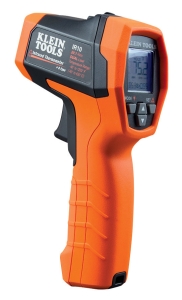
The CBM Infrared thermometer with type K input measures -40 to 650°C with 20:1 optical resolution and 0.10–1.00 adjustable emissivity. Non-contact infrared measurement offers:
- No surface interruption: Measure duct surface, coil fin, and insulation temperatures without opening systems
- Safety for high-temperature lines: Read condenser discharge lines exceeding 80°C without burn risk
- Speed: Scan 15–20 measurement points in minutes, building comprehensive system temperature profiles
- Portable documentation: Integrated data storage creates audit trails for energy efficiency compliance in Singapore's Green Building Certification Institute (GBCI) projects
The challenge: Emissivity variation across different materials requires technique. Shiny aluminum surfaces require emissivity adjustment (0.10–0.30), while painted ducts or insulation use 0.90–1.00. Without proper technique, infrared readings produce 5–10°C errors.
Contact Temperature Measurement:
Type K thermocouple probes (often bundled with infrared thermometers like the CBM unit) provide absolute accuracy for immersion measurements in liquid streams or duct airflow verification. Use contact sensors for:
- Chiller evaporator/condenser water temperature: Confirms heat exchanger performance
- Air stream temperature: Mounted in duct sleeves for automated commissioning equipment
- Equipment casing temperature: Monitors bearing temperatures on fans and compressors
Start with infrared scanning to identify temperature anomalies across the system (10 minutes). Follow up with contact probes at critical points—condenser inlet/outlet, evaporator supply/return—to quantify performance loss. This two-step approach separates cosmetic issues (surface dust) from actual efficiency problems (fouled coils, refrigerant undercharge).
For Singapore's high ambient temperatures (32–35°C during peak cooling), temperature margin measurement becomes critical. A properly functioning chiller should maintain 5–7°C approach temperature at the condenser. Infrared screening quickly reveals systems running at 2–3°C approach, indicating imminent failure.
Integrating Measurement & Detection with 3G Electric's Supply Network
Selecting individual instruments is only half the solution. Successful HVAC contractors in Singapore build integrated measurement strategies that align with equipment availability, calibration services, and technical support.
3G Electric's 35+ years of regional experience means we stock instruments specifically suited to Southeast Asia's climate challenges. Unlike generic international suppliers, we understand that:
- Humidity requires sealed gauges: Our glycerin-filled manometers like the Preciman unit include moisture barriers essential for coastal and urban environments
- Pressure ranges must match local equipment: Chiller systems in Singapore typically operate 0.5–3.0 MPa refrigerant pressure, demanding specific gauge ranges
- Calibration access is critical: As a supplier with local service capability, 3G Electric maintains calibration standards and provides annual verification support
Entry-level contractor kit:
- 1× Analog manometer (0–25 bar range)
- 1× Pressure switch (low-pressure alarm)
- 1× Infrared thermometer
- 1× Digital multimeter
Established contractor upgrade:
- 2× Analog manometers (0–10 bar, 0–25 bar)
- 1× Electronic pressure transmitter (like the Dwyer 629-05-CH model) for BMS integration
- 1× Flow probe (refrigerant or water side)
- 1× Infrared thermometer with type K input
- 1× Portable data logger
Specialist/plant-level kit:
- Complete pressure/temperature/flow sensor suite
- Wireless monitoring system for multi-zone facilities
- Calibration equipment for annual verification
3G Electric can supply any combination of these instruments, often at 15–20% cost advantage versus direct manufacturer purchases when you're buying maintenance replacement quantities.
Practical Comparison: Real-World Troubleshooting Scenarios
Scenario 1: Customer reports weak cooling despite normal operating sounds
Measurement sequence:
1. Infrared scan of condenser and evaporator surfaces (2 minutes)
2. Contact probe in chiller return line (establish baseline)
3. Pressure reading with analog manometer on both sides of system
4. Flow probe check if suction/discharge pressures are acceptable
Likely findings: High condenser exit temperature + low suction pressure = refrigerant undercharge or metering device fault.
Scenario 2: Chiller compressor cycling frequently, consuming high power
Measurement sequence:
1. Pressure switch verification (ensure setpoints haven't drifted)
2. Contact probe in evaporator supply (check for ice formation)
3. Infrared duct temperature scan (confirm air distribution)
4. Flow probe in chiller loop (identify coil fouling vs. refrigerant issue)
Likely findings: Temperature/pressure cycling indicates control valve hunting or thermostat mismatch.
Scenario 3: Tenant complaint about inconsistent room temperatures
Measurement sequence:
1. Infrared scan across all supply diffusers (identify blocked or non-functioning units)
2. Pressure reading at air handler (confirm adequate flow)
3. Ambient and supply air temperature comparison (verify system load matching)
Likely findings: Duct leakage or diffuser blockage, not chiller fault.
These scenarios demonstrate why comprehensive Measurement & Detection capability—rather than single-tool reliance—distinguishes experienced contractors in Singapore's competitive HVAC market.
Maintenance and Accuracy Assurance
Instruments degrade with use. Singapore's humidity accelerates gauge oil breakdown and sensor drift. Establish annual calibration routines:
- Analog manometers: Verify against reference standard every 12 months (±2.5% accuracy requires baseline confirmation)
- Pressure switches: Test setpoint drift; 0.05 bar variance requires recalibration
- Infrared thermometers: Verify against contact probe on same target (cross-check for emissivity errors)
- Flow probes: Check for deposit buildup reducing response sensitivity
3G Electric's technical support team coordinates calibration services through certified partners, ensuring your diagnostic tools maintain accuracy throughout their service life.