
Understanding Measurement & Detection in Hydraulic and Pneumatic Systems
Measurement & Detection systems form the backbone of effective hydraulic and pneumatic equipment maintenance. For maintenance teams across Singapore's manufacturing, construction, and industrial sectors, accurate real-time monitoring prevents catastrophic failures, reduces unexpected downtime, and extends asset lifespan. With over 35 years of experience distributing industrial equipment, 3G Electric has supported thousands of maintenance operations by providing access to precision measurement tools that enable early fault detection and predictive maintenance strategies.
Unlike reactive maintenance approaches that wait for equipment failure, modern measurement & detection enables condition-based intervention—allowing your team to schedule maintenance windows strategically rather than responding to emergencies. This distinction is particularly critical in Singapore's 24/7 manufacturing environment, where unplanned downtime directly impacts production schedules and costs.
Pressure Measurement: Comparing Gauge Types and Selection Strategies
Pressure measurement represents the most fundamental detection requirement in hydraulic and pneumatic systems. Your maintenance team must choose between analog gauges, digital transmitters, and pressure switches—each suited to different operational contexts.
Analog Manometer Advantages
Analog gauges like the Preciman Manometer ABS vert D80 0/+16bar G1/2 offer immediate visual feedback without power dependencies or signal processing delays. The glycerin-filled design dampens pressure spikes common in hydraulic systems, protecting the gauge mechanism and providing stable readings even during transient pressure events. For maintenance teams performing field diagnostics, this instantaneous analog display enables quick system assessment without waiting for digital signal stabilization.
The 80mm dial provides excellent readability in challenging industrial environments where screens may be obscured by moisture or dust. Preciman's ±2.5% accuracy at 0/+16 bar range suits most industrial hydraulic circuits operating between 50-150 bar—covering standard mobile equipment, press systems, and process automation applications common across Singapore's manufacturing base.
Digital Transmitter Advantages
Digital pressure transmitters like the Dwyer 629-05-CH-P2-E5-S1 deliver 4-20 mA output compatible with SCADA systems, PLCs, and remote monitoring dashboards. This enables continuous pressure logging, trend analysis, and automated alerts when readings drift beyond acceptable ranges. The 0.5% accuracy significantly outperforms analog alternatives, supporting precise process control in applications requiring tight pressure tolerances.
The IP65 rating makes these transmitters suitable for harsh Singapore industrial environments with frequent cleaning cycles and high humidity exposure. NPT 1/4" connections integrate directly into existing hydraulic manifolds without adapter requirements. For maintenance teams managing multiple systems across distributed facilities, digital transmitters centralize data collection and enable predictive analytics that identify degradation patterns before critical failure occurs.
Pressure Switch Applications
The Dwyer DXW-11-153-4 pressure switch provides binary fault detection—triggering alarms or shutdown sequences when pressure exceeds or falls below safe operating limits. With adjustable setpoints between 0.41–0.55 bar and differential ranges of 3.46–5.17 bar, this switch protects low-pressure pneumatic circuits common in conveyor systems, automated assembly lines, and compressed air distribution networks.
The 5 A @ 125/250 VAC rating supports direct integration with control circuits and warning systems. IP65 protection ensures reliability in environments with regular washdown or moisture exposure. Your maintenance team should pair pressure switches with transmitters rather than treating them as alternatives—switches provide redundant safety protection while transmitters enable operational optimization.
Flow and Temperature Detection: Multi-Parameter Monitoring Strategy
While pressure dominates initial diagnostics, flow rate and temperature provide equally critical indicators of system health. Many maintenance teams overlook these parameters until catastrophic failures occur—missing early warning signs that predict imminent breakdown.
Flow Measurement Implementation
The Dwyer MAFS-20 medium flow metal probe enables non-invasive flow monitoring through insertion into hydraulic or pneumatic circuits. The 71cm probe length reaches measuring points within manifolds without requiring complete system disassembly. Standard 1/4-20 thread connections integrate with existing pneumatic probes and flow measurement instruments.
For maintenance teams managing multi-circuit systems, flow measurement identifies which branches consume excessive power, signaling potential internal leakage, worn seals, or oversized actuators. Comparing flow rates across identical circuits reveals performance degradation before pressure rises enough to trigger pressure transmitters. In Singapore's high-speed manufacturing environment, this early detection capability prevents cascade failures where degraded components stress neighboring systems.
Temperature Monitoring Advantages
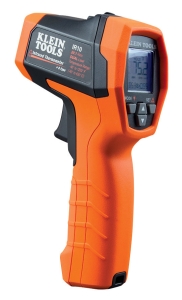
The CBM infrared thermometer with type K input measures equipment surface and fluid temperatures without contact, enabling rapid thermal scanning across complete systems. The -40 to 650°C range covers everything from cryogenic compressed air conditioning units to high-temperature hydraulic circuits in industrial furnace control systems.
The 20:1 optical resolution allows measurement of small components—hydraulic pump casings, solenoid valve coils, pressure relief valve bodies—from safe distances. For maintenance teams, temperature mapping identifies hot spots indicating friction, excess pressure drop, or failing bearings. The adjustable emissivity between 0.10–1.00 accommodates different material surfaces—polished steel, painted surfaces, aluminum—ensuring measurement accuracy across diverse equipment types.
Temperature trending proves particularly valuable in Singapore's tropical climate where ambient cooling challenges persist. Hydraulic fluid heating indicates insufficient heat exchanger performance, viscosity degradation, or internal friction. Detecting this problem early prevents fluid breakdown that would otherwise destroy seals, increase wear rates, and force emergency system replacement.
Integrated Measurement Strategy: Building Your Maintenance & Detection Protocol
Individual measurement tools provide valuable data, but systematic integration transforms raw readings into actionable maintenance decisions. Your maintenance team should implement a tiered detection approach matching tool sophistication to system criticality.
Tier 1: Critical Production Equipment
For systems where failure directly stops production—primary hydraulic presses, main pneumatic supply lines, CNC machine tool circuits—deploy integrated measurement combining analog pressure gauges, digital transmitters, flow probes, and temperature sensors. This redundant approach ensures measurement availability if any single instrument fails while providing multiple data streams for root cause analysis when problems emerge.
Implement daily visual checks of analog gauges combined with weekly SCADA dashboard reviews of digital transmitter readings. Temperature scanning should occur monthly unless baseline data suggests more frequent assessment. This creates a rhythm your team can sustain without exhausting resources.
Tier 2: Standard Production Support Equipment
For secondary systems where failure causes delays rather than complete shutdown—auxiliary hydraulic circuits, secondary air compressors, support equipment—deploy dual pressure measurement (gauge plus transmitter) with quarterly temperature scanning. Flow measurement on circuits showing pressure variations helps diagnose problems systematically rather than through trial-and-error component replacement.
Tier 3: Backup and Low-Consequence Systems
For equipment with built-in redundancy or non-critical operational impact—backup circuits, safety system standby equipment—rely on simple analog pressure gauges with semi-annual inspection. These systems still benefit from measurement & detection, but cost optimization justifies simpler approaches.
This tiered methodology balances measurement value against implementation cost. Singapore's competitive manufacturing environment demands cost discipline—maintaining extensive sensor networks on low-criticality equipment wastes resources better invested in Tier 1 system reliability.
Documentation and Trend Analysis
Your maintenance team should establish standardized data collection formats capturing pressure, flow, and temperature readings alongside environmental conditions (ambient temperature, production rate, runtime duration). Over 3-6 months, this baseline data reveals normal operating ranges and acceptable variation limits. When measurements drift beyond historical patterns, your team recognizes emerging problems while they remain addressable through preventive maintenance rather than emergency repair.
3G Electric's 35+ years supporting Singapore industrial operations demonstrates the value of disciplined measurement protocols. Facilities implementing systematic measurement & detection typically reduce unplanned downtime by 30-40% and extend equipment service life by 2-3 years—providing measurable ROI that justifies tool investment and training time.
Implementation Checklist for Measurement & Detection Success
Your maintenance team's successful measurement & detection program requires structured implementation:
- Week 1-2: Audit current equipment inventory, identifying which systems lack adequate pressure, flow, or temperature measurement. Prioritize based on production criticality and failure history.
- Week 3-4: Select measurement tools matching your tiered strategy. Preciman manometers provide cost-effective Tier 2-3 pressure foundation. Dwyer transmitters enable Tier 1 digital integration. Dwyer flow probes address flow measurement gaps. CBM infrared thermometers enable rapid thermal assessment.
- Week 5-6: Install instruments and verify connectivity. For digital transmitters, test SCADA integration and set appropriate alarm thresholds based on equipment specifications.
- Week 7+: Establish daily/weekly/monthly inspection cycles. Train all maintenance personnel on instrument operation and data interpretation. Document all readings in standardized formats.
- Month 4+: Review collected data monthly, identifying trends and adjusting maintenance intervals based on observed degradation patterns. This continuous improvement cycle compounds measurement value over time.
Your maintenance team possesses deep knowledge of equipment behavior and failure modes. Measurement & Detection tools translate this expertise into objective data, enabling confident maintenance decisions and building quantifiable evidence supporting equipment investment requests to plant management.