
Understanding Measurement & Detection Multi-Sensor Integration Challenges
Modern industrial facilities depend on coordinated Measurement & Detection systems where pressure transmitters, temperature probes, and flow sensors report to centralized control logic. In Singapore's high-humidity tropical environment, sensor networks operating in hydraulic systems, pneumatic circuits, and thermal processes face unique integration challenges that single-instrument troubleshooting cannot resolve.
When Dwyer pressure transmitters, flow probes, and infrared thermometers operate simultaneously in the same process loop, cross-talk, timing mismatches, and environmental compensation conflicts can produce conflicting data that prevents controllers from reaching setpoints. Plant managers often mistake these integration failures for individual sensor faults, leading to unnecessary replacements and extended downtime.
Drawing on 35+ years of industrial equipment distribution experience, 3G Electric has documented that approximately 60% of reported "sensor failures" in multi-sensor installations are actually integration and signal-conditioning problems. Systematic diagnostic protocols can identify and correct these issues without sensor replacement.
Diagnosing Signal Timing and Data Synchronization Failures
Multi-sensor integration failures often originate from timing mismatches between instruments reporting at different update rates. When a pressure transmitter outputting 4-20 mA at 100 ms intervals conflicts with a slower flow probe reading cycle, the control system receives inconsistent snapshots of the process state, creating oscillations and hunting behavior.
Step 1: Establish Baseline Sensor Update Rates
Document the actual reporting frequency of each device:
- Pressure transmitters typically update at 50-200 ms intervals
- Flow probes may cycle at 500 ms to 2 second intervals
- Temperature sensors can lag 1-3 seconds depending on probe mass and response time
Use a digital multimeter with min/max recording mode to capture the 4-20 mA output from transmitters over a 30-second window. Plot the data points to identify actual update frequency rather than relying on datasheet specifications, which often don't reflect real-world installation performance.
Step 2: Cross-Check Against Controller Input Scanning Cycles
Most PLC and control systems scan analog inputs at fixed intervals (typically 10-50 ms). If sensor update rates are significantly slower than scan cycles, the controller may read identical values multiple times, creating artificial data plateaus that confuse proportional-integral-derivative (PID) logic.
Access your controller's scan time configuration. If sensor updates are slower than 3× the controller's input scan rate, reconfigure controller timing or verify that signal conditioning equipment is not introducing additional delays.
Step 3: Validate Synchronization Across Measurement & Detection Sensor Pairs
When pressure manometers serve as verification standards for electronic transmitters, timing lag can cause apparent accuracy failures. The analog gauge responds immediately to pressure changes, while the electronic transmitter may exhibit 200-500 ms lag depending on damping settings.
Simultaneously observe both instruments during rapid process transients. If the manometer needle responds 0.5 seconds before the transmitter signal changes in the controller display, the apparent "drift" is actually signal delay, not accuracy degradation. Adjust transmitter response time (damping factor) to match the manometer's visual response speed, ensuring the controller receives synchronized feedback.
Isolating Environmental Crosstalk and Electrical Interference
Tropical Singapore facilities present extreme environmental challenges for Measurement & Detection systems. High humidity, corrosive salt air in coastal regions, and rapid temperature swings create interference pathways between sensors and control wiring that cause false readings and integration failures.
Identifying Humidity-Related Signal Crosstalk
When multiple analog signal wires run parallel through humid cable trays or conduit, moisture ingress can create leakage currents between 4-20 mA signal lines. The result is phantom signals: the controller receives readings that don't correspond to actual process conditions. This appears as if multiple sensors are providing conflicting data.
Disconnect one transmitter at a time while monitoring controller inputs. If disconnecting a transmitter causes another sensor's reading to suddenly stabilize, crosstalk is present. Inspect cable routing: ensure signal wires are separated physically from power and control lines by at least 150 mm. In humid environments, cable trays should include drainage holes drilled at 2-meter intervals to prevent water pooling.
For installations already commissioned with poor wire separation, use shielded twisted-pair cable for all future analog signal runs, and terminate shield grounds only at the controller input module, never at both ends of the cable.
Verifying Electrical Grounding Integrity
Multi-sensor installations in hydraulic and pneumatic systems often suffer from ground potential differences when sensors mount on different structural elements. If a pressure switch mounts on a remote hydraulic block and a transmitter mounts on the main manifold 10 meters away, ground potential differences can induce noise in the 4-20 mA signal.
Measure DC voltage between sensor ground points using a high-impedance digital multimeter. Readings greater than 50 mV indicate ground isolation problems. Verify that all sensor grounds, power supply grounds, and controller common grounds connect to a single equipment ground point via copper conductors (minimum 2.5 mm² cross-section for distances under 20 meters).
In facilities with existing ground loops, install isolation transformers on the power supply feeding signal conditioning equipment, or implement 4-20 mA current loop isolators at the controller input to break the ground path while maintaining signal integrity.
Practical Multi-Sensor Diagnostics Workflow for Plant Managers
Verification Protocol for Measurement & Detection Sensor Networks
When control system performance degrades unexpectedly in a multi-sensor installation, execute this diagnostic sequence before concluding individual sensors have failed:
1. Isolate sensor groups: Disable each transmitter and flow probe sequentially while monitoring control output stability. If disabling one sensor immediately stabilizes the system, that sensor or its wiring is the root cause.
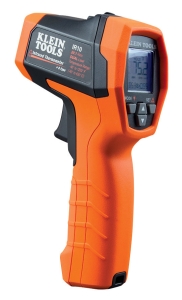
2. Perform simultaneous manual measurements: Use a portable manometer to verify pressure readings, and an infrared thermometer to spot-check temperature sensors. Document readings within 10 seconds of controller timestamps. Discrepancies greater than the sensor accuracy specification (±2.5% for pressure, ±2% for temperature) indicate genuine measurement errors; discrepancies matching the sensor response time indicate integration delays.
3. Verify signal conditioning output: Using an analog multimeter set to 20 mA DC range, measure the output of transmitters at the signal conditioning input module, not at the transmitter itself. Signal loss between transmitter and controller indicates wiring problems or termination faults, not sensor failure.
4. Test under dynamic process conditions: Do not troubleshoot with static setpoints. Initiate controlled process changes (gradually increase pump flow, raise heater setpoint by 5°C, etc.) and observe how all sensors respond in real time. Sensors that respond slowly, lag behind others, or show oscillations during transients may have excessive damping, incorrect response time settings, or partial plugging (particularly for flow probes in contaminated fluids).
5. Document performance against environmental conditions: In tropical Singapore, sensor drift often correlates with temperature or humidity changes. Maintain logs linking controller readings to ambient conditions. If accuracy shifts when facility temperature rises above 30°C or humidity exceeds 75%, implement environmental compensation or relocate sensitive electronics to climate-controlled enclosures.
Integration Failure Recovery Without Sensor Replacement
Most multi-sensor integration problems resolve through reconfiguration rather than hardware replacement:
- Adjust controller scan timing to match the slowest sensor update rate (never set scan cycles faster than the slowest sensor responds)
- Implement first-order filtering on fast-responding sensors to match the response speed of slower instruments
- Separate signal wiring from power and control lines by cable tray routing changes
- Install surge suppression on all 4-20 mA signal lines entering the controller, using varistors rated for 24 VDC with response time under 1 microsecond
- Recalibrate setpoint offsets in the control logic to account for documented response time delays
These interventions typically restore integration stability within 2-4 hours of technician effort, compared to 8-16 hours for sensor replacement and re-commissioning in Singapore's tropical environment, where high humidity can extend drying times for newly installed instruments by 50%.
Preventive Maintenance for Reliable Multi-Sensor Operation
Establish a quarterly Measurement & Detection verification schedule that goes beyond individual sensor testing:
- Simultaneous sensor comparison: Every 90 days, run all pressure transmitters against a calibrated reference manometer over a 15-minute period, recording both instruments' readings at 30-second intervals. Identify and flag any sensors whose response time differs by more than ±30% from baseline.
- Humidity and temperature logging: Deploy data loggers near signal conditioning equipment to detect environmental excursions. Implement preventive ventilation or dehumidification if facility humidity regularly exceeds 70% or temperature exceeds 32°C.
- Cable inspection and testing: Annually perform insulation resistance testing on all signal cables using a megohm meter at 500 VDC. Any cable exhibiting insulation resistance below 10 megohms should be replaced before failures occur.
- Documentation updates: Maintain current calibration certificates, response time measurements, and integration test results for all sensors. This baseline data accelerates troubleshooting when problems emerge.
With 35+ years supporting Singapore's industrial sector, 3G Electric recognizes that successful Measurement & Detection systems require disciplined integration diagnostics and preventive verification, not reactive sensor replacement. Systematic attention to timing, grounding, and environmental factors prevents the costly integration failures that frequently halt production in multi-sensor process control installations.