
Understanding Energy Audits Through Measurement & Detection
Measurement & Detection equipment forms the foundation of any credible energy efficiency audit. For plant managers overseeing industrial facilities in Singapore, understanding how to leverage pressure gauges, flow meters, and temperature sensors transforms vague suspicions about energy waste into concrete, actionable data.
Since 1990, 3G Electric has supplied industrial equipment to Singapore facilities managing complex systems where small inefficiencies compound into significant monthly costs. An energy audit isn't simply about identifying broken equipment—it's about measuring actual system performance against design specifications and identifying where your facility is consuming more energy than necessary.
Accurate measurement creates accountability. When you can show stakeholders exact pressure drops, flow rate deviations, or thermal losses with documented readings, you move beyond anecdotal concerns to data-driven decisions that justify budget allocations.
Step 1: Establish Baseline Measurements Across Critical Systems
Begin your energy audit by measuring baseline performance across three critical system types: hydraulic/pneumatic systems, HVAC circulation loops, and thermal processes.
Pressure System Baselines
For hydraulic and pneumatic systems, pressure measurement reveals efficiency losses immediately. Use the Preciman Manometer ABS vert D80 0/+16bar G1/2 to take static readings at multiple points along your system. Record pressure at the pump outlet, at branch lines, and at equipment terminals. A properly functioning system maintains consistent pressure; significant drops indicate leakage, valve degradation, or line restriction.
In Singapore's humid tropical climate, glycerin-filled manometers like the Preciman protect against moisture ingress that would compromise accuracy. The ±2.5% accuracy specification means your baseline readings remain reliable across repeat measurements—essential for detecting real changes, not measurement error.
Document these baselines with photographs, timestamps, and ambient conditions. You'll reference these measurements when calculating energy savings after improvements.
Flow Rate Verification
The Dwyer Medium flow metal probe MAFS-20 enables non-invasive flow measurement in process lines. With a 71 cm probe length and 1/4-20 thread connection, this tool fits standard industrial tapping points. Measure flow rates at system inlets and key branches. Unexpectedly low flow at distribution endpoints indicates blockage or unauthorized system modifications.
Flow measurement combined with pressure data reveals system resistance. High pressure combined with low flow suggests excessive restriction—a common source of wasted energy that maintenance teams often overlook.
Temperature Mapping
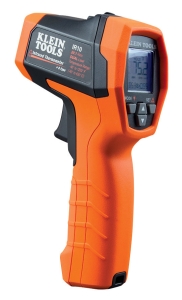
The CBM Infrared thermometer with type K input enables rapid thermal imaging without equipment shutdown. Measure surface temperatures on insulation, pipe connections, and equipment casing across thermal systems. Temperature differences between design expectation and actual readings quantify heat loss.
The 20:1 optical resolution allows precise spot measurement of small components. In HVAC systems, thermal imaging reveals insulation degradation, condensation points, and unintended thermal bridges—all energy losses that show up as increased utility consumption.
Step 2: Identify System Anomalies Using Detection Equipment
Once baselines are established, detection equipment pinpoints where systems deviate from expected performance.
Pressure Switch Validation
The Dwyer Pressure switch DXW-11-153-4 serves double duty in energy audits: it confirms existing pressure control setpoints and tests control responsiveness. This switch operates in the 0.41–0.55 bar setpoint range with tight differential specifications (3.46–5.17 bar), making it ideal for verifying that pressure control valves activate at intended thresholds.
A pressure switch that activates late allows unnecessary high-pressure operation, wasting energy. One that cycles too frequently indicates system instability. By measuring actual switch activation against specification, you document control system efficiency.
The IP65 rating ensures reliable operation in Singapore's high-humidity environments where moisture affects electronic components.
Continuous Pressure Monitoring
For systems requiring ongoing measurement during operational hours, the Dwyer Transmitter 629-05-CH-P2-E5-S1 provides real-time 4-20 mA output for data logging. This transmitter's 0.5% accuracy across the 0-100 psid range captures pressure fluctuations that manual gauges miss.
Connected to a simple data logger, this transmitter records pressure every 5 minutes for 24–72 hours, revealing operational cycles and anomalies. You'll see patterns: pressure creeping upward over hours (indicating valve drift), sudden spikes (reflecting load changes), or sustained high pressure during idle periods (showing control failures).
This data transforms intuition into evidence. When you present a pressure curve showing continuous operation 2 bar above setpoint, maintenance teams understand the urgency of valve adjustment.
Step 3: Calculate Energy Impact and Justify Improvements
Raw measurements mean little without context. Your audit report must translate readings into energy and cost impact.
Pressure Efficiency Analysis
For pneumatic and hydraulic systems, energy consumption is directly proportional to system pressure. The industry rule of thumb: reducing system pressure by 1 bar typically reduces energy consumption by 7–10% (depending on load profile). If your baseline measurements show average operating pressure 3 bar above what your equipment actually requires, you've identified a 21–30% efficiency opportunity.
Quantify this impact: if your facility operates a 25 kW compressor 16 hours daily at unnecessarily high pressure, reducing pressure by 3 bar saves approximately 5–7 kW continuously. Over one year, that's 40,000–56,000 kWh savings. At Singapore's industrial electricity rates (approximately S$0.18–0.22 per kWh), you're looking at S$7,000–12,000 annual savings from one adjustment.
Flow System Optimization
When your flow probe measurements show distribution lines receiving 30% less flow than design specification, investigate the cause. Common issues: partially closed manual valves (often from previous troubleshooting, never reopened), corroded strainers, or pipe scaling.
Restoring flow to design rates improves thermal transfer efficiency in HVAC systems and reduces pump runtime for load-handling. Calculate savings by comparing current energy consumption (measured via power meter) to consumption after correction.
Thermal Loss Quantification
Your infrared thermometer readings reveal thermal losses directly. A heated process line measuring 15°C cooler than expected over a 20-meter run indicates insulation failure. Calculate heat loss using surface area, temperature differential, and convection coefficients.
For a 50 mm diameter pipe losing 20°C over 20 meters: approximately 2.5–3 kW thermal loss. Over 8,000 annual operating hours, that's 20,000–24,000 kWh lost to the environment—S$3,600–5,300 in wasted energy. The cost of replacing insulation typically pays back within 6–12 months.
Step 4: Document Findings and Create Action Plans
A professional audit report includes:
- Baseline measurements with dated photographs and equipment specifications
- System anomalies identified by detection equipment, with root cause analysis
- Quantified energy impact showing annual kWh and cost implications for each finding
- Prioritized recommendations ranked by payback period and implementation difficulty
- Success metrics defining what repeat measurements will prove improvement
Present findings to your operations team and finance stakeholders using clear graphics: before/after pressure curves, thermal imaging overlays with temperature overlays, and cost-benefit analyses. When plant managers can show S$50,000 annual savings from S$8,000 in equipment improvements, budget approvals follow quickly.
Schedule follow-up measurements 30 and 90 days after implementing recommendations. Confirm that pressure setpoint adjustments held, replaced insulation achieved expected temperature improvements, or valve repairs restored flow rates. This closes the audit loop and validates your measurement methodology for future projects.
Practical Implementation Timeline
A comprehensive energy audit requires structured effort:
- Week 1: Equipment setup, baseline pressure/flow/temperature measurements at 10–15 key system points
- Week 2–3: Continuous monitoring via pressure transmitter, thermal imaging across all insulated systems
- Week 4: Data analysis, anomaly investigation, calculate energy impact
- Week 5: Report preparation, stakeholder presentation, improvement prioritization
- Weeks 6–12: Implementation of recommended changes
- Week 13+: Follow-up verification measurements
With 35+ years experience supplying industrial measurement equipment, 3G Electric provides not just products but application guidance. Our technical team understands how Singapore facilities operate and which measurement approaches yield the most actionable data.
Energy audits powered by accurate Measurement & Detection transform facility management from reactive troubleshooting to proactive efficiency optimization. The equipment investments required are modest compared to annual savings, and the data you generate becomes institutional knowledge that improves operations for years.