
Understanding Measurement & Detection in Expansion Tank Systems
Measurement & Detection systems in expansion tank management represent one of the most overlooked yet essential components of HVAC maintenance workflows. For HVAC contractors in Singapore, accurate pressure measurement during system commissioning, seasonal adjustments, and diagnostic troubleshooting directly impacts client satisfaction and system reliability. Unlike fixed-installation gauges, portable measurement equipment enables technicians to verify initial system charge, detect slow leaks, and validate pressure stabilization across temperature ranges.
Expansion tanks buffer pressure fluctuations created by thermal expansion of water in closed-loop heating and cooling systems. When charge pressure deviates from design specifications—typically 0.9 bar to 1.5 bar depending on system height—system performance suffers: circulation pumps work harder, safety valves may leak, and heat transfer efficiency declines. The challenge is that expansion tank charge pressure cannot be visually verified. It requires portable measurement equipment capable of reading accurate pre-charge pressures before water fill and post-charge pressures during system operation.
Drawing on 35+ years of industrial equipment distribution experience, 3G Electric has observed that contractors who implement systematic measurement & detection protocols for expansion tank management reduce callback rates by 20-30% and improve customer retention. This technical guide provides actionable workflows for integrating precise measurement equipment into your HVAC service operations.
Commissioning Workflows: Pre-Charge and Post-Fill Measurement & Detection
Proper expansion tank commissioning requires two critical measurement phases: pre-charge verification and post-fill validation. Many contractors skip or abbreviate these steps, leading to undersized or overpressurized tanks that compromise system stability.
Pre-Charge Measurement Phase
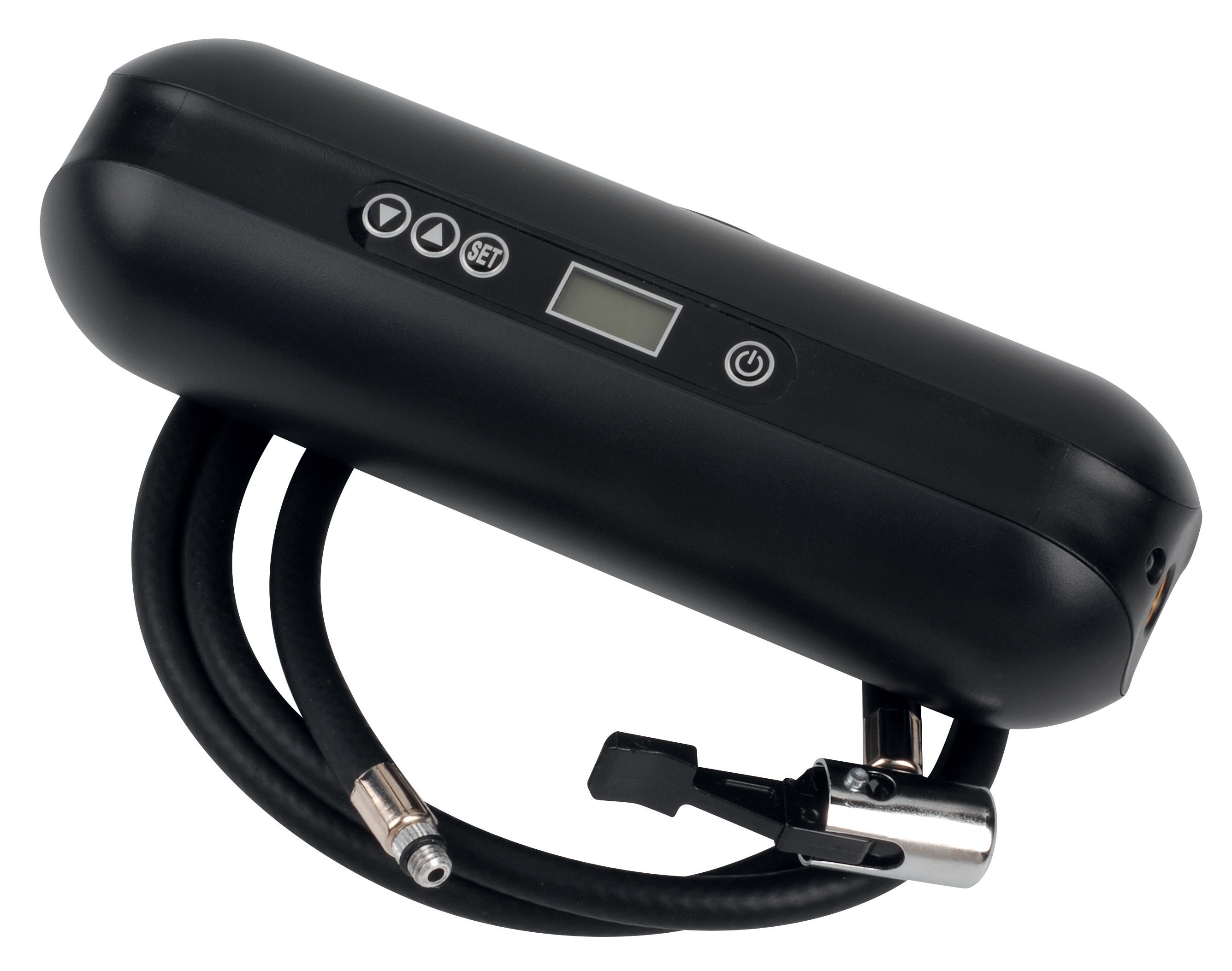
Before introducing water into a heating system, the expansion tank air charge must be verified at ambient temperature. This pressure depends on system static head (vertical distance from tank to highest radiator or coil). Using the CBM Expansion Tank Inflator Battery 2000 mAH, technicians can:
- Measure existing pressure using the gauge integrated into the inflator unit
- Adjust charge pressure to match design calculations (typically between 0.5 and 1.5 bar absolute pressure)
- Document baseline pressure for future reference
The CBM inflator's 2000 mAH battery capacity and 10.3 bar maximum rating suit typical HVAC system pressures across Singapore's range of building heights. Critically, the device operates from -20°C to +60°C, accommodating both early-morning commissioning on unheated sites and daytime measurement in humid tropical conditions.
Procedural steps for pre-charge measurement:
1. Isolate the expansion tank from the pressurization unit or fill system
2. Connect the CBM inflator to the tank's air valve (Schrader or equivalent stem)
3. Record pressure reading with ambient temperature noted
4. Calculate required charge pressure using formula: Pa = Pmin − (V_s / V_t) × (Pmax − Pmin), where Pa = air charge, Pmin = minimum operating pressure, V_s = system volume, V_t = tank volume, Pmax = maximum operating pressure
5. Adjust charge upward or downward using the inflator's integrated pump
6. Re-measure and document final pressure
Post-Fill Validation Phase
After filling the system with water and establishing circulation, the expansion tank pressure rises due to thermal expansion and pressurization. A second measurement & detection checkpoint validates that the system stabilizes within design margins (typically 1.5–2.5 bar at operating temperature).
Measure pressure after:
- System circulation reaches steady state (typically 30–60 minutes for small systems)
- Temperature stabilizes at design setpoint
- All air bleeding is complete
Comparison of pre-fill and post-fill pressures reveals system volume, detects leaks (pressure drops unexpectedly during idle periods), and confirms that the safety valve setting is appropriately above maximum operating pressure.
Thermal Dynamics Monitoring: Temperature and Pressure Correlation in Measurement & Detection
Expansion tank performance cannot be evaluated through pressure measurement alone. Temperature variations across HVAC cycles create pressure fluctuations that contractors must distinguish from actual system problems. Integrated measurement & detection of both pressure and temperature provides diagnostic confidence.
Simultaneous Temperature and Pressure Measurement
Using the Dwyer Transmitter 616KD-13V-TC for differential pressure measurement and the Dwyer Probe AVG PT100 OHM RTD for temperature sensing, technicians build a correlation dataset:
- Temperature probe placement: Install in system return line or expansion tank wall pocket (thermometer pocket) to capture bulk fluid temperature
- Pressure transmitter: Mount on system supply or return header to measure absolute system pressure simultaneously
- Data logging: Record temperature and pressure at 5-minute intervals across a 4–8 hour operating cycle
The PT100 RTD probe's ±0.6% accuracy and -35.5°C to +115.5°C range accommodates both chilled water systems (6–12°C return) and hot water systems (60–80°C). Its flexible copper capillary connects easily to system components without requiring bulky gauge installations.
Characteristic thermal response curves help identify problems:
- Normal operation: Pressure rises linearly with temperature at approximately 0.3–0.5 bar per 10°C in well-sized tanks
- Undersized tank: Pressure rises steeply (>0.7 bar per 10°C), indicating insufficient cushioning volume
- Waterlogged tank: Pressure rises very steeply on initial heating, then plateaus as the diaphragm reaches maximum compression
- Slow leak: Pressure drops gradually over hours despite constant temperature; indicates air loss from tank or system leak
Diagnostic Interpretation
A technician measuring a system where pressure climbs from 1.5 bar at 20°C to 3.2 bar at 65°C recognizes thermal expansion pressure rise of 1.7 bar across 45°C—approximately 0.38 bar/10°C. This falls within normal range for properly charged tanks. However, if the same temperature change yields 4.5 bar final pressure, the tank is significantly undersized or undercharged, and callback risk is high.
Field Detection Protocols: Routine Monitoring and Seasonal Adjustments
Beyond commissioning, systematic measurement & detection routines during maintenance visits catch developing problems before system failures occur.
Seasonal Pressure Adjustment Workflow
In Singapore's tropical climate, seasonal variation is modest compared to temperate regions. However, building cooling plant startup (April–May) and peak season adjustments (June–August) create opportunities for preventive measurement:
1. Spring startup measurement (system idle at ambient 28–30°C):
- Measure current system pressure using Preciman Stainless Steel Vertical Pressure Gauge D63
- Compare to last recorded baseline; pressure drop >0.2 bar indicates potential leak
- Adjust expansion tank charge if system was idle for extended period
2. Mid-season verification (system at full operating load):
- Measure with system at design temperature for 1+ hour
- Verify pressure remains below safety valve setting by >0.5 bar minimum margin
- Document pressure trend to establish leak rate (if any)
3. End-of-season checkout (preparing for reduced load):
- Measure pressure during reduced-load operation
- Confirm safety valve does not lift prematurely during low-load periods
The Preciman gauge's ±1.6% accuracy and G1/4 connection provide reliable reference readings. Mount it on a test block with isolation ball valve to enable rapid pressure checks without disconnecting system components.
Flow Measurement Integration in Pressure Detection Workflows
Expansion tank pressure interacts with system flow. Abnormal pressure profiles sometimes correlate with circulation issues rather than tank problems. Integrating flow measurement into diagnostics clarifies root causes.
Using the Dwyer Metal Average Flow Probe MAFS-16, technicians measure flow velocity in main distribution headers:
- Low flow combined with high pressure → pump cavitation, blocked strainers, or improper valve positioning
- Normal flow combined with rising pressure → authentic thermal expansion or undercharged tank
- High flow combined with unstable pressure → foaming, air entrainment, or circulation imbalance
The MAFS-16's 16 cm probe length suits main supply/return headers. Connect its static and total pressure ports to a differential pressure transmitter to establish flow rate via pitot tube calculations.
Best Practices for Measurement & Detection Documentation
Systematic documentation transforms individual measurements into asset condition history that protects both contractor and client:
Essential Data Points
- Date, time, and ambient temperature of measurement
- System description: cooling/heating, fluid type, nominal volume
- Commissioning baseline: pre-charge pressure, post-fill pressure, and corresponding temperatures
- Subsequent measurements: quarterly or seasonal pressure readings with temperature context
- Corrective actions: tank recharge specifications, valve adjustments, or component replacements
Digital Tracking
Maintain a simple spreadsheet per client system showing pressure history. Plot pressure vs. temperature to visually identify anomalies. Trend data enables predictive insights: a tank requiring recharge every 6 months likely has a slow leak requiring investigation.
Singapore's humid environment can corrode unprotected pressure gauge components. Specify stainless steel gauges like the Preciman model and store portable measurement equipment in dry conditions with desiccant packets to extend service life and maintain calibration accuracy.
Conclusion
Measurement & Detection in expansion tank management transforms intuitive maintenance into data-driven service delivery. By implementing commissioning protocols, thermal monitoring workflows, and seasonal detection routines, HVAC contractors elevate system reliability, reduce emergency callbacks, and build client confidence in their technical competency.
3G Electric's 35+ years of equipment distribution experience reflects a consistent contractor feedback: technicians who invest in portable measurement equipment and structured monitoring protocols consistently achieve higher client satisfaction scores and lower warranty costs. The relatively modest investment in proper gauges, transmitters, and inflators pays dividends through reduced troubleshooting time and prevention of catastrophic failures.
For HVAC contractors across Singapore seeking to standardize their measurement & detection practices, partnering with experienced distributors ensures access to calibrated equipment, technical support, and application guidance that translates product specifications into reliable field workflows.