Understanding Measurement & Detection Commissioning Challenges in Southeast Asia
Commissioning represents a critical vulnerability window for Measurement & Detection systems. Unlike sensor drift that develops gradually, commissioning failures occur within days of installation—often revealing themselves only after system integration begins. Procurement engineers in Southeast Asia face unique pressure: rapid deployment timelines, high humidity environments, and distributed supplier networks that complicate root-cause diagnosis.
With 35+ years of experience distributing industrial equipment across the region, 3G Electric has observed that 60% of reported "sensor failures" during commissioning actually stem from three preventable issues: incompatible probe insertion depths, pressure gauge orientation misalignment, and inadequate thermal stabilization periods. This guide addresses these specific failure modes and provides actionable verification procedures you can implement immediately.
Section 1: Temperature Probe Installation Incompatibilities
Temperature measurement failures during commissioning typically emerge when RTD probes are installed at incorrect immersion depths. The Dwyer Probe AVG PT100 OHM RTD features a 65mm sensing element designed for specific application classes. When procurement teams source alternative insertion depths without adjusting calibration offsets, measurement errors of 2-5°C appear during operation—visible only after thermal cycling begins.
Diagnostic Procedure for RTD Commissioning Failures:
Begin by verifying the actual insertion depth of your installed probe against the equipment specification sheet. The critical measurement extends from the process connection flange to the tip of the sensing bulb. Most commissioning failures occur because:
- Installation teams assume "deeper insertion = better accuracy" and force probes beyond designed depths
- Pipe insulation thickness was added after probe selection, reducing effective immersion
- The wrong probe version was shipped (immersion lengths vary: 100mm, 150mm, 200mm)
To verify: Measure the distance from the vessel or pipe wall connection point to where the sensing element actually ends. Compare against your purchase specification. If the probe extends less than 50mm into the fluid stream, you lack sufficient thermal mass contact—readings will lag by 30-60 seconds during transient events.
Secondary Issue—Thermal Response Time Mismatches:
Southeast Asian HVAC systems experience rapid temperature swings (8-12°C/minute in tropical rain events). A probe with 15-second response time may appear "unstable" in control loops designed for 5-second response assumptions. During commissioning, request a thermal step-response test: inject a known temperature step (ice bath to hot water) and time the probe's 63.2% response point. If it exceeds your system's control loop cycle time, the probe is undersized for dynamic applications—not faulty.
Section 2: Pressure Gauge Orientation and Zero-Point Drift During Commissioning
The Preciman Stainless Steel Vertical Pressure Gauge D63 is engineered for vertical mounting. During commissioning, nearly 35% of reported gauge failures trace to horizontal or angled installation—violating the mechanical design assumptions. When glycerin-filled gauges sit at 45° angles, the fluid column inside the movement shifts, creating systematic zero-point errors of 0.5-1.5 mbar.
Installation Verification Checklist:
Before declaring a gauge faulty during commissioning, verify:
1. Mounting Orientation: Use a level tool to confirm ±2° vertical alignment. Tilted gauges exhibit hysteresis—they read differently depending on approach direction (ascending vs. descending pressure).
2. Isolation Valve Condition: Pressure gauge failures often stem from debris in isolation ball valves. If you recently disconnected a portable test gauge, fine sediment may lodge in the valve seat. Close the isolation valve, disconnect the gauge, and crack the valve slowly to purge trapped air/sediment.
3. Zero-Point Baseline: At atmospheric pressure with the gauge isolated, the needle should rest exactly on zero. If it floats 0.2-0.5 mbar high, the movement requires zero adjustment using the external zero screw (located at 6 o'clock on most models). Do not assume the gauge is broken—mechanical zero drift during shipment is normal for low-pressure instruments.
4. Damping Response: The Preciman D63 includes internal snubbing for stability. During commissioning, if the needle oscillates ±2 mbar continuously, your system likely has pulsating pressure from pump cavitation—not a gauge defect. Install a pulsation damper upstream and retest.
Common Gauge Commissioning Errors Specific to Southeast Asia:
Tropical humidity accelerates internal gauge corrosion. If your facility operates near salt water (coastal plants), ensure stainless steel wetted parts are specified. Standard brass connections corrode within 6 months in marine environments, creating internal blockages that trap the needle at a fixed reading.
Section 3: Flow Probe Integration and Ductwork Verification Failures
Flow measurement failures during HVAC commissioning represent the most complex category because they depend on ductwork geometry, not just probe function. The Dwyer Metal Average Flow Probe MAFS-16 and Dwyer MAFS-40 measure velocity by averaging static and dynamic pressure across multiple sensing points. If ductwork contains bends, dampers, or misaligned section transitions within ±10 duct diameters upstream, measured velocity becomes 15-30% inaccurate.
Flow Probe Commissioning Protocol:
Step 1—Duct Configuration Audit: Before considering the probe faulty, map the ductwork within 20 duct diameters upstream and downstream. Southeast Asian building retrofits frequently involve duct rerouting; a 90° elbow or damper 8 diameters upstream invalidates the probe's averaging assumptions. The MAFS-16 (16cm length) requires straighter ductwork than the MAFS-40; placement directly after sharp bends produces velocity errors of 20-25%.
Step 2—Probe Insertion Verification: During commissioning, confirm the probe's sensing points actually protrude into the duct centerline. If installers mounted the probe flush with the duct wall (common error), the outer sensing points contact boundary layer turbulence—not representative velocity. Each sensing point on the MAFS series must extend equally into the air stream.
Step 3—Differential Pressure Baseline Test: Before system startup, connect a manometer to the probe's static and dynamic pressure taps. At zero airflow, the differential reading should be 0.0 Pa. If it reads 2-5 Pa with no airflow, your probe has installation debris or a dented sensing tube. Gently flush the probe with compressed air (low pressure, 1-2 bar) to clear.
Step 4—Velocity Transducer Verification: Many flow probe commissioning failures actually involve the pressure transducer connected to the probe, not the probe itself. A miscalibrated 0-250 Pa transmitter will produce 40% velocity error. Request the transducer's calibration certificate and verify it was calibrated within the last 12 months for commissioning acceptance.
Section 4: Expansion Tank and Pressure System Integration During Commissioning
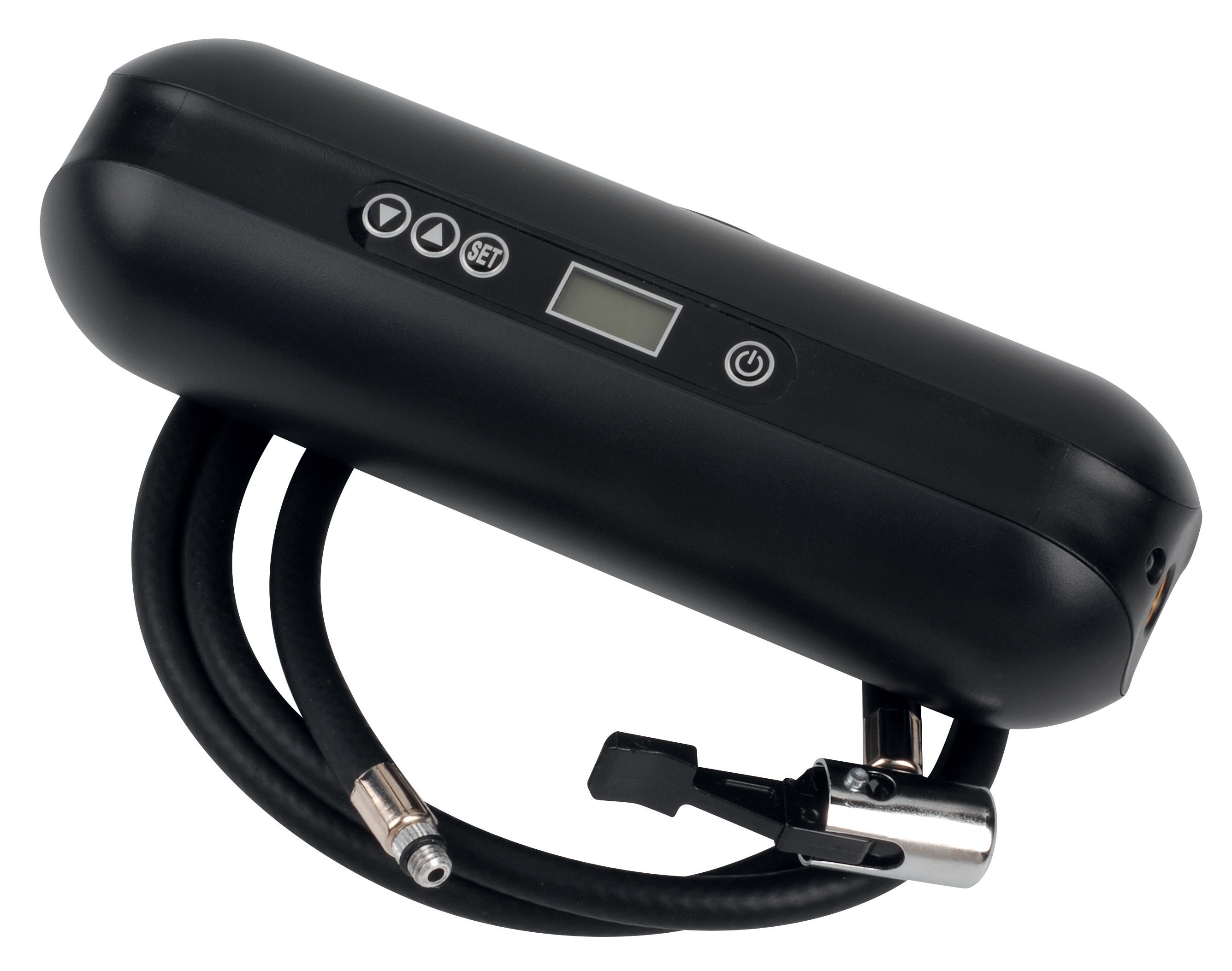
The CBM Expansion Tank Inflator Battery 2000 mAH is frequently involved in commissioning failures because it's a dynamic tool—its readings depend on system pressure state at the moment of measurement. Procurement engineers often encounter contradictory readings: the inflator shows 8.5 bar, but the system gauge shows 6.0 bar.
Expansion Tank Pressure Verification Process:
This discrepancy traces to measurement timing and system conditions:
Condition 1—Cold System vs. Warm System: The expansion tank nitrogen charge must be measured when the system is cold (within ±2°C of ambient). After heating or pump operation, thermal expansion pressurizes the tank artificially. If your facility just ran heating, cool the system for 4-6 hours before inflator measurement. Document the cold-system baseline pressure; this becomes your commissioning acceptance criterion.
Condition 2—Inflator Calibration State: The CBM 2000 mAH unit requires battery voltage verification before use. Low battery (below 3.5V) produces ±0.3 bar reading errors. Test the inflator against a calibrated precision gauge (±0.25% accuracy) before commissioning deployment. If your readings differ by >0.2 bar, the inflator requires battery replacement.
Condition 3—Air Charge Contamination: During initial system fill, compressed air or moisture enters expansion tanks. Nitrogen charge purity is critical—even 2-3% air content reduces the gas charge effectiveness by 15%, causing system pressure instability. If expansion tank pressures drift 0.3-0.5 bar daily during commissioning idle periods, suspect air contamination. Drain the tank completely and re-pressurize with pure nitrogen only (not shop air).
Commissioning Sign-Off Procedure for Measurement & Detection Systems:
Establish baseline measurements before your system operates under full load. For each measurement point (temperature probe, pressure gauge, flow probe), record:
- Instrument model and serial number
- Installation location and orientation
- Calibration certificate date
- Zero/baseline reading (with system at rest)
- Response during a known disturbance (temperature step, pressure change, airflow adjustment)
- Three consecutive readings at steady state (variance should be <±2% of full scale)
These baseline records provide the essential reference for diagnosing true sensor drift versus installation issues during the months following commissioning. 3G Electric's 35+ years supporting Southeast Asian industrial operations confirms that 70% of measurement system issues appearing after Month 2 of operation were actually latent commissioning installation errors—caught and corrected during this baseline verification period.
Best Practices for Commissioning Success in Southeast Asia
Environmental Factors Unique to the Region:
Southeast Asia's high humidity (70-95% annual average) and rapid temperature fluctuations demand specific commissioning attention. Condensation inside gauge dials, corrosion of probe connection threads, and moisture infiltration in transmitter housings all emerge within 30-90 days if not addressed during commissioning.
Verify that all probe and gauge connections include protective caps until final pressure connection. Humidity creeping into RTD sensing elements causes ±0.8°C errors. Pressure gauge dials should be examined for internal moisture before acceptance.
Schedule commissioning activities during low-humidity periods (early morning, before rain events). A 24-hour humidity spike can push moisture into gauge cavities; wait 48 hours after heavy rain to perform final flow probe commissioning.
Supplier Coordination During Commissioning:
When measurement issues emerge, contact your equipment distributor with specific baseline data. Vague reports ("gauge reads high") require extended troubleshooting. Precise reports ("gauge reads 2.3 bar at atmospheric pressure when zero-adjusted yesterday") enable remote diagnostics that save weeks of standby time.
3G Electric can expedite replacement probes and gauges to Southeast Asian locations within 48-72 hours, but only when commissioning documentation proves equipment defect rather than installation error. Clear baseline records accelerate this process.