Understanding Maintenance & Service Requirements in Fluid System Procurement
When procurement engineers evaluate industrial fluid systems for manufacturing, cleaning, and processing applications, Maintenance & Service capabilities should influence equipment selection as much as initial performance specifications. Components operating under sustained pressure—from regulators managing gas distribution to high-performance pumps delivering consistent flow—require different maintenance strategies than static infrastructure.
With over 35 years of experience as an industrial equipment distributor, 3G Electric has observed that procurement decisions made without considering serviceability, spare parts availability, and preventive maintenance protocols often result in hidden lifecycle costs that exceed initial capital expenditure by 40-60%. This guide addresses the specific Maintenance & Service considerations that procurement engineers must evaluate when selecting pressure regulation equipment, industrial pumps, and precision spray nozzles for Singapore operations.
The distinction between commodity equipment and engineered solutions becomes apparent during maintenance cycles. A pressure regulator like the Francel B25/37mb with integrated safety relief requires different inspection protocols than basic fixed-outlet regulators. Similarly, high-performance Italian-engineered pumps such as the Pratissoli KF30 demand maintenance schedules aligned with their design specifications and operational duty cycles. Procurement engineers who understand these distinctions can specify systems that maintain performance consistency while reducing unplanned downtime.
Component-Specific Maintenance & Service Strategies
Pressure Regulation Systems
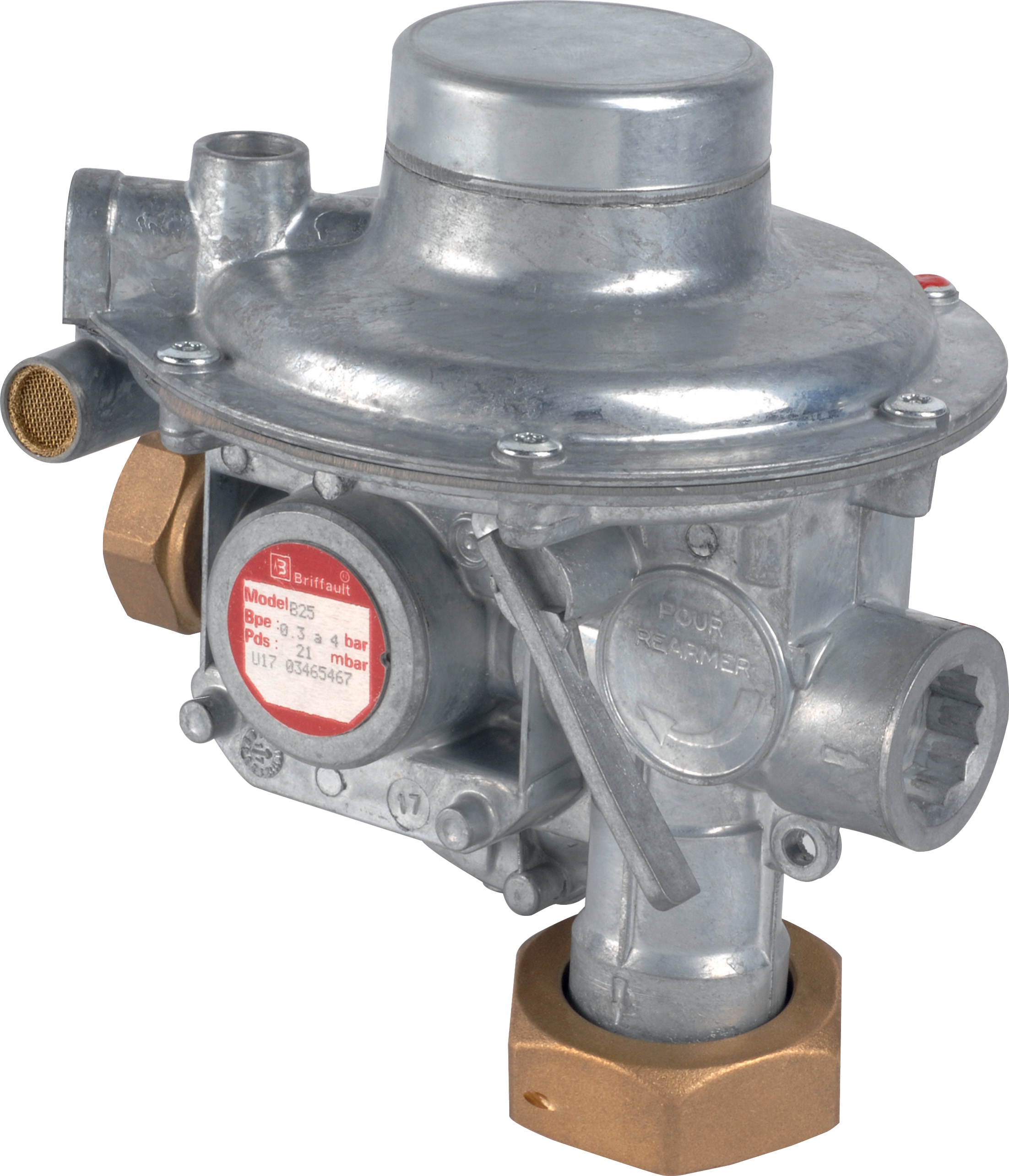
Pressure regulators form the foundation of safe, efficient industrial gas and fluid distribution. The Francel B25/37mb pressure regulator exemplifies modern safety-integrated design, incorporating relief valve functionality within a compact package. Maintenance & Service protocols for such equipment differ fundamentally from unregulated systems.
Procurement specifications should require regulators with accessible relief valve cartridges, visible pressure gauges, and modular internal components designed for in-service maintenance without full system shutdown. The Francel B25/37mb's 10 mm vent size and 37 mbar outlet pressure regulation demand periodic calibration verification—typically quarterly for laboratory applications and semi-annually for continuous industrial operation. Procurement engineers should budget for annual professional calibration services, as field-adjustable designs often drift 2-3% annually under thermal cycling.
When specifying pressure regulation systems, request detailed maintenance documentation including:
- Relief valve cracking pressure test procedures and acceptance tolerances
- Recommended lubricant specifications for internal regulators (mineral oil vs. synthetic compatibility)
- Vent line sizing guidance to prevent backpressure-induced seal degradation
- Temperature compensation requirements for systems operating outside 15-25°C ambient range
- Isolation valve placement to enable regulator servicing without process interruption
Economically, procurement engineers should consider modular regulator designs where the pressure-reducing element can be replaced as a cartridge assembly rather than replacing entire units. This approach reduces maintenance costs by 60-70% over a 10-year lifecycle while maintaining performance continuity.
Industrial Pump Maintenance & Service Planning
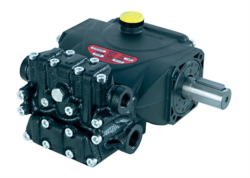
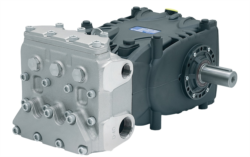
High-performance industrial pumps represent significant capital investments and demand sophisticated Maintenance & Service strategies. The Pratissoli KF30 (106 L/min at 200 bar, 40 kW) and Pratissoli MW40 (211 L/min at 210 bar, 85 kW) exemplify Italian engineering design focused on reliability and serviceability. The Interpump PUMP E1D1808 L demonstrates compact high-pressure design for space-constrained applications.
Procurement specifications for industrial pumps must address:
Seal and Bearing Maintenance: Modern pump designs utilize sophisticated mechanical seals requiring lubrication compatibility verification. Specify pumps with easily accessible seal chambers that permit inspection without complete disassembly. The Pratissoli KF and MW series incorporate modular seal cartridges designed for field replacement without specialized tools or press equipment.
Fluid Quality Management: High-pressure systems (200+ bar) are exponentially sensitive to fluid contamination. Procurement engineers should specify:
- Suction strainers with visual clogging indicators (replace at 0.5 bar differential)
- Return line filtration to ISO 17/15/12 cleanliness or better
- Fluid sampling ports positioned for quarterly analysis
- Heat exchanger capacity sizing to maintain fluid temperature within ±10°C of design specification
- Monthly visual/auditory inspection for unusual noise patterns
- Quarterly vibration measurement at pump suction, discharge, and motor mounting points
- Annual detailed vibration analysis using ISO 20816 standardized measurement and evaluation
For the compact Interpump E1D1808 L (8 L/min at 180 bar, 2.72 kW), the smaller displacement demands even more rigorous fluid cleanliness—this pump specification suggests micro-filtration capability essential for precision applications. Procurement engineers should budget for automated monitoring systems when specifying smaller displacement pumps for continuous duty.
Preventive Maintenance Scheduling: Establish maintenance intervals based on operational hours:
- 500 hours: Visual inspection of external seals, fluid level/condition check
- 2,000 hours: Seal cartridge replacement, bearing inspection, suction strainer cleaning
- 5,000 hours: Heat exchanger cleaning, complete fluid change, precision balancing verification
- 10,000 hours: Comprehensive overhaul including internal component inspection and tolerance verification
Precision Spray Nozzle Systems
Industrial spray applications demand Maintenance & Service protocols addressing both mechanical and hydraulic performance. The Euspray flat jet nozzle (25° angle, 1/4" M BSPT connection, index 30 design) represents precision spray equipment requiring specific maintenance approaches.
Spray nozzles accumulate deposits, mineral residue, and coating buildup that degrade spray pattern consistency. Procurement specifications should require:
- Nozzles with replaceable orifice inserts rather than monolithic bodies
- Materials compatible with system fluids (stainless steel or ceramic orifices for corrosive applications)
- Clear dimensional documentation enabling field cleaning without specialized equipment
- Index design (noted in the Euspray specification) that prevents rotational misalignment during maintenance
Establish preventive cleaning schedules:
- Weekly: Visual inspection of spray pattern for symmetry and consistency
- Monthly: Flush nozzle with clean solvent at low pressure (10-20 bar below operating pressure)
- Quarterly: Remove nozzle and mechanically clean orifice opening using only non-metallic brushes
- Semi-annually: Replace worn orifice inserts regardless of visual condition
For the Euspray 1/4" M BSPT nozzle, maintain a spare nozzle on-site with identical specifications to enable hot-swap maintenance without process interruption. Document nozzle lot numbers and performance baseline data to identify performance degradation patterns.
Lifecycle Cost Analysis and Procurement Decision-Making
Procurement engineers evaluating fluid system equipment must model total cost of ownership across equipment, Maintenance & Service, and operational efficiency. This analysis transforms equipment selection from simple capital budgeting into strategic business decision-making.
Comparative Analysis Framework
Evaluate candidate equipment using this matrix:
Initial Capital Cost: Document equipment purchase price, delivery, installation, and commissioning expenses.
Annual Maintenance Costs: Include scheduled seal replacement, filter media, lubricants, calibration services, and spare cartridges. For the Pratissoli KF30, typical annual maintenance ranges 8-12% of capital cost; for simpler equipment like the Francel B25/37mb, typically 3-5% annually.
Spare Parts Availability and Cost: Evaluate supplier capabilities to deliver critical spare parts (mechanical seals, relief valve cartridges, orifice inserts) within 48 hours. Regional stocking strategies significantly impact unplanned downtime costs. As a distributor with 35+ years serving Singapore and Southeast Asia, 3G Electric maintains inventory depth that reduces emergency procurement lead times compared to international manufacturers.
Technical Support and Documentation: Assess supplier capability to provide detailed maintenance manuals, troubleshooting guides, and trained field service representatives. Equipment with comprehensive documentation reduces emergency service call costs by 30-40%.
Operational Efficiency Parameters: Model how maintenance quality impacts production efficiency:
- Pressure regulation accuracy affecting downstream process consistency
- Pump performance degradation curves (typically 2-3% annual efficiency loss without active maintenance)
- Spray pattern deterioration impact on product quality
Return on Investment in Preventive Maintenance
Procurement engineers should quantify preventive Maintenance & Service investment against unplanned downtime costs. For a manufacturing facility operating equipment 16 hours daily:
Unplanned downtime cost = (daily revenue impact) × (downtime hours)
For fluid system applications generating $5,000-15,000 hourly value, a single unplanned pump shutdown represents $10,000-75,000 immediate loss plus secondary production delays.
Conversely, preventive maintenance investments typically range:
- Pressure regulator calibration: $500-1,000 annually
- Pump seal replacement: $2,500-5,000 every 3-5 years
- Nozzle maintenance program: $200-400 monthly
When unplanned downtime probability exceeds 15% annually, preventive maintenance programs deliver 3:1 to 5:1 return on investment through downtime elimination. Procurement engineers should structure equipment specifications and maintenance contracts to achieve this threshold.
Specification Development and Vendor Evaluation
When developing procurement specifications for fluid systems requiring sophisticated Maintenance & Service protocols, incorporate these elements:
Performance Specifications: Document required operating parameters (pressure, flow, temperature, duty cycle) with tolerance bands.
Maintenance & Service Requirements: Specify:
- Maximum acceptable maintenance interval between component replacements
- Required spare parts availability and maximum delivery timeframe
- Documented preventive maintenance procedures with interval guidance
- Training requirements for plant personnel
- Remote diagnostic capability (if applicable)
- Detailed operations and maintenance manuals in English
- Spare parts list with current pricing
- Performance baseline data (pressure settings, flow rates, vibration signatures)
- Recommended calibration and testing intervals
- Regional spare parts inventory and delivery capability
- Field service technician training and certification
- Technical support responsiveness (target: 4-hour response for critical issues)
- Warranty terms including coverage for normal wear components
As a distributor with 35+ years serving the Singapore industrial market, 3G Electric combines product expertise with logistics efficiency that supports complex Maintenance & Service programs. When evaluating vendor partnerships for ongoing maintenance support, consider suppliers with established regional presence and local technical resources.
Implementing Continuous Improvement in Maintenance & Service
Effective fluid system management evolves through systematic performance tracking and continuous improvement. Establish baseline metrics during commissioning:
- Pressure regulation stability: Track outlet pressure variation over 24-hour periods; target <2% drift
- Pump performance efficiency: Document baseline power consumption, flow rate consistency, and thermal signature
- Spray pattern consistency: Photograph spray patterns monthly to establish degradation timeline
Conduct quarterly performance reviews comparing actual maintenance costs, spare parts consumption, and unplanned downtime against projections. Use variance analysis to refine maintenance intervals—increasing frequency if failures emerge ahead of schedule, or extending intervals when performance exceeds expectations.
Engage equipment vendors in continuous improvement discussions. Manufacturers like Pratissoli and Interpump continuously refine component designs based on field maintenance experience. Specifying equipment from vendors committed to this feedback cycle ensures that future fleet additions incorporate lessons learned from current installations.
Document lessons learned from maintenance events to support organizational knowledge transfer. When seal failures, pressure anomalies, or spray degradation occur, capture root cause analysis and preventive measures. This institutional knowledge directly reduces similar future incidents and supports procurement engineer decision-making for equipment refreshes.
Maintenance & Service excellence represents the bridge between equipment selection and operational success. By establishing comprehensive maintenance strategies during procurement planning, engineers ensure that their equipment investments deliver sustained performance and reliability throughout their operational lifecycle.