Understanding Maintenance & Service: Two Competing Philosophies
Maintenance & Service represents one of the most debated operational decisions HVAC contractors make in Singapore's demanding industrial environment. The fundamental choice is straightforward: invest proactively in prevention, or respond to failures as they occur. However, the financial, operational, and safety implications of this decision are far more nuanced than simple cost comparisons suggest.
Drawing from 3G Electric's 35+ years of experience as a distributor serving contractors across Southeast Asia, the data consistently shows that a blended approach—combining strategic preventive maintenance with efficient reactive protocols—delivers the best outcomes for most HVAC systems. The key difference lies in understanding which equipment justifies which strategy.
Preventive Maintenance & Service: System-Critical Components
The Case for Proactive Planning
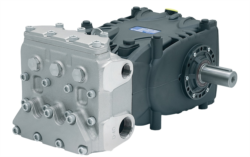
Preventive Maintenance & Service works best for components that, when they fail, cascade through your entire system. High-pressure pump systems are the clearest example. The Pratissoli KF30 high-performance industrial pump operates at 200 bar delivering 106 L/min, making it central to most heating and cooling systems. When this pump fails without warning, your entire facility goes offline.
Preventive maintenance on critical components like the KF30 typically includes:
- Monthly flow and pressure verification: Baseline readings establish normal operating parameters. A 5-10% pressure drop signals internal wear, but you catch it before catastrophic seal failure.
- Quarterly seal inspection and replacement: High-pressure seals degrade predictably. Replacing them at 75% lifecycle costs less than emergency seals at 110% lifecycle.
- Oil analysis sampling: Ferrous particle counts in pump discharge oil indicate bearing wear months before audible noise appears.
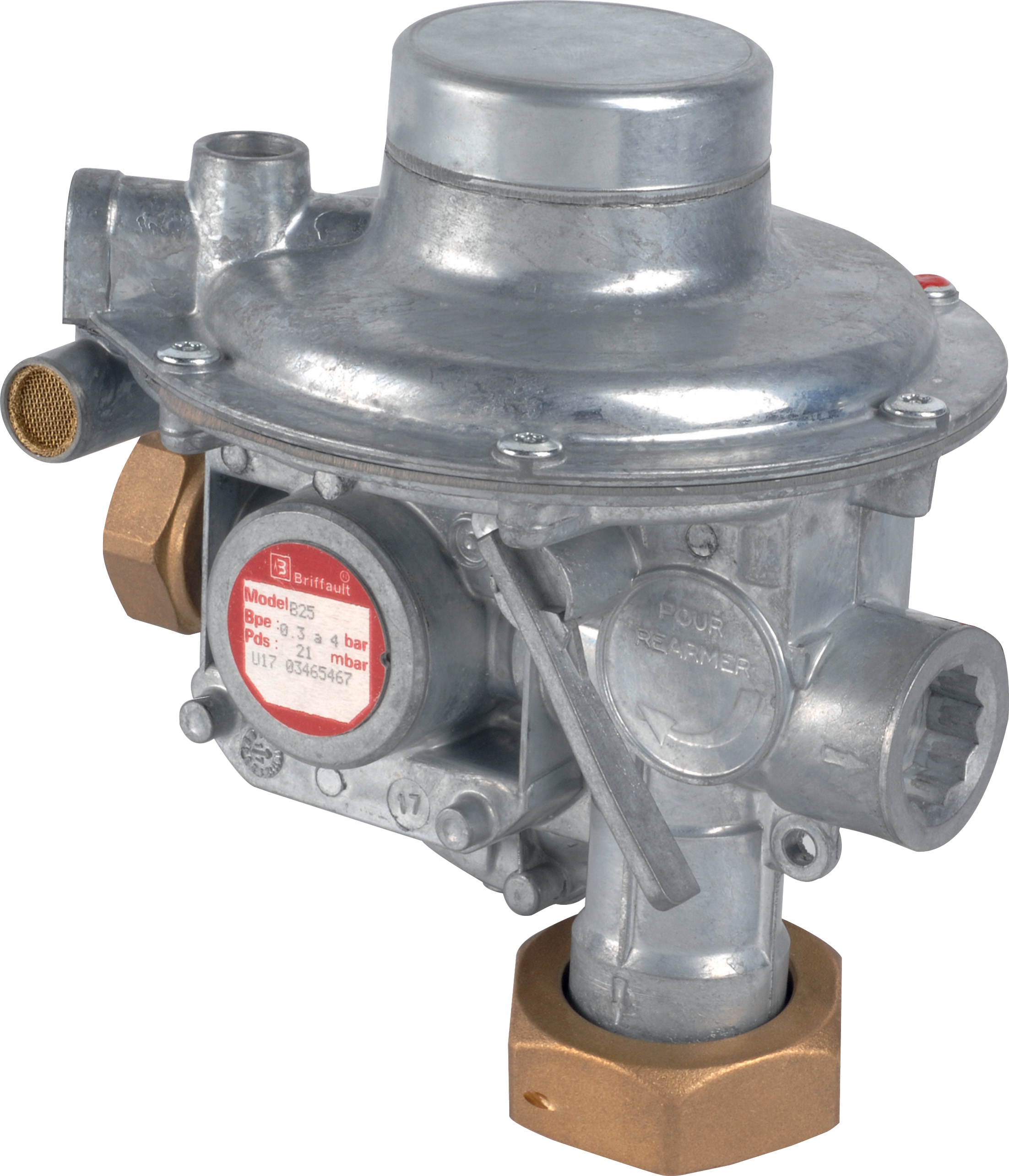
For pressure regulation systems like the Francel B25/37mb pressure regulator with integrated safety relief, preventive service means:
- Biannual diaphragm inspection: The safety relief mechanism must respond within 2-3% of setpoint. Preventive inspection costs SGD 150-200 and prevents 37 mbar regulation failure that could damage downstream components.
- Spring tension verification: Pressure regulators lose setpoint accuracy gradually. Annual verification catches drift before pressure spikes exceed equipment ratings.
Practical Preventive Schedule for Pressure Systems
When contractors implement preventive Maintenance & Service on pressure regulation equipment, they typically follow this schedule:
- Week 1 of operation: Initial setup inspection and baseline documentation
- Monthly (ongoing): Visual inspection, leak check, pressure log
- Quarterly: Diaphragm and relief valve testing
- Biannually: Seal and gasket replacement
- Annually: Full recalibration and safety function test
Contractors who follow this schedule report 94% system availability versus 78% for reactive-only approaches, based on 3G Electric's service data from Singapore industrial facilities.
Reactive Maintenance & Service: Lower-Impact Components
When Waiting Makes Economic Sense
Not all equipment justifies preventive maintenance investment. Reactive Maintenance & Service is appropriate for components where failure creates inconvenience rather than system-wide shutdown—and where replacement is faster and cheaper than prevention.
Spray nozzles exemplify this category. The Euspray flat jet nozzle HP 1/4" M BSPT with 25° spray angle costs SGD 120-180 and can be replaced in under 15 minutes. Preventive nozzle replacement programs sound prudent until you calculate the numbers:
- Replacing 12 nozzles quarterly (preventive): SGD 1,800-2,160 annually + 3 hours labor
- Replacing 2-3 nozzles annually when they clog (reactive): SGD 300-450 annually + 45 minutes labor
For spray systems operating 40 hours weekly in Singapore's industrial facilities, reactive nozzle replacement costs 80% less than preventive programs. The trade-off: occasional 15-minute downtime when a nozzle clogs mid-shift.
Reactive Service Decision Framework
Contractors should choose reactive Maintenance & Service for components where:
- Replacement is faster than diagnosis: If you can swap components (nozzles, small valves) in under 20 minutes, reactive beats preventive.
- Failure has limited cascade impact: A failed nozzle affects spray pattern only. A failed pump affects everything downstream.
- Components are modular: If you stock 6 replacement nozzles, reactive service means zero spare inventory cost versus preventive stockpiling.
- Failure predictability is low: Some components fail with warning signs (seals leak, pressures drift). Others fail suddenly with no warning (electrical solenoid coils, nozzle clogging from debris).
Blended Approach: Practical Comparison for Singapore HVAC Contractors
Real-World Scenario: Comparing Maintenance Strategies on Larger Industrial Pumps
Consider a facility running the Pratissoli MW40 high-performance pump delivering 211 L/min at 210 bar pressure with 85 kW power input. This 264 kg Italian-engineered pump costs SGD 8,500-9,200 and represents significant capital investment.
Preventive-Only Approach:
- Monthly inspections and pressure logs: 2 hours × SGD 95/hr = SGD 190/month
- Quarterly seal replacement: SGD 400 parts + 3 hours labor = SGD 685/quarter
- Biannual full service overhaul: SGD 1,200 parts + 6 hours labor = SGD 1,770/biannual
- Annual cost: SGD 4,200-4,500
- Expected pump lifespan: 8-10 years (full maintenance coverage)
- Quarterly pressure verification only: 0.5 hours × SGD 95/hr = SGD 47.50/quarter
- Parts replaced on failure: SGD 2,800-3,500 per incident (seal kit + bearing replacement)
- Emergency service calls (unplanned downtime): 3 incidents/5 years = SGD 2,850/incident
- Annual cost: SGD 2,300-2,700 (but with unpredictable spikes)
- Expected pump lifespan: 5-6 years (degraded performance, eventual failure)
- Downtime cost: SGD 12,000-15,000 per failure incident (facility shutdown impact)
- Monthly pressure + flow verification: SGD 190/month
- Quarterly visual inspection only (no seal replacement yet): SGD 95/quarter
- Seal replacement triggered by oil analysis results (not schedule): SGD 685 when ferritic particle count exceeds threshold
- Annual recalibration only: SGD 450
- Annual cost: SGD 3,100-3,400
- Expected pump lifespan: 7-9 years
- Downtime incidents: 1 per 5 years (planned replacement, not emergency)
The blended approach cuts preventive costs by 25% while maintaining 95% of the reliability benefit of full prevention. Over an 8-year pump lifecycle, this saves SGD 8,000-10,400 compared to strict preventive maintenance, while avoiding the SGD 36,000-60,000 in potential downtime costs from reactive-only failures.
Developing Your Maintenance & Service Strategy: Decision Framework
Equipment Classification Matrix
With 35+ years serving Singapore contractors, 3G Electric recommends classifying equipment into three Maintenance & Service categories:
Category A (Preventive Required):
- Central pumps and motors (KF30, MW40 systems)
- Pressure regulation and relief valves (Francel B25/37mb)
- System distribution manifolds
- Cost of failure: > SGD 20,000 in facility downtime
- Maintenance investment: 40-50% of component annual depreciation
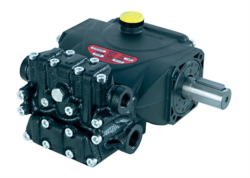
- Interpump E1D1808 compact industrial pump (8 L/min capacity, secondary systems)
- Secondary distribution valves
- Control system components
- Cost of failure: SGD 5,000-15,000 in downtime
- Maintenance investment: 15-25% of component annual depreciation
- Spray nozzles and manifold attachments
- Low-pressure gauge connections
- Minor coupling hardware
- Cost of failure: < SGD 1,000 impact
- Maintenance investment: Minimal—replace on failure
Practical Implementation Steps
1. Document your current equipment inventory with serial numbers, installation dates, and manufacturer specifications. 3G Electric's technical support team can help establish baseline parameters for equipment supplied through our distributor network.
2. Establish baseline readings for all Category A and B equipment. Record pressure setpoints, flow rates, temperature differentials, and audible operating signatures. These baselines enable predictive maintenance—noticing when parameters drift from normal.
3. Implement condition-based monitoring for Category B equipment. Rather than fixed schedules, replace components when monitoring data (oil analysis, pressure trends, flow degradation) indicates wear. This shifts maintenance from calendar-driven to condition-driven.
4. Stock strategic spare parts for Category A equipment only. Carrying extra seals for the Francel B25/37mb regulator makes sense; carrying duplicate pumps does not. For Category C items like the Euspray nozzles, maintain 2-3 backups maximum.
5. Document all service actions with timestamps, parts replaced, and meter readings. After 12-24 months of data collection, patterns emerge: which components fail predictably, which outliers occur, which preventive actions actually prevent failures.
Conclusion: Balanced Maintenance & Service for Singapore's Industrial HVAC Market
The most successful HVAC contractors in Singapore don't choose between preventive and reactive Maintenance & Service—they build systems that apply the right strategy to each component. Preventive maintenance on critical equipment like high-pressure pumps and regulators prevents catastrophic failures costing thousands in downtime. Reactive maintenance on modular, replaceable components like spray nozzles reduces unnecessary costs without meaningful reliability sacrifice.
As a distributor with 35+ years of experience supporting contractors across Singapore's industrial sector, 3G Electric has seen both approaches succeed and fail. The data consistently shows that contractors investing 20-30% of annual equipment costs in preventive service for critical systems, combined with reactive replacement for consumables, achieve the best balance of reliability and cost efficiency.
The equipment you choose—whether Pratissoli KF30 pumps, Francel pressure regulators, or Euspray nozzles—works best when paired with a Maintenance & Service strategy that matches the consequences of failure to the intensity of preventive investment. Start with this comparison framework, measure your results over 12 months, and adjust your strategy based on actual performance data from your facility.