Understanding Industry Applications in Southeast Asia's Climate
Plant managers across Southeast Asia—from Thailand's automotive sector to Singapore's petrochemical refineries—operate in an environment that tests equipment durability daily. High humidity, salt air exposure in coastal areas, and year-round heat place premium demands on industrial systems. Equipment selection isn't just about specifications; it's about understanding what will perform consistently in monsoon season and maintain uptime during peak production cycles.
With over 35 years of experience distributing industrial equipment globally, 3G Electric has supported Southeast Asian manufacturers through their toughest operational challenges. The key to success in this region is matching equipment capabilities to both your immediate production needs and your facility's environmental constraints.
Comparing Pressure Regulation Solutions for Gas Distribution Systems
Application Context: Gas distribution systems in semiconductor manufacturing, laboratory testing, and industrial processing require reliable pressure control. In humid tropical environments, corrosion and seal degradation accelerate—making equipment selection critical.
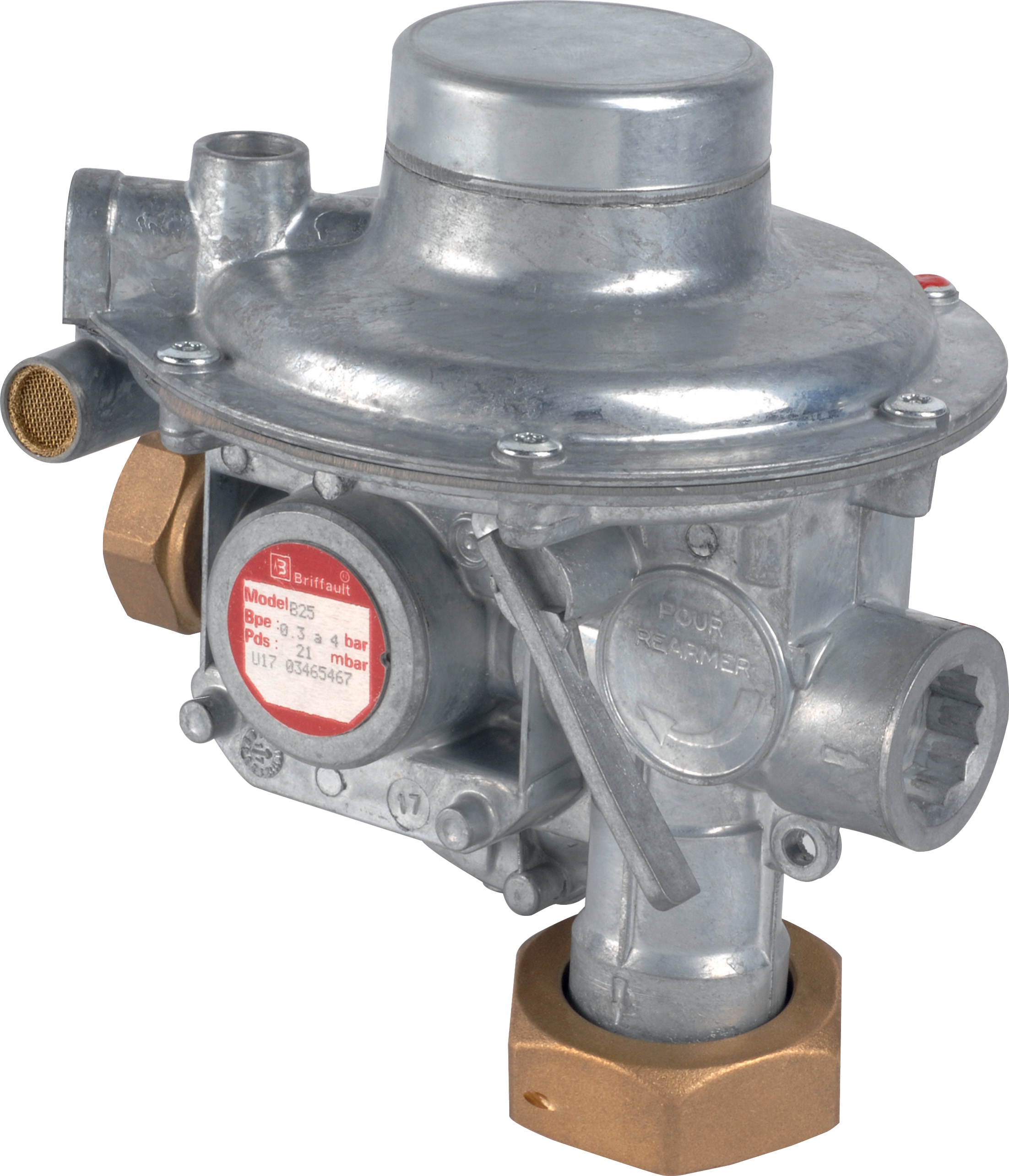
The Francel B25/37mb pressure regulator delivers 37 mbar outlet pressure with integrated safety relief and a 10 mm vent size, specifically designed for laboratory and industrial gas distribution. This regulator excels in controlled indoor environments where precision is non-negotiable.
Why This Matters for Plant Managers:
- Integrated Safety: The built-in relief valve eliminates the need for separate downstream protection, reducing connection points where corrosion can occur in tropical humidity
- Stable Outlet Pressure: 37 mbar consistency supports precise gas metering—critical for semiconductor fab operations or analytical laboratory work
- Compact Design: Lower footprint means easier installation in equipment racks common in Southeast Asian facilities with space constraints
If your facility operates gas cylinders in outdoor or semi-exposed areas (common in manufacturing complexes across Malaysia and Thailand), the Francel regulator's internal design must be verified for your specific gas type and humidity exposure. Plan maintenance intervals more aggressively than you would in temperate climates—quarterly inspections are recommended rather than annually.
Industrial Pump Selection: Matching Flow and Pressure to Your Application
The Southeast Asia Challenge: Production lines running 16-20 hours daily demand pumps that maintain consistent output without requiring constant maintenance interventions. Equipment downtime directly impacts revenue, making reliability paramount.
3G Electric supplies two high-performance Pratissoli pump families that address different operational demands:
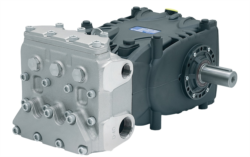
The Pratissoli KF30 delivers:
- 106 L/min flow rate
- 200 bar maximum pressure
- 40 kW power consumption
- 72 kg weight (compact, portable for line adjustments)
The Pratissoli MW40 delivers:
- 211 L/min flow rate (2x the KF30)
- 210 bar maximum pressure
- 85 kW power consumption
- 264 kg weight (permanent installation)
Decision Framework for Plant Managers:
1. Calculate Your Peak Flow Demand: During your busiest production shift, what's your simultaneous equipment demand? Add 20% as a safety margin to account for component aging over 3-4 years.
2. Assess Your Energy Budget: The KF30 at 40 kW vs. MW40 at 85 kW represents a significant operational cost difference—approximately 30,000-40,000 USD annually in electricity (Southeast Asia rates). The MW40 justifies this only if you're actually using that capacity.
3. Consider Maintenance Accessibility: The KF30's 72 kg weight allows technicians to service it in place or move it for cleaning. The MW40's 264 kg requires permanent positioning, which can complicate troubleshooting in tight spaces.
4. Plan for Tropical Degradation: Both pumps perform excellently in humidity, but the MW40's larger system requires more frequent fluid analysis to catch contamination before it causes wear. Budget quarterly fluid testing for MW40 installations.
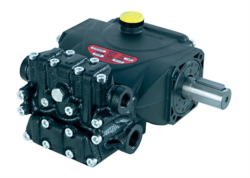
The Interpump E1D1808S represents a third option:
- 8 L/min capacity
- 180 bar pressure
- 2.72 kW power
- 5 kg weight
This compact gear pump suits auxiliary circuits, control systems, and applications requiring precise, lower-volume flow. Treating it as a supplement to your primary pump rather than a replacement ensures reliability.
Spray Nozzle Applications: Precision Delivery in Coating and Cleaning Systems
Spray nozzles are often overlooked in capital equipment decisions, yet they directly impact product quality, material waste, and system efficiency. The Euspray flat jet nozzle with 1/4" M BSPT connection and 25° spray angle addresses a specific but critical application.
Where Flat Jet Nozzles Excel:
- Coating Operations: Uniform, predictable spray pattern ensures consistent product coating without over-application
- Cleaning Systems: The 25° angle provides effective surface coverage without the splashing associated with wider patterns
- Water Conservation: In water-constrained Southeast Asian regions (parts of Thailand and Cambodia), flat jets deliver more precise coverage with less overall flow
The index 30 design indicates compatibility with standard pressure washer systems and industrial spray lines operating 150-250 bar—exactly the range where the KF30 and MW40 pumps operate. This isn't coincidental; 3G Electric stocks coordinated systems where nozzle and pump specifications align naturally.
For Plant Managers: When replacing nozzles, verify your existing pump's pressure rating. Installing a flat jet nozzle designed for 200 bar on a system rated only for 150 bar reduces nozzle lifespan dramatically in tropical conditions (salt air accelerates corrosion of internal components). Always match to your actual system pressure, not theoretical maximum.
Making Your Equipment Selection Decision
Five Practical Steps:
1. Audit Your Current Equipment: Document what pumps, regulators, and nozzles you're running now. If they're failing frequently, identify why—undersizing, improper maintenance, or environmental factors. Don't simply replace like-for-like; use failures as data.
2. Calculate Total Cost of Ownership: Initial equipment cost is 20-30% of your five-year investment. Include energy costs, maintenance labor, spare parts inventory, and downtime risk. The cheaper pump often becomes the expensive choice when production stops.
3. Evaluate Your Maintenance Capability: The MW40 requires more skilled attention than the KF30. If your maintenance team has limited hydraulics expertise, start with the smaller pump and scale up only when your processes demand it.
4. Plan for Humidity Management: Southeast Asia's climate demands attention to seals, filters, and fluid condition. Budget for more frequent element changes (filters) and fluid analysis than you'd do in North America or Europe. This preventive investment prevents catastrophic failures.
5. Engage with 3G Electric Early: With 35 years supporting industrial operations, we've encountered the specific challenges Southeast Asian facilities face. Our technical team can review your application drawings and recommend configurations that account for your climate and operational constraints.
Regional Considerations for Thailand, Malaysia, Singapore, Indonesia, and Vietnam:
Each Southeast Asian country presents distinct regulatory and operational environments. Singapore's strict emissions regulations influence pump selection differently than Thailand's manufacturing sector. 3G Electric supports facilities across all these markets with equipment that meets local compliance standards while maintaining global performance reliability.
Implementation Timeline
Plant managers often ask: "When do we upgrade?" The answer depends on your current system's health and your production growth trajectory.
Upgrade Immediately If:
- Your current pump can't maintain rated pressure during peak production
- Maintenance costs exceeded 15% of equipment value in the past year
- Your production demand has grown 30%+ and you're running at 90%+ capacity
- Equipment operates reliably but approaches end of service life (typically 5-7 years for industrial pumps in tropical service)
- Your production roadmap indicates 20-40% capacity growth within 18 months
- You're consolidating multiple older systems into one newer, more efficient unit
Conclusion: Matching Equipment to Your Facility's Reality
Successful Industry Applications equipment selection in Southeast Asia comes down to honest assessment of your current needs, realistic projection of your facility's growth, and commitment to matching equipment specifications to your actual operating environment. The Francel regulator, KF30 pump, MW40 pump, and Euspray nozzle each represent specific solutions for specific applications.
Your job as a plant manager is matching the right solution to your challenge—not settling for generic recommendations that don't account for tropical humidity, your crew's skill level, or your facility's unique demands. 3G Electric's 35 years of global industrial experience gives us perspective on what works in your region, what fails, and how to prevent problems before they impact your production.