Understanding Industry Applications for High-Pressure Operations
Industry applications encompass the practical deployment of fluid handling equipment across manufacturing, maintenance, and service operations. In Singapore's industrial sector—from petrochemical facilities to food processing plants—maintenance teams must select and configure pumping and spray systems that deliver consistent performance under demanding conditions.
High-pressure cleaning and coating represent two of the most common industry applications requiring precision fluid delivery. Unlike standard irrigation or circulation systems, these operations demand equipment that balances flow rate, pressure stability, and nozzle precision. With 35+ years of experience supplying industrial equipment across Asia-Pacific, 3G Electric has supported maintenance teams in selecting components that maximize uptime while minimizing operational costs.
The challenge for your maintenance team isn't simply choosing the largest pump or the cheapest nozzle. Success depends on understanding how pump performance curves, pressure regulation, and nozzle design interact within your specific operational environment.
Pump Selection Criteria for Singapore Industrial Applications
Flow Rate and Pressure Requirements
Your first step is calculating actual operational demand. Industrial cleaning applications in Singapore typically require 50–211 L/min at pressures between 150–210 bar, depending on substrate and contamination level.
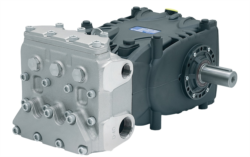
The Pratissoli KF30 delivers 106 L/min at 200 bar with 40 kW input power, making it suitable for general industrial cleaning of concrete, steel, and equipment surfaces. This mid-range capacity works well for:
- Daily facility maintenance at small-to-medium manufacturing sites
- Portable cleaning cart operations
- Equipment degreasing in automotive and precision manufacturing
For higher-volume operations—such as large-scale coating systems or continuous production cleaning—the Pratissoli MW40 provides 211 L/min at 210 bar with 85 kW power. This capacity suits:
- Production line washdown systems
- High-volume industrial coating operations
- Facility-wide cleaning networks requiring simultaneous multi-point spray
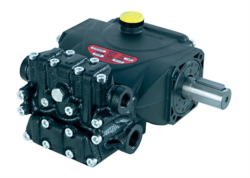
For compact, space-constrained applications, the Interpump PUMP E1D1808 L delivers 8 L/min at 180 bar—adequate for precision cleaning of intricate components, electronics assembly facilities, or laboratory equipment.
Duty Cycle and Thermal Management
Singapore's tropical climate intensifies cooling demands on high-pressure systems. Pumps operating continuously in 30°C+ ambient temperatures generate substantial heat. Select equipment rated for continuous duty rather than intermittent operation if your cleaning schedule runs 6+ hours daily.
The Pratissoli pump families (KF and MW series) incorporate Italian engineering design standards emphasizing thermal stability. Verify your installation includes adequate ventilation around pump discharge areas and consider mounting pump units in shaded locations or air-conditioned mechanical rooms when possible.
Power Source Integration
Confirm whether your facility operates 3-phase 380V (standard in Singapore) or single-phase power. The KF30 (40 kW) and MW40 (85 kW) both suit 3-phase industrial supplies. For portable or distributed cleaning operations, verify motor speed ratings match local electrical standards (50 Hz in Singapore).
Nozzle Configuration and Spray Pattern Optimization
Selecting Flat Jet vs. Rotary Spray
Nozzle selection determines spray quality and substrate compatibility. The Euspray Flat Jet Nozzle HP 1/4" M BSPT features a 25° spray angle with index 30 design, delivering consistent flat spray patterns across the working surface.
Flat jet nozzles excel for:
- Industrial cleaning: Removing embedded contaminants from concrete, steel, and painted surfaces
- Coating applications: Achieving uniform product distribution on vertical and horizontal substrates
- Quality control: Maintaining repeatable spray geometry for batch processing
The 1/4" M BSPT connection (metric British Standard Pipe Taper) is standard across Singapore industrial facilities, simplifying retrofit and maintenance procedures.
Pressure-Nozzle Compatibility
Operating pressure directly influences spray pattern width and cleaning force. At 200 bar (KF30) or 210 bar (MW40), flat jet nozzles achieve effective coverage distances of 30–60 cm depending on angle and substrate.
Your maintenance team should:
- Match nozzle flow capacity (gpm or L/min) to pump outlet capacity
- Never exceed nozzle rated pressure by more than 10% (causes pattern degradation)
- Test nozzle performance quarterly, replacing units showing pattern drift or uneven spray
For example, the KF30 (106 L/min) pairs effectively with 2–4 Euspray nozzles operating simultaneously, maintaining system efficiency.
Pressure Regulation and Safety System Integration
Role of Pressure Regulators in High-Pressure Systems
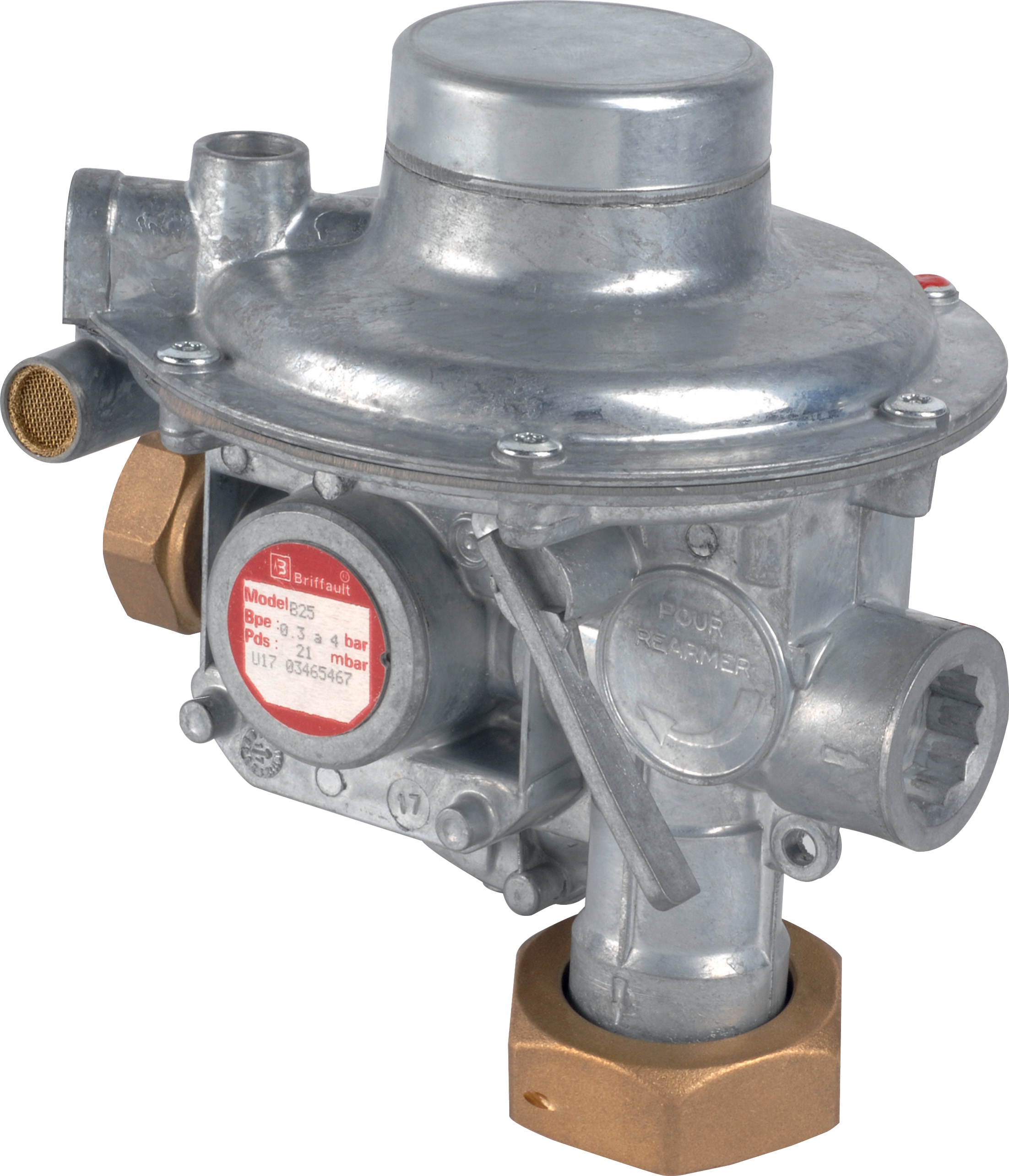
Pressure regulators prevent system overpressure, protect downstream components, and enable fine-tuning of cleaning or coating intensity. The Francel B25/37mb Pressure Regulator with integrated safety relief is designed for gas distribution; however, pressure regulation principles apply across fluid systems.
In high-pressure cleaning operations, your system should include:
1. Primary pressure regulator: Located immediately after pump discharge to stabilize outlet pressure
2. Safety relief valve: Set 10–15% above operational pressure to protect against surge conditions
3. Pressure gauge: Mounted upstream and downstream of regulator for monitoring
Safety Considerations for Singapore Industrial Environments
High-pressure fluid systems pose serious hazards. Singaporean facilities must comply with Workplace Safety and Health (WSH) Act guidelines:
- Pressure-rated hoses: All discharge lines must be rated for 1.5× system maximum pressure
- Quick-disconnect safety couplers: Prevent accidental line separation under pressure
- Operator training: Maintenance personnel must complete documented training on equipment operation and safety procedures
- Regular testing: Pressure hoses require visual inspection monthly and pressure testing annually
During routine maintenance, depressurize systems completely before disconnecting hoses or removing nozzles. Use proper lockout/tagout procedures to prevent accidental system activation.
Practical Implementation for Maintenance Teams
Commissioning New Systems
When deploying a new high-pressure cleaning or coating system:
1. Document baseline conditions: Record pump outlet pressure, nozzle spray pattern, and flow rate during initial operation
2. Establish maintenance intervals: Schedule pressure hose inspections monthly, nozzle flow testing quarterly, pump seal inspections semi-annually
3. Create operational logs: Maintain records of system usage hours, pressure readings, and any performance anomalies
4. Train operators: Ensure all personnel understand proper startup procedures, emergency shutdown, and pressure-system safety
Troubleshooting Common Issues
Problem: Uneven spray pattern or reduced coverage
- Check nozzle for mineral buildup or debris; clean or replace
- Verify system pressure matches nozzle specifications
- Inspect hose connections for leaks (reduces effective pressure)
- Confirm inlet suction line is unobstructed
- Check fluid level in supply tank
- Verify pump inlet strainer is clean
- Ensure pump discharge pressure regulator is not set too high
- Monitor ambient temperature (tropical Singapore heat accelerates issues)
- Reduce continuous duty hours or add system cooling
- Verify pump displacement matches intended duty cycle
- Check for internal pump wear requiring seal replacement
Supplier Support and Parts Availability
3G Electric's 35-year track record in industrial equipment distribution means you have reliable access to replacement components. When maintenance needs arise, sourcing authentic pump seals, nozzles, and regulators prevents cascade failures and production downtime.
Maintain spare inventory of:
- Replacement nozzles (1–2 units per each in-service model)
- Pressure hose assemblies in common sizes (DN16, DN20, DN25)
- Pump seal kits matching your primary pump model
- Quick-disconnect couplers and safety caps
Conclusion
Optimizing high-pressure systems for cleaning and coating represents a core competency for industrial maintenance teams. Success requires balancing pump capacity against actual operational demand, selecting nozzles matched to pressure and flow parameters, and implementing rigorous safety and maintenance protocols.
The Pratissoli pump families, Euspray precision nozzles, and supporting pressure regulation components available through 3G Electric provide proven solutions across Singapore's diverse industrial sector. By applying the selection criteria and maintenance strategies outlined in this guide, your team can achieve consistent uptime, predictable performance, and safe operations throughout equipment lifecycles.