Understanding Gas Valves & Regulation in Industrial Networks
Gas Valves & Regulation systems are critical infrastructure in any industrial facility distributing pressurized gases across multiple process points. Unlike simple point-of-use regulators, modern industrial gas distribution requires coordinated pressure management at the source, intermediate stages, and endpoint delivery—each with distinct functional requirements.
For industrial professionals in Southeast Asia, understanding how different valve types interact within a distribution network is essential. Pressure drops, safety margins, and regulatory compliance all depend on selecting the right combination of components. With 35+ years of experience serving regional industrial operations, 3G Electric has seen how proper valve and regulation specification prevents costly downtime, safety incidents, and product quality failures.
The challenge intensifies when facilities manage multiple gas types (nitrogen, argon, CO₂, specialty gases) simultaneously, often operating at different pressures and flow rates. This article compares practical approaches to building robust gas distribution networks that meet Southeast Asian safety standards while delivering reliable performance.
Primary Stage vs. Secondary Pressure Regulation: Design Strategies
Primary (First Stage) Regulation
Primary regulators operate at the gas supply inlet, reducing high cylinder or bulk tank pressure to a stable intermediate pressure (typically 3–10 bar depending on application). These regulators must handle large pressure differentials and occasional supply fluctuations without losing stability.
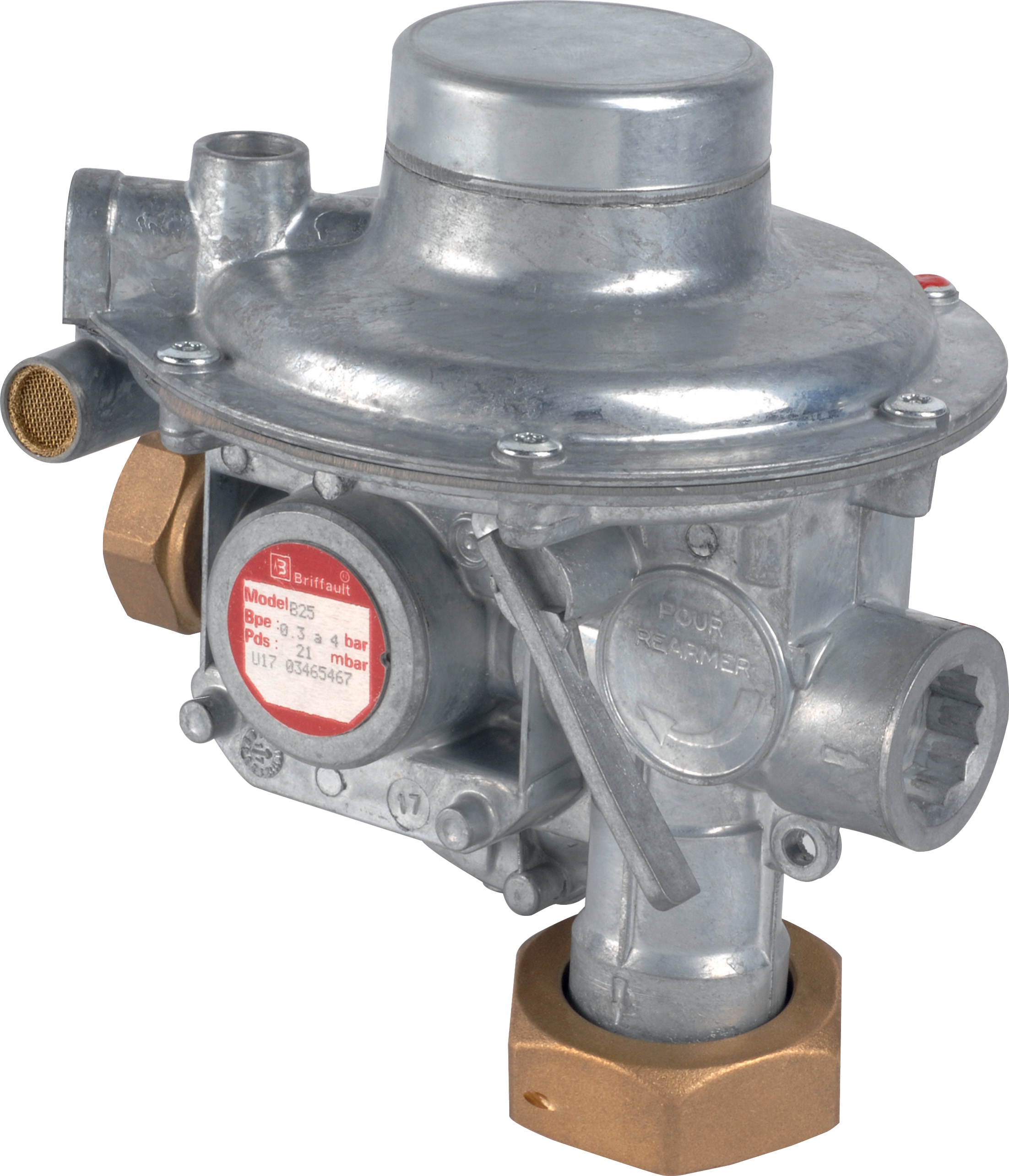
The Francel B25/37mb pressure regulator exemplifies primary-stage design philosophy. Its integrated safety relief valve provides dual functionality—maintaining outlet pressure at 37 mbar while protecting downstream components from overpressurization. The 10 mm vent size allows rapid pressure venting if a fault occurs, critical for preventing cascade failures in interconnected systems.
Key advantages of dedicated primary regulators:
- Large pressure drop capacity (reducing variability from supply pressure fluctuations)
- Integrated safety relief prevents downstream overpressure
- Separates supply-side safety concerns from endpoint control requirements
- Enables consistent performance across seasonal temperature variations common in tropical Southeast Asian facilities
Secondary (Point-of-Use) Regulation
Secondary regulators operate downstream, providing final pressure adjustment for specific process equipment. These typically handle smaller pressure differentials (0.5–3 bar) and must respond quickly to process demand changes.
The critical distinction: secondary regulators assume stable inlet pressure from primary stage regulation. This allows them to be simpler, more responsive, and smaller—reducing cost and space requirements at multiple process points.
Comparison table:
| Aspect | Primary Regulation | Secondary Regulation |
|--------|------------------|---------------------|
| Inlet pressure range | Variable (30–300 bar typical) | Stable (3–10 bar typical) |
| Outlet pressure stability | ±5–10% typical | ±2–3% achievable |
| Required flow capacity | High (supports multiple branches) | Low to medium (single process point) |
| Safety relief integration | Essential | Optional |
| Response time to demand | Moderate | Fast |
| Installation complexity | Centralized, requires isolation | Distributed, installed locally |
For facilities managing 5–10 distribution branches from a single supply line, the two-stage approach delivers better economics and reliability than attempting point-of-use regulation at every endpoint.
Safety Valve Integration and Compliance Standards
Pressure Relief Requirements
Industrial gas systems operating above 1.5 bar in Southeast Asia must comply with pressure equipment directive standards. Safety relief valves protect against three failure scenarios:
1. Regulator failure (outlet pressure exceeds setpoint)
2. Downstream blockage (pressure accumulates in isolated branch)
3. Temperature-induced pressure rise (confined gas expands in high ambient temperatures)
Integrated relief valves like those in the Francel B25/37mb address scenario 1 directly. For scenarios 2 and 3, branch-line relief valves or solenoid vent assemblies become necessary.
Vent Sizing and Atmospheric Discharge
The 10 mm vent on the Francel B25/37mb allows approximately 30–40 CFM atmospheric discharge at full relief flow. For facilities in tropical Southeast Asia, proper vent location is critical—discharging near air intakes for occupied spaces violates local industrial safety codes. Vents should terminate:
- Away from personnel work areas
- Above facility roof lines (preventing rain ingress)
- With simple sintered bronze filters if discharge area permits condensation concerns
Pneumatic Control Applications: End-of-Stroke Valve Selection
Many Southeast Asian manufacturing facilities integrate pneumatic automation—conveyor systems, assembly presses, robotic handling equipment—alongside gas supply systems. End-of-stroke contact valves manage pressure signals at extreme process positions.
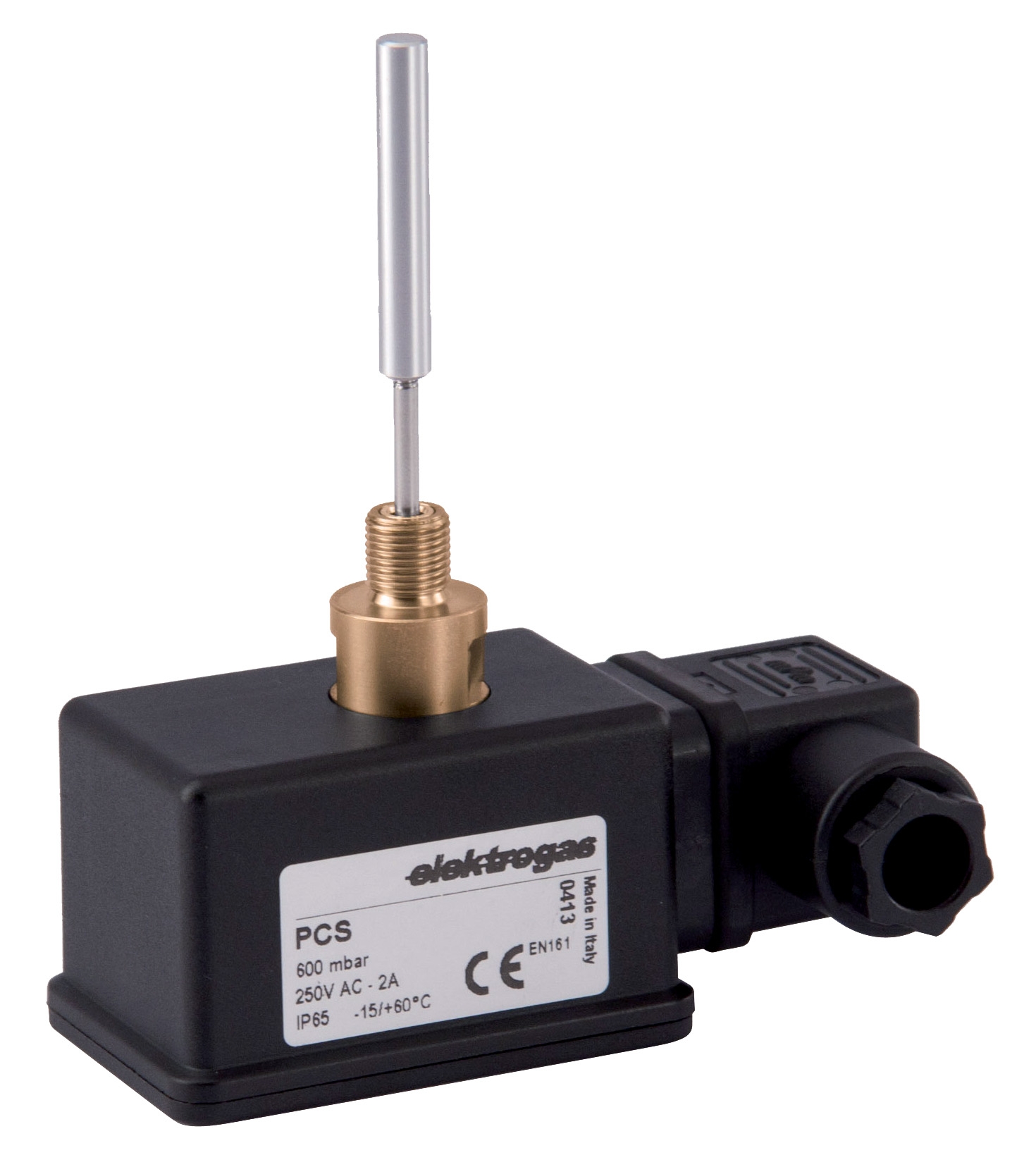
The Elektrogas VMM 20-25 end-of-stroke contact valve exemplifies this application class. Rated for 6 bar, designed to EN 161 standard, it combines mechanical function (responding to physical stroke completion) with electrical signaling (micro-switch activation for PLC integration).
Practical Advantages of Dedicated End-of-Stroke Design
Compared to solenoid-only control:
- Mechanical switching guarantees repeatability (no electrical supply dependency)
- Dual functionality: hydraulic/pneumatic control + electrical signal
- Reduced wiring complexity in decentralized machine automation
- Adjustable switching point (3 mm Allen wrench—field serviceable)
For facilities operating multiple packaging, material handling, or assembly machines, standardizing on EN 161 compliant valves like the VMM 20-25 simplifies spare parts management and technician training across Southeast Asian operations.
High-Pressure Hose Assemblies and System Integrity
Gas distribution reliability depends equally on hoses, fittings, and connection integrity. Pratissoli high-pressure sewer cleaning hoses, while designed for their primary application, incorporate engineering principles applicable to industrial gas distribution:
Relevant technical features from Pratissoli ZT06B1000353, Pratissoli ZT03A0200152, and Pratissoli ZT04A0100202 assemblies:
- Italian engineering from Interpump Group (rigorous pressure testing standards)
- Complete pre-assembled units (reducing field connections that introduce leakage points)
- SAE or ISO flange compatibility (enabling rapid adaptation to different systems)
- Tested in high-vibration, thermal-cycling environments (conditions also present in Southeast Asian industrial facilities)
For gas systems, the equivalent lesson: pre-assembled, factory-tested hose and fitting combinations reduce installation risk compared to field-assembled alternatives. 3G Electric supplies both individual components and complete assemblies, allowing facilities to balance cost and reliability requirements.
Network Design Recommendations for Southeast Asian Facilities
Typical Three-Stage Architecture
Stage 1 (Bulk Supply):
Cylinder banks or bulk tanks → primary regulator (50–100 bar inlet, 5–8 bar outlet) → manifold
Stage 2 (Main Distribution):
From manifold → branch isolation valves → secondary regulators at process clusters (maintaining 3–5 bar)
Stage 3 (Point-of-Use):
From process clusters → tertiary regulators or direct connection to equipment (maintaining 0.5–2 bar equipment inlet pressure)
Pressure Drop Considerations
Southeast Asian facilities often operate equipment continuously in hot environments (ambient 28–35°C common). This affects:
- Regulator accuracy: Higher ambient temperature shifts regulator setpoint by 0.05–0.10 bar per 10°C. Select regulators with stated temperature compensation specifications
- Pipeline losses: Extended distribution runs (>50 meters) in elevated-temperature machine halls increase friction losses
- Seasonal variation: Monsoon season humidity affects air quality in systems using compressed air as the gas source
Accounting for these factors during design prevents pressure instability that reduces equipment precision and increases failure rates.
Practical Specification Checklist for Gas Valve Selection
When specifying Gas Valves & Regulation components for a facility expansion or system upgrade:
1. Confirm inlet/outlet pressure requirements for each regulation stage and process cluster
2. Calculate maximum and minimum flow rates across all simultaneous processes
3. Verify compliance with local pressure equipment directives (PED in EU-aligned markets, AS/NZS standards in Australia-influenced Southeast Asian facilities)
4. Specify relief valve setpoints with 10% margin above normal operating pressure
5. Document vent location and sizing to prevent safety code violations
6. Select standardized valve types to simplify maintenance scheduling and spare parts inventory
7. Request factory pressure testing certificates for all assemblies (mandatory for regulated gas systems)
8. Plan installation with isolation capability at each regulation stage for safe troubleshooting and component replacement
3G Electric assists industrial professionals through each specification phase, drawing on three-and-a-half decades of Southeast Asian industrial requirements and proven component performance.