Understanding Controls & Safety in Singapore's Regulatory Context
Controls & Safety systems form the backbone of safe industrial operations, particularly within Singapore's stringent regulatory framework governed by the Workplace Safety and Health (WSH) Act and industry-specific standards. Over 35 years of experience, 3G Electric has supported industrial professionals in navigating complex safety requirements while maintaining operational efficiency.
Singapore's Ministry of Manpower (MOM) mandates comprehensive risk assessments and control hierarchies for all industrial equipment. The Controls & Safety approach you implement today directly impacts your facility's compliance status, insurance premiums, and operational liability. Unlike generic international standards, Singapore's regulations emphasize documented risk assessments, competent personnel oversight, and continuous monitoring of critical safety parameters.
Industrial burner systems, pressure controls, and ignition systems represent high-risk areas requiring meticulous attention. Your facility must demonstrate that all safety-critical functions are protected by reliable controls that meet relevant standards such as EN 746-2, EN 676, and ISO 13849-1 Performance Levels. This isn't merely about selecting components—it's about building a comprehensive control architecture that reflects your specific operational hazards.
Conducting Effective Hazard Analysis for Control Selection
The foundation of robust Controls & Safety systems begins with systematic hazard identification. Before specifying any relay, pressure switch, or control module, industrial professionals must answer critical questions: What are the potential failure modes? What consequences could occur if this system fails? What Performance Level must this control achieve?
Singapore's WSH framework requires HAZOP (Hazard and Operability) studies or FMEA (Failure Mode and Effects Analysis) for complex systems. These methodologies aren't bureaucratic overhead—they're practical tools that reveal control gaps and guide component selection.
For burner control applications, hazard analysis typically identifies:
- Uncontrolled ignition: Risk of flame impingement, explosion, or equipment damage
- Loss of flame detection: Unburned fuel accumulation leading to explosive conditions
- Pressure system failures: Over-pressure conditions damaging equipment or creating safety hazards
- Air supply interruption: Unsafe fuel-to-air ratios promoting flame failure or backdraft
- Loss of control signal: Inability to shut down equipment in emergency conditions
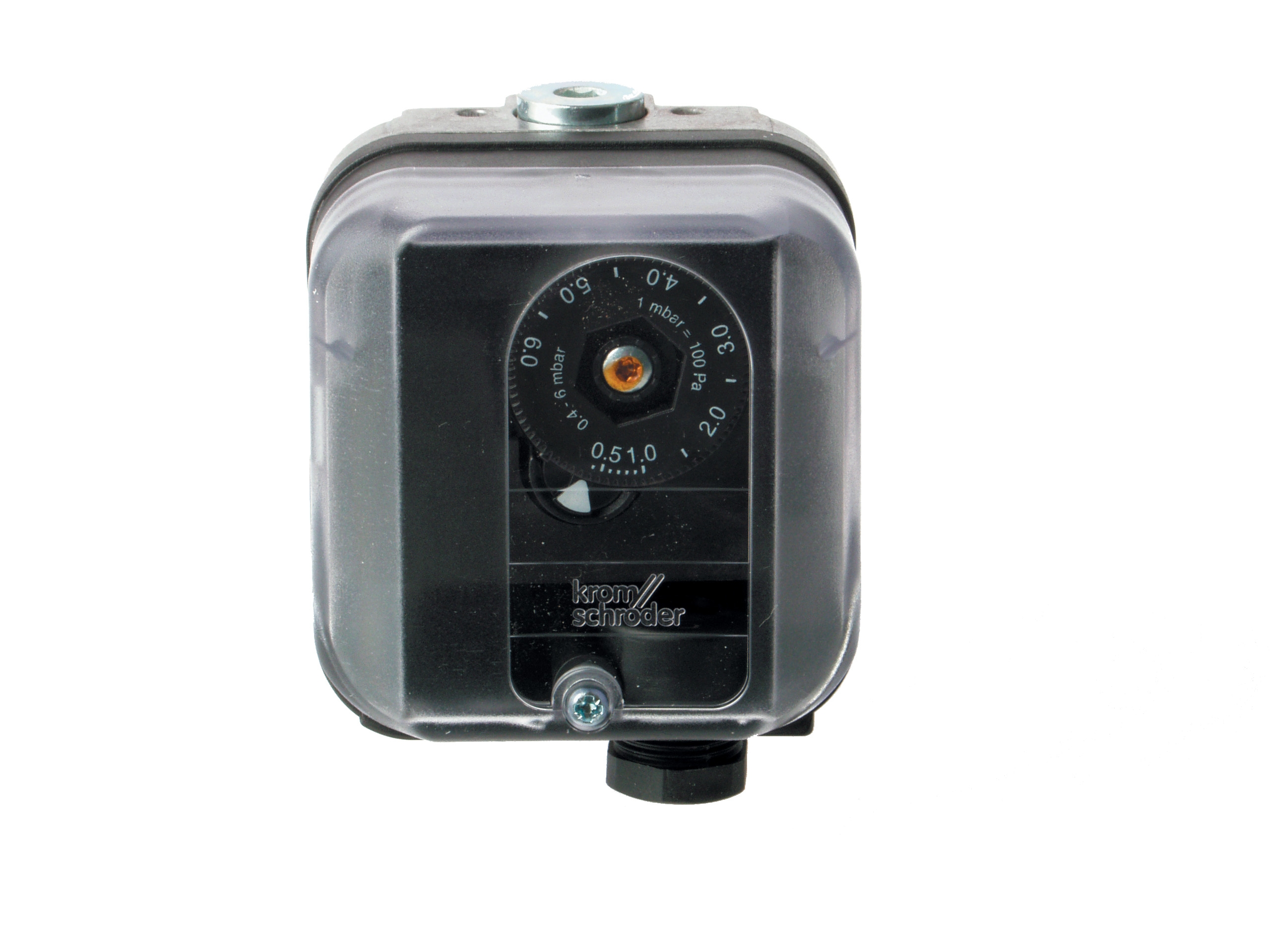
Each identified hazard requires specific protective controls. The Kromschroder Relay BCU 570WC1F1U0K1-E addresses multiple hazards through its dual-mode ignition capability and EN 746-2 compliance, making it suitable for applications where direct and pilot ignition flexibility is required. The Kromschroder Pressure switch DG 50U/6 provides SIL 3-rated protection for pressure-related hazards, ensuring that your facility meets Singapore's Performance Level d or e requirements.
Your hazard analysis should document:
- Identified hazards and their severity ratings
- Current control measures and their effectiveness
- Residual risk levels before implementing new controls
- Selected components and how they address specific hazards
- Post-implementation verification that residual risks are acceptable
This documentation becomes critical during MOM inspections and insurance audits. It demonstrates that your control selection is evidence-based rather than arbitrary.
Implementing SIL and Performance Level Compliance Strategies
Safety Integrity Level (SIL) requirements have become increasingly central to Singapore industrial operations. SIL ratings define the probability that a safety system will perform its intended function under all specified conditions. For industrial burner systems, achieving SIL 2 or SIL 3 compliance is often mandatory under equipment-specific regulations.
Performance Level (PL) is the parallel concept under ISO 13849-1, ranging from PL a (lowest) to PL e (highest). Singapore regulators increasingly reference Performance Levels alongside SIL ratings, particularly for machinery directive compliance.
Understanding the difference matters practically. SIL focuses on quantitative reliability calculations—failure rates, mean time between failures (MTBF), and architectural constraints. Performance Level emphasizes system architecture, component reliability, and design robustness. Many modern control components address both frameworks simultaneously.
The Siemens Relay LFL 1.622 exemplifies this dual-compliance approach, offering UV and ionization flame monitoring suitable for SIL 2/PL d applications. Its dual-flame detection methodology provides redundancy, a critical requirement when implementing high-integrity control architectures.
To implement effective SIL/PL compliance:
Document Your SIL/PL Target: Before procuring components, your facility engineer must specify required SIL/PL levels for each control function. Underspecifying creates residual risk; overspecifying wastes resources. Singapore's WSH regulations expect this specification to be formally documented.
Verify Component Certifications: Demand technical documentation proving that components achieve claimed SIL/PL ratings. Certifications from recognized bodies (TÜV, DNV, Exova) carry weight with regulators. The Kromschroder DG 50U/6 pressure switch holds SIL 3 certification with FM, UL, AGA, and GOST-TR approvals—documentation that supports facility compliance claims.
Design for Fault Tolerance: High-integrity systems typically employ redundancy (dual pressure switches, dual flame detectors) or diversity (combining UV and ionization flame detection). The Siemens LFL 1.622 uses dual flame detection—if one method fails, the other continues protecting the system.
Test and Validate: Singapore's MOM expects documented proof that implemented controls actually achieve claimed performance levels. This requires periodic proof testing, where you deliberately introduce faults and verify that safety systems respond correctly. Your maintenance procedures must include these validation steps.
Maintain Configuration Control: SIL/PL compliance depends on maintaining the exact configuration specified in your design documentation. Substituting components, modifying control logic, or changing operating parameters without re-validation can invalidate your compliance claim.
Practical Control Architecture and Component Integration
Selecting individual components is only part of the Controls & Safety equation. Your facility must integrate these components into a coherent control architecture that addresses all identified hazards without creating new risks through inappropriate interactions.
A typical Singapore industrial burner system might integrate:
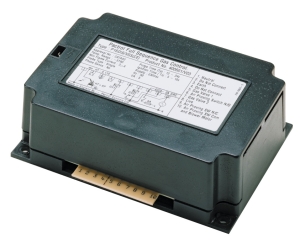
- Burner Control Relay: Kromschroder BCU 570WC1F1U0K1-E managing ignition sequences and flame supervision
- Pressure Monitoring: Kromschroder DG 50U/6 ensuring fuel pressure remains within safe operating ranges
- Flame Detection: Siemens LFL 1.622 continuously monitoring combustion integrity
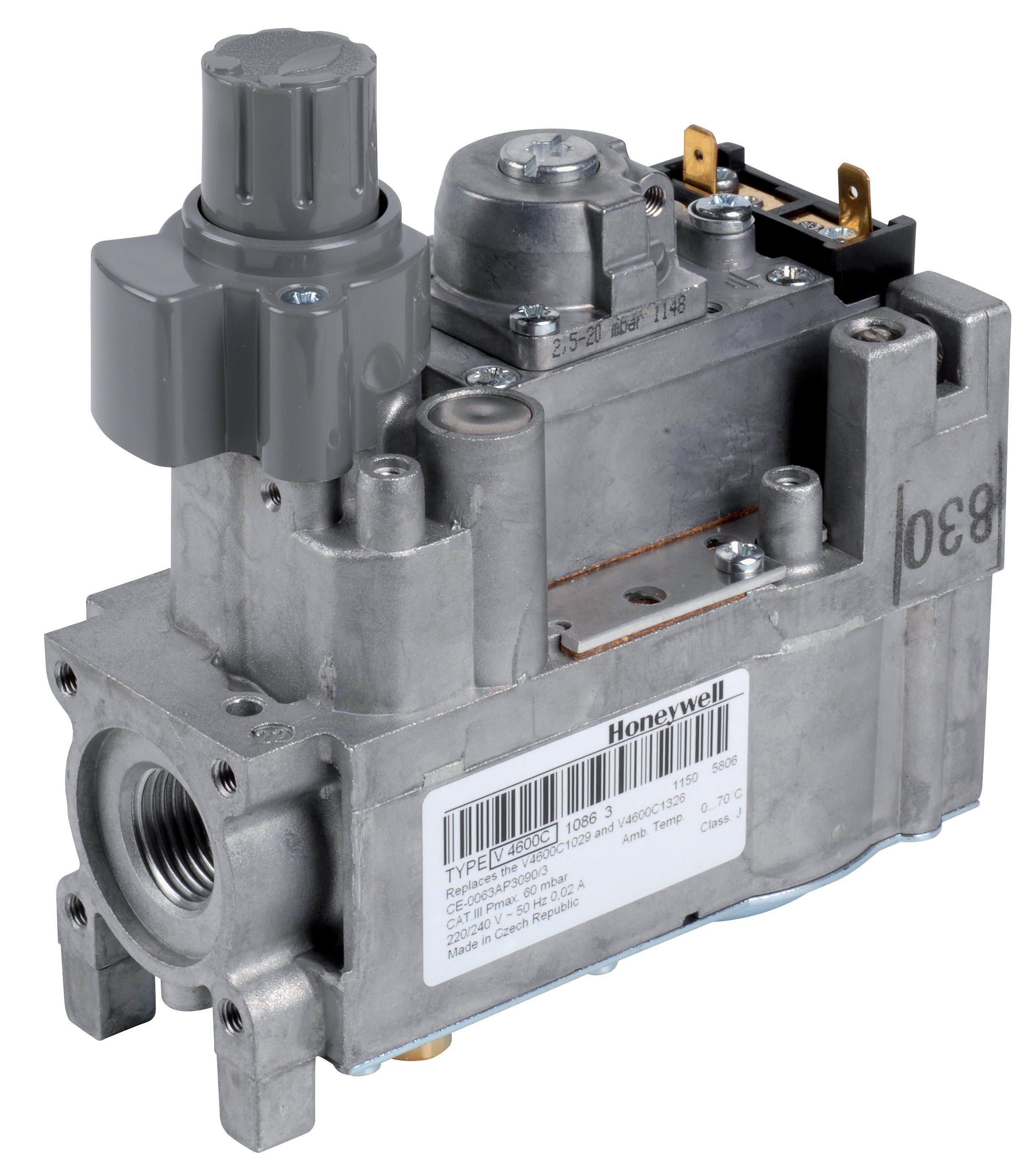
- Gas Modulation: Honeywell Gas block VK 4105 C 1041 U providing proportional fuel flow control in response to demand signals
- Ignition Module: Pactrol Housing P 16 DI CE 400601/V23 delivering controlled ignition energy with flame detection feedback
These components don't function in isolation. The burner control relay sends ignition enable signals to the Pactrol ignition module while monitoring feedback from the Siemens flame detector. The Honeywell gas block modulates fuel flow based on temperature or process demand signals, while the Kromschroder pressure switch continuously verifies safe operating conditions. If any component detects an unsafe condition, the entire system must transition to a safe state—typically shutting down fuel supply and preventing further ignition attempts.
Integration best practices for Singapore operations:
Signal Isolation and Integrity: All safety-critical signals must be physically isolated from non-critical signals. Don't mix control signals and safety signals on the same wiring or control bus. Singapore's electrical safety standards (SS 638) demand this separation.
Fail-Safe Design Philosophy: When power fails, control signals fail, or components malfunction, your system must fail to a safe state—not into a dangerous operating condition. This means fuel solenoids should de-energize on command rather than requiring continuous power to remain closed.
Accessible Test Points: Your control architecture must include accessible test points where maintenance technicians can safely inject test signals and measure actual responses without bypassing safety systems. The Kromschroder BCU 570WC1F1U0K1-E includes built-in test capabilities specifically designed for this requirement.
Clear Documentation: Every control connection, signal path, and safety interlock must be documented in control logic diagrams, P&ID (piping and instrumentation diagrams), and electrical schematics. Singapore's MOM expects this documentation to be current, accurate, and immediately available for inspector review.
Environmental Suitability: Your facility's operating environment—temperature extremes, vibration, corrosive atmospheres, electromagnetic interference—must be considered when selecting and positioning control components. Industrial Singapore facilities often operate in hot, humid conditions that accelerate component degradation if inappropriate selections are made.
Maintenance, Verification, and Continuous Compliance
Controls & Safety systems don't remain compliant through initial installation alone. Singapore's WSH Act explicitly requires ongoing maintenance, testing, and verification. Your facility must develop a structured program that addresses component aging, environmental degradation, and regulatory updates.
Scheduled Proof Testing: Most SIL-rated systems require periodic proof testing where safety functions are deliberately activated and verified. For burner systems, this typically involves simulating flame loss conditions and confirming that fuel shutoff occurs within specified time limits. Document these tests with dates, results, and technician identification.
Component Replacement Schedules: Control relays, pressure switches, and ignition modules have finite operational lifespans. High-integrity systems may require component replacement based on service hours rather than waiting for failure. Over 35 years of experience, 3G Electric has seen countless facility failures result from deferred component replacement on safety-critical equipment.
Regulatory Updates and Revalidation: Singapore's safety standards and equipment directives evolve. When new standards are adopted or equipment regulations change, your facility may need to revalidate existing control systems. The Kromschroder DG 50U/6 pressure switch maintains certifications under multiple standards (EN 1854, FM, UL, AGA, GOST-TR), but your facility must verify that your installed equipment remains compliant with current Singapore requirements.
Competent Personnel Requirements: Singapore's WSH Act requires that maintenance and testing of safety systems be performed by competent personnel. Your facility should define competence requirements for control system work, document training completion, and maintain evidence that personnel performing safety-critical maintenance have appropriate qualifications.
Maintenance Records and Audit Trails: Create comprehensive maintenance records documenting all work performed on control systems. Include dates, personnel names, work performed, test results, and any deviations from standard procedures. These records provide the evidence trail required during regulatory audits.
The Kromschroder BCU 570WC1F1U0K1-E and Siemens LFL 1.622 include self-diagnostic capabilities that support your maintenance program. Modern control systems can detect internal faults and report them to facility monitoring systems, allowing preventive maintenance before safety systems actually fail.
Conclusion
Controls & Safety compliance in Singapore represents a continuous commitment to systematic hazard management, component selection based on risk assessment, and rigorous maintenance discipline. By implementing the frameworks outlined in this guide—conducting thorough hazard analysis, specifying appropriate SIL/Performance Levels, integrating components into coherent architectures, and maintaining comprehensive verification programs—your facility can achieve the compliance confidence required for sustainable industrial operations.
The investment in robust Controls & Safety systems protects not only your facility's regulatory standing but also your personnel and operational reputation. 3G Electric supports this commitment by providing access to components proven in demanding industrial environments and by maintaining technical expertise developed across 35 years of supporting Singapore's industrial sector.