Understanding Controls & Safety Procurement Challenges
Controls & Safety component selection is rarely about finding the cheapest option. As a procurement engineer, you know that selecting thermostats, flame detectors, amplifiers, and control modules impacts operational continuity, maintenance costs, warranty exposure, and regulatory compliance across your facility portfolio.
Over 35 years as a global industrial equipment distributor, 3G Electric has worked with procurement teams across Southeast Asia, Europe, and the Middle East. The most common sourcing challenges are:
- Specification misalignment: Selecting components rated for operating conditions they will never experience (oversizing) or undersizing for peak demand scenarios
- Lead-time fragmentation: Managing multiple vendors for thermostats, flame detectors, and amplifiers when consolidated sourcing is available
- Compatibility uncertainty: Pairing flame detectors with amplifiers, thermostats with control modules without verifying electrical ratings and response time matching
- Total cost blindness: Comparing unit price without accounting for warranty scope, maintenance requirements, or replacement frequency
This guide addresses these procurement realities with actionable frameworks you can implement immediately.
Building Your Controls & Safety Specification Matrix
Define Your Core Operating Envelope
Your specification foundation must answer three questions for every application:
1. What are the actual operating conditions?
Don't default to industrial-grade components if your HVAC applications run in climate-controlled facilities. Conversely, don't specify commercial-duty equipment for extreme environments.
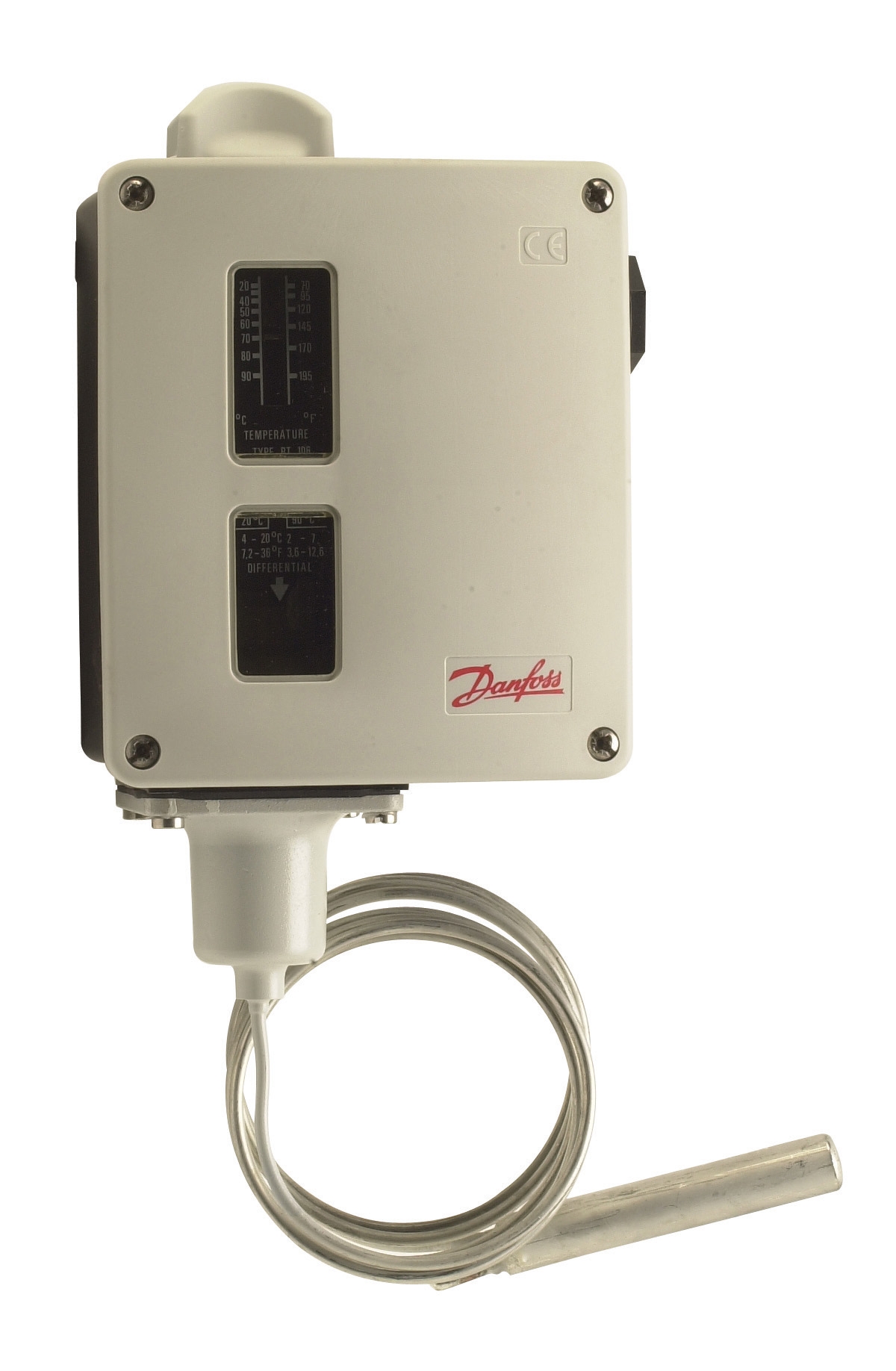
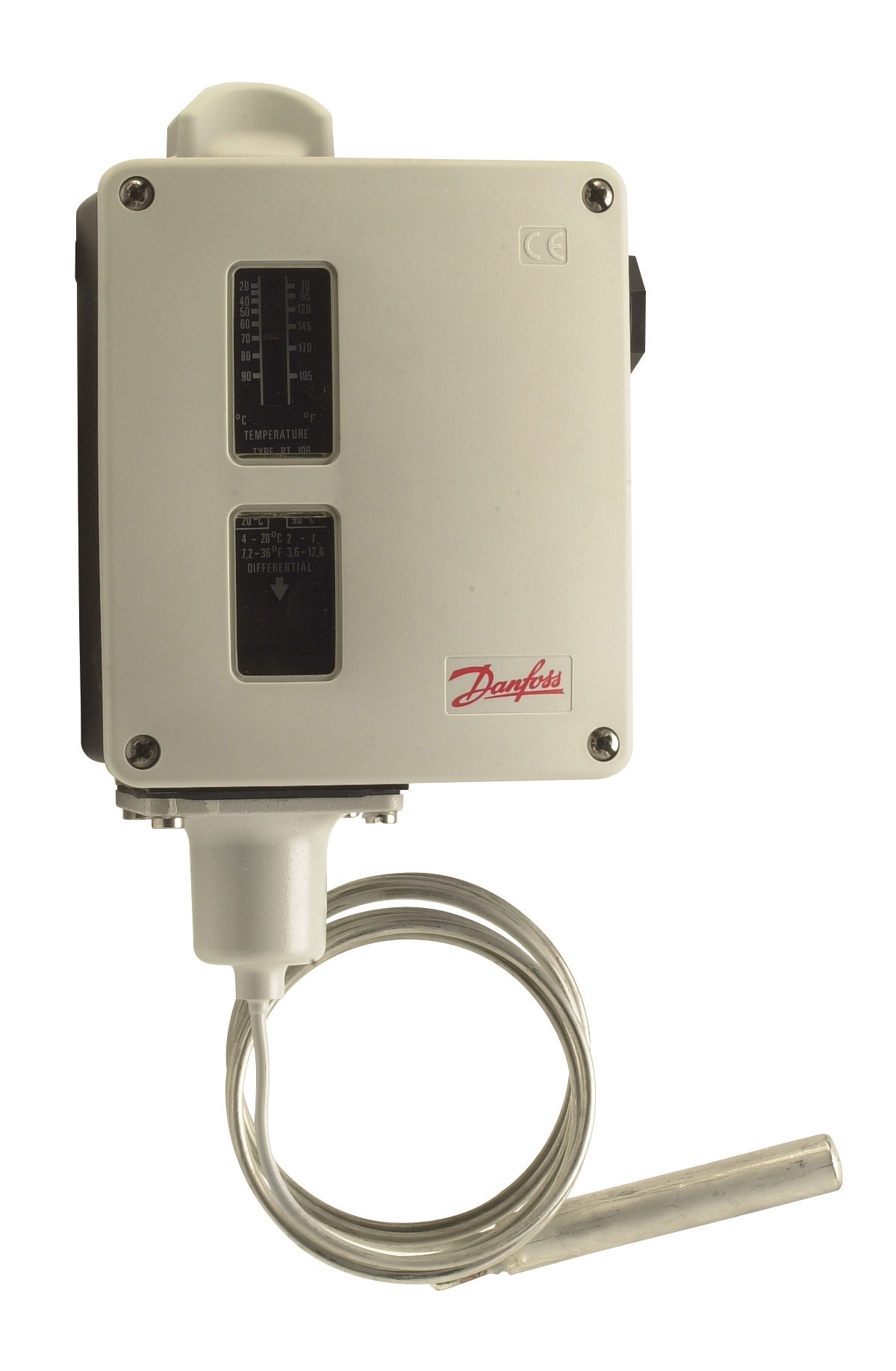
- Temperature range: Document minimum, nominal, and peak conditions. The Danfoss Thermostat RT 124 operates reliably across typical HVAC ranges, but confirm your facility's actual extremes—many specify for -10°C when operations never drop below 5°C.
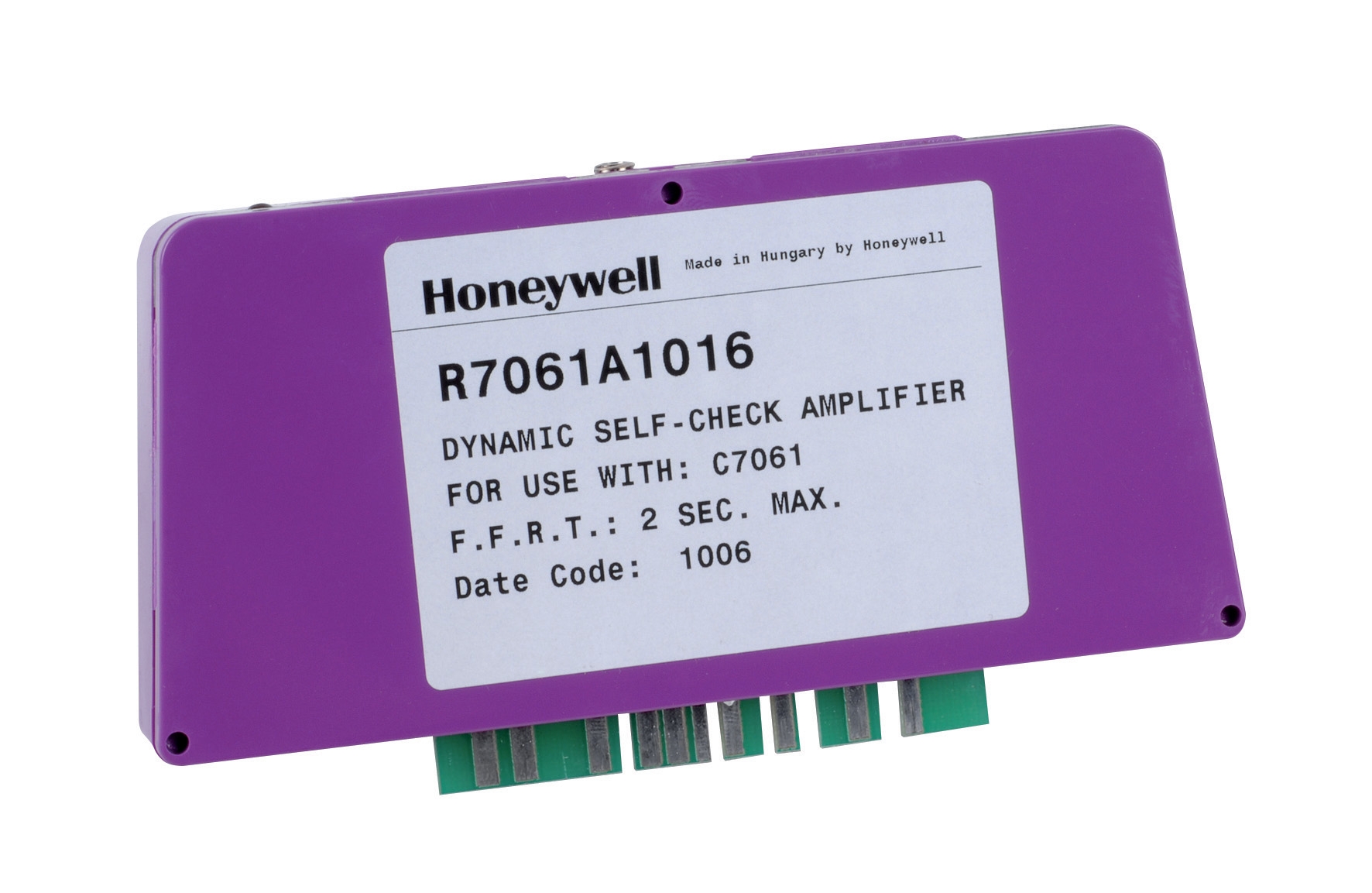
- Vibration environment: Industrial burner installations subject components to continuous mechanical stress. The Honeywell Amplifier R 7861 A 1026 is rated for 0.5 g continuous vibration, suitable for mounting near combustion chambers. Rooftop or remote-mounting applications may have different requirements.
- Electrical interference: Burner systems near high-frequency switching equipment or variable frequency drives (VFDs) demand flame detector amplifiers with shielded wiring and EMI filtering. Your specification should mandate these where relevant.
Flame supervision response time directly impacts safety response and system stability. If you're sourcing a flame detector amplifier for a 30 kW forced-air burner, response time and reliability matter more than in small pilot applications.
- The Honeywell Cell C 7044 A 1006 ultraviolet flame detector delivers microsecond-level response combined with the Honeywell R 7861 A 1026 amplifier creates a fast, stable supervision system.
- Build your specification to require independent flame detection validation—not just vendor claims.
- Document acceptable response time in milliseconds, not categories like "fast" or "standard."
Unit cost is typically 20–30% of true acquisition cost. Include:
- Spare parts availability: Can you source replacements within 48 hours from local distributors, or do you need stock at your facility?
- Warranty and support: A €80 thermostat with 5-year warranty and 24/7 technical support has different risk profile than a €45 alternative with 1-year coverage.
- Training and commissioning: New component families may require technician training. Budget this separately from component cost.
- Maintenance intervals: Some designs require annual recalibration; others run maintenance-free for 5+ years.
Create a Tiered Component Library
Develop three tiers of approved components for different facility classes:
Tier 1 (Mission-Critical): Healthcare facilities, data centers, continuous-process manufacturing. Specify redundant controls, extended warranties, and rapid replacement inventory.
Tier 2 (Standard Industrial): Manufacturing plants, office buildings, hospitality. Balance cost with reliability. Most procurement engineers source Tier 2 components as their primary volume.
Tier 3 (Low-Risk Applications): Storage facilities, seasonal operations, development sites. Acceptable cost-optimization zone with clear tradeoffs documented.
For your Tier 2 baseline, consider the Danfoss Thermostat RT 107 for temperature control and the Pactrol CSS01 12 housing control module for burner supervision. Both deliver proven reliability with competitive cost profiles suitable for standard industrial HVAC applications.
Vendor Performance Evaluation and Sourcing Strategy
Establish Measurable Vendor Criteria
Moving beyond "preferred vendor" relationships, quantify performance expectations:
| Evaluation Criteria | Target Metric | Why It Matters |
|---|---|---|
| Lead time consistency | 95% of orders within ±3 days of quoted date | Protects your project schedule; identifies vendors with unstable supply |
| Quality escapes | <0.5% defect rate on arrival inspection | Reduces commissioning delays and field failures |
| Technical response time | <4 hours for specification questions | Supports project decision-making velocity |
| Spare parts availability | >90% of components in stock | Minimizes downtime when components fail |
| Price stability | <5% quarterly variance on standard SKUs | Enables accurate budget forecasting |
Request three months of historical data before formalizing agreements. This eliminates aspirational claims and reveals actual performance.
Implement Dual-Sourcing for Critical Components
Flame detection is a safety function. Maintain approved suppliers for both ultraviolet flame detectors and amplifiers to avoid single-source risk. This doesn't mean equal volume splitting—80/20 splits are common—but ensures supply continuity if your primary vendor faces disruption.
When evaluating alternate suppliers:
- Verify electrical ratings match exactly (not "equivalent")
- Request side-by-side commissioning if integrating unfamiliar amplifiers
- Document approval with engineering sign-off, not procurement alone
Negotiate Total Cost Contracts
Instead of individual purchase orders, structure annual agreements around volume forecasts and service levels:
Example Framework:
- Year 1 volume commitment: 500 thermostats, 200 flame detector sets, 100 control modules
- Pricing locked for 12 months (with CPI adjustment clause, if applicable)
- Quarterly stock reviews; vendor maintains 30-day safety stock at no charge
- Technical support included: specification reviews, commissioning guidance, troubleshooting
- Logistics: vendor manages shipping; you pay FOB destination
This approach typically yields 15–25% cost reduction versus transactional purchasing while improving supply reliability.
Implementation: From Specification to Deployment
Documentation Requirements for Procurement Sign-Off
Before raising a purchase requisition, your specification package must include:
1. Application summary: Facility type, system size (kW), operating location, environmental conditions
2. Component selection rationale: Why these components (e.g., "UV flame detection selected for oil burner application with high ambient light; Honeywell Cell C 7044 proven in similar installations")
3. Cross-compatibility verification: Confirm thermostat voltage ratings match control module inputs, amplifier output ranges align with flame relay specifications
4. Spare parts plan: Identify critical spares and recommended inventory levels
5. Maintenance access: Document technician training requirements and commissioning scope
This documentation protects procurement from specification creep and ensures field teams understand component purpose and integration points.
Risk Mitigation Through Phased Rollout
When introducing new component families or unfamiliar vendors:
- Phase 1 (Pilot): Install in 1–2 low-risk facilities. Allocate 60–90 days for operational validation.
- Phase 2 (Limited expansion): Roll out to 3–5 facilities if Phase 1 performs to specification.
- Phase 3 (Full deployment): Standardize across your facility portfolio once proven.
This approach costs slightly more in initial procurement but eliminates catastrophic adoption failures and provides data for ROI calculations.
Cost-Benefit Analysis Framework
When comparing component options, model true acquisition cost over 5-year operating cycle:
| Cost Category | Component A | Component B | Notes |
|---|---|---|---|
| Unit cost | €80 | €120 | 33% price difference |
| Annual maintenance | €15 | €0 | A requires recalibration; B is maintenance-free |
| Spare parts (5yr) | €180 | €100 | B has lower failure rate; A requires 2.5 replacements |
| Warranty/support | €25/yr | €50/yr | B includes extended support coverage |
| 5-Year Total | €650 | €620 | Component B delivers 5% lower TCO |
Procurement teams often default to lowest unit cost. This financial model reveals true value and justifies higher initial expenditure when warranted.
Practical Sourcing Checklist for Procurement Engineers
- [ ] Define operating conditions (temperature, vibration, interference) for each application class
- [ ] Create tiered component library aligned to facility criticality levels
- [ ] Establish measurable vendor performance criteria (lead time, quality, response time, availability)
- [ ] Identify critical components requiring dual-source approval (e.g., flame detectors, amplifiers)
- [ ] Request 3 months of vendor historical performance data before formalizing agreements
- [ ] Develop total-cost model including spare parts, maintenance, and support over 5-year cycle
- [ ] Structure annual volume contracts with locked pricing and service level commitments
- [ ] Create specification documentation package with application rationale and cross-compatibility verification
- [ ] Plan phased rollout for new component families or vendors with 60-90 day validation window
- [ ] Document maintenance access requirements and technician training scope in procurement package
3G Electric's 35 years supplying industrial control components across global markets has shown that procurement success relies on systematic sourcing discipline, not vendor relationships alone. By implementing these frameworks, you reduce supply risk, improve budget predictability, and ensure your facilities receive Controls & Safety components matched to actual operational demands.