Understanding Controls & Safety Performance in Multi-Fuel Burner Systems
Industrial burner systems operating with multiple fuel sources—gas, oil, or dual-fuel configurations—demand Controls & Safety components engineered to handle varying combustion characteristics, pressure profiles, and ignition sequences. With over 35 years of distribution experience, 3G Electric has supported industrial facilities across diverse sectors requiring precise burner control under demanding operating conditions.
The selection of Controls & Safety components extends beyond basic functionality. Engineers and maintenance professionals must evaluate response times, safety integrity levels (SIL ratings), certification standards across global markets, and integration compatibility with existing burner management systems. This comparison examines the practical performance differences between market-leading relay units, pressure switches, and modulating gas blocks to provide actionable guidance for system specification and troubleshooting.
Safety Relay Performance: SIL Ratings and Response Time Analysis
Burner Control Relay Architecture
The Kromschroder BCU 570WC1F1U0K1-E represents a dedicated burner control relay designed for applications requiring direct ignition with optional intermittent or continuous pilot ignition modes. This architecture delivers several performance advantages for industrial operators:
Flame Monitoring Capability: The relay integrates UV flame detection circuits, eliminating the need for external photoelectric cells in many applications. This simplification reduces component count, wiring complexity, and potential failure points in the ignition sequence.
Certification Compliance: EN 746-2 and EN 676 compliance ensures compatibility with European burner standards while maintaining electrical safety requirements across industrial installations. For facilities operating under EN standards, this certification eliminates additional qualification testing or third-party validations.
In contrast, the Siemens LFL 1.622 safety control unit provides dual flame monitoring—UV and ionization detection—with integrated air damper control capability. This expanded functionality suits higher-power burner installations requiring proportional combustion air adjustment. The ionization detection option provides backup flame verification for dual-fuel systems where one fuel source may exhibit different flame characteristics (oil produces heavier carbon particles affecting UV detection).
Response Time Differential: Dedicated relay units typically achieve flame recognition within 1-3 seconds, while integrated units with multiple monitoring modes may require 2-5 seconds due to signal verification logic. For intermittent pilot applications, this difference impacts pilot establishment timing and gas valve sequencing. Industrial professionals should verify response time specifications against their burner manufacturer's ignition sequence requirements.
Practical Selection Criteria for Relay Architecture
Smaller facility heating systems (under 300 kW thermal input) typically benefit from dedicated relay units like the BCU 570WC1F1U0K1-E, offering cost-effective flame safety without unnecessary complexity. Medium to large industrial boilers (300-5 MW thermal input) increasingly specify integrated units like the Siemens LFL 1.622 where air damper modulation and multi-fuel capability justify the additional component cost.
Pressure Switch Integration and SIL 3 Performance Requirements
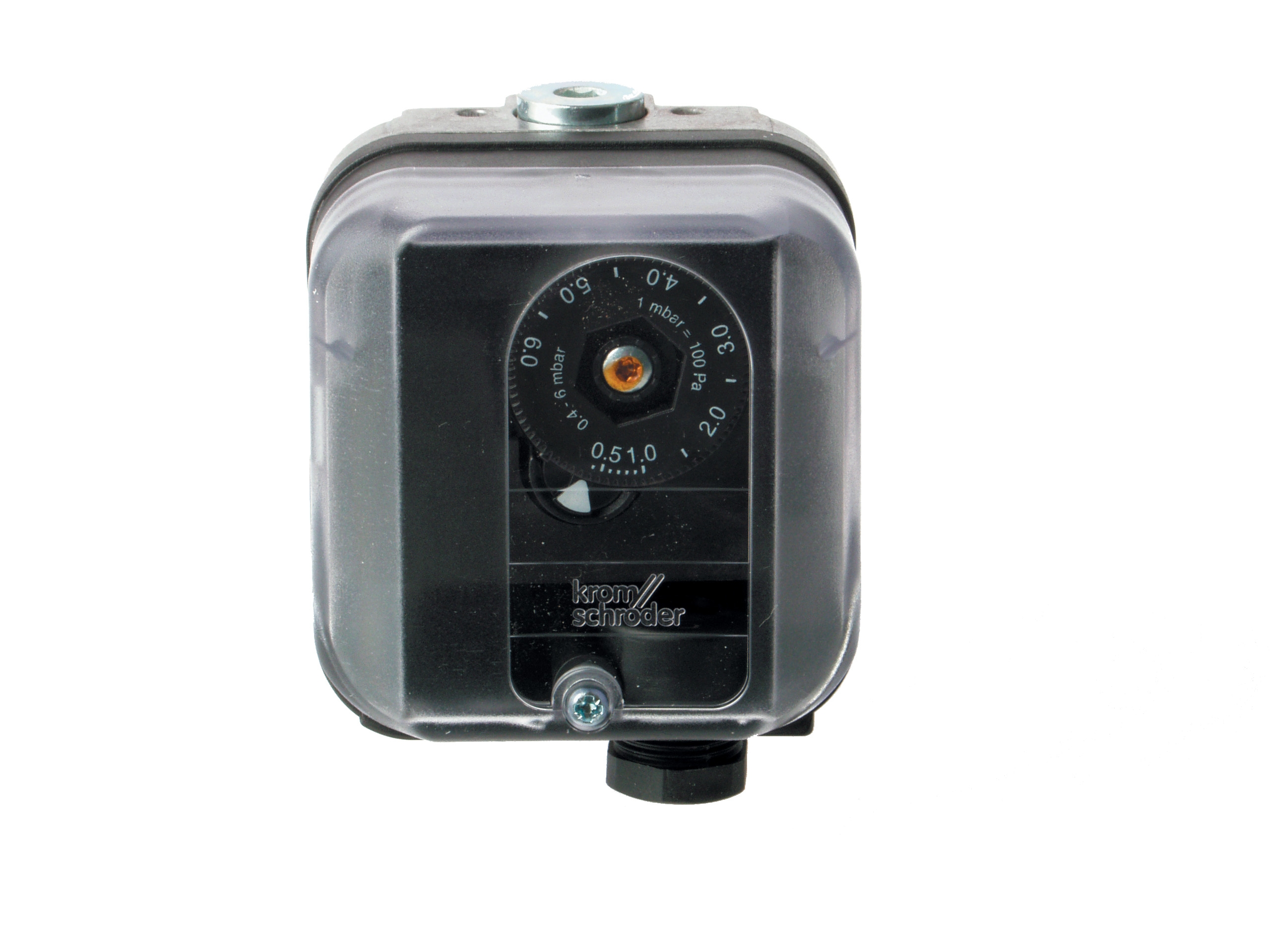
Pressure monitoring in burner safety systems performs two critical functions: confirming fuel availability and preventing unsafe operating conditions. The Kromschroder DG 50U/6 pressure switch delivers SIL 3 rated performance across comprehensive international certifications (EN 1854, FM, UL, AGA, GOST-TR).
SIL 3 Significance: Safety Integrity Level 3 rating indicates the device operates within a probability range of dangerous failure between 10⁻⁴ and 10⁻³ per hour of operation. For burner systems, SIL 3 pressure switches prevent ignition attempts during insufficient fuel pressure conditions, protecting ignition transformers and reducing unburned fuel accumulation in combustion chambers.
Multi-Standard Certification Advantage: The DG 50U/6 simultaneous compliance with FM, UL, AGA, and GOST-TR standards addresses global market requirements without requiring multiple switch models. Industrial facilities operating in North America (UL/FM), Europe (EN standards), and Commonwealth countries (GOST-TR) can standardize on a single pressure switch component, simplifying spare parts inventory and technician training.
Pressure Setting Flexibility: Industrial burners operate across wide pressure ranges depending on fuel type and delivery system. Gas burners typically require 3-7 bar confirmation pressure, while oil burners demand 8-12 bar atomization pressure. The DG 50U/6 adjustable setpoint design (with mechanical or electronic calibration options) accommodates this variation without component substitution. In multi-fuel systems, pressure switch settings must account for pressure differential during fuel switching sequences—a critical detail often overlooked during initial commissioning.
Modulating Gas Block Design: Precision Control and Valve Integration
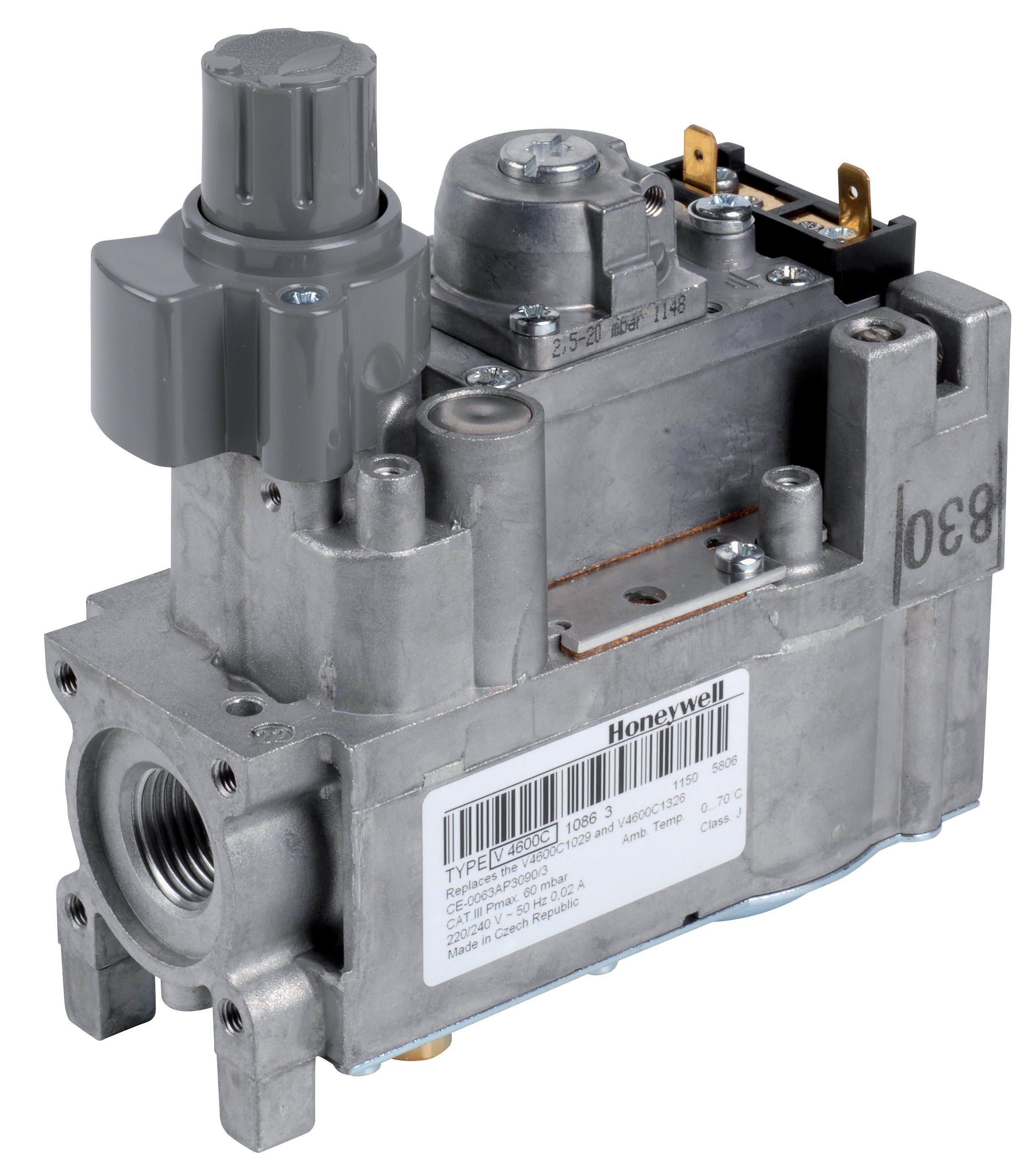
The Honeywell VK 4105 C 1041 U electric modulating pressure regulator represents advanced gas control block technology, integrating pressure regulation, modulation capability, and safety shutdown functions into a single compact component.
Modulation Architecture: Unlike on-off gas solenoid valves producing discrete flow steps, modulating blocks adjust outlet pressure proportionally to control signal input, enabling smooth combustion response to changing load demands. For heating systems with variable load profiles (office buildings with occupancy variations, process equipment with production cycles), modulation reduces pressure swings and improves efficiency by 3-7% compared to traditional on-off controls.
Pilot Connection Integration: The M8 x 1 pilot connection and M5 pressure feedback threading enable direct integration with burner management systems without requiring external gauge connections or signal transducers. This integrated design reduces installation labor—particularly valuable during retrofit projects where space constraints limit external component mounting.
Temperature Operating Range: The -5 to 140°F (-20.5 to 60°C) operating range accommodates outdoor burner installations, basement mechanical rooms, and industrial facilities without climate control. However, professionals should verify that surrounding components (flame detectors, pressure switches) share compatible temperature ranges; a common commissioning error involves mixing components with overlapping but non-identical temperature specifications.
Ignition Module Performance: Energy Output and Flame Establishment
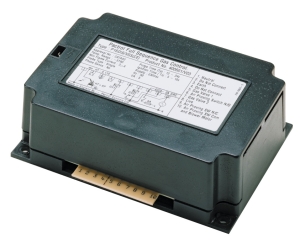
The Pactrol Housing P 16 DI CE flame control module provides 12 kV output voltage with 10 MJ (megajoule) output energy—specifications that directly impact burner ignition reliability and pilot light establishment speed.
Energy Output Analysis: 10 MJ energy rating indicates the module can sustain pilot light ignition for approximately 10-15 seconds without gas flame feedback, allowing sufficient time for pilot establishment before flame safety circuits verify combustion. Undersized ignition modules (6-8 MJ) may fail to establish pilot lights in challenging conditions: high-altitude installations (thinner air requiring more ignition energy), cold startup conditions, or when pilot ports accumulate minor deposits reducing gas flow. Industrial facilities in high-altitude regions (above 1,500 meters elevation) should specify minimum 10 MJ modules as a commissioning standard.
230V Supply Compatibility: Operating at 230V three-phase supply, the P 16 DI CE integrates directly with European industrial electrical systems while requiring voltage conversion in North American facilities (typically 120V or 240V single-phase). This geographic specification detail ensures technicians confirm electrical compatibility during equipment selection, avoiding field retrofit complications.
Dual Function Design: Integrated ignition and flame detection capability eliminates separate UV cell mounting and signal wiring, simplifying commissioning and reducing UV detector failure rates (photoelectric cells are the most frequently replaced burner control component). The consolidated design particularly benefits retrofit projects where existing burner frames may not accommodate additional external sensors.
Cross-Component Integration: Relay-Pressure Switch-Modulation Block Sequencing
Individual component performance matters less than reliable integration between relay, pressure switch, and gas control block. Consider a typical burner startup sequence:
Stage 1 - System Preparation: The relay energizes the ignition module (Pactrol P 16 DI CE) and confirms fuel pressure availability through the pressure switch (Kromschroder DG 50U/6). If pressure is below setpoint, the relay prevents gas valve energization, protecting against unburned fuel accumulation.
Stage 2 - Pilot Establishment: The ignition module (10 MJ output) establishes the pilot flame while the relay monitors UV detection (Siemens LFL 1.622) or ionization sensing (Kromschroder BCU 570WC1F1U0K1-E). Typical flame establishment requires 3-5 seconds; if flame fails to appear, the relay de-energizes the ignition module and initiates a safety shutdown sequence.
Stage 3 - Main Burner Modulation: Once pilot flame is confirmed, the relay opens the main gas solenoid and energizes the modulating pressure regulator (Honeywell VK 4105 C 1041 U). For load-variable systems, the modulation block adjusts outlet pressure proportionally to maintain set combustion air-to-fuel ratios, preventing efficiency losses from pressure oscillation.
Practical Integration Challenge: Relay response time (1-3 seconds) must coordinate with pressure switch calibration; if the pressure switch setpoint is too sensitive, minor pressure fluctuations trigger relay shutdown cycles. Industrial commissioning best practices specify 10-15% pressure margin above minimum operating pressure to prevent nuisance shutdowns during normal combustion variations.
Comparative Performance Metrics by Application Type
Small Heating Systems (Under 300 kW): Specify Kromschroder BCU 570WC1F1U0K1-E relay with DG 50U/6 pressure switch and on-off solenoid valve architecture. This combination minimizes component cost while delivering reliable performance for residential and small commercial applications. The DG 50U/6's SIL 3 rating exceeds typical safety requirements for this application class, providing longevity margin.
Medium Industrial Boilers (300 kW - 2 MW): Introduce Siemens LFL 1.622 integrated relay with air damper control and Honeywell VK 4105 C modulating block for proportional combustion control. The integrated air damper control reduces separate damper motor components, improving system reliability. Modulation capability justifies cost through 3-5% thermal efficiency improvement on variable-load systems.
Large Multi-Fuel Installations (Above 2 MW): Implement Siemens LFL 1.622 with dual-fuel switching logic, Pactrol P 16 DI CE high-energy ignition module, and field-proven flame detection strategy (ionization for oil, UV for gas). Large systems justify redundant pressure switches (one on gas circuit, one on oil circuit) with master control logic preventing simultaneous fuel ignition during switching sequences.
Specification and Troubleshooting Framework
When evaluating Controls & Safety components for specific applications, industrial professionals should document:
- Thermal Input Rating: Confirms relay amperage capacity and pressure switch sizing
- Fuel Type and Switching Requirement: Determines relay flame detection mode and pressure switch calibration
- Environmental Conditions: Temperature, humidity, and vibration exposure guide component selection
- Certification Requirements: Geographic market (EU/FM/UL/GOST-TR) determines mandatory compliance standards
- Integration Points: Confirms compatibility with existing burner frame, air damper motors, and burner management systems
- Response Time Budget: Validates that relay-to-ignition-module sequencing meets burner manufacturer specifications
With 35+ years of industrial equipment distribution, 3G Electric maintains technical expertise across this component ecosystem, supporting engineers through specification selection, commissioning coordination, and troubleshooting complex integration scenarios. Component performance data sheets provide theoretical specifications; field experience across thousands of burner installations reveals real-world reliability patterns and common configuration errors to avoid.
Regular maintenance—annual flame detector cleaning, pressure switch calibration verification, and relay contact inspection—ensures Controls & Safety components maintain rated performance throughout their operational lifetime. Many burner safety failures trace to deferred maintenance rather than component design limitations, making preventive maintenance programs essential for facility reliability.