Understanding Controls & Safety in Burner Systems
Burner control relays form the backbone of industrial combustion safety. These devices monitor ignition sequences, flame detection, and shutdown protocols—making them essential for Controls & Safety compliance across Singapore's petrochemical, manufacturing, and food processing sectors.
With over 35 years of experience distributing industrial equipment, 3G Electric has observed a critical trend: many facilities operate with suboptimal relay selections, leading to nuisance shutdowns, maintenance costs, and regulatory non-compliance. This guide compares three market-leading control relay technologies to help you identify which system best matches your operational requirements.
The choice between relay types involves trade-offs in flame detection sensitivity, ignition capability, response time, and certification scope—all directly impacting your facility's safety performance and operational continuity.
Direct Ignition vs. Pilot Ignition Control Relays: Comparative Analysis
Dual-Mode Direct Ignition Systems
The Kromschroder BCU 570WC1F1U0K1-E represents modern direct ignition architecture, supporting both direct ignition and intermittent/continuous pilot ignition modes. This flexibility provides operational versatility: you can configure the same relay for different burner types without inventory duplication.
Advantages of dual-mode relays:
- Single control unit manages multiple ignition strategies
- EN 746-2 and EN 676 certification ensures Singapore-compliant operation
- Reduced commissioning complexity through unified hardware
- Lower spare parts inventory requirements
- Scalable to medium-to-high power burners
- Dual-mode systems occupy more panel space than single-function alternatives
- Setup requires comprehensive understanding of your burner's ignition characteristics
- Not ideal for facilities requiring extreme rapid-response ignition (sub-100ms)
Dedicated Safety Control Units
The Siemens LFL 1.622 takes a specialized approach, designed specifically for gas, oil, or dual-fuel burners with integrated UV and ionization flame monitoring. This dedicated architecture trades flexibility for optimized performance.
Advantages of dedicated units:
- Dual flame monitoring (UV + ionization) increases detection reliability
- Optimized response timing for high-power burner applications
- Integrated air damper control reduces external valve requirements
- Superior redundancy for SIL-rated safety-critical installations
- Proven performance in continuous-duty industrial environments
- Requires separate units for different fuel types
- Higher initial capital cost vs. single dual-mode relay
- More sophisticated troubleshooting—requires understanding of UV/ionization sensor diagnostics
- Benefits fully realized only in medium-to-high power installations
Pressure-Based Safety Controls: Comparative Framework
Beyond relay systems, pressure-based Controls & Safety controls provide an independent verification layer for burner operation.
SIL-Rated Pressure Switches for Critical Applications
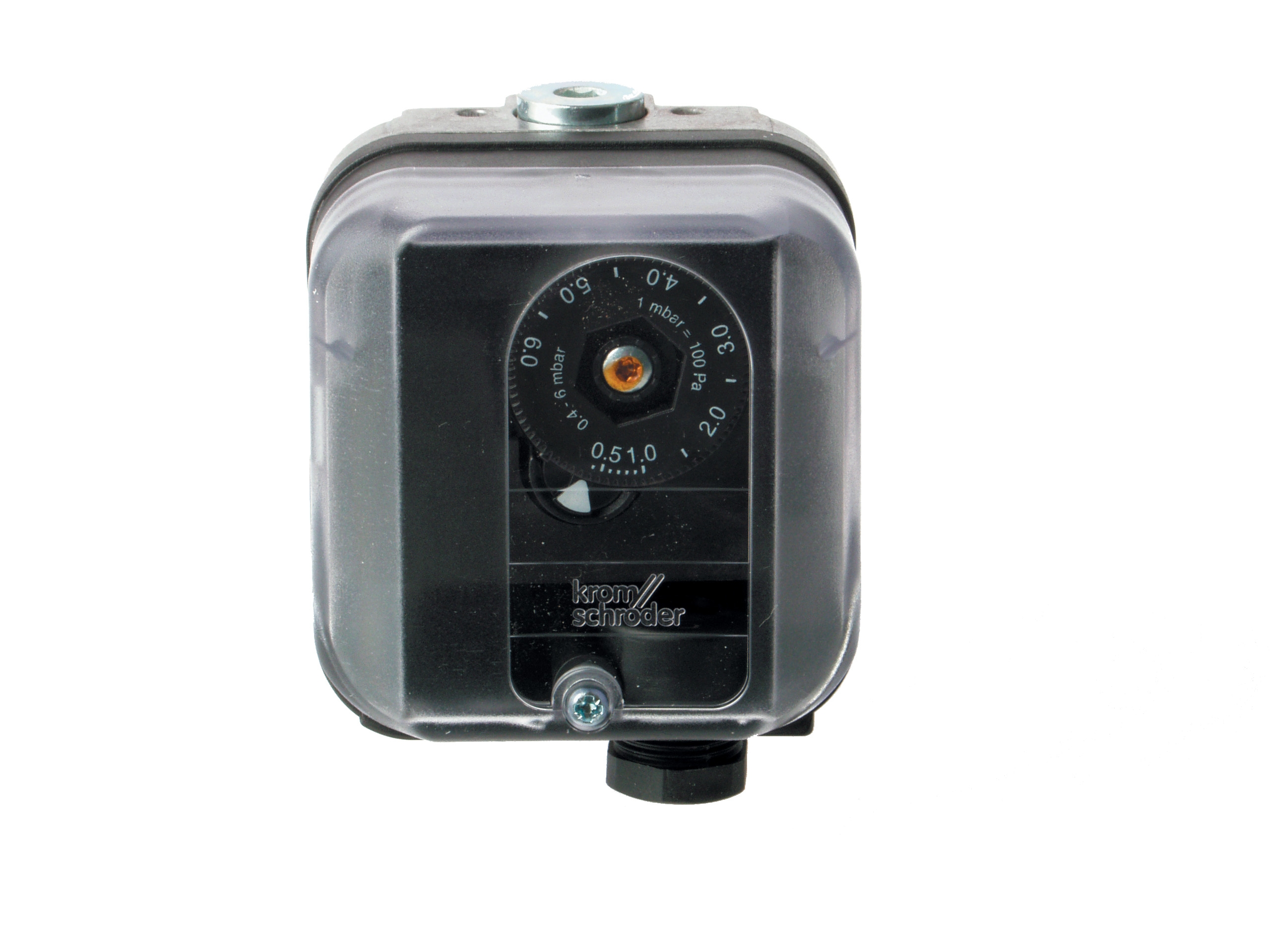
The Kromschroder DG 50U/6 pressure switch demonstrates the SIL 3 / Performance Level e certification that Singapore industrial facilities increasingly require. This device monitors fuel pressure to verify safe burner startup and shutdown conditions.
Comparative advantages:
- EN 1854 certification plus FM, UL, AGA, GOST-TR multi-standard approval
- SIL 3 rating appropriate for safety-instrumented systems (SIS)
- Pressure-based verification operates independently of flame detection
- Proven in high-reliability petrochemical and pharmaceutical applications
- Compliance pathway for facilities pursuing ISO 17776 or IEC 61511 certification
- Dual-fuel burners requiring independent fuel pressure verification
- Installations where flame detection alone is insufficient
- Facilities with aggressive maintenance intervals requiring more robust sensing
- High-consequence processes where burner malfunction risks product loss or safety exposure
Pressure Regulator Integration with Controls
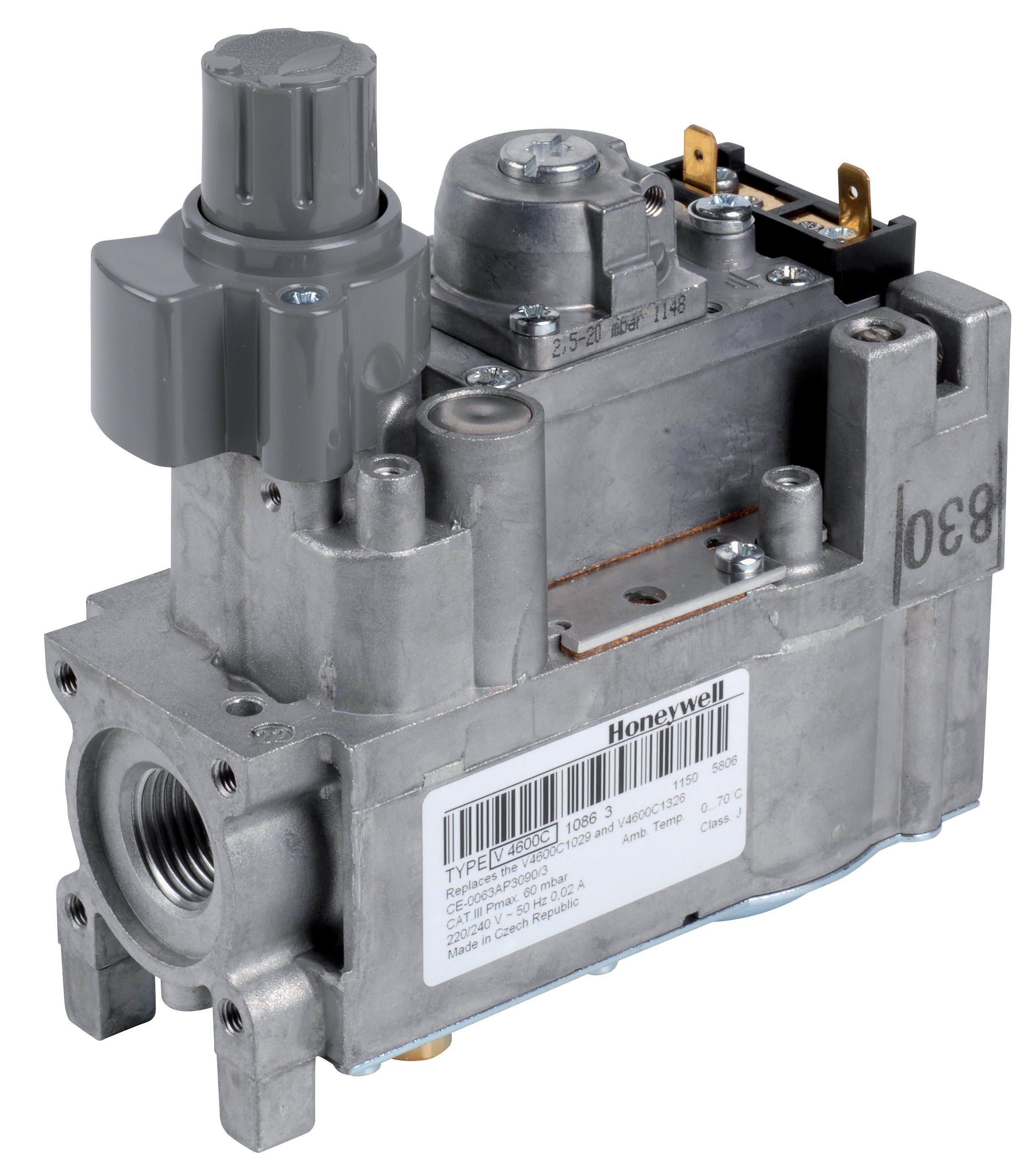
The Honeywell VK 4105 C 1041 U modulating pressure regulator adds a critical dimension: active pressure control rather than passive monitoring. This device maintains precise fuel pressure despite inlet variations, improving combustion efficiency and reducing flame instability.
Comparative architecture:
- M8 x 1 pilot connection follows ISO 228 standards
- M5 pressure feedback threading enables closed-loop control
- Operating range -5 to 140°F accommodates tropical and temperate environments
- Modulating design reduces fuel consumption vs. traditional on-off regulators
- Integrates with modern burner control systems via 4-20mA feedback signals
- Use pressure switches (DG 50U/6) where binary fuel-ready verification suffices
- Upgrade to modulating regulators (VK 4105 C) when combustion stability or efficiency optimization is required
- Combine both technologies in critical applications requiring independent pressure confirmation plus active control
Ignition Module Selection: Flame Detection and Reliability Comparison
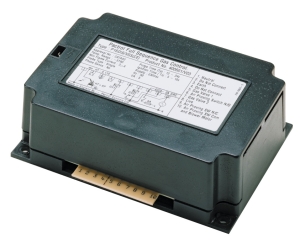
The Pactrol Housing P 16 DI CE represents specialized ignition and flame detection hardware, operating at 230V with 12 kV output and 10MJ energy output.
Technology Comparison for Singapore Operations
Ignition module evaluation criteria:
1. Output Energy: The Pactrol's 10MJ output suits robust ignition across variable fuel conditions common in tropical climates. Compare this against competitor modules offering 6-8MJ—sufficient for natural gas but challenging for oil burners or humid-environment ignition reliability.
2. Supply Voltage Compliance: 230V operation aligns with standard Singapore industrial power, eliminating transformer requirements. However, verify your facility's actual voltage tolerance (±10% per IEC 60038) before specification.
3. Flame Detection Integration: The P 16 DI housing supports both ionization and UV sensor inputs, providing the dual-monitoring capability discussed earlier. This integration simplifies wiring and reduces external sensor signal conditioning requirements.
4. Certification and Compliance: Confirm that selected ignition modules meet Singapore's electrical safety codes (SS 638 for electrical safety) and relevant burner standards before procurement.
Practical Selection Logic
- Natural gas burners with stable pilot lights: Standard ignition modules (8MJ) suffice
- Oil burners or high-altitude/tropical installations: Upgrade to higher-energy modules (Pactrol's 10MJ) to overcome difficult ignition conditions
- Dual-fuel capabilities required: Select modules supporting multiple flame detection modes
- Space constraints: Consider integrated housing designs that consolidate ignition, detection, and control functions
Implementation Framework: Selecting Your Controls & Safety Configuration
Decision Matrix by Application Type
Small industrial burners (< 5MW):
- Primary control: Dual-mode relay (Kromschroder BCU 570WC1F1U0K1-E)
- Pressure verification: Basic pressure switch (DG 50U/6)
- Ignition: Standard 8MJ module
- Cost-optimized, suitable for process heat applications
- Primary control: Dedicated safety relay (Siemens LFL 1.622) with dual flame monitoring
- Pressure control: Modulating regulator (Honeywell VK 4105 C) for efficiency optimization
- Ignition: Enhanced module (Pactrol P 16 DI CE) for reliability
- Balances performance and efficiency—typical for food processing, textiles
- Primary control: Redundant safety relays with voting logic
- Pressure verification: Dual SIL-rated pressure switches in independent circuits
- Ignition: Redundant ignition modules with cross-monitoring
- Regulator: Modulating unit with manual backup valve
- Achieves SIL 2 or higher safety integrity
Singapore-Specific Compliance Considerations
1. Pressure Equipment Safety Directive (PESD): Equipment exceeding Category II thresholds requires CE certification—verify supplier documentation for your selected controls.
2. Electrical Safety: All control components must comply with SS 638 (Code of Practice for Electrical Installations). 3G Electric's 35+ years supplying Singapore industrial facilities ensures familiarity with these requirements.
3. Documentation: Maintain traceability on all controls Components, including:
- Original equipment certification (CE, UL, FM marks)
- Commissioning test records
- Pressure test certificates
- Flame detection sensor calibration logs
Troubleshooting and Comparative Performance Analysis
Common Relay Failure Modes
Dual-mode relays (Kromschroder type):
- Intermittent ignition due to mode-switching logic errors
- Resolution: Verify ignition circuit continuity; reset control module
- UV detector fouling in dusty environments
- Resolution: Clean optics quarterly; replace detector if sensitivity drops >20%
- Ionization flame signal loss
- Resolution: Check electrode cleanliness; verify pilot flame stability
- Erratic shutdowns due to hysteresis drift
- Resolution: Test calibration against certified gauge; replace if drift exceeds ±3%
Maintenance Intervals by Control Type
| Control Component | Quarterly | Semi-Annual | Annual |
|---|---|---|---|
| Burner relay (visual inspection) | ✓ | - | - |
| Flame detector lens/electrode | ✓ | ✓ | - |
| Pressure switch calibration check | - | ✓ | - |
| Ignition module test firing | - | ✓ | - |
| Complete system validation | - | - | ✓ |
Procurement Strategy Through 3G Electric
As a distributor with 35+ years' experience in Singapore's industrial sector, 3G Electric understands that Controls & Safety component selection extends beyond technical specifications to include:
- Lead time management: Maintaining strategic inventory of Kromschroder, Siemens, and Honeywell components to support emergency replacements
- Technical support: Commissioning assistance and troubleshooting guidance aligned with Singapore regulatory requirements
- Spare parts availability: Ensuring long-term support for installed systems, critical for devices expected to operate 10-15 years
- Training and documentation: Providing localized technical resources and multilingual commissioning guides
When comparing suppliers for your Controls & Safety components, evaluate not just pricing but the full service ecosystem supporting your operational continuity.
Summary: Comparative Controls & Safety Selection Framework
The optimal burner control configuration balances:
1. Detection redundancy (dual-mode relays vs. dedicated units, pressure monitoring vs. flame detection)
2. Operational flexibility (single vs. multiple fuel types, manual vs. modulating control)
3. Reliability requirements (SIL ratings, maintenance accessibility, spare parts support)
4. Singapore regulatory compliance (PESD, electrical codes, certification documentation)
5. Total cost of ownership (initial capital, maintenance intervals, troubleshooting complexity)
No single configuration suits all applications. Your facility's specific burner type, power rating, fuel variability, and process criticality determine the optimal choice among the technologies reviewed above. 3G Electric's extensive inventory across multiple manufacturers enables you to specify and implement the configuration that best matches your operational requirements.