Controls & Safety: Ignition System Architecture and Flame Monitoring
Effective Controls & Safety systems in HVAC applications depend fundamentally on reliable ignition architecture and continuous flame verification. For HVAC contractors operating in Southeast Asia's humid, corrosive climate, understanding how ignition and flame detection systems work together is essential to preventing costly downtime and safety failures. With 35+ years of industrial equipment distribution experience, 3G Electric has supported contractors across the region in implementing robust ignition and monitoring systems that comply with international standards while performing reliably in challenging environments.
Understanding Ignition System Architecture
Modern HVAC burner ignition systems operate through a carefully orchestrated sequence of electrical and mechanical actions. The ignition process begins when the burner control relay receives a call for heat, initiating a startup sequence that must complete within strict timing windows before safety shutdowns activate.
The typical ignition architecture consists of three phases:
Purge Phase – Before ignition can occur, the combustion chamber must be purged of any unburned fuel vapors or residual gases. During this 30-60 second period, the control system energizes the fan motor and opens the air damper while keeping fuel supply shut off. This ensures safe combustion conditions and prevents dangerous explosions.
Ignition Phase – Once the chamber is purged, the control relay activates the ignition transformer, which generates high-voltage output (typically 8-14 kV) to create a spark at the electrode gap. Simultaneously, fuel supply (gas or oil) opens through solenoid valves. The spark must successfully ignite the fuel within 4-8 seconds, depending on system specifications and environmental conditions.
Flame Detection and Lockout – Within 1-2 seconds of ignition, the flame detection circuit must confirm that combustion has begun. If flame is detected, the ignition transformer de-energizes and normal burner operation continues. If no flame is detected within the allowed time, the control system enters safety lockout, requiring manual reset.
The Kromschroder Relay BCU 570WC1F1U0K1-E exemplifies professional-grade control architecture, supporting both direct ignition and intermittent/continuous pilot ignition modes. This component integrates the decision logic that manages the three-phase sequence, evaluating sensor inputs and controlling output timing with precision required in safety-critical applications. Its EN 746-2 and EN 676 compliance ensures compatibility with regional standards that govern burner safety across Southeast Asia.
Key architectural considerations for Southeast Asian installations include:
- Voltage stability: Regional power supplies often fluctuate, affecting transformer performance and ignition reliability
- Humidity protection: Sealed control enclosures with desiccant breathers prevent moisture from corroding relay contacts and electronics
- Response time calibration: Tropical air density variations require adjustment of purge and ignition timing windows
- Fuel supply pressure verification: Gas block pressure regulation must account for humidity's effect on regulator diaphragms
Flame Detection Technology and Monitoring Principles
Flame detection is the critical safety function that confirms combustion is occurring and stable. Two primary flame detection technologies are used in industrial HVAC burner systems, each with distinct advantages and limitations in Southeast Asian environments.
UV Flame Detection – Ultraviolet sensors respond to the UV radiation emitted by the flame. These sensors are extremely fast, responding within milliseconds, and are unaffected by visible light from sunshine or nearby burners. However, UV sensors can be problematic in humidity-rich environments because they rely on a quartz window that can fog or accumulate deposits. Regular cleaning (quarterly in coastal areas) is essential for reliability.
Ionization Flame Detection – This method uses a flame rod positioned in the flame path. When the flame ionizes gases between the rod and the burner electrode, a small DC current flows through the ionization circuit. If current drops below a threshold, no flame is detected and the system locks out. Ionization detection is less sensitive to environmental fouling but takes longer to respond (typically 3-5 seconds) and can be affected by electromagnetic interference from electrical equipment nearby.
The Siemens Relay LFL 1.622 integrates both UV and ionization flame monitoring in a single safety control unit, allowing contractors to select the appropriate detection method based on installation requirements and environmental conditions. For Southeast Asian applications, many contractors configure dual-flame detection (one sensor of each type) to maximize reliability – if one sensor fails or becomes fouled, the other continues monitoring.
Flame detection monitoring principles depend on understanding failure modes:
- False flame detection – When the control system detects flame when none exists, often from sensor fouling or electrical noise
- Flame dropout – When actual flame is momentarily lost but the control system doesn't immediately detect it, creating dangerous unburned fuel accumulation
- Delayed flame verification – When environmental factors (air density, fuel composition, humidity) affect flame development speed
Proper flame monitoring requires:
1. Sensor positioning – Flame sensors must have clear line-of-sight to the flame envelope, positioned to avoid thermal shock from direct burner jets
2. Circuit design – Ionization circuits require careful transformer design to minimize capacitive coupling that can cause false signals
3. Response time validation – Field testing during startup to verify that flame detection responds within the designed lockout window
4. Maintenance protocols – Regular sensor cleaning and electrode inspection, with particular attention to salt air corrosion in coastal Southeast Asian locations
Pressure Monitoring and Safety Interlocks for Ignition Control
Successful ignition depends not only on spark and fuel delivery, but on verifying that air pressure is adequate and fuel pressure is within specification before allowing spark generation. Pressure switches serve as critical safety interlocks that prevent ignition attempts under unsafe conditions.
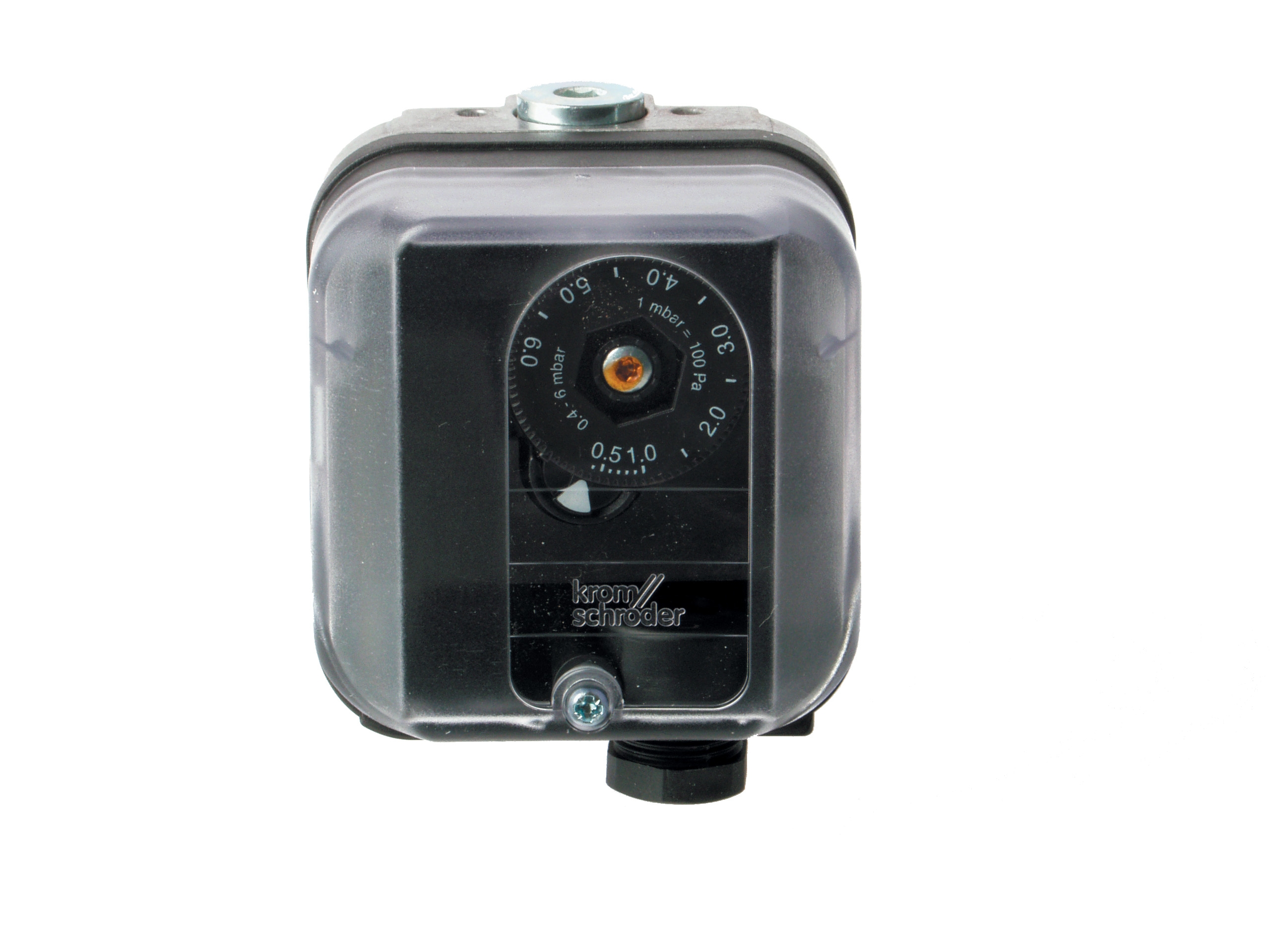
The Kromschroder Pressure Switch DG 50U/6 demonstrates the reliability standard required for burner control applications. With SIL 3 rating and Performance Level e certification, this pressure switch can serve as a primary safety function, meaning it's qualified to directly control burner shutdown if conditions fall out of range. FM, UL, AGA, and GOST-TR certifications ensure recognition across diverse regulatory regimes in the Southeast Asian region.
Pressure interlocks operate through two critical functions in ignition systems:
Air Pressure Proving – A pressure switch on the air duct confirms that the forced-draft fan has developed adequate air pressure (typically 0.15-0.50 inches water column) before allowing ignition. Without this interlock, the burner might attempt to ignite in a non-purged chamber, creating an explosion hazard. If air pressure falls during burner operation, the pressure switch immediately de-energizes the fuel solenoid, shutting off fuel supply within 1-2 seconds.
Fuel Pressure Regulation and Monitoring – Gas and oil burners require different pressure monitoring approaches. Gas burners use regulator output pressure monitoring to ensure stable fuel delivery and consistent ignition, while oil burners require pressure monitoring to confirm atomizing air (for air-atomized systems) and to verify fuel pump discharge pressure for flame stability.
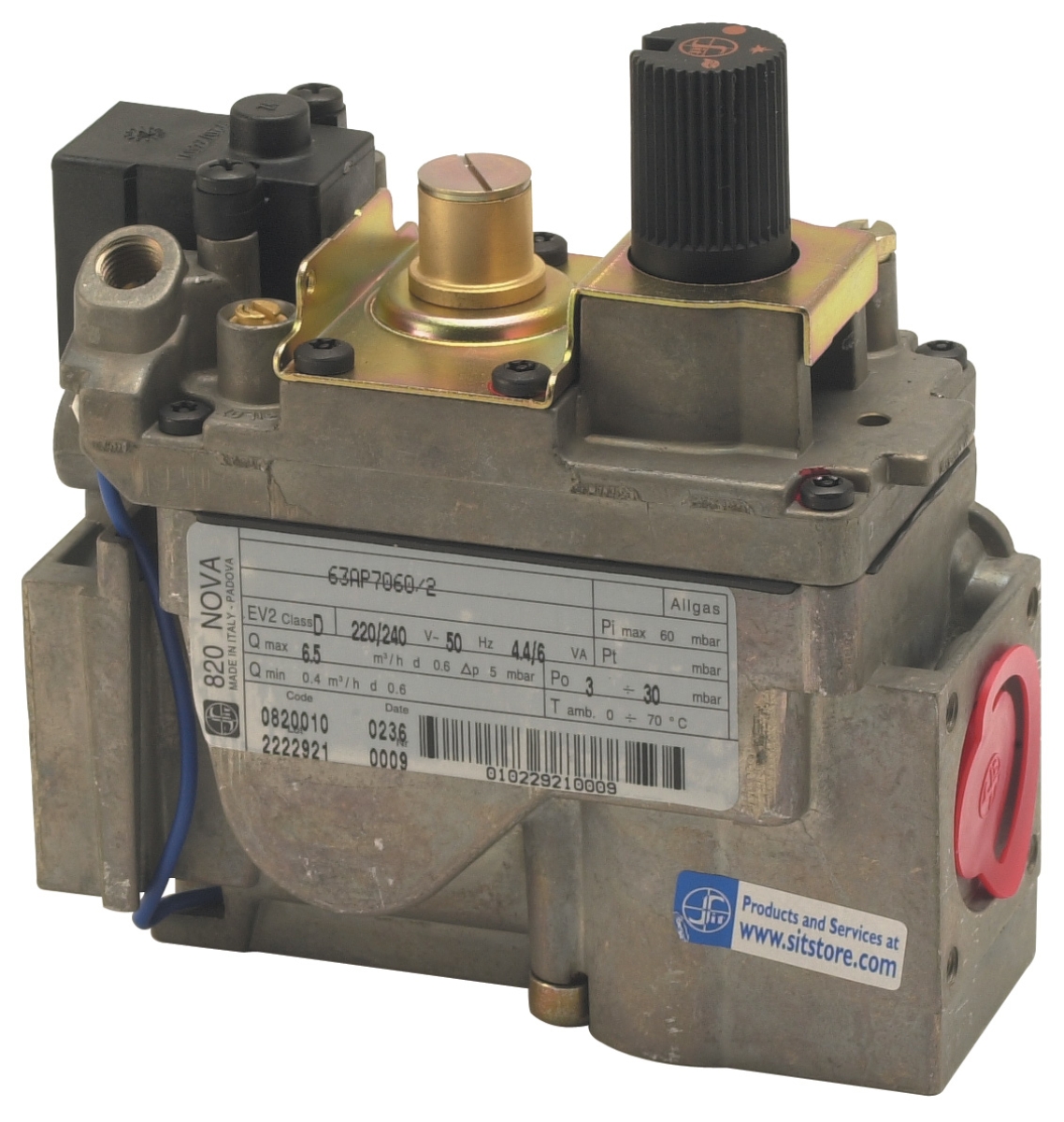
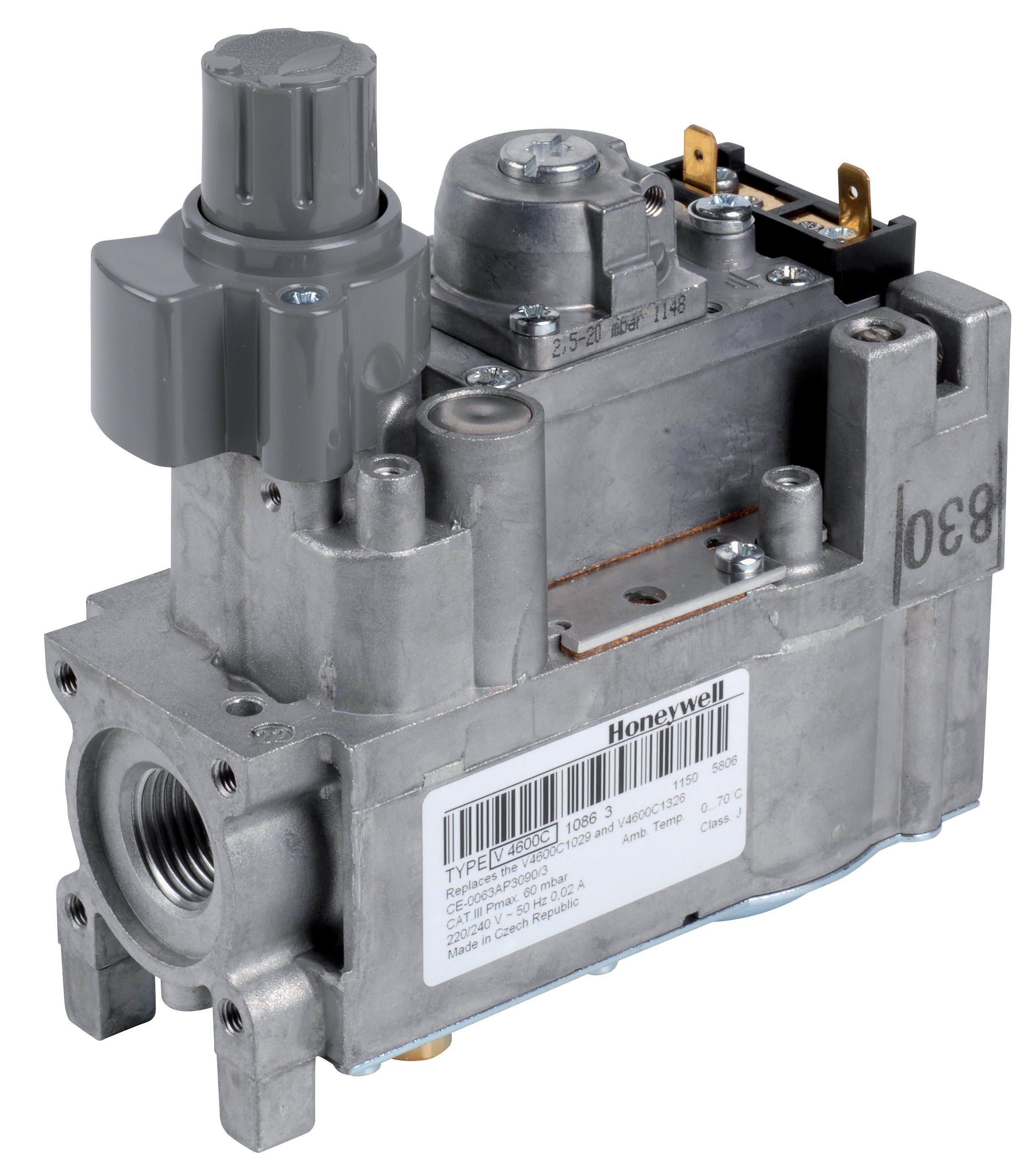
The Honeywell Gas Block VK 4105 C 1041 U integrates pressure regulation and feedback monitoring in a single modulating valve body. The M5 pressure feedback threading allows installation of a remote pressure transmitter or switch that continuously monitors actual delivery pressure, enabling the control system to adjust regulator output in response to demand changes while confirming stable conditions.
Pressure monitoring considerations for Southeast Asian contractors:
- Humidity effects on regulator diaphragms – Moisture penetration into regulator chambers accelerates diaphragm degradation; sealed regulators with desiccant breathers extend service life
- Salt air corrosion – Stainless steel and nickel-plated components resist corrosion better than painted steel in coastal installations
- Altitude variations – Some Southeast Asian installations at elevation (Malaysia, Indonesia highlands) require pressure switch setpoint adjustment due to lower atmospheric pressure
- Fuel composition variations – Natural gas quality and pressure vary between municipal supplies; regulators may require field adjustment to maintain consistent burner performance
Ignition Transformer Selection and Spark Generation
The ignition transformer is the component that converts line voltage (typically 230V in Southeast Asia) into the high-voltage pulse required to create a spark across the electrode gap. Transformer selection directly affects ignition reliability, especially in environments with power supply instability.
The Pactrol Housing P 16 DI CE provides ignition and flame detection in an integrated module rated at 230V supply with 12 kV output voltage and 10MJ output energy. This specification means the transformer can generate 12,000 volts at the electrode (sufficient to spark across a typical 3-4mm gap) with enough energy to ignite fuel even under adverse conditions.
Ignition transformer specifications affect practical performance:
Output Voltage – Higher voltage (10-14 kV range) provides more reliable ignition in difficult conditions like cold-start in air-conditioned spaces or with low-volatility fuels. Lower voltage (6-8 kV) is acceptable for standard conditions but may fail to ignite if moisture accumulates on the electrode or spark gap widens due to erosion.
Output Energy – Measured in millijoules, energy rating determines the spark's ability to maintain ionization until fuel ignites. The 10MJ specification on the Pactrol unit represents professional-grade capacity suitable for heavy-duty HVAC applications.
Duty Cycle – Transformers rated for continuous duty can spark repeatedly without thermal damage, important for intermittent pilot light systems that may restart frequently. Transformers rated for intermittent duty should not be used where frequent spark cycles are expected.
Noise Suppression – High-voltage spark generation creates electromagnetic interference that can disrupt nearby electronic equipment. Transformers with integrated capacitive filtering and shielding reduce EMI emissions, critical in buildings with sensitive electronic controls or communications equipment.
Practical guidance for Southeast Asian contractors:
- Power supply conditioning – In regions with significant voltage fluctuations, install an uninterruptible power supply (UPS) or voltage regulator to maintain stable 230V to the control system
- Electrode maintenance – Spark electrodes erode over time; inspect and replace electrodes showing pitting, blackening, or gap widening beyond 4-5mm
- Moisture protection – Ignition transformers must be sealed against humidity; drill small drainage holes at the lowest point of transformer enclosures to prevent water pooling
- Spark gap verification – Field commissioning should include high-voltage testing to confirm spark generation at the electrode, using a spark-testing probe rather than relying on audible or visual spark detection which can be misleading
Practical Maintenance and Diagnostics for Ignition and Flame Detection Systems
Maintaining ignition and flame detection systems in Southeast Asia requires understanding how tropical conditions accelerate degradation and how to diagnose failures methodically.
Quarterly Inspection Protocol – Every three months, contractors should:
1. Visually inspect ignition electrodes for erosion, corrosion, or carbon buildup; clean with soft brass brush if needed
2. Verify spark electrode gap is 3-4mm (measure with feeler gauge); reset if needed
3. Check ionization or UV flame detector lens for fouling; clean with soft cloth and distilled water
4. Inspect all pressure switches for debris in sense lines; blow clear with dry compressed air
5. Test flame detection response time using calibrated test equipment during burner startup
6. Verify control relay switching response (typically 1-3 seconds from signal input to solenoid energization)
Common Failure Modes and Diagnostic Steps:
Ignition occurs but flame detection fails – The burner sparks, fuel flows, but the control system doesn't detect flame and locks out. Causes: UV lens fouled with deposits; ionization circuit broken; flame rod corroded or mispositioned. Diagnostics: Clean or replace flame detector; test ionization circuit continuity with ohmmeter; check flame rod physical position relative to flame envelope.
Ignition fails to spark – Control system energizes ignition transformer but no spark appears at electrode. Causes: Spark gap too wide (electrode erosion); moisture bridging spark path; transformer secondary wire disconnected. Diagnostics: Measure electrode gap with feeler gauge; inspect transformer connections; use spark tester probe to confirm high-voltage output at transformer secondary.
Air pressure interlock prevents ignition – Control system won't allow ignition because air pressure switch stays open. Causes: Fan motor not running; air duct blockage; pressure switch setpoint too high; humidity condensation in pressure sense line. Diagnostics: Confirm fan motor operation; inspect fan inlet and outlet for blockage; measure actual air pressure with manometer and compare to pressure switch setting; blow out pressure sense lines with dry compressed air.
Unwanted lockout during normal operation – Burner runs normally, then locks out after 1-10 minutes. Causes: Flame detection intermittently fails (sensor fouling or electrical noise); pressure interlock cycling; control relay intermittent contact failure. Diagnostics: Log lockout events with time-stamped data; check flame detector response time trend (should be consistent); verify pressure switch response during normal operation with analog manometer; measure relay contact resistance (should be <0.1 ohms).
With 35+ years of industrial equipment distribution experience, 3G Electric supports Southeast Asian HVAC contractors with technical expertise, component availability, and field support for diagnosing and resolving these ignition and flame detection challenges. Proper understanding of ignition system architecture and flame monitoring enables contractors to deliver safe, reliable burner systems that perform dependably in the region's demanding tropical environment.