Understanding Controls & Safety: Architectural Approaches for Industrial Burners
Controls & Safety systems in industrial burner applications have evolved significantly over three decades. At 3G Electric, we've supplied and installed thousands of burner control systems across Southeast Asia, and we've observed that procurement engineers often struggle to choose between fundamentally different architectural approaches. The decision isn't simply about selecting individual components—it's about understanding how relay-based systems, modular flame detection modules, and integrated gas control blocks deliver safety differently.
This guide compares three dominant architectures used in Singapore's manufacturing, petrochemical, and HVAC sectors, helping you evaluate which approach best fits your operational requirements, budget constraints, and compliance obligations.
Architecture 1: Traditional Relay-Based Control Systems
How Relay-Based Systems Work
Traditional burner control relies on a dedicated safety relay as the central logic hub. The relay receives signals from pressure switches, flame sensors, and manual inputs, then orchestrates solenoid valve operation, ignition timing, and pilot light management.
The Kromschroder BCU 570WC1F1U0K1-E represents this architecture's modern iteration. This relay supports direct ignition and intermittent/continuous pilot modes, complying with EN 746-2 and EN 676 standards—critical requirements for Singapore's industrial equipment certification pathways. The unit processes multiple input signals and delivers precise output control to gas solenoid valves.
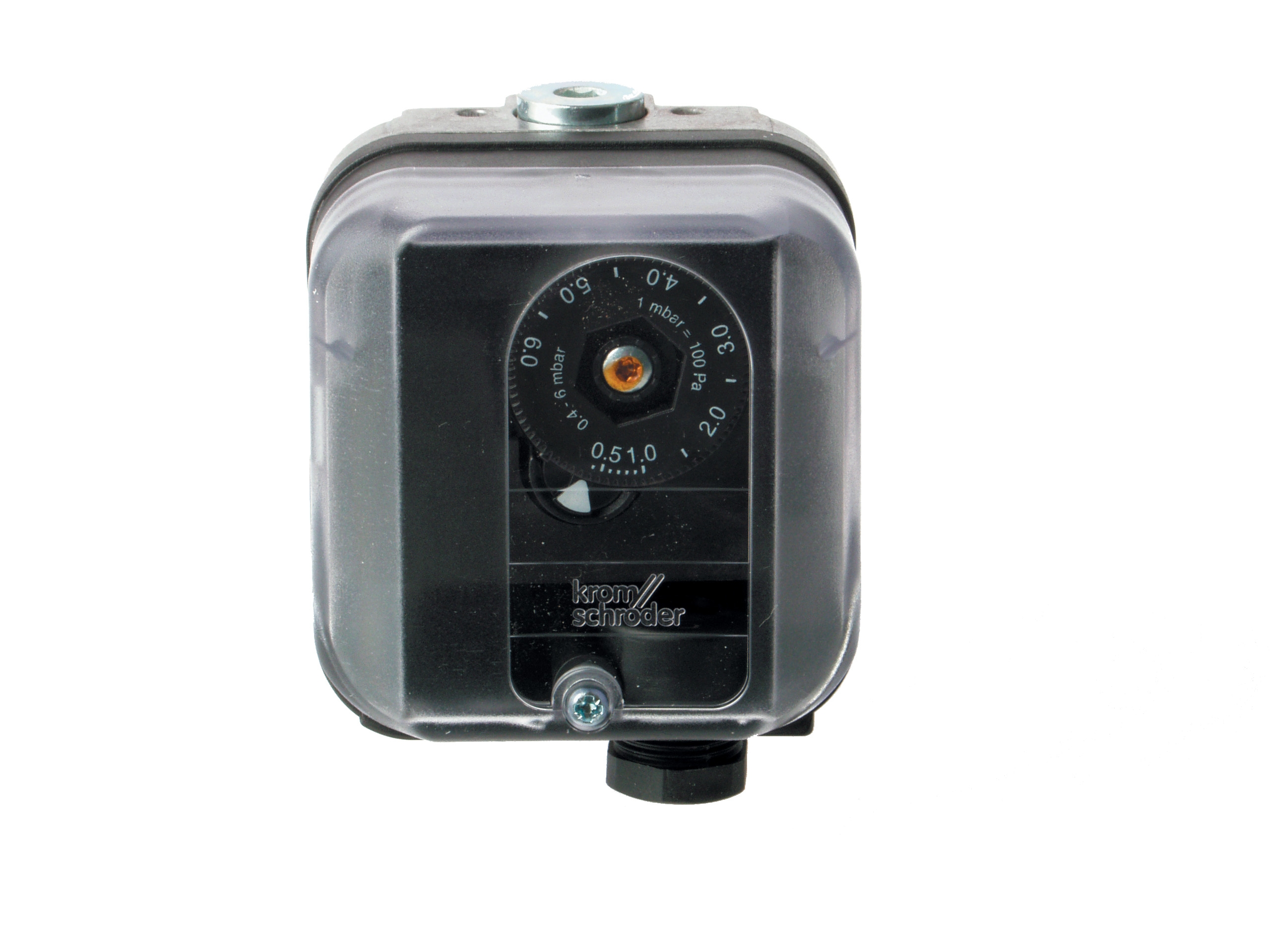
The Kromschroder DG 50U/6 pressure switch integrates seamlessly into relay-based systems. Rated SIL 3 and Performance Level e, this switch provides the pressure monitoring feedback that relay logic depends on. Its FM, UL, AGA, and GOST-TR certifications ensure compatibility across Singapore's multinational manufacturing environments.
Advantages of Relay-Based Architecture
Proven Reliability: Relay systems have operated continuously since the 1980s. Over 35 years, 3G Electric has seen these systems deliver thousands of operational hours with minimal surprises.
Lower Component Cost: Individual relays and switches cost less than integrated modules. If your procurement budget is constrained, relay-based systems offer cost efficiency.
Modular Expandability: You can add safety functions incrementally—add a second pressure switch, expand pilot monitoring, integrate air damper control—without replacing core architecture.
Straightforward Troubleshooting: Technicians understand relay logic intuitively. Service calls are faster when your maintenance team can diagnose component-level failures.
Disadvantages and Trade-Offs
Multiple Components = Higher Assembly Labor: Relay systems require more interconnection points. Installation and commissioning labor costs exceed integrated alternatives.
Space Requirements: Equipment footprint is larger. In space-constrained Singapore industrial facilities, this matters.
Flame Detection Limitations: Traditional relays rely on thermocouple or ionization feedback. UV flame detection requires additional modules, increasing complexity.
Slower Commissioning: Setting up relay logic, testing interlocks, and validating safety sequences requires more technician time on-site.
Architecture 2: Integrated Flame Detection Modules
How Flame Detection Modules Work
Integrated modules combine flame detection, ignition control, and safety logic within a single enclosure. Instead of separate relays and sensors, a flame module receives power and simple input signals, then delivers comprehensive burner control.
The Siemens LFL 1.622 exemplifies this approach. This safety control unit integrates UV and ionization flame monitoring with controlled air damper capability in a single unit designed for gas, oil, or dual-fuel burners with medium to high power ratings. Rather than assembling a relay + separate flame sensors + damper actuator, you install one module.
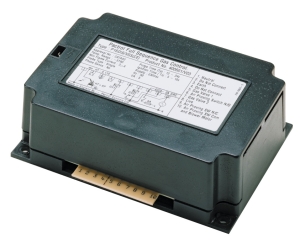
The Pactrol Housing P 16 DI CE operates as a specialized flame detection module, featuring 230V supply with 12 kV output voltage and 10MJ output energy. It handles ignition and flame detection simultaneously—functions that relay-based systems distribute across multiple components.
Advantages of Integrated Modules
Compact Footprint: One enclosure replaces multiple relay and sensor assemblies. For Singapore's high-density industrial parks, space efficiency directly reduces cabinet size and real estate costs.
Faster Commissioning: Factory pre-configured logic means on-site setup is straightforward. Modules ship "flame-ready"—no relay ladder logic to program or validate.
Integrated Safety Logic: Flame detection, ignition sequencing, and safety interlocks operate as a tested system. No integration risk between separate components.
Dual-Fuel Capability: The Siemens LFL 1.622 handles gas, oil, or dual-fuel seamlessly. If your operation switches fuel types seasonally or for cost optimization, one module adapts automatically.
Superior Flame Detection: UV and ionization detection simultaneously offer redundancy. You can detect flame presence faster and more reliably than thermocouple-only arrangements.
Disadvantages and Trade-Offs
Higher Unit Cost: Integrated modules cost more per unit than individual relays or switches.
Limited Expandability: You cannot easily add safety functions. Need a second pressure switch? Often requires a different module or external relay logic.
Vendor Lock-In: Repairs and replacements tie you to specific manufacturers. If Siemens discontinues a module model, sourcing becomes difficult.
Overkill for Simple Applications: If your burner requires only basic on/off control with minimal monitoring, an integrated module wastes capability and budget.
Architecture 3: Integrated Gas Control Block Systems
How Gas Control Blocks Work
Gas control blocks combine pressure regulation, solenoid valve control, and safety interlocking within a single manifold. These systems integrate pneumatic and electrical functions, reducing external interconnections and simplifying system architecture.
The Honeywell VK 4105 C 1041 U represents modern gas block design. This electric modulating pressure regulator controls gas supply dynamically based on burner load. Rather than fixed pressure regulation, it modulates—reducing wasted energy and improving efficiency for modulating burners.
Advantages of Gas Control Blocks
Integrated Safety: Solenoid cutoff, pressure relief, and regulator functions operate as a unified system. Failure modes are contained within the manifold—external valve leaks cannot bypass safety logic.
Energy Efficiency: Electric modulation adjusts gas flow to match actual burner demand. For Singapore's energy-conscious manufacturers, this reduces fuel consumption significantly.
Simplified Plumbing: One manifold replaces three or four separate valves and regulators. Pipe connections decrease, leak points disappear, and maintenance becomes simpler.
Compact Installation: Gas control blocks mount directly on burner frames. External piping, external regulators, and external solenoid valves vanish.
Consistent Performance: Manufacturer testing ensures internal valve calibration. You avoid field calibration variability that plague individual pressure switch and solenoid combinations.
Disadvantages and Trade-Offs
Higher Initial Cost: Gas control blocks cost significantly more than individual solenoid valves or pressure regulators.
Serviceability Challenges: Internal manifold failures often require complete unit replacement. Rebuilding is rarely practical in field conditions.
Limited Customization: If your system requires non-standard pressure setpoints, flow rates, or pilot arrangements, you may need custom manifolds—expensive and time-consuming.
Specialized Installation Skills: Gas block installation requires trained technicians. Standard HVAC or industrial maintenance staff may lack experience.
Comparative Decision Matrix
Cost Considerations
Relay-Based Systems: Lower component cost ($2,000–$5,000), higher labor cost ($1,500–$3,500 installation). Total installed cost: $3,500–$8,500. Best for budget-constrained operations with in-house technical expertise.
Integrated Modules: Higher component cost ($4,000–$7,000), lower labor cost ($800–$1,500). Total installed cost: $4,800–$8,500. Best when labor costs dominate or commissioning speed matters.
Gas Control Blocks: Highest component cost ($5,000–$9,000), moderate labor cost ($1,000–$2,000). Total installed cost: $6,000–$11,000. Best when energy efficiency and safety integration justify premium pricing.
Safety Compliance in Singapore Context
Singapore's manufacturing sector operates under the Workplace Safety and Health (WSH) Act and SPRING Singapore standards. All three architectures can achieve compliance, but differently:
Relay-Based: Achieves compliance through documented relay logic, pressure switch validation (SIL 3 rated like the KRO04206), and third-party testing. Compliance requires paperwork and test reports.
Integrated Modules: Pre-compliance from factory testing. Siemens LFL 1.622 arrives certified—faster regulatory approval for your installation.
Gas Control Blocks: Manifold design certified as complete safety systems. Honeywell VK 4105 certification covers the entire gas delivery chain, simplifying regulatory documentation.
Maintenance and Operational Impact
Relay-Based: Ongoing maintenance includes relay function testing, switch calibration, thermocouple cleaning. Technicians understand every component—troubleshooting is methodical but time-intensive.
Integrated Modules: Modules operate until failure, then replacement is required. Minimal maintenance, but repair costs are higher because you replace entire modules rather than individual components.
Gas Control Blocks: Manifold testing ensures performance consistency. Maintenance focuses on external connections rather than internal valve adjustment. Downtime for failures can be significant because replacement timing is critical.
Practical Selection Framework for Procurement Engineers
Choose Relay-Based Systems When:
- Your facility has experienced maintenance teams capable of relay logic troubleshooting
- Budget constraints require minimizing component cost
- Your burners operate at consistent load with minimal modulation requirements
- Expandability and future customization matter
- You operate multiple burner models requiring flexible control adaptation
Choose Integrated Modules When:
- Commissioning speed and on-site labor costs matter more than component cost
- Your facility lacks specialized relay logic expertise
- Dual-fuel or multi-mode operation (direct ignition + pilot) is required
- Space constraints limit equipment cabinet size
- You prioritize proven, factory-tested safety logic over customized solutions
Choose Gas Control Blocks When:
- Energy efficiency improvements justify premium pricing
- Safety integration and failure containment are critical priorities
- Your facility operates high-efficiency modulating burners
- Installation simplicity and reduced plumbing complexity matter
- Long-term reliability and minimal maintenance downtime are valued
Implementation Guidance for Singapore Operations
Specification Best Practices
When procuring controls and safety components through 3G Electric, specify architectural requirements explicitly. Rather than listing individual SKUs without context, communicate your architecture choice. This ensures compatible products arrive—for example, ordering the KRO04206 pressure switch without clarifying relay-based vs. modular integration can result in incompatible installations.
Document pressure ratings, voltage requirements (230V is standard in Singapore), and response time thresholds. The Cromschroder relay and switches operate on standard three-phase or single-phase supplies available throughout Singapore's industrial zones.
Commissioning Checklist
Regardless of architecture, commissioning requires:
- Pressure switch calibration at specified setpoints
- Flame detection response time verification (typically under 5 seconds)
- Solenoid valve response confirmation
- Safety interlock testing under fault conditions
- Documentation of all test results for WSH Act compliance
Relay-based systems require additional logic validation testing. Integrated modules require functional testing but less sequence verification. Gas control blocks require manifold pressure verification.
Supply Chain Considerations for Singapore Procurement
3G Electric maintains stock of all three architectural approaches. Lead times vary: relay-based components ship within 2–3 weeks, integrated modules within 3–4 weeks, and specialized gas control blocks may require 4–6 weeks depending on customization.
For emergency repairs, relay and switch components are more readily available through local distributors. Integrated modules and gas control blocks depend on manufacturer stock, potentially extending downtime.
Conclusion
Controls & Safety system selection is not about choosing the "best" architecture universally—it's about matching architecture to your specific operational context, budget constraints, and technical capabilities. Over 35 years serving Southeast Asia's industrial sector, 3G Electric has supplied systems spanning all three approaches, and we've learned that successful implementations align architecture choice with procurement strategy, maintenance capacity, and long-term operational goals.
Relay-based systems remain the most flexible and cost-conscious approach for skilled maintenance environments. Integrated modules accelerate commissioning and reduce labor risk for organizations lacking specialized expertise. Gas control blocks deliver safety and energy efficiency benefits justifying premium costs in high-stakes, high-efficiency operations.
Your procurement decision today determines troubleshooting capabilities, expansion possibilities, and maintenance burden for the next decade. Choose deliberately, document your reasoning, and partner with suppliers like 3G Electric who understand the trade-offs and can support your chosen architecture throughout its lifecycle.