Understanding Burners & Combustion System Failures
Burners & Combustion systems are the backbone of industrial heating, steam generation, and process applications across Singapore's manufacturing sector. Yet their complexity—combining fuel delivery, ignition, flame detection, and pressure control—creates multiple failure points that can halt production for hours.
With 35+ years of experience distributing industrial equipment, 3G Electric has supported hundreds of maintenance teams troubleshooting these systems in real-world conditions. The most effective repairs begin not with replacement parts, but with systematic diagnosis.
Common failure modes include:
- Flame detection failure (no ignition signal despite fuel delivery)
- Pressure control instability (hunting, oscillation, or inability to modulate)
- Incomplete combustion (yellow flame, soot accumulation, unburnt fuel)
- Safety interlock trips (nuisance shutdowns without apparent fuel issue)
- Ignition failure (lockout on first-time startup or after brief operation)
Each symptom points to specific subsystems. Understanding which to inspect first—and in what sequence—separates efficient repairs from prolonged troubleshooting.
Diagnostic Sequence: A Systematic Approach to Root Cause Identification
Step 1: Visual Flame Observation
Before touching any tools, observe the burner flame directly (using appropriate safety precautions). The flame's color, shape, and stability communicate volumes:
- Bright blue flame with minimal yellow: Normal combustion, fuel-air ratio correct
- Persistent yellow flame: Incomplete combustion, excess fuel, or insufficient air
- Orange or red flame: Too rich mixture, clogged air inlet, or carbon buildup
- Flickering or pulsing: Pressure instability, air inlet blockage, or fuel supply interruption
- No flame: Ignition electrode failure, fuel shutoff valve stuck, or pilot line blockage
Document the flame condition before proceeding further. This single observation often narrows troubleshooting scope by 60%.
Step 2: Pressure Switch and Control Line Verification
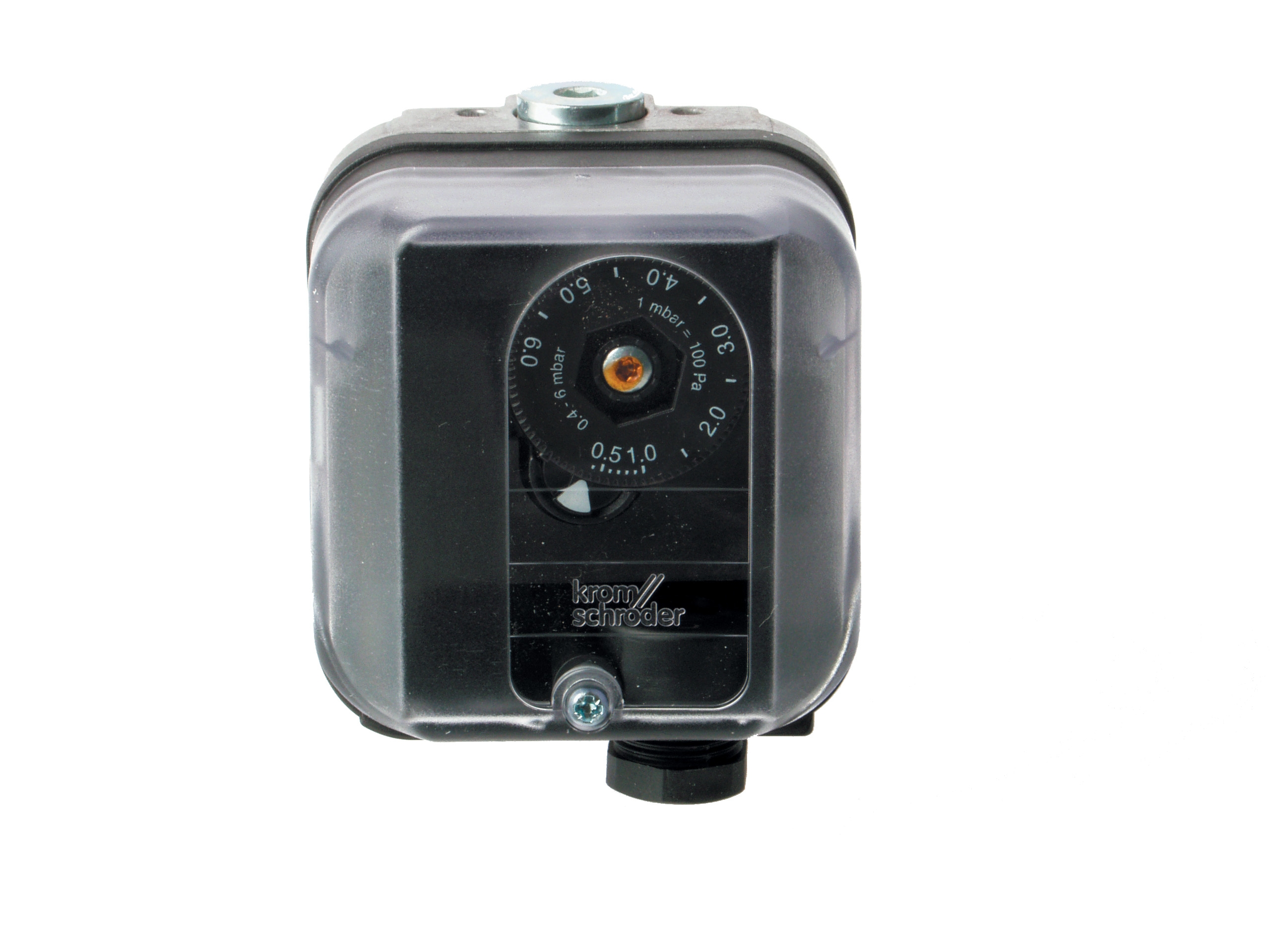
The Kromschroder DG 50U/6 pressure switch is a SIL 3-rated safety device managing fuel pressure to the burner head. Failures here trigger nuisance lockouts or prevent ignition entirely.
Field inspection protocol:
1. Manually feel the fuel line upstream of the burner (never open connections while pressurized)
2. Confirm pulsation—steady pressure indicates pump operation
3. Check the pressure gauge (if fitted) against manufacturer specification (typically 2–8 bar for gas, 15–25 bar for oil)
4. Disconnect the pressure switch signal lead and manually apply 60% of rated pressure using a hand pump
5. Listen for the audible click (electrical switching); if absent, the switch diaphragm is fatigued
Maintenance action: A worn pressure switch cannot be field-repaired. Order a replacement matching your burner's rated pressure envelope. Most industrial burners require a pressure range of ±0.5 bar; exceeding this tolerance causes control instability.
Step 3: Flame Detector Inspection
The Siemens QRB4A-B036B40B flame detector is rated for oil and gas burners and provides the signal that confirms ignition. Without this feedback, the burner locks out after 4 seconds (standard safety protocol).
Field diagnostics:
1. Power off the entire control system
2. Visually inspect the flame detector lens for carbon deposits, soot, or oil coating
3. Clean the lens carefully with a dry, lint-free cloth (no solvents unless specified in manual)
4. Inspect the two-wire cable for cuts, pinches, or moisture ingress at the connector
5. Restore power and attempt ignition; observe whether the flame signal appears on the control panel display
If the detector still fails to recognize flame:
- Check burner air shutter alignment (flame must be unobstructed at the detector)
- Verify the detector is aimed within ±10° of the flame center
- Test the detector with a calibrated ultraviolet light source (UV intensity test)
Step 4: Fuel Supply System Assessment
Interrupt at the fuel feed before examining the burner:
1. Check filter condition (clogged filters reduce fuel pressure by 0.3–0.5 bar)
2. Open the fuel shutoff valve fully; partially closed valves mask as pressure problems
3. Bleed air from fuel lines (air pockets prevent consistent atomization)
4. For oil burners, verify viscosity at operating temperature (cold heavy oil flows poorly; hot oil may vapor-lock)
Practical Repair Workflows for High-Impact Failures
Scenario 1: No Ignition Despite Fuel Delivery
Symptoms: Blower operates, fuel pump running (audible), no flame within 4 seconds, control panel shows "lockout."
Diagnosis sequence (5–10 minutes):
1. Confirm fuel reaches the burner nozzle: Remove the nozzle and manually trigger the fuel shutoff solenoid; fuel should spray
2. If no spray: Check solenoid coil for continuity with a multimeter (should read 8–12 ohms for 24V coil)
3. If solenoid is open-circuit: Replace the coil; do not attempt to repair
4. If fuel sprays but no ignition: Confirm ignition electrode spacing (typically 3–4 mm gap)
5. Check ignition transformer output voltage using a high-voltage meter (should read 4–8 kV at the electrode)
Field repair: Ignition transformers and spark electrodes are field-replaceable components. Most burner designs allow removal in <15 minutes without breaking fuel connections.
Scenario 2: Burner Trips Randomly (Intermittent Flame Loss)
Symptoms: Burner operates normally for 5–30 minutes, then shuts down; restart is possible without clearing fault code.
Diagnosis sequence (10–15 minutes):
1. Observe flame stability during operation: Flickering or pulsing indicates pressure instability
2. Measure fuel pressure every 2 minutes while burner runs; pressure should remain ±0.2 bar of setpoint
3. If pressure drifts upward: Pressure relief valve is leaking internally; order replacement
4. If pressure fluctuates wildly: Pump pressure regulator is fatigued; check diaphragm by tapping gently (should feel flexible, not rigid)
5. Check for partial fuel line blockage: Remove the line at the burner inlet and allow fuel to flow into a bucket; compare flow rate to pump specification
Field repair: Intermittent failures often stem from fuel system cleanliness. Drain the fuel tank, replace all filters, and flush lines with clean fuel before blaming control components.
Scenario 3: High Smoke or Poor Combustion (Yellow Flame)
Symptoms: Visible smoke at flue, soot accumulation on heat exchanger, yellow-orange flame instead of blue.
Diagnosis sequence (10–20 minutes):
1. Check burner air inlet: Remove any obstruction, verify air shutter moves freely
2. Inspect the air inlet screen for carbon blockage; clean or replace
3. Measure combustion oxygen content at the flue using a portable analyzer (should read 3–5% O₂ for gas, 2–4% for oil)
4. If oxygen is low (<2%): Burner is running too rich; open air shutter incrementally and retest
5. If oxygen is high (>6%): Burner is running too lean; check for fuel line leaks or nozzle wear
Field repair: Yellow flame typically requires air-fuel ratio adjustment, not component replacement. However, a worn or damaged burner nozzle cannot be repaired—order a matching replacement from the equipment OEM.
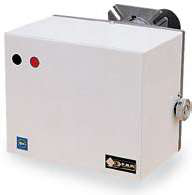
For industrial gas burners like the FBR HI-GAS P1500/M CE TL and FBR HI-GAS P650/M CE TL, combustion tuning is critical at installation; drifting afterward signals mechanical wear or fuel quality change.
Preventive Measures to Reduce Unscheduled Repairs
Quarterly Maintenance Checklist
- Inspect and clean flame detector lens
- Verify fuel pressure setpoint remains within ±0.1 bar of nominal
- Confirm ignition electrode gap and cleanliness
- Check fuel filter pressure drop; replace if exceeding 0.3 bar
- Drain fuel tank sediment plug and inspect for water (shake sample in clear container)
- Record combustion oxygen at full and minimum load
- Remove and chemically clean the burner nozzle (do not ultrasonic-clean; may damage internal passages)
- Replace all fuel line filters
- Inspect pressure switch diaphragm visually; order replacement if cracked or discolored
- Perform full air-fuel ratio calibration across the operating range
- Clean heat exchanger surfaces to maintain thermal efficiency
- Store fuel in sealed, temperature-controlled tanks (condensation is common in tropical humidity)
- Use fuel stabilizers during seasonal idle periods
- Test fuel samples quarterly for viscosity and contamination
- Install 10-micron fuel filters minimum; upgrade to 5-micron in high-dust environments
3G Electric's 35+ years supporting industrial operations across Southeast Asia have shown that planned maintenance cuts emergency repairs by 70%. A burner serviced quarterly rarely requires field repair; one neglected for 18 months will consume 40+ hours of troubleshooting.
When to Replace vs. Repair: Economic Threshold Analysis
Replace (do not attempt field repair):
- Flame detector: Cost SGD 300–600 | Field repair time: 0.5 hours | Failure risk if repaired: 30%
- Pressure switch: Cost SGD 200–450 | Field repair time: 0.25 hours | Failure risk if repaired: 25%
- Ignition transformer: Cost SGD 150–350 | Field repair time: 0.75 hours | Failure risk if repaired: 45%
- Fuel pump: Cost SGD 800–2000 | Field repair time: 2 hours | Failure risk if repaired: 60%
- Burner nozzle clogging: Clean in-place with soft brushes and approved solvent; cost
- Air shutter misalignment: Loosen mounting bolts, reposition, retighten; cost
- Fuel line blockage: Flush or replace section; cost SGD 50–150
- Ignition electrode gap: Adjust spacing with feeler gauge; cost
- Air shutter misalignment: Loosen mounting bolts, reposition, retighten; cost
For dual-fuel burners like the FBR KN 350/M, which delivers 465–4070 kW across two modulating stages, the cost-benefit threshold shifts toward replacement because a single failure in either fuel circuit can disable the entire unit.
When in doubt: Consult the equipment manual's parts diagram. If the failed component is listed as a "serviceable assembly," repair is intended. If listed as "non-serviceable," replacement is the manufacturer's tested path.
Documentation and Spare Parts Strategy
Maintenance teams should retain:
1. Original burner commissioning report (fuel pressure settings, air-fuel ratio, ignition timing)
2. Control relay schematic and wiring diagram (essential for understanding safety interlocks)
3. Component replacement history with dates and failure modes
4. Quarterly maintenance logs showing fuel pressure and combustion oxygen trends
Stock spare parts based on Mean Time Between Failures (MTBF) and lead time:
- Critical path (burner down if unavailable): Flame detector, pressure switch, ignition transformer, fuel pump solenoid
- Non-critical (operation continues but efficiency drops): Fuel filters, nozzles, gaskets, electrodes
For burners supplied through 3G Electric, we maintain a Singapore warehouse with 2–3 week lead time on most components. Contact your account manager to establish a parts consignment agreement if downtime costs exceed SGD 5000/hour.
Conclusion: Building Diagnostic Confidence
Burners & Combustion troubleshooting is learnable. The key is systematic observation before action. A maintenance technician who correctly diagnoses a flame detector failure in 15 minutes saves 8 hours of random part replacement and callback visits.
Implement the diagnostic sequences in this guide on your next burner issue. Record the findings. Within 3–4 repairs, your team will develop the pattern recognition that separates experienced maintenance personnel from those dependent on external service calls.
3G Electric's technical team is available to discuss specific failure modes and recommend component upgrades tailored to your plant's fuel quality and operational intensity. Reach out with burner model number and failure symptoms for targeted guidance.