Introduction: Why Fuel Quality Matters in Singapore's Industrial Environment
Burners & Combustion systems depend critically on fuel purity and consistent delivery. In Singapore's humid, corrosive climate, fuel degradation accelerates—water ingress in storage tanks, bacterial growth in oil systems, and pressure fluctuations in gas distribution create operational challenges that directly affect burner control reliability and thermal efficiency.
With over 35 years of experience distributing industrial equipment across Southeast Asia, 3G Electric has observed that fuel-related issues account for approximately 40% of preventive maintenance calls on burner systems. Many of these problems are entirely preventable through disciplined fuel management protocols.
This guide provides HVAC contractors with actionable strategies for fuel quality assurance, storage optimization, and feed system diagnostics—ensuring your burner installations deliver consistent performance and comply with Singapore's industrial safety standards.
Section 1: Fuel Quality Assessment and Contamination Control
Understanding Fuel Degradation in Tropical Climates
Singapore's high humidity (70–90% annually) and temperatures (24–32°C) accelerate fuel degradation. Gas phase fuels absorb moisture; distillate and residual oils develop free water, emulsions, and microbial contamination. These contaminants cause:
- Nozzle clogging – Particulates block atomizer orifices, reducing spray pattern quality
- Injector wear – Abrasive particles accelerate pump and needle valve erosion
- Control valve stiction – Water and sludge deposits impair solenoid response and safety valve function
- Flame instability – Inconsistent fuel delivery triggers nuisance shutdowns and failed ignition sequences
Fuel Sampling and Analytical Testing Protocols
Establish a quarterly fuel testing program aligned with ISO 4406 (particulate cleanliness codes) and ASTM D6304 (water content by Karl Fischer titration):
For Gas Burner Systems:
- Odor concentration (natural gas odorant stability; target: maintain mercaptan odor at 0.5–1.0 ppm)
- Moisture content (target: <100 mg/m³ absolute)
- Non-hydrocarbon components (target: <5% by volume)
- Pressure dew point (target: <–20°C at operating pressure)
- Kinematic viscosity at 40°C (target ranges per fuel grade: 2–6 cSt for light oil, 10–100 cSt for heavy fuel)
- Water content (target: <0.5% by mass for Grade 2D, <3% for Grade 6 residual)
- Ash content (target: <0.1% by mass)
- Copper corrosion (ASTM D130, target: Rating 1b or better)
- Particulate cleanliness: ISO 4406 code (target: 17/15/12 or cleaner)
Partner with SGS Singapore or JMT Laboratories for accredited testing. Document results and trend data quarterly to identify deterioration patterns.
Contamination Prevention at the Source
Gas Supply Lines:
- Install coalescing filters (15–25 micron absolute) at burner inlet to capture entrained water vapor and fine aerosols
- Replace filters every 2,000–3,000 operating hours or annually, whichever occurs first
- Use stainless steel or powder-coated carbon steel piping to resist corrosion; avoid bare galvanized fittings in humid environments
- Maintain storage tanks with sealed vents equipped with desiccant breathers (replace desiccant cartridges monthly in Singapore's humidity)
- Install settling tanks (minimum residence time: 24–48 hours) between main storage and burner feed lines to allow water and heavy particles to drop below suction points
- Use 100-micron strainers on tank outlet and 25–50 micron suction strainers on fuel pump inlet
- Implement weekly visual tank inspections for water layer formation; drain free water immediately using automated drain valves with sight glasses
Section 2: Fuel Feed System Design and Pressure Management
Pressure Switch Calibration and Safety Integration
Fuel delivery pressure directly influences burner firing stability. Incorrect calibration creates cascading failures: weak atomization, incomplete combustion, flame detection faults, and spurious safety shutdowns.
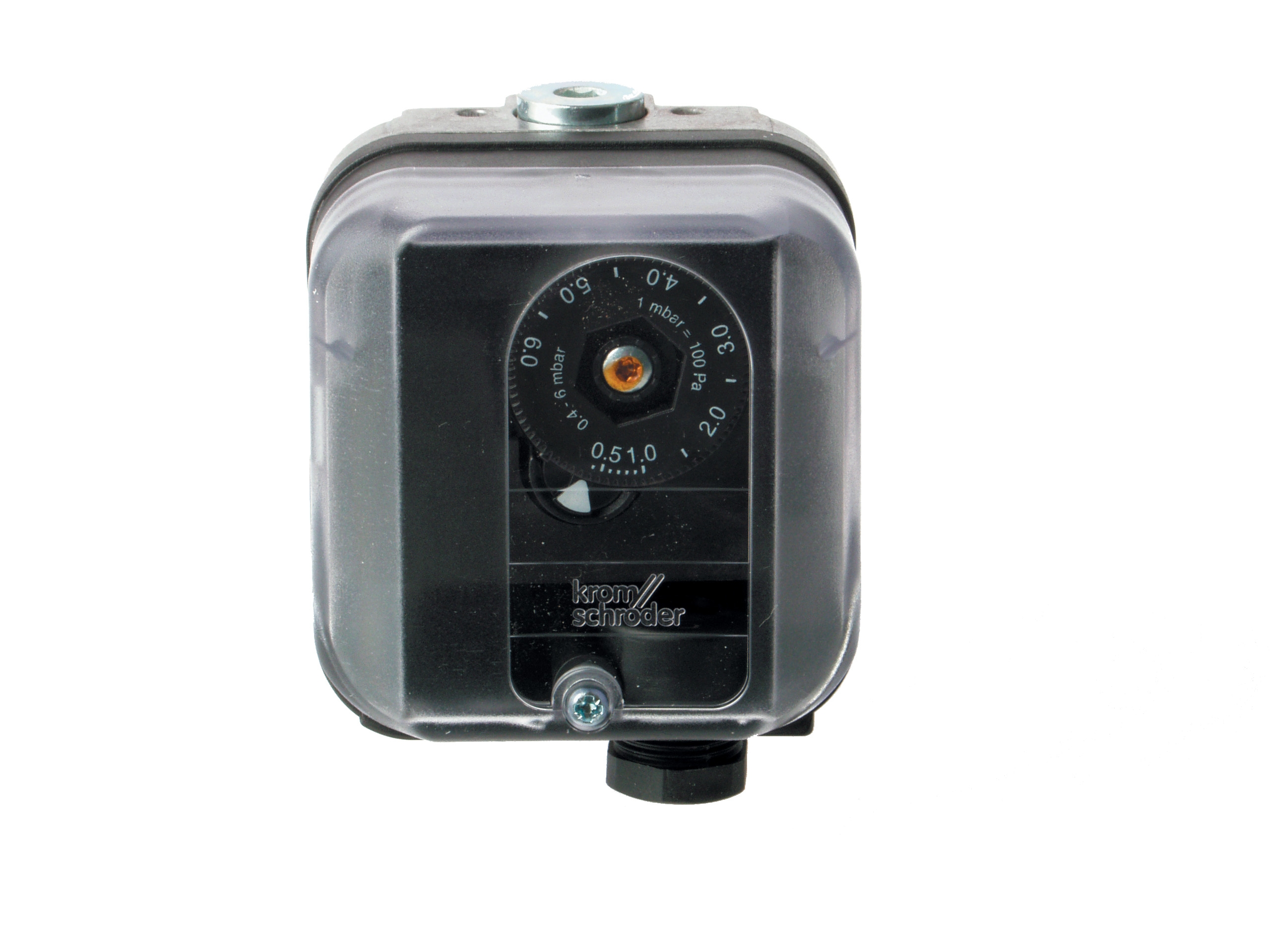
The Kromschroder DG 50U/6 pressure switch provides SIL 3-rated monitoring for burner fuel systems. Contractors must verify:
Setup and Testing Protocol:
- Confirm setpoint matches equipment nameplate: typically 4–8 bar for light oil burners, 8–12 bar for heavy oil, and 15–25 mbar for gas pressure regulation
- Perform hydrostatic pressure test: apply slowly increasing pressure via portable test pump; document actuation point (differential hysteresis must not exceed ±0.5 bar)
- Verify reset behavior: after shutdown, pressure must drop 10–15% below setpoint before restart permissive engages
- Use electronic manometer (±0.5% accuracy) rather than analog gauges for repeatability
- Mount pressure switches in shaded enclosures; direct solar exposure causes temperature drift (0.5 mbar per °C)
- Use impulse snubbers (0.5–1.5 second response time) on pulsating fuel lines to prevent nuisance switching
- Install isolation ball valves and bleed cock upstream for safe disconnection and zero-pressure venting
Two-Stage and Modulating Burner Fuel Feeds
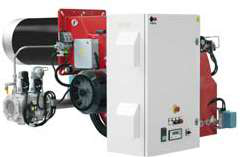
Modern industrial burners, such as the FBR KN 1300/M TL EL, operate in two firing stages:
Low Fire Stage (25–40% capacity):
- Reduced fuel flow: lower pressure regulator setpoint (typically 50–70% of high-fire pressure)
- Air damper modulates to maintain stoichiometric air-fuel ratio
- Pressure switch validates fuel supply before ignition permissive
- Full fuel flow: main pressure regulator maintains design setpoint
- Air damper fully open; combustion air fan runs at maximum speed
- Burner control unit adjusts ignition dwell and flame monitoring sensitivity
- Confirm dual-regulator setup: one for low-fire (adjustable), one for high-fire (fixed); verify both reductions maintain minimum 0.5 bar differential above pressure switch setpoint
- Test low-fire stability: measure flame through sight glass; if flame flickers or shrieks, reduce low-fire pressure by 0.2–0.3 bar increments
- Document high-fire dwell timing (typically 2–5 seconds); confirm ignition sparks for full duration before fuel valve opens
Section 3: Burner Control System Integration with Fuel Management
Flame Detection and Fuel Safety Interlocks
The Siemens LFL 1.622 safety control unit coordinates ionization or UV flame monitoring with fuel pressure validation and purge cycle logic. Fuel management directly influences flame detection reliability:
Ionization Flame Monitoring (most common for oil burners):
- Measures ion current between flame electrodes (typically 2–10 microamps)
- Contaminant ash deposits reduce conductivity; ionization signal declines 30–50% over 1,000 operating hours in dirty fuel conditions
- Contractor maintenance: Clean electrodes quarterly with soft brass brush and deionized water; replace every 18–24 months
- Detects UV radiation from flame (190–300 nm band)
- Soot and carbon deposits reduce window transmittance; UV signal loss occurs within 500 hours of heavy fuel oil operation
- Contractor maintenance: Check UV window quarterly; clean with soft, lint-free cloth and optical alcohol; replace window seal gasket annually
Burner Control Relay Logic and Fuel Pressure Feedback
The Kromschroder BCU 570WC1F1U0K1-E relay supports direct ignition and intermittent/continuous pilot modes with integral fuel pressure monitoring logic:
Prepurge Cycle (3–10 seconds):
- Air damper opens; fuel solenoid remains closed
- Purpose: expel combustibles from furnace before ignition
- Fuel pressure switch must remain de-energized; if pressure rises during purge, safety fault (E4 lockout) activates—indicates stuck fuel valve or line pressure surge
- Air damper holds position; ignition transformer energizes; pilot or main fuel solenoid opens after 1–2 second dwell
- Flame monitoring circuit monitors for ionization or UV signal
- Fuel system requirement: Fuel pressure must stabilize within 500 ms of solenoid opening (insufficient filtration or regulator wear delays response, causing flame failure)
- Once flame detected, ignition de-energizes; fuel solenoid remains open
- Control unit monitors flame continuity; any signal loss > 0.2 seconds triggers shutdown
- Fuel quality impact: Water contamination or nozzle erosion reduces flame stability window, increasing false shutdowns
- Verify fuel pressure at solenoid outlet during ignition trial using portable test gauge (0–16 bar range)
- Confirm pressure rise time < 500 ms (measure with digital oscilloscope on solenoid current ramp)
- Test flame signal amplitude on control relay input terminal (should read 1–3 mA for ionization, 100–500 mV for UV)
- Document setpoint and observe 5 complete ignition cycles; any variation >10% in pressure response indicates fuel system degradation
Section 4: Maintenance, Troubleshooting, and Seasonal Preparation
Seasonal Fuel Management for Singapore's Dual Climate
While Singapore lacks extreme seasonal shifts, annual monsoon periods (November–January, June–August) increase atmospheric humidity. Contractors must adjust preventive maintenance:
Monsoon Preparation (August and May):
- Inspect and replace desiccant breathers on all oil storage tanks
- Perform full fuel sampling analysis; compare viscosity and water content to baseline
- Clean suction strainers and replace if clogged >50%
- Test burner ignition sequences under low-fire conditions three times to confirm fuel delivery stability
- Drain collected free water from oil settling tanks
- Inspect UV windows and ionization electrodes; clean if visible soot deposits present
- Verify pressure switch calibration (retest using portable pump)
- Review flame signal trends over past quarter; any declining amplitude trend warrants fuel testing
Common Fuel-Related Faults and Diagnostic Flow
Symptom: Nuisance Flame Failures / False Lockouts (>2 per week)
- Root cause assessment: (1) Fuel quality degradation, (2) Pressure fluctuation, (3) Flame detector contamination
- Contractor diagnostics: First, sample fuel; if water >1% or particulates exceed ISO 18/16/13, drain tank and replace fuel. If fuel clean, test pressure switch hysteresis (must be <0.5 bar) and measure flame signal (must be >1.5 mA for ionization); clean or replace electrodes if signal <1.0 mA.
- Root cause: Insufficient low-fire fuel pressure, pressure regulator failure, or nozzle clogging
- Contractor diagnostics: Measure fuel pressure at low-fire position; should be 50–70% of high-fire setting. If pressure normal but ignition fails, suspect clogged nozzle (replace) or weak ignition transformer (test with multimeter, confirm >5 kVAC output).
- Root cause: Incomplete combustion from excess fuel or air starvation
- Contractor diagnostics: Verify fuel pressure is not exceeding design setpoint (pressure regulator drift); confirm air damper opens fully during high fire (check for binding or weak actuator linkage); inspect nozzle spray pattern (should be fine cone; if coarse spray, replace nozzle).
Documentation and Lifecycle Tracking
Maintain a burner system logbook (digital or hard copy) including:
- Monthly flame signal readings (mA for ionization, mV for UV)
- Quarterly fuel sampling results (water %, viscosity, cleanliness code)
- Pressure switch setpoint verification dates and measured values
- Electrode and UV window replacement dates
- Ignition attempt counts from control relay logs (trend analysis for drift prediction)
Use this data to forecast maintenance intervals. For example, if ionization signal declines 5% per quarter, predict replacement at 18 months rather than the nominal 24-month interval.
Conclusion
Burners & Combustion performance in Singapore's industrial environment depends fundamentally on fuel quality discipline. Contractors who implement systematic fuel sampling, storage optimization, and feed system verification reduce unexpected shutdowns by 60–75% and extend burner component lifespan by 30–40%.
3G Electric's product range—from pressure switches like the DG 50U/6 to advanced control relays such as the Kromschroder BCU 570WC1F1U0K1-E and Siemens LFL 1.622—provides the instrumentation necessary for precise fuel system monitoring. Combined with disciplined maintenance protocols, these tools ensure safe, efficient burner operation across Singapore's demanding industrial sectors.
Begin your fuel management program today by scheduling quarterly fuel analysis and pressure switch calibration. Your customers' bottom line—and your reputation—depends on it.